2024 Edition
CIA World Factbook 2024 (factbook.json @ b8538d78e87c)
Introduction
Background
The Isle of Man was part of the Norwegian Kingdom of the Hebrides until the 13th century, when it was ceded to Scotland. The isle came under English lordship in the 14th century before being purchased by the British Government in 1765. Current concerns include reviving the almost extinct Manx Gaelic language. The Isle of Man is a British Crown dependency, which makes it a self-governing possession of the British Crown that is not part of the UK. The UK Government, however, remains constitutionally responsible for its defense and international representation.
Geography
Area
- land
- 572 sq km
- total
- 572 sq km
- water
- 0 sq km
Area - comparative
slightly more than three times the size of Washington, DC
Climate
temperate; cool summers and mild winters; overcast about a third of the time
Coastline
160 km
Elevation
- highest point
- Snaefell 621 m
- lowest point
- Irish Sea 0 m
Geographic coordinates
54 15 N, 4 30 W
Geography - note
one small islet, the Calf of Man, lies to the southwest and is a bird sanctuary
Irrigated land
0 sq km (2022)
Land boundaries
- total
- 0 km
Land use
- agricultural land
- 74.7% (2018 est.)
- agricultural land: arable land
- arable land: 43.8% (2018 est.)
- agricultural land: permanent crops
- permanent crops: 0% (2018 est.)
- agricultural land: permanent pasture
- permanent pasture: 30.9% (2018 est.)
- forest
- 6.1% (2018 est.)
- other
- 19.2% (2018 est.)
Location
Western Europe, island in the Irish Sea, between Great Britain and Ireland
Map references
Europe
Maritime claims
- exclusive fishing zone
- 12 nm
- territorial sea
- 12 nm
Natural hazards
occasional high winds and rough seas
Natural resources
none
Population distribution
most people concentrated in cities and large towns of which Douglas, in the southeast, is the largest
Terrain
hills in north and south bisected by central valley
People and Society
Age structure
- 0-14 years
- 16% (male 7,701/female 7,100)
- 15-64 years
- 61.9% (male 29,035/female 28,044)
- 65 years and over
- 22.1% (2024 est.) (male 9,595/female 10,794)
Birth rate
10.4 births/1,000 population (2024 est.)
Children under the age of 5 years underweight
NA
Contraceptive prevalence rate
NA
Current health expenditure
NA
Death rate
10.2 deaths/1,000 population (2024 est.)
Dependency ratios
- elderly dependency ratio
- 34.9
- potential support ratio
- 2.9 (2021)
- total dependency ratio
- 58.6
- youth dependency ratio
- 23.6
Drinking water source
- improved: rural
- rural: NA
- improved: total
- total: 99.1% of population
- improved: urban
- urban: NA
- unimproved: rural
- rural: NA
- unimproved: total
- total: 0.9% of population (2020)
- unimproved: urban
- urban: NA
Education expenditures
NA
Ethnic groups
- White 94.7%, Asian 3.1%, Mixed 1%, Black 0.6%, other 0.4% (2021 est.)
- note
- note: data represent population by nationality
Gross reproduction rate
0.9 (2024 est.)
Infant mortality rate
- female
- 3.7 deaths/1,000 live births
- male
- 4.4 deaths/1,000 live births
- total
- 4.1 deaths/1,000 live births (2024 est.)
Languages
English, Manx Gaelic (about 2% of the population has some knowledge)
Life expectancy at birth
- female
- 84.4 years
- male
- 80.7 years
- total population
- 82.5 years (2024 est.)
Literacy
- female
- NA
- male
- NA
- total population
- NA
Major urban areas - population
27,000 DOUGLAS (capital) (2018)
Median age
- female
- 46.1 years
- male
- 43.7 years
- total
- 44.9 years (2024 est.)
Nationality
- adjective
- Manx
- noun
- Manxman (men), Manxwoman (women)
Net migration rate
4.3 migrant(s)/1,000 population (2024 est.)
Physician density
NA
Population
- female
- 45,938 (2024 est.)
- male
- 46,331
- total
- 92,269
Population distribution
most people concentrated in cities and large towns of which Douglas, in the southeast, is the largest
Population growth rate
0.45% (2024 est.)
Religions
Christian 54.7%, Muslim 0.5%, Buddhist 0.5%, Hindu 0.4%, Jewish 0.2%, none 43.8% (2021 est.)
Sanitation facility access
- improved: rural
- rural: NA
- improved: total
- total: NA
- improved: urban
- urban: NA
- unimproved: rural
- rural: NA
- unimproved: total
- total: NA
- unimproved: urban
- urban: NA
Sex ratio
- 0-14 years
- 1.08 male(s)/female
- 15-64 years
- 1.04 male(s)/female
- 65 years and over
- 0.89 male(s)/female
- at birth
- 1.08 male(s)/female
- total population
- 1.01 male(s)/female (2024 est.)
Total fertility rate
1.88 children born/woman (2024 est.)
Urbanization
- rate of urbanization
- 0.97% annual rate of change (2020-25 est.)
- urban population
- 53.5% of total population (2023)
Government
Administrative divisions
none; there are no first-order administrative divisions as defined by the US Government, but there are 24 local authorities each with its own elections
Capital
- daylight saving time
- +1hr, begins last Sunday in March; ends last Sunday in October
- etymology
- name derives from the Dhoo and Glass Rivers, which flow through the valley in which the town is located and which in Manx mean the "dark" and the "light" rivers respectively
- geographic coordinates
- 54 09 N, 4 29 W
- name
- Douglas
- time difference
- UTC 0 (5 hours ahead of Washington, DC, during Standard Time)
Citizenship
see United Kingdom
Constitution
- amendments
- proposed as a bill in the House of Keys, by the "Government," by a "Member of the House," or through petition to the House or Legislative Council; passage normally requires three separate readings and approval of at least 13 House members; following both House and Council agreement, assent is required by the lieutenant governor on behalf of the Crown; the constitution has been expanded and amended many times, last in 2020
- history
- development of the Isle of Man constitution dates to at least the 14th century
Country name
- abbreviation
- I.O.M.
- conventional long form
- none
- conventional short form
- Isle of Man
- etymology
- the name "man" may be derived from the Celtic word for "mountain"
Dependency status
British crown dependency
Diplomatic representation from the US
- embassy
- none (British crown dependency)
Diplomatic representation in the US
none (British crown dependency)
Executive branch
- cabinet
- Council of Ministers appointed by the lieutenant governor
- chief of state
- Lord of Mann King CHARLES III (since 8 September 2022); represented by Lieutenant Governor Sir John LORIMER (since 29 September 2021)
- election results
- 2021: Alfred CANNAN (independent) elected chief minister; Tynwald House of Keys vote - 21 of 242016: Howard QUAYLE elected chief minister; Tynwald House of Keys vote - 21 of 33
- elections/appointments
- the monarchy is hereditary; lieutenant governor appointed by the monarch; chief minister indirectly elected by the Tynwald for a 5-year term (eligible for second term); election last held on 23 September 2021 (next to be held in 2026)
- head of government
- Chief Minister Alfred CANNAN (since 12 October 2021)
Flag description
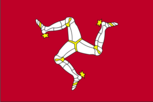
red with the Three Legs of Man emblem (triskelion), in the center; the three legs are joined at the thigh and bent at the knee; in order to have the toes pointing clockwise on both sides of the flag, a two-sided emblem is used; the flag is based on the coat of arms of the last recognized Norse King of Mann, MAGNUS III (r. 1252-65); the triskelion has its roots in an early Celtic sun symbol
Government type
parliamentary democracy (Tynwald)
Independence
none (British Crown dependency)
International organization participation
UPU
Judicial branch
- highest court(s)
- Isle of Man High Court of Justice (consists of 3 permanent judges or "deemsters" and 1 judge of appeal; organized into the Staff of Government Division or Court of Appeal and the Civil Division); the Court of General Gaol Delivery is not formally part of the High Court but is administered as though part of the High Court and deals with serious criminal cases; note - appeals beyond the Court of Appeal are referred to the Judicial Committee of the Privy Council (in London)
- judge selection and term of office
- deemsters appointed by the Lord Chancellor of England on the nomination of the lieutenant governor; deemsters can serve until age 70
- subordinate courts
- High Court; Court of Summary Gaol Delivery; Summary Courts; Magistrate's Court; specialized courts
Legal system
the laws of the UK apply where applicable and include Manx statutes
Legislative branch
- description
- bicameral Tynwald or the High Court of Tynwald consists of:Legislative Council (11 seats; renewal of 4 members every 2 years; elected members serve 4-year terms) House of Keys (24 seats; 2 members each from 12 constituencies directly elected by simple majority vote to serve 5-year terms)
- election results
- Legislative Council - composition - men 6, women 4, vacant 1; percentage women 36.4% House of Keys - percent of vote by party - Liberal Vannin 5.3%, Manx Labour Party 5.1%, Green Party 3.3% independent 86.3%; seats by party - independent 21; Manx Labour Party 2, Liberal Vannin 1; composition – men 14, women 10, percentage women 41.7%; total Tynwald percentage women 40%
- elections
- Legislative Council - last held 14 March 2023 (next to be held by March 2028)House of Keys - last held on 23 September 2021 (next to be held on 24 September 2026)
- note
- note: Legislative Council includes the President of Tynwald, 2 non-voting members (the Lord Bishop of Sodor and Man and the attorney general), and 8 members indirectly elected by the House of Keys
National anthem
- lyrics/music
- William Henry GILL [English], John J. KNEEN [Manx]/traditional
- name
- "Arrane Ashoonagh dy Vannin" (O Land of Our Birth)
- note
- note: adopted 2003, in use since 1907; serves as a local anthem; as a British Crown dependency, "God Save the King" is official (see United Kingdom) and is played when the sovereign, members of the royal family, or the lieutenant governor are present
National holiday
Tynwald Day, 5 July (1417); date Tynwald Day was first recorded
National symbol(s)
triskelion (a motif of three legs); national colors: red, white
Political parties
- Green Party Liberal Vannin Party or LVP Manx Labor PartyMec Vannin (sometimes referred to as the Manx Nationalist Party)
- note
- note: most members sit as independents
Suffrage
16 years of age; universal
Economy
Agricultural products
cereals, vegetables; cattle, sheep, pigs, poultry
Credit ratings
- Moody's rating
- Aa3 (2020)
- note
- note: The year refers to the year in which the current credit rating was first obtained.
- Standard & Poors rating
- N/A
Economic overview
high-income British island economy; known financial services and tourism industries; taxation incentives for technology and financial firms to operate; historic fishing and agriculture industries are declining; major online gambling and film industry locale
Exchange rates
- Currency
- Manx pounds (IMP) per US dollar -
- Exchange rates 2019
- 0.783 (2019 est.)
- Exchange rates 2020
- 0.78 (2020 est.)
- Exchange rates 2021
- 0.727 (2021 est.)
- Exchange rates 2022
- 0.811 (2022 est.)
- Exchange rates 2023
- 0.805 (2023 est.)
Exports - commodities
crude petroleum, artwork, vegetables, fruits, whiskies (2022)
Exports - partners
almost entirely United Kingdom (2022)
GDP - composition, by sector of origin
- agriculture
- 0.3% (2021 est.)
- industry
- 9.4% (2021 est.)
- note
- note: figures may not total 100% due to non-allocated consumption not captured in sector-reported data
- services
- 91.8% (2021 est.)
GDP (official exchange rate)
- $7.931 billion (2021 est.)
- note
- note: data in current dollars at official exchange rate
Imports - commodities
ships, delivery trucks (2022)
Imports - partners
almost entirely United Kingdom (2022)
Industrial production growth rate
- 9.95% (2021 est.)
- note
- note: annual % change in industrial value added based on constant local currency
Industries
financial services, light manufacturing, tourism
Inflation rate (consumer prices)
- Inflation rate (consumer prices) 2016
- 1% (2016 est.)
- Inflation rate (consumer prices) 2017
- 4.1% (2017 est.)
Real GDP (purchasing power parity)
- note
- note: data are in 2014 dollars
- Real GDP (purchasing power parity) 2014
- $7.428 billion (2014 est.)
- Real GDP (purchasing power parity) 2015
- $6.792 billion (2015 est.)
Real GDP growth rate
- note
- note: annual GDP % growth based on constant local currency
- Real GDP growth rate 2019
- 0.25% (2019 est.)
- Real GDP growth rate 2020
- -8.84% (2020 est.)
- Real GDP growth rate 2021
- 3.84% (2021 est.)
Real GDP per capita
- Real GDP per capita 2014
- $84,600 (2014 est.)
Unemployment rate
- Unemployment rate 2017
- 1.1% (2017 est.)
Energy
Electricity access
- electrification - total population
- 100% (2022 est.)
Communications
Broadcast media
national public radio broadcasts over 3 FM stations and 1 AM station; 2 commercial broadcasters operating with 1 having multiple FM stations; receives radio and TV services via relays from British TV and radio broadcasters
Internet country code
.im
Telecommunication systems
- domestic
- landline, telefax, mobile cellular telephone system
- general assessment
- the Isle of Man has an extensive communications infrastructure consisting of telephone cables, submarine cables, and an array of television and mobile phone transmitters and towers (2022)
- international
- country code - 44; fiber-optic cable, microwave radio relay, satellite earth station, submarine cable
Transportation
Airports
4 (2024)
Civil aircraft registration country code prefix
M
Heliports
1 (2024)
Merchant marine
- by type
- bulk carrier 102, container ship 6, general cargo 27, oil tanker 56, other 78
- total
- 269 (2023)
Ports
- key ports
- Douglas, Ramsey
- ports with oil terminals
- 1
- small
- 2
- total ports
- 2 (2024)
Railways
- narrow gauge
- 6 km (2008) 1.076-m gauge (6 km electrified)
- note
- 57 0.914-mm gauge (29 km electrified) note: primarily summer tourist attractions
- total
- 63 km (2008)
Roadways
- paved
- 1,107 km
- total
- 1,107 km (2022)
Military and Security
Military - note
defense is the responsibility of the UK
Environment
Climate
temperate; cool summers and mild winters; overcast about a third of the time
Environment - current issues
air pollution, marine pollution; waste disposal (both household and industrial)
Land use
- agricultural land
- 74.7% (2018 est.)
- agricultural land: arable land
- arable land: 43.8% (2018 est.)
- agricultural land: permanent crops
- permanent crops: 0% (2018 est.)
- agricultural land: permanent pasture
- permanent pasture: 30.9% (2018 est.)
- forest
- 6.1% (2018 est.)
- other
- 19.2% (2018 est.)
Revenue from forest resources
0% of GDP (2017 est.)
Urbanization
- rate of urbanization
- 0.97% annual rate of change (2020-25 est.)
- urban population
- 53.5% of total population (2023)
Waste and recycling
- municipal solid waste generated annually
- 50,551 tons (2011 est.)
- municipal solid waste recycled annually
- 25,276 tons (2011 est.)
- percent of municipal solid waste recycled
- 50% (2011 est.)