1986 Edition
CIA World Factbook 1986 (Internet Archive)
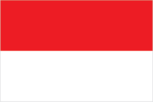
Geography
Agriculture
subsistence food production, and smallholder and plantation production for export; main crops — rice, cassava, rubber, copra, other tropical products; an illegal producer of cannabis for the international drug trade
Airfields
416 total, 393 usable; 95 with permanent-surface runways; 1 with runways over 3,659 m, 1 1 with runways 2,4403,659 m, 68 with runways 1,220-2,439 m
Branches
- executive headed by President who is chief of state and head of Cabinet; Cabinet selected by President; unicameral legislature (DPR or House of Representatives) of 460 members (96 appointed, 364 elected); second body (MPR or People's Consultative Assembly) of 920 members includes the legislature and 460 other members (chosen by several processes, but not directly elected); MPR elects President and Vice President and theoretically determines national policy; judicial, Supreme Court is highest court
- Army, Navy, Air Force, National Police
Budget
(1984/85) expenditures, $17.4 billion; receipts, $14.5 billion
Capital
Jakarta
Civil air
approximately 150 major transport aircraft Iran
Communists
Communist Party (PKI) was officially banned in March 1966; current strength est. at 1,000-3,000, with less than 10% engaged in organized activity; pre-October 1965 hardcore membership has been estimated at 1.5 million
Electric power
(including Timor Timur and Irian Jaya) 10,200,000 kW capacity (1985); 28.5 billion kWh produced (1985), 164 kWh per capita
Exports
$22.2 billion (1984); petroleum and liquefied natural gas ($15.0 billion), timber ($1.2 billion), rubber ($0.9 billion), coffee ($0.6 billion), tin ($0.3 billion), palm oil ($0.8 billion), tea ($0.2 billion), copper ($0. 1 billion)
Fiscal year
1 April-31 March Communications
Fishing
catch 2.2 million metric tons (1984); shrimp exports $194 million (1984), imports $4 million (1984)
GNP
$90.3 billion (1985 est.), about $540 per capita; real average annual growth, 5.9% (1980-84); real annual growth rate 3.5% (1985 est.)
Government leader
Gen. (Ret.) SOEHARTO, President (since March 1968)
Highways
93,063 km total; 26,583 km paved, 41,521 km gravel or crushed stone, 24,959 km improved or unimproved earth
Imports
$15.3 billion (1984); rice ($1.02 billion); wheat flour, wheat grains, and other cereals and cereal products ($0.3 billion), textiles ($0.3 billion), chemicals ($1.5 billion), iron and steel products ($0.7 billion), machinery ($1.3 billion), transport equipment ($0.7 billion)
Infant mortality rate
95/1,000(1983)
Inland waterways
21,579 km; Sumatra 5,471 km, Java and Madura 820 km, Borneo 10,460 km, Celebes 241 km, and Irian Jaya 4,587 km
Labor force
67 million (1985 est); 55% agriculture, 10% manufacturing, 4% construction, 3% transport and communications
Legal system
based on Roman-Dutch law, substantially modified by indigenous concepts and by new criminal procedures code; constitution of 1945 is legal basis of government; legal education at University of Indonesia, Jakarta; has not accepted compulsory ICJ jurisdiction
Life expectancy
54
Literacy
62%
Major industries
petroleum, textiles, mining, cement, chemical fertilizer production, timber
Major trade partners
(1984)exports — 47% Japan, 21% US, 9% Singapore; imports — 23% Japan, 18% US, 12% Singapore, 11% Saudi Arabia, 4% FRG
Member of
ADB, ANRPC, ASEAN, Association of Tin Producing Countries, CIPEC, ESCAP, FAO, G-77, GATT, IAEA, IBA, IBRD, ICAO, ICO, IDA, IDB— Islamic Development Bank, IFAD, IFC, IHO, ILO, IMF, IMO, INTELSAT, INTERPOL, IPU, IRC, ISO, ITC, ITU, NAM, QIC, OPEC, UN, UNESCO, UPU, WFTU, WHO, WIPO, WMO, WTO Economy
Military manpower
males 15-49, 44,809,000; 26,513,000 fit for military service; about 1,955,000 reach military age (18) annually Gulf See region*! map VI Strait of Hormul JBMW Gull Behoihi of
Monetary conversion rate
1,125 rupiahs=US$l (31 December 1985)
National holiday
Independence Day, 17 August
Natural resources
oil, tin, natural gas, nickel, timber, bauxite, copper
Official name
Republic of Indonesia
Organized labor
3 million members (claimed); est. 5% of labor force Government
Pipelines
crude oil, 2,450 km; refined products, 456 km; natural gas, 450 km -
Political subdivisions
28 first-level administrative subdivisions or provinces, which are further subdivided into 282 second-level areas
Ports
15 ocean ports
Railroads
6,964 km total; 6,389 km 1.067meter gauge, 497 km 0.750-meter gauge, 78 km 0.600-meter gauge; 211km double track; 101 km electrified; government owned
Suffrage
universal over age 18 and married persons regardless of age Political parties and leaders: Golkar (quasiofficial "party" based on functional groups), Lt. Gen. Sudharmono; Indonesia Democracy Party (federation of former Nationalist and Christian Parties), leader unknown; United Development Party (federation of former Islamic parties), John Naro
Telecommunications
interisland microwave system and HF police net; domestic service fair, international service good; radio-broadcast coverage good; 392,563 telephones (0.2 per 100 popl.); 251 AM, 1 FM, 14 TV stations; 1 international ground satellite station (1 Indian Ocean antenna and 1 Pacific Ocean antenna), and a domestic satellite communications system Defense Forces
Type
republic
Voting strength
(1982 election) Golkar 64.1%, Unity Development 28%, Indonesia Democracy 7.9%