2016 Edition
CIA World Factbook 2016 Archive (HTML)
Introduction
Background
Settled by Norwegian and Celtic (Scottish and Irish) immigrants during the late 9th and 10th centuries A.D., Iceland boasts the world's oldest functioning legislative assembly, the Althingi, established in 930. Independent for over 300 years, Iceland was subsequently ruled by Norway and Denmark. Fallout from the Askja volcano of 1875 devastated the Icelandic economy and caused widespread famine. Over the next quarter century, 20% of the island's population emigrated, mostly to Canada and the US. Denmark granted limited home rule in 1874 and complete independence in 1944. The second half of the 20th century saw substantial economic growth driven primarily by the fishing industry. The economy diversified greatly after the country joined the European Economic Area in 1994, but Iceland was especially hard hit by the global financial crisis in the years following 2008. Literacy, longevity, and social cohesion are first rate by world standards.
Geography
Area
- 103,000 sq km 100,250 sq km 2,750 sq km
- land
- 100,250 sq km
- total
- 103,000 sq km
- water
- 2,750 sq km
Area - comparative
slightly smaller than Pennsylvania; about the same size as Kentucky
Climate
temperate; moderated by North Atlantic Current; mild, windy winters; damp, cool summers
Coastline
4,970 km
Elevation
- 557 m lowest point: Atlantic Ocean 0 m highest point: Hvannadalshnukur 2,110 m (at Vatnajokull Glacier)
- elevation extremes
- lowest point: Atlantic Ocean 0 m
- highest point
- Hvannadalshnukur 2,110 m (at Vatnajokull Glacier)
- mean elevation
- 557 m
Environment - current issues
water pollution from fertilizer runoff; inadequate wastewater treatment
Environment - international agreements
- Air Pollution, Air Pollution-Persistent Organic Pollutants, Biodiversity, Climate Change, Climate Change-Kyoto Protocol, Desertification, Endangered Species, Hazardous Wastes, Kyoto Protocol, Law of the Sea, Marine Dumping, Ozone Layer Protection, Ship Pollution, Transboundary Air Pollution, Wetlands, Whaling Environmental Modification, Marine Life Conservation
- party to
- Air Pollution, Air Pollution-Persistent Organic Pollutants, Biodiversity, Climate Change, Climate Change-Kyoto Protocol, Desertification, Endangered Species, Hazardous Wastes, Kyoto Protocol, Law of the Sea, Marine Dumping, Ozone Layer Protection, Ship Pollution, Transboundary Air Pollution, Wetlands, Whaling
- signed, but not ratified
- Environmental Modification, Marine Life Conservation
Geographic coordinates
65 00 N, 18 00 W
Geography - note
strategic location between Greenland and Europe; westernmost European country; Reykjavik is the northernmost national capital in the world; more land covered by glaciers than in all of continental Europe
Irrigated land
NA
Land boundaries
0 km
Land use
- 18.7% arable land 1.2%; permanent crops 0%; permanent pasture 17.5% 0.3% 81% (2011 est.)
- agricultural land
- 18.7%
- forest
- 0.3%
- other
- 81% (2011 est.)
Location
Northern Europe, island between the Greenland Sea and the North Atlantic Ocean, northwest of the United Kingdom
Map references
Arctic Region
Maritime claims
- 12 nm 200 nm 200 nm or to the edge of the continental margin
- continental shelf
- 200 nm or to the edge of the continental margin
- exclusive economic zone
- 200 nm
- territorial sea
- 12 nm
Natural hazards
- earthquakes and volcanic activity Iceland, situated on top of a hotspot, experiences severe volcanic activity; Eyjafjallajokull (elev. 1,666 m) erupted in 2010, sending ash high into the atmosphere and seriously disrupting European air traffic; scientists continue to monitor nearby Katla (elev. 1,512 m), which has a high probability of eruption in the very near future, potentially disrupting air traffic; Grimsvoetn and Hekla are Iceland's most active volcanoes; other historically active volcanoes include Askja, Bardarbunga, Brennisteinsfjoll, Esjufjoll, Hengill, Krafla, Krisuvik, Kverkfjoll, Oraefajokull, Reykjanes, Torfajokull, and Vestmannaeyjar
- volcanism
- Iceland, situated on top of a hotspot, experiences severe volcanic activity; Eyjafjallajokull (elev. 1,666 m) erupted in 2010, sending ash high into the atmosphere and seriously disrupting European air traffic; scientists continue to monitor nearby Katla (elev. 1,512 m), which has a high probability of eruption in the very near future, potentially disrupting air traffic; Grimsvoetn and Hekla are Iceland's most active volcanoes; other historically active volcanoes include Askja, Bardarbunga, Brennisteinsfjoll, Esjufjoll, Hengill, Krafla, Krisuvik, Kverkfjoll, Oraefajokull, Reykjanes, Torfajokull, and Vestmannaeyjar
Natural resources
fish, hydropower, geothermal power, diatomite
Population - distribution
Iceland is almost entirely urban with half of the population located in and around the capital of Reykjavik; smaller agglomerations are primarily found along the coast in the north and west
Terrain
mostly plateau interspersed with mountain peaks, icefields; coast deeply indented by bays and fiords
People and Society
Age structure
- 20.4% (male 35,009/female 33,495) 13.77% (male 23,452/female 22,789) 39.99% (male 67,878/female 66,428) 11.75% (male 19,848/female 19,622) 14.1% (male 22,130/female 25,227) (2016 est.)
- 0-14 years
- 20.4% (male 35,009/female 33,495)
- 15-24 years
- 13.77% (male 23,452/female 22,789)
- 25-54 years
- 39.99% (male 67,878/female 66,428)
- 55-64 years
- 11.75% (male 19,848/female 19,622)
- 65 years and over
- 14.1% (male 22,130/female 25,227) (2016 est.)
Birth rate
13.8 births/1,000 population (2016 est.)
Death rate
6.3 deaths/1,000 population (2016 est.)
Dependency ratios
- 51.6% 30.8% 20.8% 4.8% (2015 est.)
- elderly dependency ratio
- 20.8%
- potential support ratio
- 4.8% (2015 est.)
- total dependency ratio
- 51.6%
- youth dependency ratio
- 30.8%
Drinking water source
- urban: 100% of population rural: 100% of population total: 100% of population urban: 0% of population rural: 0% of population total: 0% of population (2015 est.)
- rural
- 0% of population
- total
- 0% of population (2015 est.)
- urban
- 0% of population
Education expenditures
7% of GDP (2011)
Ethnic groups
homogeneous mixture of descendants of Norse and Celts 94%, population of foreign origin 6%
Health expenditures
8.9% of GDP (2014)
HIV/AIDS - adult prevalence rate
NA
HIV/AIDS - deaths
NA
HIV/AIDS - people living with HIV/AIDS
NA
Hospital bed density
3.2 beds/1,000 population (2012)
Infant mortality rate
- 2.1 deaths/1,000 live births 2.2 deaths/1,000 live births 1.9 deaths/1,000 live births (2016 est.)
- female
- 1.9 deaths/1,000 live births (2016 est.)
- male
- 2.2 deaths/1,000 live births
- total
- 2.1 deaths/1,000 live births
Languages
Icelandic, English, Nordic languages, German widely spoken
Life expectancy at birth
- 83 years 80.9 years 85.3 years (2016 est.)
- female
- 85.3 years (2016 est.)
- male
- 80.9 years
- total population
- 83 years
Major urban areas - population
REYKJAVIK (capital) 184,000 (2014)
Maternal mortality rate
3 deaths/100,000 live births (2015 est.)
Median age
- 36.3 years 35.7 years 36.9 years (2016 est.)
- female
- 36.9 years (2016 est.)
- male
- 35.7 years
- total
- 36.3 years
Mother's mean age at first birth
27 (2011 est.)
Nationality
- Icelander(s) Icelandic
- adjective
- Icelandic
- noun
- Icelander(s)
Net migration rate
4.2 migrant(s)/1,000 population (2016 est.)
Obesity - adult prevalence rate
23.9% (2014)
Physicians density
3.48 physicians/1,000 population (2012)
Population
335,878 (July 2016 est.)
Population distribution
Iceland is almost entirely urban with half of the population located in and around the capital of Reykjavik; smaller agglomerations are primarily found along the coast in the north and west
Population growth rate
1.17% (2016 est.)
Religions
Evangelical Lutheran Church of Iceland (official) 73.8%, Roman Catholic 3.6%, Reykjavik Free Church 2.9%, Hafnarfjorour Free Church 2%, The Independent Congregation 1%, other religions 3.9% (includes Pentecostal and Asatru Association), none 5.6%, other or unspecified 7.2% (2015 est.)
Sanitation facility access
- urban: 98.7% of population rural: 100% of population total: 98.8% of population urban: 1.3% of population rural: 0% of population total: 1.2% of population (2015 est.)
- rural
- 0% of population
- total
- 1.2% of population (2015 est.)
- urban
- 1.3% of population
School life expectancy (primary to tertiary education)
- 19 years 18 years 20 years (2012)
- female
- 20 years (2012)
- male
- 18 years
- total
- 19 years
Sex ratio
- 1.05 male(s)/female 1.05 male(s)/female 1.03 male(s)/female 1.02 male(s)/female 1.01 male(s)/female 0.88 male(s)/female 1.01 male(s)/female (2016 est.)
- 0-14 years
- 1.05 male(s)/female
- 15-24 years
- 1.03 male(s)/female
- 25-54 years
- 1.02 male(s)/female
- 55-64 years
- 1.01 male(s)/female
- 65 years and over
- 0.88 male(s)/female
- at birth
- 1.05 male(s)/female
- total population
- 1.01 male(s)/female (2016 est.)
Total fertility rate
2.01 children born/woman (2016 est.)
Unemployment, youth ages 15-24
- 9.8% 12.9% 6.6% (2014 est.)
- female
- 6.6% (2014 est.)
- male
- 12.9%
- total
- 9.8%
Urbanization
- 94.1% of total population (2015) 1.25% annual rate of change (2010-15 est.)
- rate of urbanization
- 1.25% annual rate of change (2010-15 est.)
- urban population
- 94.1% of total population (2015)
Government
Administrative divisions
8 regions; Austurland, Hofudhborgarsvaedhi, Nordhurland Eystra, Nordhurland Vestra, Sudhurland, Sudhurnes, Vestfirdhir, Vesturland
Capital
- Reykjavik 64 09 N, 21 57 W UTC 0 (5 hours ahead of Washington, DC, during Standard Time)
- geographic coordinates
- 64 09 N, 21 57 W
- name
- Reykjavik
- time difference
- UTC 0 (5 hours ahead of Washington, DC, during Standard Time)
Citizenship
- no at least one parent must be a citizen of Iceland yes 3 to 7 years
- citizenship by birth
- no
- citizenship by descent only
- at least one parent must be a citizen of Iceland
- dual citizenship recognized
- yes
- residency requirement for naturalization
- 3 to 7 years
Constitution
several previous; latest ratified 16 June 1944, effective 17 June 1944 (at independence); amended many times, last in 2013 (2016)
Country name
- Republic of Iceland Iceland Lydveldid Island Island Floki VILGERDARSON, an early explorer of the island (9th century), applied the name "land of ice" after spotting a fjord full of drift ice to the north and spending a bitter winter on the island; he eventually settled on the island, however, after he saw how it greened up in the summer and that it was in fact habitable
- conventional long form
- Republic of Iceland
- conventional short form
- Iceland
- etymology
- Floki VILGERDARSON, an early explorer of the island (9th century), applied the name "land of ice" after spotting a fjord full of drift ice to the north and spending a bitter winter on the island; he eventually settled on the island, however, after he saw how it greened up in the summer and that it was in fact habitable
- local long form
- Lydveldid Island
- local short form
- Island
Diplomatic representation from the US
- Ambassador Robert C. BARBER (since 23 January 2015) Laufasvegur 21, 101 Reykjavik US Department of State, 5640 Reykjavik Place, Washington, D.C. 20521-5640 [354] 595-22-00 [354] 562-9118
- chief of mission
- Ambassador Robert C. BARBER (since 23 January 2015)
- embassy
- Laufasvegur 21, 101 Reykjavik
- FAX
- [354] 562-9118
- mailing address
- US Department of State, 5640 Reykjavik Place, Washington, D.C. 20521-5640
- telephone
- [354] 595-22-00
Diplomatic representation in the US
- Ambassador Geir Hilmar HAARDE (since 23 February 2015) House of Sweden, 2900 K Street NW [1] (202) 265-6653 [1] (202) 265-6656 New York
- chancery
- House of Sweden, 2900 K Street NW
- chief of mission
- Ambassador Geir Hilmar HAARDE (since 23 February 2015)
- consulate(s) general
- New York
- FAX
- [1] (202) 265-6656
- telephone
- [1] (202) 265-6653
Executive branch
- President Gudni Thorlacius JOHANNESSON (since 1 August 2016) Prime Minister Sigurdur Ingi JOHANNSSON (since 7 April 2016) Cabinet appointed by the prime minister president directly elected by simple majority popular vote for a 4-year term (no term limits); election last held on 25 June 2016 (next to be held in June 2020); following legislative elections, the leader of the majority party or majority coalition becomes prime minister Gudni Thorlacius JOHANNESSON elected president; percent of vote - Gudni Thorlacius JOHANNESSON (IP) 39.1%, Halla TOMASDOTTIR (independent) 27.9%, Andri Snaer MAGNASON (independent) 14.3%, Davio ODDSSON (IP) 13.7%, Sturla JONSSON (Sturla JONSSON Party) 3.5%, invalid 1.5%
- cabinet
- Cabinet appointed by the prime minister
- chief of state
- President Gudni Thorlacius JOHANNESSON (since 1 August 2016)
- election results
- Gudni Thorlacius JOHANNESSON elected president; percent of vote - Gudni Thorlacius JOHANNESSON (IP) 39.1%, Halla TOMASDOTTIR (independent) 27.9%, Andri Snaer MAGNASON (independent) 14.3%, Davio ODDSSON (IP) 13.7%, Sturla JONSSON (Sturla JONSSON Party) 3.5%, invalid 1.5%
- elections/appointments
- president directly elected by simple majority popular vote for a 4-year term (no term limits); election last held on 25 June 2016 (next to be held in June 2020); following legislative elections, the leader of the majority party or majority coalition becomes prime minister
- head of government
- Prime Minister Sigurdur Ingi JOHANNSSON (since 7 April 2016)
Flag description
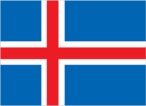
- blue with a red cross outlined in white extending to the edges of the flag; the vertical part of the cross is shifted to the hoist side in the style of the Dannebrog (Danish flag); the colors represent three of the elements that make up the island: red is for the island's volcanic fires, white recalls the snow and ice fields of the island, and blue is for the surrounding ocean
- blue with a red cross outlined in white extending to the edges of the flag; the vertical part of the cross is shifted to the hoist side in the style of the Dannebrog (Danish flag); the colors represent three of the elements that make up the island
- red is for the island's volcanic fires, white recalls the snow and ice fields of the island, and blue is for the surrounding ocean
Government type
parliamentary republic
Independence
1 December 1918 (became a sovereign state under the Danish Crown); 17 June 1944 (from Denmark; birthday of Jon SIGURDSSON leader of Iceland's 19th Century independence movement)
International law organization participation
has not submitted an ICJ jurisdiction declaration; accepts ICCt jurisdiction
International organization participation
Arctic Council, Australia Group, BIS, CBSS, CD, CE, EAPC, EBRD, EFTA, FAO, FATF, IAEA, IBRD, ICAO, ICC (national committees), ICCt, ICRM, IDA, IFAD, IFC, IFRCS, IHO, ILO, IMF, IMO, IMSO, Interpol, IOC, IOM, IPU, ISO, ITSO, ITU, ITUC (NGOs), MIGA, NATO, NC, NEA, NIB, NSG, OAS (observer), OECD, OPCW, OSCE, PCA, Schengen Convention, UN, UNCTAD, UNESCO, UPU, WCO, WHO, WIPO, WMO, WTO
Judicial branch
- Supreme Court or Haestirettur (consists of 9 judges) judges proposed by Ministry of Interior selection committee and appointed by the president; judges appointed for an indefinite period 8 district courts; Labor Court
- highest court(s)
- Supreme Court or Haestirettur (consists of 9 judges)
- judge selection and term of office
- judges proposed by Ministry of Interior selection committee and appointed by the president; judges appointed for an indefinite period
- subordinate courts
- 8 district courts; Labor Court
Legal system
civil law system influenced by the Danish model
Legislative branch
- unicameral Althingi or Parliament (63 seats; members directly elected in multi-seat constituencies by proportional representation vote to serve 4-year terms) last held on 29 October 2016 (next to be held in 2020) percent of vote by party - IP 29%, LGM 15.9%, Pirate Party 14.5%, PP 11.5%, Vioreisn 10.5%, BF 7.2%, SDA 5.7%, other 2.3%; seats by party - IP 21, LGM 10, Pirate Party 10, PP 8, Vioreisn 7, BF 4, SDA 3
- description
- unicameral Althingi or Parliament (63 seats; members directly elected in multi-seat constituencies by proportional representation vote to serve 4-year terms)
- election results
- percent of vote by party - IP 29%, LGM 15.9%, Pirate Party 14.5%, PP 11.5%, Vioreisn 10.5%, BF 7.2%, SDA 5.7%, other 2.3%; seats by party - IP 21, LGM 10, Pirate Party 10, PP 8, Vioreisn 7, BF 4, SDA 3
- elections
- last held on 29 October 2016 (next to be held in 2020)
National anthem
- "Lofsongur" (Song of Praise) Matthias JOCHUMSSON/Sveinbjorn SVEINBJORNSSON adopted 1944; also known as "O, Gud vors lands" (O, God of Our Land), the anthem was originally written and performed in 1874
- lyrics/music
- Matthias JOCHUMSSON/Sveinbjorn SVEINBJORNSSON
- name
- "Lofsongur" (Song of Praise)
- note
- adopted 1944; also known as "O, Gud vors lands" (O, God of Our Land), the anthem was originally written and performed in 1874
National holiday
Independence Day, 17 June (1944)
National symbol(s)
- gyrfalcon; national colors: blue, white, red
- gyrfalcon; national colors
- blue, white, red
Political parties and leaders
Bright Future (Bjort framtid) or BF [Ottarr PROPPE] Independence Party (Sjalfstaedisflokkurinn) or IP [Bjarni BENEDIKTSSON] Left-Green Movement (Vinstrihreyfingin-graent frambod) or LGM [Katrin JAKOBSDOTTIR] Pirate Party (Piratar) or PIP [Birgitta JONSDOTTIR] Progressive Party (Framsoknarflokkurinn) or PP [Sigmundur David GUNNLAUGSSON] Social Democratic Alliance (Samfylkingin) or SDA [Arni Pall ARNASON]
Suffrage
18 years of age; universal
Economy
Agriculture - products
potatoes, carrots, green vegetables; mutton, chicken, pork, beef, dairy products; fish
Budget
- $7.058 billion $7.139 billion (2015 est.)
- expenditures
- $7.139 billion (2015 est.)
- revenues
- $7.058 billion
Budget surplus (+) or deficit (-)
-0.5% of GDP (2015 est.)
Central bank discount rate
5.4% (31 January 2012) 5.75% (31 December 2010)
Commercial bank prime lending rate
7.61% (31 December 2015 est.) 7.74% (31 December 2014 est.)
Current account balance
$710 million (2015 est.) $627 million (2014 est.)
Debt - external
$31.04 billion (31 December 2015 est.) $97.8 billion (31 December 2014 est.)
Distribution of family income - Gini index
28 (2006) 25 (2005)
Economy - overview
- Iceland's Scandinavian-type social-market economy combines a capitalist structure and free-market principles with an extensive welfare system. Except for a brief period during the 2008 crisis, Iceland has achieved high growth, low unemployment, and a remarkably even distribution of income. The economy depends heavily on the fishing industry, which provides 40% of merchandise export earnings, more than 12% of GDP, and employs nearly 5% of the work force. It remains sensitive to declining fish stocks as well as to fluctuations in world prices for its main exports: fish and fish products, aluminum, and ferrosilicon. Since 2010, tourism has become the main pillar of Icelandic economic growth, with the number of tourists expected to reach or exceed 4.5 times the Icelandic population in 2016. Iceland's economy has been diversifying into manufacturing and service industries in the last decade, particularly within the fields of tourism, software production, and biotechnology. In fall 2013, the Icelandic Government approved a joint application by Icelandic, Chinese, and Norwegian energy firms to conduct oil exploration off Iceland’s northeast coast, although no exploration has yet taken place. Abundant geothermal and hydropower sources have attracted substantial foreign investment in the aluminum sector, boosted economic growth, and sparked some interest from high-tech firms looking to establish data centers using cheap green energy, although the financial crisis has put several investment projects on hold. Following the privatization of the banking sector in the early 2000s, domestic banks expanded aggressively in foreign markets, and consumers and businesses borrowed heavily in foreign currencies. Worsening global financial conditions throughout 2008 resulted in a sharp depreciation of the krona vis-a-vis other major currencies. The foreign exposure of Icelandic banks, whose loans and other assets totaled more than 10 times the country's GDP, became unsustainable. Iceland's three largest banks collapsed in late 2008. The country secured over $10 billion in loans from the IMF and other countries to stabilize its currency and financial sector, and to back government guarantees for foreign deposits in Icelandic banks. GDP fell 6.8% in 2009, and unemployment peaked at 9.4% in February 2009. Three new banks were established to take over the domestic assets of the collapsed banks. Two of them have majority ownership by the State, which intends to re-privatize them. Since the collapse of Iceland's financial sector, government economic priorities have included stabilizing the krona, implementing capital controls, reducing Iceland's high budget deficit, containing inflation, addressing high household debt, restructuring the financial sector, and diversifying the economy. Iceland’s financial woes prompted an initial increase in public support to join the EU and the euro zone, with accession negotiations beginning in July 2010, but negotiations were suspended under the 2013 center-right government. Most macroeconomic indicators and employment have rebounded to pre-crisis levels, driven primarily by the unprecedented growth in tourism – averaging over 20% annually – following the well publicized volcanic eruption in 2010.
- Iceland's Scandinavian-type social-market economy combines a capitalist structure and free-market principles with an extensive welfare system. Except for a brief period during the 2008 crisis, Iceland has achieved high growth, low unemployment, and a rema
- fish and fish products, aluminum, and ferrosilicon. Since 2010, tourism has become the main pillar of Icelandic economic growth, with the number of tourists expected to reach or exceed 4.5 times the Icelandic population in 2016.
Exchange rates
Icelandic kronur (ISK) per US dollar - 131.92 (2015 est.) 116.77 (2014 est.) 116.77 (2013 est.) 125.08 (2012 est.) 115.95 (2011 est.)
Exports
$4.653 billion (2015 est.) $4.861 billion (2014 est.)
Exports - commodities
fish and fish products 40%, aluminum, animal products, ferrosilicon, diatomite (2010 est.)
Exports - partners
Netherlands 26.1%, UK 11.6%, Spain 11.5%, Germany 7.4%, France 5.7%, US 5.7%, Norway 4.7% (2015)
Fiscal year
calendar year
GDP - composition, by end use
- 50.1% 23.6% 19.1% 0.2% 53.4% -46.3% (2015 est.)
- exports of goods and services
- 53.4%
- government consumption
- 23.6%
- household consumption
- 50.1%
- imports of goods and services
- -46.3% (2015 est.)
- investment in fixed capital
- 19.1%
- investment in inventories
- 0.2%
GDP - composition, by sector of origin
- 5.8% 20.7% 73.5% (2015 est.)
- agriculture
- 5.8%
- industry
- 20.7%
- services
- 73.5% (2015 est.)
GDP - per capita (PPP)
- $46,100 (2015 est.) $44,700 (2014 est.) $44,400 (2013 est.) data are in 2015 US dollars
- note
- data are in 2015 US dollars
GDP - real growth rate
4% (2015 est.) 2% (2014 est.) 4.4% (2013 est.)
GDP (official exchange rate)
$16.72 billion (2015 est.)
GDP (purchasing power parity)
- $15.15 billion (2015 est.) $14.58 billion (2014 est.) $14.3 billion (2013 est.) data are in 2015 US dollars
- note
- data are in 2015 US dollars
Gross national saving
23.5% of GDP (2015 est.) 20.9% of GDP (2014 est.) 21.2% of GDP (2013 est.)
Household income or consumption by percentage share
- NA% NA%
- highest 10%
- NA%
- lowest 10%
- NA%
Imports
$4.924 billion (2015 est.) $4.961 billion (2014 est.)
Imports - commodities
machinery and equipment, petroleum products, foodstuffs, textiles
Imports - partners
Norway 10.1%, Germany 8.6%, US 7.9%, China 7.9%, Denmark 7.1%, Netherlands 5.9%, Brazil 5.8%, UK 5% (2015)
Industrial production growth rate
1.5% (2015 est.)
Industries
tourism, fish processing; aluminum smelting, ferrosilicon production; geothermal power, hydropower, tourism
Inflation rate (consumer prices)
1.6% (2015 est.) 2% (2014 est.)
Labor force
191,400 (2015 est.)
Labor force - by occupation
- 4.8% 22.2% 73% (2008)
- agriculture
- 4.8%
- industry
- 22.2%
- services
- 73% (2008)
Market value of publicly traded shares
$2.825 billion (31 December 2012 est.) $2.021 billion (31 December 2011 est.) $1.996 billion (31 December 2010 est.)
Population below poverty line
- NA% 332,100 families (2011 est.)
- note
- 332,100 families (2011 est.)
Public debt
67.6% of GDP (2015 est.) 82.5% of GDP (2014 est.)
Reserves of foreign exchange and gold
$5.041 billion (31 December 2015 est.) $4.176 billion (31 December 2014 est.)
Stock of broad money
$8.368 billion (31 December 2013 est.) $8.12 billion (31 December 2013 est.)
Stock of direct foreign investment - abroad
$15.59 billion (31 December 2015 est.) $15.84 billion (31 December 2014 est.)
Stock of direct foreign investment - at home
$16.72 billion (31 December 2015 est.) $16.34 billion (31 December 2014 est.)
Stock of domestic credit
$18.25 billion (31 December 2015 est.) $18.19 billion (31 December 2014 est.)
Stock of narrow money
$3.314 billion (31 December 2015 est.) $3.213 billion (31 December 2014 est.)
Taxes and other revenues
42.2% of GDP (2015 est.)
Unemployment rate
4% (2015 est.) 5% (2014 est.)
Energy
Carbon dioxide emissions from consumption of energy
3.3 million Mt (2013 est.)
Crude oil - exports
0 bbl/day (2015 est.)
Crude oil - imports
0 bbl/day (2015 est.)
Crude oil - production
0 bbl/day (2015 est.)
Crude oil - proved reserves
0 bbl (1 January 2016 es)
Electricity - consumption
17 billion kWh (2014 est.)
Electricity - exports
0 kWh (2013 est.)
Electricity - from fossil fuels
4.3% of total installed capacity (2012 est.)
Electricity - from hydroelectric plants
70.6% of total installed capacity (2012 est.)
Electricity - from nuclear fuels
0% of total installed capacity (2012 est.)
Electricity - from other renewable sources
25.1% of total installed capacity (2012 est.)
Electricity - imports
0 kWh (2013 est.)
Electricity - installed generating capacity
2.8 million kW (2014 est.)
Electricity - production
18 billion kWh (2014 est.)
Electricity access
- 100% (2016)
- electrification - total population
- 100% (2016)
Natural gas - consumption
0 cu m (2014 est.)
Natural gas - exports
0 cu m (2014 est.)
Natural gas - imports
0 cu m (2014 est.)
Natural gas - production
0 cu m (2014 est.)
Natural gas - proved reserves
0 cu m (1 January 2014 es)
Refined petroleum products - consumption
16,250 bbl/day (2015 est.)
Refined petroleum products - exports
2,866 bbl/day (2015 est.)
Refined petroleum products - imports
17,550 bbl/day (2015 est.)
Refined petroleum products - production
0 bbl/day (2015 est.)
Communications
Broadcast media
state-owned public TV broadcaster operates 1 TV channel nationally; several privately owned TV stations broadcast nationally and roughly another half-dozen operate locally; about one-half the households utilize multi-channel cable or satellite TV services; state-owned public radio broadcaster operates 2 national networks and 4 regional stations; 2 privately owned radio stations operate nationally and another 15 provide more limited coverage (2007)
Internet country code
.is
Internet users
- 326,000 98.2% (July 2015 est.)
- percent of population
- 98.2% (July 2015 est.)
- total
- 326,000
Telephone system
- telecommunications infrastructure is modern and fully digitized, with satellite-earth stations, fiber-optic cables, and an extensive broadband network liberalization of the telecommunications sector beginning in the late 1990s has led to increased competition especially in the mobile services segment of the market country code - 354; the CANTAT-3 and FARICE-1 submarine cable systems provide connectivity to Canada, the Faroe Islands, UK, Denmark, and Germany; a planned new section of the Hibernia-Atlantic submarine cable will provide additional connectivity to Canada, US, and Ireland; satellite earth stations - 2 Intelsat (Atlantic Ocean), 1 Inmarsat (Atlantic and Indian Ocean regions); note - Iceland shares the Inmarsat earth station with the other Nordic countries (Denmark, Finland, Norway, and Sweden) (2015)
- domestic
- liberalization of the telecommunications sector beginning in the late 1990s has led to increased competition especially in the mobile services segment of the market
- general assessment
- telecommunications infrastructure is modern and fully digitized, with satellite-earth stations, fiber-optic cables, and an extensive broadband network
- international
- country code - 354; the CANTAT-3 and FARICE-1 submarine cable systems provide connectivity to Canada, the Faroe Islands, UK, Denmark, and Germany; a planned new section of the Hibernia-Atlantic submarine cable will provide additional connectivity to Canada, US, and Ireland; satellite earth stations - 2 Intelsat (Atlantic Ocean), 1 Inmarsat (Atlantic and Indian Ocean regions); note - Iceland shares the Inmarsat earth station with the other Nordic countries (Denmark, Finland, Norway, and Sweden) (2015)
Telephones - fixed lines
- 168,149 51 (July 2015 est.)
- subscriptions per 100 inhabitants
- 51 (July 2015 est.)
- total subscriptions
- 168,149
Telephones - mobile cellular
- 384,000 116 (July 2015 est.)
- subscriptions per 100 inhabitants
- 116 (July 2015 est.)
- total
- 384,000
Transportation
Airports
96 (2013)
Airports - with paved runways
- 3 (2013)
- 1,524 to 2,437 m
- 3
- 914 to 1,523 m
- 3 (2013)
- over 3,047 m
- 1
- total
- 7
Airports - with unpaved runways
- 60 (2013)
- 1,524 to 2,437 m
- 3
- 914 to 1,523 m
- 26
- total
- 89
- under 914 m
- 60 (2013)
Civil aircraft registration country code prefix
TF (2016)
Merchant marine
- passenger/cargo 2 19 (Antigua and Barbuda 10, Belize 1, Faroe Islands 4, Finland 1, Gibraltar 1, Norway 2) (2010)
- by type
- passenger/cargo 2
- registered in other countries
- 19 (Antigua and Barbuda 10, Belize 1, Faroe Islands 4, Finland 1, Gibraltar 1, Norway 2) (2010)
- total
- 2
National air transport system
- 3,413,950 102,356,809 mt-km (2015)
- annual freight traffic on registered air carriers
- 102,356,809 mt-km (2015)
- annual passenger traffic on registered air carriers
- 3,413,950
- inventory of registered aircraft operated by air carriers
- 43
- number of registered air carriers
- 5
Ports and terminals
- Grundartangi, Hafnarfjordur, Reykjavik
- major seaport(s)
- Grundartangi, Hafnarfjordur, Reykjavik
Roadways
- 12,890 km 4,782 km (excludes urban roads) 8,108 km (2012)
- paved/oiled gravel
- 4,782 km (excludes urban roads)
- total
- 12,890 km
- unpaved
- 8,108 km (2012)
Military and Security
Military - note
Iceland is the only NATO member that has no standing military force; all US military forces in Iceland were withdrawn as of October 2006; defense of Iceland remains a NATO commitment and NATO maintains an air policing presence in Icelandic airspace; Iceland participates in international peacekeeping missions with the civilian-manned Icelandic Crisis Response Unit (ICRU)
Military branches
no regular military forces; Icelandic National Police; Icelandic Coast Guard (2013)
Military expenditures
0.13% of GDP (2012) 0.14% of GDP (2011) 0.13% of GDP (2010)
Transnational Issues
Disputes - international
Iceland, the UK, and Ireland dispute Denmark's claim that the Faroe Islands' continental shelf extends beyond 200 nm; the European Free Trade Association Surveillance Authority filed a suit against Iceland, claiming the country violated the Agreement on the European Economic Area in failing to pay minimum compensation to Icesave depositors
Refugees and internally displaced persons
- 131 (2015)
- stateless persons
- 131 (2015)