1985 Edition
CIA World Factbook 1985 (Internet Archive)
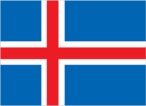
Geography
Agriculture
cattle, sheep, dairying, hay, potatoes, turnips
Aid
economic authorizations, including ExIm from US, $19.1 million (FY70-81)
Area
120km Greenland Sea North Atlantic Ocean Land 102,845 km2; the size of Virginia; arable and forest negligible, 22% meadow and pasture, 78% other Water
Branches
legislative authority rests jointly with President and parliament (Althing); executive power vested in President but exercised by Cabinet responsible to parliament; Supreme Court and 29 lower courts
Budget
(1984) expenditures $619.3 million, revenues $619.6 million
Capital
Reykjavik
CNP
$2.1 billion (1983), $8,898 per capita; 64.7% private consumption, 16.2% private investment, 24% government (1981); —4.9% net export of goods and services (1981); growth rate -5.5% (1983)
Coastline
4,988 km People
Communists
est. 2,200, many of whom participate in the People's Alliance, which drew 22,489 votes in the 1983 parliamentary elections
Elections
parliamentary every four years, last 23 April 1983; presidential, every four years, last August 1984 Political parties and leaders: Independence (conservative), Thorsteinn Palsson; Progressive, Steingrimur Hermannsson; Social Democratic, Kjartan Johannsson; People's Alliance (leftist front), Svavar Gestsson
Electric power
913,000 kW capacity (1984); 4.226 billion kWh produced (1984), 17,682 kWh per capita
Ethnic divisions
homogeneous mixture of descendants of Norwegians and Celts
Exports
$677.2 million (f.o.b., 1982); fish and fish products, animal products, aluminum, diatomite
Fishing
catch, 788,000 (1982) metric tons; marine product exports, $699.7 million (1981)
Government leaders
Vigdis FINNBOGADOTTIR, President; Steingrimur HERMANNSSON, Prime Minister (since May 1983)
Imports
$92.7 million (c.i.f., 1982); machinery and transportation equipment, petroleum, foodstuffs, textiles
Labor force
105,000; 18.6% commerce, finance, and services; 1 2.2% construction; 9.0% agriculture; 6.3% transportation and communications; 5.4% fishing; 8.0% fish processing; 16.8% other manufacturing; 23.7% other; 1.0% unemployment (1983 average)
Language
Icelandic
Legal system
civil law system based on Danish law; constitution adopted 1944; legal education at University of Iceland; does not accept compulsory ICJ jurisdiction
Limits of territorial waters (claimed)
12 nm (economic, including fishing, 200 nm)
Literacy
99.9%
Major industries
fish processing, aluminum smelting, diatomite production, hydroelectricity
Major trade partners
(1982) exports — EC 31.6% (UK 13.2%, FRG 7.1%), US 25.8%, CEMA 8.5%
Member of
Council of Europe, EC (free trade agreement pending resolution of fishing limits issue), EFTA, FAO, GATT, IAEA, IBRD, ICAO, ICES, IDA, IFC, IHO, ILO, IMF, IMO, INTELSAT, INTERPOL, IPU, ITU, IWC— International Whaling Commission, NATO, Nordic Council, OECD, UN, UNESCO, UPU, WHO, WMO, WSG Economy
National holiday
Anniversary of the Establishment of the Republic, 17 June
Nationality
noun — Icelanders); adjective — Icelandic
Official name
Republic of Iceland
Organized labor
60% of labor force Government
Political subdivisions
23 rural districts, 215 parishes, 14 incorporated towns
Population
24 1,000 (July 1985), average annual growth rate 1.0%
Religion
95% Evangelical Lutheran, 3% other Protestant and Roman Catholic, 2% no affiliation
Shortages
grains, sugar, vegetables and vegetable fibers, fuel, wood, minerals
Suffrage
universal, over age 20; not compulsory
Type
republic •
Voting strength
(1983 election) 38.7% Independence, 19.5% Progressive, 17.3% People's Alliance, 11.7% Social Democratic, 12.8% other