1983 Edition
CIA World Factbook 1983 (Internet Archive)
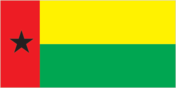
Geography
Agriculture
main crops — rice, palm products, root crops, coconuts, peanuts, wood
Airfields
- 18 total, 18 usable; 4 with permanent-surface runways; 3 with runways 2,440-3,659 m, 9 with runways 1,2202,439 m Defense Forces
- 58 total, 53 usable; 5 with permanent-surface runways; 8 with runways 1,220-2,439 m
Branches
- Army (ground forces), Navy (acts primarily as a coast guard), Air Force, National Militia
- Presidency and Cabinet overseen by Revolutionary Council
- People's Revolutionary Armed Force (FARP); Army, Navy, and Air Force are separate components
Budget
(1979 est.) revenue $27.4 million, current expenditures $45.4 million, investment expenditures $107.7 million
Capital
Bissau
Civil air
- 10 major transport aircraft
- 10 major transport aircraft
Coastline
- 274 km People
- 459 km People
Communists
a few Communists, some sympathizers
Elections
elections to choose regional councils held April 1984 Political parties and leaders: African Party for the Independence of Guinea-Bissau and Cape Verde (PAIGC), led by President Vieira, only legal party; Guinea-Bissau decided to retain the binational party title despite its formal break with Cape Verde
Electric power
20,000 kW capacity (1983); 34 million k Wh produced (1983), 40 kWh per capita
Ethnic divisions
- about 99% African (30% Balanta, 20% Fula, 14% Manjaca, 13% Mandinga, 7% Papel); less than 1% European and mulatto
- 51% East Indian, 43% black and mixed, 4% Amerindian, 2% European and Chinese
Exports
$13.5 million (1981); principally peanuts (60%); also palm kernels, shrimp, fish, lumber
Fiscal year
calendar year Communications
Fishing
catch 3,729 metric tons (1980)
GDP
$177 million (FY82), $198 per capita, real growth rate 1.5% (1982)
Government leaders
Brig. Gen. Joao Bernardo VIEIRA, President, Council of the Revolution; Paulo CORREIA, Prime Minister
Highways
approx. 3,218 km (418 km bituminous, remainder earth)
Imports
$47.7 million (1981); foodstuffs, manufactured goods, fuels, transport equipment
Inland waterways
- 1,295 km navigable by shallow-draft native craft
- scattered stretches are important to coastal commerce
Labor force
- 90% agriculture; 5% industry, services, and commerce; 5% government Government
- 200,000(1982); 44.5% industry and commerce, 33.8% agriculture, 21.7% • services; 64% public sector employment; approximately 21%unemployed
Land boundaries
- 740 km Water
- 2,575 km Water
Language
- Portuguese (official); Criolo and numerous African languages
- English, Amerindian dialects
Legal system
to be determined
Limits of territorial waters (claimed)
- 12 nm (economic including fishing 200 nm)
- 12 nm (fishing 200 nm; economic zone 200 nm)
Literacy
- 9%
- 85%
Major industries
agricultural processing, beer, soft drinks Guinea-Bissau (continued) Guyana
Major trade partners
mostly Portugal, Spain, and other European countries
Member of
AfDB, FAO, G-77, GATT (de facto), IBRD, ICAO, IDA, IDE— Islamic Development Bank, IFAD, IFC, ILO, IMF, IMO, ISCON, ITU, NAM, OAU, QIC, UN, UNESCO, UPU, WFTU, WHO, WMO Economy
Military manpower
- males 15-49, 1,249,000; 628,000 fit for military service At Ian tic Ocean Land 36,260 km2 (includes Bijagos archipelago)
- males 15-49, 197,000; 1 15,000 fit for military service
Monetary conversion rate
84.5483 Cuinean pesos=US$l (February 1984)
National holiday
Independence Day, 24 September
Nationality
- noun — Guinea-Bissauan(s); adjective — Guinea-Bissauan
- noun — Guyanese (sing., pi.); adjective — Guyanese
Official name
- Republic of Guinea-Bissau
- Cooperative Republic of
Organized labor
34% of labor force Government
Political subdivisions
9 municipalities, 3 circumscriptions (predominantly indigenous population)
Population
- 842,000 (July 1984), average annual growth rate 1.8%
- 837,000 (July 1984), average annual growth rate 0.5%
Ports
- 1 major (Conakry), 2 minor
- 1 major (Bissau)
Railroads
none
Religion
- 65% indigenous beliefs, 30% Muslim, 5% Christian
- 57% Christian, 33% Hindu, 9% Muslim, 1% other
Ships
no combat ships Atlantic Ocean FRENCH UIANA Land 214,970 km8; 66% forest; 22% water, urban, and waste; 8% savanna; 3% pasture; 1% cropland
Suffrage
universal over age 15
Telecommunications
limited system of open-wire lines, radio-relay links, and radiocommunication stations; 3,000 telephones (0.5 IXT lOOpopl.); 1 AM station and 1 FM station; no TV stations Defense Forces
Type
republic; constitutional commission established February 1983 to update electoral process, with eventual restoration of constitutional government