2020 Edition
factbook.json (GitHub)
Introduction
Background
In 2007, the Iles Eparses became an integral part of the French Southern and Antarctic Lands (TAAF). The Southern Lands are now divided into five administrative districts, two of which are archipelagos, the Iles Crozet and Iles Kerguelen; the third is a district composed of two volcanic islands, Ile Saint-Paul and Ile Amsterdam; the fourth, Iles Eparses, consists of five scattered tropical islands around Madagascar. They contain no permanent inhabitants and are visited only by researchers studying the native fauna, scientists at the various scientific stations, fishermen, and military personnel. The fifth district is the Antarctic portion, which consists of "Adelie Land," a thin slice of the Antarctic continent discovered and claimed by the French in 1840. Ile Amsterdam: Discovered but not named in 1522 by the Spanish, the island subsequently received the appellation of Nieuw Amsterdam from a Dutchman; it was claimed by France in 1843. A short-lived attempt at cattle farming began in 1871. A French meteorological station established on the island in 1949 is still in use. Ile Saint Paul: Claimed by France since 1893, the island was a fishing industry center from 1843 to 1914. In 1928, a spiny lobster cannery was established, but when the company went bankrupt in 1931, seven workers were abandoned. Only two survived until 1934 when rescue finally arrived. Iles Crozet: A large archipelago formed from the Crozet Plateau, Iles Crozet is divided into two main groups: L'Occidental (the West), which includes Ile aux Cochons, Ilots des Apotres, Ile des Pingouins, and the reefs Brisants de l'Heroine; and L'Oriental (the East), which includes Ile d'Est and Ile de la Possession, the largest island of the Crozets. Discovered and claimed by France in 1772, the islands were used for seal hunting and as a base for whaling. Originally administered as a dependency of Madagascar, they became part of the TAAF in 1955. Iles Kerguelen: This island group, discovered in 1772, consists of one large island (Ile Kerguelen) and about 300 smaller islands. A permanent group of 50 to 100 scientists resides at the main base at Port-aux-Francais. Adelie Land: The only non-insular district of the TAAF is the Antarctic claim known as "Adelie Land." The US Government does not recognize it as a French dependency. Bassas da India: A French possession since 1897, this atoll is a volcanic rock surrounded by reefs and is awash at high tide. Europa Island: This heavily wooded island has been a French possession since 1897; it is the site of a small military garrison that staffs a weather station. Glorioso Islands: A French possession since 1892, the Glorioso Islands are composed of two lushly vegetated coral islands (Ile Glorieuse and Ile du Lys) and three rock islets. A military garrison operates a weather and radio station on Ile Glorieuse. Juan de Nova Island: Named after a famous 15th-century Spanish navigator and explorer, the island has been a French possession since 1897. It has been exploited for its guano and phosphate. Presently a small military garrison oversees a meteorological station. Tromelin Island: First explored by the French in 1776, the island came under the jurisdiction of Reunion in 1814. At present, it serves as a sea turtle sanctuary and is the site of an important meteorological station.
Geography
Area
Ile Amsterdam (Ile Amsterdam et Ile Saint-Paul): total - 55 sq km; land - 55 sq km; water - 0 sq km Ile Saint-Paul (Ile Amsterdam et Ile Saint-Paul): total - 7 sq km; land - 7 sq km; water - 0 sq km Iles Crozet: total - 352 sq km; land - 352 sq km; water - 0 sq km Iles Kerguelen: total - 7,215 sq km; land - 7,215 sq km; water - 0 sq km Bassas da India (Iles Eparses): total - 80 sq km; land - 0.2 sq km; water - 79.8 sq km (lagoon) Europa Island (Iles Eparses): total - 28 sq km; land - 28 sq km; water - 0 sq km Glorioso Islands (Iles Eparses): total - 5 sq km; land - 5 sq km; water - 0 sq km Juan de Nova Island (Iles Eparses): total - 4.4 sq km; land - 4.4 sq km; water - 0 sq km Tromelin Island (Iles Eparses): total - 1 sq km; land - 1 sq km; water - 0 sq km note: excludes "Adelie Land" claim of about 500,000 sq km in Antarctica that is not recognized by the US
Area - comparative
Ile Amsterdam (Ile Amsterdam et Ile Saint-Paul): less than one-half the size of Washington, D.C. Ile Saint-Paul (Ile Amsterdam et Ile Saint-Paul): more than 10 times the size of the National Mall in Washington, D.C. Iles Crozet: about twice the size of Washington, D.C. Iles Kerguelen: slightly larger than Delaware Bassas da India (Iles Eparses): land area about one-third the size of the National Mall in Washington, D.C. Europa Island (Iles Eparses): about one-sixth the size of Washington, D.C. Glorioso Islands (Iles Eparses): about eight times the size of the National Mall in Washington, D.C. Juan de Nova Island (Iles Eparses): about seven times the size of the National Mall in Washington, D.C. Tromelin Island (Iles Eparses): about 1.7 times the size of the National Mall in Washington, D.C.
Climate
Ile Amsterdam et Ile Saint-Paul: oceanic with persistent westerly winds and high humidity Iles Crozet: windy, cold, wet, and cloudy Iles Kerguelen: oceanic, cold, overcast, windy Iles Eparses: tropical
Coastline
Ile Amsterdam (Ile Amsterdam et Ile Saint-Paul): 28 km Ile Saint-Paul (Ile Amsterdam et Ile Saint-Paul): Iles Kerguelen: 2,800 km Bassas da India (Iles Eparses): 35.2 km Europa Island (Iles Eparses): 22.2 km Glorioso Islands (Iles Eparses): 35.2 km Juan de Nova Island (Iles Eparses): 24.1 km Tromelin Island (Iles Eparses): 3.7 km
Elevation
- highest point
- Mont de la Dives on Ile Amsterdam (Ile Amsterdam et Ile Saint-Paul) 867 m
- lowest point
- Indian Ocean 0 m
Geographic coordinates
Ile Amsterdam (Ile Amsterdam et Ile Saint-Paul): 37 50 S, 77 32 E Ile Saint-Paul (Ile Amsterdam et Ile Saint-Paul): 38 72 S, 77 53 E Iles Crozet: 46 25 S, 51 00 E Iles Kerguelen: 49 15 S, 69 35 E Bassas da India (Iles Eparses): 21 30 S, 39 50 E Europa Island (Iles Eparses): 22 20 S, 40 22 E Glorioso Islands (Iles Eparses): 11 30 S, 47 20 E Juan de Nova Island (Iles Eparses): 17 03 S, 42 45 E Tromelin Island (Iles Eparses): 15 52 S, 54 25 E
Geography - note
islands are widely scattered across remote locations in the southern Indian Ocean Bassas da India (Iles Éparses): atoll is a circular reef on top of a long-extinct, submerged volcano Europa Island and Juan de Nova Island (Iles Éparses): wildlife sanctuary for seabirds and sea turtles Glorioso Island (Iles Éparses): an extensive reef system surrounds the island Tromelin Island (Iles Éparses): climatologically important location for forecasting cyclones in the western Indian Ocean; wildlife sanctuary (seabirds, tortoises)
Land boundaries
- total
- 0 km
Location
southeast and east of Africa, islands in the southern Indian Ocean, some near Madagascar and others about equidistant between Africa, Antarctica, and Australia; note - French Southern and Antarctic Lands include Ile Amsterdam, Ile Saint-Paul, Iles Crozet, Iles Kerguelen, Bassas da India, Europa Island, Glorioso Islands, Juan de Nova Island, and Tromelin Island in the southern Indian Ocean, along with the French-claimed sector of Antarctica, "Adelie Land"; the US does not recognize the French claim to "Adelie Land"
Map references
Antarctic Region Africa
Maritime claims
- exclusive economic zone
- 200 nm from Iles Kerguelen and Iles Eparses (does not include the rest of French Southern and Antarctic Lands); Juan de Nova Island and Tromelin Island claim a continental shelf of 200-m depth or to the depth of exploitation
- territorial sea
- 12 nm
Natural hazards
Ile Amsterdam and Ile Saint-Paul are inactive volcanoes; Iles Éparses are subject to periodic cyclones; Bassas da India is a maritime hazard because it is under water for three hours before and after high tide volcanism: Reunion Island - Piton de la Fournaise (2,632 m), which has erupted many times in recent years, is one of the world's most active volcanoes; although rare, eruptions outside the volcano's caldera could threaten nearby cities
Natural resources
fish, crayfish, note, Glorioso Islands and Tromelin Island (Iles Eparses) have guano, phosphates, and coconuts
Terrain
Ile Amsterdam (Ile Amsterdam et Ile Saint-Paul): a volcanic island with steep coastal cliffs; the center floor of the volcano is a large plateau Ile Saint-Paul (Ile Amsterdam et Ile Saint-Paul): triangular in shape, the island is the top of a volcano, rocky with steep cliffs on the eastern side; has active thermal springs Iles Crozet: a large archipelago formed from the Crozet Plateau is divided into two groups of islands Iles Kerguelen: the interior of the large island of Ile Kerguelen is composed of high mountains, hills, valleys, and plains with peninsulas stretching off its coasts Bassas da India (Iles Eparses): atoll, awash at high tide; shallow (15 m) lagoon Europa Island, Glorioso Islands, Juan de Nova Island: low, flat, and sandy Tromelin Island (Iles Eparses): low, flat, sandy; likely volcanic seamount
People and Society
Population
- total
- no permanent inhabitants
Government
Administrative divisions
no first-order administrative divisions as defined by the US government, but the 5 administrative districts are Iles Crozet, Iles Éparses, Iles Kerguelen, Ile Saint-Paul et Ile Amsterdam, and "Adelie Land," a claim in Antarctica that the US does not recognize
Citizenship
see France
Country name
- abbreviation
- TAAF
- conventional long form
- Territory of the French Southern and Antarctic Lands
- conventional short form
- French Southern and Antarctic Lands
- etymology
- self-descriptive name specifying the territories' affiliation and location in the Southern Hemisphere
- local long form
- Terres australes et antarctiques françaises
- local short form
- Terres Australes et Antarctiques Françaises
Dependency status
overseas territory of France since 1955
Diplomatic representation from the US
- embassy
- none (overseas territory of France)
Diplomatic representation in the US
none (overseas territory of France)
Executive branch
- chief of state
- President Emmanuel MACRON (since 14 May 2017), represented by Prefect Florence JEANBLANC-RISLER (since 5 October 2022)
Flag
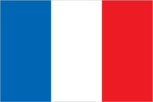
the flag of France is used
International organization participation
UPU
Legal system
the laws of France apply
National anthem(s)
- history
- official anthem, as a French territory
- lyrics/music
- Claude-Joseph ROUGET de Lisle
- title
- "La Marseillaise" (The Song of Marseille)
Economy
Economic overview
very small, fishing-based, domestic economic activity; military base servicing
Exports - commodities
fish (2023)
Exports - partners
France 47%, USA 34%, Poland 9%, Singapore 3%, Saudi Arabia 2% (2023)
Imports - commodities
scented mixtures, industrial acids/oils/alcohols, surveying equipment, fish, refined petroleum (2023)
Imports - partners
France 41%, Ireland 15%, Germany 11%, Poland 7%, Netherlands 7% (2023)
Communications
Internet country code
.tf
Transportation
Airports
4 (2025)
Heliports
3 (2025)
Merchant marine
- by type
- other 2
- total
- 2 (2023)
Military and Security
Military - note
defense is the responsibility of France; the French military maintains a Foreign Legion detachment on Mayotte to maintain France’s presence in the region and support French forces operating in the southern zone of the Indian Ocean and the east coast of Africa; the detachment regularly deploys to the outlying Glorioso Islands
Environment
Environmental issues
problems from introduction of foreign species on Iles Crozet; overfishing of Patagonian toothfish around Iles Crozet and Iles Kerguelen