1990 Edition
CIA World Factbook 1990 (Project Gutenberg)
Geography
Climate
tropical, but moderate
Coastline
2,525 km
Comparative area
slightly less than one-third the size of Connecticut
Environment
occasional cyclonic storm in January; includes five archipelagoes
Extended economic zone
200 nm;
Land boundaries
none
Land use
1% arable land; 19% permanent crops; 5% meadows and pastures; 31% forest and woodland; 44% other
Natural resources
timber, fish, cobalt
Note
Makatea is one of three great phosphate rock islands in the Pacific (others are Banaba or Ocean Island in Kiribati and Nauru)
Terrain
mixture of rugged high islands and low islands with reefs
Territorial sea
12 nm
Total area
3,941 km2; land area: 3,660 km2
People and Society
Birth rate
31 births/1,000 population (1990)
Death rate
6 deaths/1,000 population (1990)
Ethnic divisions
78% Polynesian, 12% Chinese, 6% local French, 4% metropolitan French
Infant mortality rate
23 deaths/1,000 live births (1990)
Labor force
57,863 employed (1983)
Language
French (official), Tahitian
Life expectancy at birth
66 years male, 71 years female (1990)
Literacy
NA%
Nationality
noun--French Polynesian(s); adjective--French Polynesian
Net migration rate
0 migrants/1,000 population (1990)
Organized labor
NA
Population
190,181 (July 1990), growth rate 2.5% (1990)
Religion
mainly Christian; 55% Protestant, 32% Roman Catholic
Total fertility rate
3.9 children born/woman (1990)
Government
Administrative divisions
none (overseas territory of France)
Capital
Papeete
Constitution
28 September 1958 (French Constitution)
Diplomatic representation
as an overseas territory of France, French Polynesian interests are represented in the US by France
Elections
Territorial Assembly--last held 16 March 1986 (next to be held March 1991); results--percent of vote by party NA; seats--(41 total) Tahoeraa Huiraatira 24, Amuitahiraa Mo Porinesia 6, Pupu Here Ai'a 4, Ia Mana 3, Front de Liberation 2, other 2; French Senate--last held 24 September 1989 (next to be held September 1992); results--percent of vote by party NA; seats--(1 total) Democrats for Progress 1; French National Assembly last held 5 and 12 June 1988 (next to be held June 1993); results--percent of vote by party NA; seats--(2 total) Rally for the Republic 1, Ai'a Api 1
Executive branch
French president, high commissioner of the republic, president of the Council of Ministers, vice president of the Council of Ministers, Council of Ministers
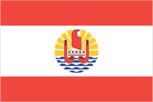
Flag
the flag of France is used
Independence
none (overseas territory of France)
Judicial branch
Court of Appeal
Leaders
Chief of State--President Francois MITTERRAND (since 21 May 1981); High Commissioner of the Republic Jean MONTPEZAT (since NA November 1987); Head of Government--President of the Council of Ministers Alexandre LEONTIEFF (since 9 December 1987); Vice President of the Council of Ministers Georges KELLY (since 9 December 1987)
Legal system
based on French system
Legislative branch
unicameral Territorial Assembly
Long-form name
Territory of French Polynesia
National holiday
Taking of the Bastille, 14 July (1789)
Political parties and leaders
Tahoeraa Huiraatira (Gaullist), Gaston Flosse; Pupu Here Ai'a, Jean Juventin; Front de Liberation, Oscar Temaru; Ai'a Api, Emile Vernaudon; Ia Mana Te Nunaa, Jacques Drollet; Pupu Taina, Michel Law; Toatiraa Polynesia, Arthur Chung; Te E'a Api, Francis Sanford
Suffrage
universal at age 18
Type
overseas territory of France
Economy
Agriculture
coconut and vanilla plantations; vegetables and fruit; poultry, beef, dairy products
Aid
Western (non-US) countries, ODA and OOF bilateral commitments (1970-87), $3.6 billion
Budget
revenues $431; expenditures $418, including capital expenditures of $NA (1986)
Currency
Comptoirs Francais du Pacifique franc (plural--francs); 1 CFP franc (CFPF) = 100 centimes
Electricity
72,000 kW capacity; 265 million kWh produced, 1,350 kWh per capita (1989)
Exchange rates
Comptoirs Francais du Pacifique francs (CFPF) per US$1--104.71 (January 1990), 115.99 (1989), 108.30 (1988), 109.27 (1987), 125.92 (1986), 163.35 (1985); note--linked at the rate of 18.18 to the French franc
Exports
$75 million (f.o.b., 1987); commodities--coconut products 79%, mother-of-pearl 14%, vanilla, shark meat; partners--France 44%, US 21%
External debt
$NA
Fiscal year
calendar year
GDP
$2.24 billion, per capita $6,400; real growth rate NA% (1986)
Imports
$767 million (c.i.f., 1986); commodities--fuels, foodstuffs, equipment; partners--France 50%, US 16%, New Zealand 6%
Industrial production
growth rate NA%
Industries
tourism, pearls, agricultural processing, handicrafts
Inflation rate (consumer prices)
1.2% (1987)
Overview
Since 1962, when France stationed military personnel in the region, French Polynesia has changed from a subsistence economy to one in which a high proportion of the work force is either employed by the military or supports the tourist industry. Tourism accounts for about 20% of GDP and is a primary source of hard currency earnings.
Unemployment rate
8% (1986 est.)
Communications
Airports
43 total, 41 usable; 23 with permanent-surface runways; none with runways over 3,659 m; 2 with runways 2,440-3,659 m; 12 with runways 1,220-2,439 m
Civil air
about 6 major transport aircraft
Highways
600 km (1982)
Merchant marine
2 ships (1,000 GRT or over) totaling 2,732 GRT/4,191 DWT; includes 1 cargo, 1 refrigerated cargo; note--a subset of the French register
Ports
Papeete, Bora-bora
Telecommunications
33,200 telephones; 84,000 radio receivers; 26,400 TV sets; stations--5 AM, 2 FM, 6 TV; 1 Pacific Ocean INTELSAT earth station
Military and Security
Note
defense is responsibility of France