1987 Edition
CIA World Factbook 1987 (Internet Archive)
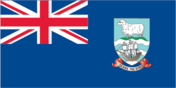
Geography
Boundary disputes
none; territorial dispute—islands administered by UK, claimed by Argentina
Climate
cold marine; strong westerly winds, cloudy, humid; rain occurs on more than half of days in year; occasional snow all year, does not accumulate
Coastline
1,288 km
Comparative area
about the size of Connecticut
Continental shelf
200 meters or to depth of exploitation
Environment
some smaller islands in dependencies are voleanically active
Exclusive fishing zone
200 nm (enforeing only to 150 nm, 1 February 1987)
Land use
0% arable land; 0% permanent crops; 99% meadows and pastures; 0% forest and woodland; 1% other
Special notes
deeply indented coastline provides good natural harbors
Terrain
rocky, hilly, mountainous with some boggy, undulating plains
Territorial sea
8 nm
Total area
- South Georgia. Shag. and $9 km Clerke Rocks are not shown wa South Atlantic Ocean Falkland @ East Falkland - Administered by U.K. claimad by Argentine Scotie Sea
- 12,170 km?; land area: 12,170 km?
People and Society
Ethnic divisions
almost totally British
Labor force
1,100 (est.); about 95% in agriculture, mostly sheepherding
Language
English
Literacy
compulsory education up to age
Nationality
noun—Falkland Islander(s); adjective—Falkland Island
Religion
predominantly Anglican
Government
Administrative divisions
Falkland, South Georgia, and South Sandwich Islands (the latter two are administered from Stanley)
Branches
under the 1985 Constitution an Executive Council was established; it consists of three elected members from the eight-member popularly elected Legislative Counil
Capital
Stanley
Government leaders
Gordon W. JEWKES, Governor (since 1985); Rear Admiral Christopher CAYMAN, Commander of the British Armed Forces (since 1986)
Legal system
English common law
Official name
Colony of the Falkland Islands
Suffrage
universal adult at age 18
Type
British dependent territory
Economy
Agriculture
predominantly sheep farming
Aid
(1970-79) Western (non-US) countries, ODA and OOF, $24 million
Budget
revenues, $5 million; expenditures, $4.8 million (1982)
Electric power
3,500 kW capacity; 6 million kWh produced, 3,050 kWh per capita (1986)
Exports
to UK, $21.9 million (1986); wool, hides and skins, and other
Imports
from UK, $17.9 million (1986); food, clothing, fuels, and machinery
Major industry
wool processing
Major trade partners
exports—nearly all to the UK, some to the Netherlands and Japan; imports—Curacao, Japan, and UK
Monetary conversion rate
0.70 Falkland Island pound=0.70 pound sterling=US$1 (November 1986)
Communications
Airfields
5 total, 4 usable, 1 with permanent-surface runways; | with runways 2,440-8,659 m
Civil air
no major transport aircraft
Highways
510 km total; 30 km paved, 80 km gravel, and 400 km unimproved earth
Ports
| major (Port Stanley), 4 minor
Railroads
none
Telecommunications
governmentoperated radiotelephone networks providing effective service to almost all points on both islands; about 590 telephones (24.2 per 100 popl.); | AM, 1 FM, and 1 Atlantic satellite stations