1986 Edition
CIA World Factbook 1986 (Internet Archive)
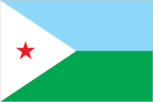
Geography
Agriculture
livestock; limited commercial crops, including fruit and vegetables
Airfields
12 total, 10 usable; 1 with permanent-surface runways; 1 with runways 2,440-3,659 m, 4 with runways 1, 220-2,439 m
Area
22,000 km2; about the size of New Hampshire; 89% desert waste, 10% permanent pasture, less than 1% cultivated
Branches
- legislative — 65-member parliament (National Assembly), executive, judiciary
- Army, Navy, Air Force; paramilitary National Security Force
Budget
(1983) revenues, $118 million; grants, $27 million; current expenditures, $120 million; development expenditures, $32 million; extrabudgetary expenditures, $21 million
Capital
Djibouti
Civil air
1 major transport aircraft
Coastline
314 km (includes offshore islands) Communists: possibly a few sympathizers People
Elections
parliament elected May 1982 Political party and leader: Peoples Progress Assembly (RPP), Hassan Gouled Aptidon; sole legal party
Electric power
80,100 kW capacity (1985); 140 million kWh produced (1985), 471 kWh per capita
Ethnic divisions
60% Somali (Issa); 35% Afar, 5% French, Arab, Ethiopian, and Italian
Exports
$88 million (f.o.b., 1984 prelim.); hides and skins and transit of coffee; a large portion consists of reexports to foreign residents of Djibouti
Fiscal year
calendar year Gommunications
GDP
$369 million (1983); per capita income $1,168(1983)
Government leader
Hassan GOULED Aptidon, President (since June 1977)
Highways
2,800 km total; 279 km bituminous surface, 229 km improved earth, 2,292 km unimproved earth
Imports
$200 million (f.o.b., 1984 prelim.); almost all domestically needed goods — foods, machinery, transport equipment
Infant mortality rate
140/1,000(1985)
Labor force
a small number of semiskilled laborers at port
Land boundaries
517 km Water
Language
French (official); Somali and Afar widely used
Legal system
based on French civil law system, traditional practices, and Islamic law; partial constitution ratified January 1981 by National Assembly
Life expectancy
50
Limits of territorial waters (claimed)
12 nm (200 nm exclusive economic zone) Government
Literacy
17%
Major industries
transit trade, port, railway, services; live cattle and sheep exports to Saudi Arabia; secondary services to French military
Member of
AfDB, Arab League, FAO, G-77, IBRD, ICAO, IDA, IDE— Islamic Development Bank, IFAD, IFC, ILO, IMF, IMO, INTERPOL, ITU, NAM, OAU, QIC, UN, UPU, WFTU, WHO, WMO Economy
Military budget
for fiscal year ending 31 December 1984, $27.8 million; about 22% of central government budget
Military manpower
males 15-49, about 66,000; about 39,000 fit for military service
Monetary conversion rate
177.67 Djibouti francs=US$l (October 1984)
National holiday
27 June
Nationality
noun — Djiboutian(s); adjective— Djiboutian
Natural resources
none
Official name
Republic of Djibouti
Organized labor
3,000 railway workers organized
Political subdivisions
5 cercles (districts)
Population
304,000 (July 1986), average annual growth rate 2.5%
Ports
1 major (Djibouti)
Railroads
the Ethiopian-Djibouti railroad extends for 97 km through Djibouti
Religion
94% Muslim, 6% Christian
Suffrage
universal adult
Telecommunications
fair system of urban facilities in Djibouti and radio-relay stations at outlying places; 7,200 telephones (2.0 per 100 popl.); 2 AM stations, 1 FM station, 2 TV stations; 1 Indian Ocean satellite ground station, 1 Arab satellite station, 1 submarine cable to Saudi Arabia under construction Defense Forces
Type
republic