2023 Edition
CIA World Factbook 2023 (factbook.json @ 0d4fa4984ecb)
Introduction
Background
The lands that today comprise Croatia were part of the Austro-Hungarian Empire until the close of World War I. In 1918, the Croats, Serbs, and Slovenes formed a kingdom known after 1929 as Yugoslavia. Following World War II, Yugoslavia became a federal independent communist state consisting of six socialist republics under the strong hand of Marshal Josip Broz, aka TITO. Although Croatia declared its independence from Yugoslavia in 1991, it took four years of sporadic, but often bitter, fighting before Yugoslav forces were cleared from Croatian lands, along with a majority of Croatia's ethnic Serb population. Under UN supervision, the last Serb-held enclave in eastern Slavonia was returned to Croatia in 1998. The country joined NATO in April 2009 and the EU in July 2013. In January 2023, Croatia further integrated into the EU by joining the Eurozone and the Schengen Area.
Geography
Area
- land
- 55,974 sq km
- total
- 56,594 sq km
- water
- 620 sq km
Area - comparative
slightly smaller than West Virginia
Climate
Mediterranean and continental; continental climate predominant with hot summers and cold winters; mild winters, dry summers along coast
Coastline
5,835 km (mainland 1,777 km, islands 4,058 km)
Elevation
- highest point
- Dinara 1,831 m
- lowest point
- Adriatic Sea 0 m
- mean elevation
- 331 m
Geographic coordinates
45 10 N, 15 30 E
Geography - note
controls most land routes from Western Europe to Aegean Sea and Turkish Straits; most Adriatic Sea islands lie off the coast of Croatia - some 1,200 islands, islets, ridges, and rocks
Irrigated land
171 sq km (2020)
Land boundaries
- border countries
- Bosnia and Herzegovina 956 km; Hungary 348 km; Montenegro 19 km; Serbia 314 km; Slovenia 600 km
- total
- 2,237 km
Land use
- agricultural land
- 23.7% (2018 est.)
- agricultural land: arable land
- arable land: 16% (2018 est.)
- agricultural land: permanent crops
- permanent crops: 1.5% (2018 est.)
- agricultural land: permanent pasture
- permanent pasture: 6.2% (2018 est.)
- forest
- 34.4% (2018 est.)
- other
- 41.9% (2018 est.)
Location
Southeastern Europe, bordering the Adriatic Sea, between Bosnia and Herzegovina and Slovenia
Major rivers (by length in km)
Dunav (Danube) (shared with Germany [s], Austria, Slovakia, Czechia, Hungary, Serbia, Bulgaria, Ukraine, Moldova, and Romania [m]) - 2,888 kmnote – [s] after country name indicates river source; [m] after country name indicates river mouth
Major watersheds (area sq km)
Atlantic Ocean drainage: (Black Sea) Danube (795,656 sq km)
Map references
Europe
Maritime claims
- continental shelf
- 200-m depth or to the depth of exploitation
- territorial sea
- 12 nm
Natural hazards
destructive earthquakes
Natural resources
oil, some coal, bauxite, low-grade iron ore, calcium, gypsum, natural asphalt, silica, mica, clays, salt, hydropower
Population distribution
more of the population lives in the northern half of the country, with approximately a quarter of the populace residing in and around the capital of Zagreb; many of the islands are sparsely populated
Terrain
geographically diverse; flat plains along Hungarian border, low mountains and highlands near Adriatic coastline and islands
People and Society
Age structure
- 0-14 years
- 13.98% (male 300,575/female 282,165)
- 15-64 years
- 63.39% (male 1,319,878/female 1,322,953)
- 65 years and over
- 22.63% (2023 est.) (male 391,632/female 552,036)
Alcohol consumption per capita
- beer
- 4.75 liters of pure alcohol (2019 est.)
- other alcohols
- 0.36 liters of pure alcohol (2019 est.)
- spirits
- 1.37 liters of pure alcohol (2019 est.)
- total
- 9.64 liters of pure alcohol (2019 est.)
- wine
- 3.52 liters of pure alcohol (2019 est.)
Birth rate
8.6 births/1,000 population (2023 est.)
Children under the age of 5 years underweight
NA
Contraceptive prevalence rate
NA
Current health expenditure
7.8% of GDP (2020)
Currently married women (ages 15-49)
50.8% (2023 est.)
Death rate
13 deaths/1,000 population (2023 est.)
Dependency ratios
- elderly dependency ratio
- 34.4
- potential support ratio
- 2.9 (2021 est.)
- total dependency ratio
- 56.5
- youth dependency ratio
- 22.1
Drinking water source
- improved: rural
- rural: NA
- improved: total
- total: 100% of population
- improved: urban
- urban: NA
- unimproved: rural
- rural: NA
- unimproved: total
- total: 0% of population (2020 est.)
- unimproved: urban
- urban: NA
Education expenditures
5.5% of GDP (2020 est.)
Ethnic groups
Croat 90.4%, Serb 4.4%, other 4.4% (including Bosniak, Hungarian, Slovene, Czech, and Romani), unspecified 0.8% (2011 est.)
Gross reproduction rate
0.71 (2023 est.)
Hospital bed density
5.5 beds/1,000 population (2017)
Infant mortality rate
- female
- 8.8 deaths/1,000 live births
- male
- 8.4 deaths/1,000 live births
- total
- 8.6 deaths/1,000 live births (2023 est.)
Languages
- Languages
- Croatian (official) 95.6%, Serbian 1.2%, other 3% (including Hungarian, Czech, Slovak, and Albanian), unspecified 0.2% (2011 est.)
- major-language sample(s)
- Knjiga svjetskih činjenica, nužan izvor osnovnih informacija. (Croatian)The World Factbook, the indispensable source for basic information.
Life expectancy at birth
- female
- 80.8 years
- male
- 74.4 years
- total population
- 77.5 years (2023 est.)
Literacy
- definition
- age 15 and over can read and write
- female
- 99.2% (2021)
- male
- 99.7%
- total population
- 99.4%
Major infectious diseases
- degree of risk
- intermediate (2023)
- vectorborne diseases
- tickborne encephalitis
Major urban areas - population
684,000 ZAGREB (capital) (2023)
Maternal mortality ratio
5 deaths/100,000 live births (2020 est.)
Median age
- female
- 46.7 years
- male
- 42.9 years
- total
- 44.8 years (2023 est.)
Mother's mean age at first birth
29 years (2020 est.)
Nationality
- adjective
- Croatian
- note
- note: the French designation of "Croate" to Croatian mercenaries in the 17th century eventually became "Cravate" and later came to be applied to the soldiers' scarves - the cravat; Croatia celebrates Cravat Day every 18 October
- noun
- Croat(s), Croatian(s)
Net migration rate
-0.3 migrant(s)/1,000 population (2023 est.)
Obesity - adult prevalence rate
24.4% (2016)
Physicians density
3.47 physicians/1,000 population (2019)
Population
4,169,239 (2023 est.)
Population distribution
more of the population lives in the northern half of the country, with approximately a quarter of the populace residing in and around the capital of Zagreb; many of the islands are sparsely populated
Population growth rate
-0.47% (2023 est.)
Religions
Roman Catholic 86.3%, Orthodox 4.4%, Muslim 1.5%, other 1.5%, unspecified 2.5%, not religious or atheist 3.8% (2011 est.)
Sanitation facility access
- improved: rural
- rural: 98.4% of population
- improved: total
- total: 99% of population
- improved: urban
- urban: 99.5% of population
- unimproved: rural
- rural: 1.6% of population
- unimproved: total
- total: 1% of population (2020 est.)
- unimproved: urban
- urban: 0.5% of population
School life expectancy (primary to tertiary education)
- female
- 16 years (2020)
- male
- 14 years
- total
- 15 years
Sex ratio
- 0-14 years
- 1.01 male(s)/female
- 15-64 years
- 1.02 male(s)/female
- 65 years and over
- 0.82 male(s)/female
- at birth
- 1.06 male(s)/female
- total population
- 0.93 male(s)/female (2023 est.)
Tobacco use
- female
- 36.1% (2020 est.)
- male
- 37.6% (2020 est.)
- total
- 36.9% (2020 est.)
Total fertility rate
1.46 children born/woman (2023 est.)
Urbanization
- rate of urbanization
- 0.05% annual rate of change (2020-25 est.)
- urban population
- 58.6% of total population (2023)
Government
Administrative divisions
20 counties (zupanije, zupanija - singular) and 1 city* (grad - singular) with special county status; Bjelovarsko-Bilogorska (Bjelovar-Bilogora), Brodsko-Posavska (Brod-Posavina), Dubrovacko-Neretvanska (Dubrovnik-Neretva), Istarska (Istria), Karlovacka (Karlovac), Koprivnicko-Krizevacka (Koprivnica-Krizevci), Krapinsko-Zagorska (Krapina-Zagorje), Licko-Senjska (Lika-Senj), Medimurska (Medimurje), Osjecko-Baranjska (Osijek-Baranja), Pozesko-Slavonska (Pozega-Slavonia), Primorsko-Goranska (Primorje-Gorski Kotar), Sibensko-Kninska (Sibenik-Knin), Sisacko-Moslavacka (Sisak-Moslavina), Splitsko-Dalmatinska (Split-Dalmatia), Varazdinska (Varazdin), Viroviticko-Podravska (Virovitica-Podravina), Vukovarsko-Srijemska (Vukovar-Syrmia), Zadarska (Zadar), Zagreb*, Zagrebacka (Zagreb county)
Capital
- daylight saving time
- +1hr, begins last Sunday in March; ends last Sunday in October
- etymology
- the name seems to be related to "digging"; archeologists suggest that the original settlement was established beyond a water-filled hole or graba and that the name derives from this; za in Slavic means "beyond"; the overall meaning may be "beyond the trench (fault, channel, ditch)"
- geographic coordinates
- 45 48 N, 16 00 E
- name
- Zagreb
- time difference
- UTC+1 (6 hours ahead of Washington, DC, during Standard Time)
Citizenship
- citizenship by birth
- no
- citizenship by descent only
- at least one parent must be a citizen of Croatia
- dual citizenship recognized
- yes
- residency requirement for naturalization
- 5 years
Constitution
- amendments
- proposed by at least one fifth of the Assembly membership, by the president of the republic, by the Government of Croatia, or through petition by at least 10% of the total electorate; proceedings to amend require majority vote by the Assembly; passage requires two-thirds majority vote by the Assembly; passage by petition requires a majority vote in a referendum and promulgation by the Assembly; amended several times, last in 2014
- history
- several previous; latest adopted 22 December 1990
Country name
- conventional long form
- Republic of Croatia
- conventional short form
- Croatia
- etymology
- name derives from the Croats, a Slavic tribe who migrated to the Balkans in the 7th century A.D.
- former
- People's Republic of Croatia, Socialist Republic of Croatia
- local long form
- Republika Hrvatska
- local short form
- Hrvatska
Diplomatic representation from the US
- chief of mission
- Ambassador (vacant); Chargé d'Affaires Mark FLEMING (since May 2021)
- email address and website
- ZagrebACS@state.govhttps://hr.usembassy.gov/
- embassy
- Ulica Thomasa Jeffersona 2, 10010 Zagreb
- FAX
- [385] (1) 661-8933
- mailing address
- 5080 Zagreb Place, Washington DC 20521-5080
- telephone
- [385] (1) 661-2200
Diplomatic representation in the US
- chancery
- 2343 Massachusetts Avenue NW, Washington, DC 20008
- chief of mission
- Ambassador Pjer SIMUNOVIC (since 8 September 2017)
- consulate(s)
- Anchorage (AL), Houston, Kansas City (MO), New Orleans, Pittsburgh (PA)
- consulate(s) general
- Chicago, Los Angeles, New York, Seattle (WA), Washington, DC
- email address and website
- washington@mvep.hrhttps://mvep.gov.hr/embassy-114969/114969
- FAX
- [1] (202) 588-8937
- telephone
- [1] (202) 588-5899
Executive branch
- cabinet
- Council of Ministers named by the prime minister and approved by the Assembly
- chief of state
- President Zoran MILANOVIC (since 18 February 2020)
- election results
- 2019: Zoran MILANOVIC elected president in second round; percent of vote in second round - Zoran MILANOVIC (SDP) 52.7%, Kolinda GRABAR-KITAROVIC (HDZ) 47.3%2015: Kolinda GRABAR-KITAROVIC elected president in second round; percent of vote in second round - Kolinda GRABAR-KITAROVIC (HDZ) 50.7%, Ivo JOSIPOVIC (Forward Croatia Progressive Alliance) 49.3%
- elections/appointments
- president directly elected by absolute majority popular vote in 2 rounds if needed for a 5-year term (eligible for a second term); election last held on 22 December 2019 with a runoff on 5 January 2020 (next to be held in 2024); the leader of the majority party or majority coalition usually appointed prime minister by the president and approved by the Assembly
- head of government
- Prime Minister Andrej PLENKOVIC (since 19 October 2016); Deputy Prime Ministers Tomo MEDVED (since 23 July 2020), Davor BOZINOVIC (since 12 July 2019), Oleg BUTKOVIC (since 15 July 2022), Branko BACIC (since 17 January 2023), Anja SIMPRAG (since 29 April 2022)
Flag description
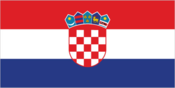
- three equal horizontal bands of red (top), white, and blue - the Pan-Slav colors - superimposed by the Croatian coat of arms; the coat of arms consists of one main shield (a checkerboard of 13 red and 12 silver (white) fields) surmounted by five smaller shields that form a crown over the main shield; the five small shields represent five historic regions (from left to right): Croatia, Dubrovnik, Dalmatia, Istria, and Slavonia
- note
- note: the Pan-Slav colors were inspired by the 19th-century flag of Russia
Government type
parliamentary republic
Independence
25 June 1991 (from Yugoslavia); note - 25 June 1991 was the day the Croatian parliament voted for independence; following a three-month moratorium to allow the European Community to solve the Yugoslav crisis peacefully, parliament adopted a decision on 8 October 1991 to sever constitutional relations with Yugoslavia; notable earlier dates: ca. 925 (Kingdom of Croatia established); 1 December 1918 (Kingdom of Serbs, Croats, and Slovenes (Yugoslavia) established)
International law organization participation
has not submitted an ICJ jurisdiction declaration; accepts ICCt jurisdiction
International organization participation
Australia Group, BIS, BSEC (observer), CD, CE, CEI, EAPC, EBRD, ECB, EMU, EU, FAO, G-11, IADB, IAEA, IBRD, ICAO, ICC (national committees), ICCt, ICRM, IDA, IFAD, IFC, IFRCS, IHO, ILO, IMF, IMO, IMSO, Interpol, IOC, IOM, IPU, ISO, ITSO, ITU, ITUC (NGOs), MIGA, MINURSO, NAM (observer), NATO, NSG, OAS (observer), OIF (observer), OPCW, OSCE, PCA, Schengen Convention, SELEC, UN, UNCTAD, UNESCO, UNFICYP, UNHCR, UNIDO, UNIFIL, UNMIL, UNMOGIP, UNWTO, UPU, Wassenaar Arrangement, WCO, WHO, WIPO, WMO, WTO, ZC
Judicial branch
- highest court(s)
- Supreme Court (consists of the court president and vice president, 25 civil department justices, and 16 criminal department justices)
- judge selection and term of office
- president of Supreme Court nominated by the president of Croatia and elected by the Sabor for a 4-year term; other Supreme Court justices appointed by the National Judicial Council; all judges serve until age 70
- subordinate courts
- Administrative Court; county, municipal, and specialized courts; note - there is an 11-member Constitutional Court with jurisdiction limited to constitutional issues but is outside of the judicial system
Legal system
civil law system influenced by legal heritage of Austria-Hungary; note - Croatian law was fully harmonized with the European Community acquis as of the June 2010 completion of EU accession negotiations
Legislative branch
- description
- unicameral Assembly or Hrvatski Sabor (151 seats; 140 members in 10 multi-seat constituencies and 3 members in a single constituency for Croatian diaspora directly elected by proportional representation vote using the D'Hondt method with a 5% threshold; an additional 8 members elected from a nationwide constituency by simple majority by voters belonging to minorities recognized by Croatia; the Serb minority elects 3 Assembly members, the Hungarian and Italian minorities elect 1 each, the Czech and Slovak minorities elect 1 jointly, and all other minorities elect 2; all members serve 4-year terms
- election results
- percent of vote by coalition/party - HDZ-led coalition 37.3%, Restart coalition 24.9%, DPMS-led coalition 10.9%, MOST 7.4%, Green-Left coalition 7%, P-F-SSIP 4%, HNS-LD 1.3%, NS-R 1%, other 6.2%; number of seats by coalition/party - HDZ-led coalition 66, Restart coalition 41, DPMS-led coalition 16, MOST 8, Green-Left coalition 7, P-F-SSIP 3, HNS-LD 1, NS-R 1, national minorities 8; composition as of January 2021 - men 103, women 48, percent of women 31.8%
- elections
- early election held on 5 July 2020 (next to be held by 2024)
- note
- note: seats by party as of March 2021 - HDZ 62, SDP 33, DP 9, Most 6, Croatian Sovereignists 4, We Can! 4, IDS 3, SDSS 3, HSS 2, HSLS 2, BZH 1, Center 1, FOKUS 1, GLAS 1, HDS 1, HSU 1, NL 1, Reformists 1, SSIP 1, RF 1, independent 12
National anthem
- lyrics/music
- Antun MIHANOVIC/Josip RUNJANIN
- name
- "Lijepa nasa domovino" (Our Beautiful Homeland)
- note
- note: adopted in 1972 while still part of Yugoslavia; "Lijepa nasa domovino," whose lyrics were written in 1835, served as an unofficial anthem beginning in 1891
National heritage
- selected World Heritage Site locales
- Plitvice Lakes National Park (n); Historic Split (c); Old City of Dubrovnik (c); Euphrasian Basilica; Historic Trogir (c); Šibenik Cathedral (c); Stari Grad Plain (c); Zadar and Fort St. Nikola Venetian Defense Works (c); Primeval Beech Forests (n); Stećci Medieval Tombstones Graveyards (c)
- total World Heritage Sites
- 10 (8 cultural, 2 natural)
National holiday
Statehood Day (National Day), 30 May (1990); note - marks the day in 1990 that the first modern multi-party Croatian parliament convened
National symbol(s)
red-white checkerboard; national colors: red, white, blue
Political parties and leaders
Bloc for Croatia or BLOK or BZH [Zlatko HASANBEGOVIC]The Bridge or Most [Bozo PETROV] (formerly the Bridge of Independent Lists)Center or Centar [Ivica PULJAK] (formerly Pametno and Party with a First and Last Name or SSIP) Civic Liberal Alliance or GLAS [Ankar Mrak TARITAS]Croatian Demochristian Party or HDS [Goran DODIG]Croatian Democratic Alliance of Slavonia and Baranja or HDSSB [Branimir GLAVAS]Croatian Democratic Union or HDZ [Andrej PLENKOVIC]Croatian Democratic Union-led coalition (includes HSLS, HDS, HDSSB)Croatian Party of Pensioners or HSU [Veselko GABRICEVIC]Croatian Peasant Party or HSS [Kreso BELJAK]Croatian People's Party - Liberal Democrats or HNS-LD [Mirko KOROTAJ, acting]Croatian Social Liberal Party or HSLS [Dario HREBAK]Croatian Sovereignists or HS [Marijan PAVLICEK]Focus on the Important or Focus [Davor NADI]Green-Left coalition [collective leadership] (includes MOZEMO!, NL)Homeland Movement or DP [Ivan PENAVA] (also known as Miroslav Škoro Homeland Movement or DPMS)Independent Democratic Serb Party or SDSS [Milorad PUPOVAC]Istrian Democratic Assembly or IDS [Dalibor PAUS]New Left or NL [Ivana KEKIN]People's Party - Reformists or NS-R [Radimir CACIC]Restart Coalition (includes SDP, HSS, HSU, GLAS, IDS, NS-R)Social Democratic Party of Croatia or SDP [Peda GRBIN]We Can! or Mozemo! [collective leadership]Workers' Front or RF [collective leadership]
Suffrage
18 years of age; universal
Economy
Agricultural products
maize, wheat, sugar beet, milk, barley, soybeans, potatoes, pork, grapes, sunflower seed
Average household expenditures
- on alcohol and tobacco
- 2.3% of household expenditures (2018 est.)
- on food
- 23% of household expenditures (2018 est.)
Budget
- expenditures
- $211.069 billion (2019 est.)
- revenues
- $212.81 billion (2019 est.)
Budget surplus (+) or deficit (-)
0.8% (of GDP) (2017 est.)
Credit ratings
- Fitch rating
- BBB- (2019)
- Moody's rating
- Ba1 (2020)
- note
- note: The year refers to the year in which the current credit rating was first obtained.
- Standard & Poors rating
- BBB- (2019)
Current account balance
- Current account balance 2019
- $1.7 billion (2019 est.)
- Current account balance 2020
- -$184.775 million (2020 est.)
- Current account balance 2021
- $2.082 billion (2021 est.)
Debt - external
- Debt - external 2018
- $51.176 billion (2018 est.)
- Debt - external 2019
- $48.263 billion (2019 est.)
Economic overview
tourism-based economy that was one of the hardest hit by COVID-19 economic disruptions; newest euro user since 2023, helping recover from a 6-year recession; public debt increases due to COVID-19 and stimulus packages; weak exports; continuing emigration; new liquefied natural gas import terminal
Exchange rates
- Currency
- euros (EUR) per US dollar -
- Exchange rates 2017
- 0.885 (2017 est.)
- Exchange rates 2018
- 0.847 (2018 est.)
- Exchange rates 2019
- 0.893 (2019 est.)
- Exchange rates 2020
- 0.876 (2020 est.)
- Exchange rates 2021
- 0.845 (2021 est.)
- note
- note: Prior to 1 January 2023, Croatia used the kuna as its currency, and it is currently accepting both currencies until 15 January 2023. However, kuna users will receive change in euros, and the exchange rate has been fixed at 7.53450 kuna to 1 euro. Persons may exchange currencies at Croatian post offices until 30 June 2023, free-of-charge, and at any Croatian bank until 31 December 2023.
Exports
- Exports 2019
- $31.504 billion (2019 est.)
- Exports 2020
- $24.007 billion (2020 est.)
- Exports 2021
- $35.308 billion (2021 est.)
- note
- note: Data are in current year dollars and do not include illicit exports or re-exports.
Exports - commodities
refined petroleum, crude petroleum, packaged medicines, electricity, electrical transformers (2021)
Exports - partners
Italy 13%, Germany 13%, Slovenia 10%, Bosnia and Herzegovina 9%, Austria 6%, Serbia 5% (2019)
Fiscal year
calendar year
GDP - composition, by end use
- exports of goods and services
- 51.1% (2017 est.)
- government consumption
- 19.5% (2017 est.)
- household consumption
- 57.3% (2017 est.)
- imports of goods and services
- -48.8% (2017 est.)
- investment in fixed capital
- 20% (2017 est.)
- investment in inventories
- 0% (2017 est.)
GDP - composition, by sector of origin
- agriculture
- 3.7% (2017 est.)
- industry
- 26.2% (2017 est.)
- services
- 70.1% (2017 est.)
GDP (official exchange rate)
$60.687 billion (2019 est.)
Gini Index coefficient - distribution of family income
- Gini Index coefficient - distribution of family income 2019
- 28.9 (2019 est.)
Household income or consumption by percentage share
- highest 10%
- 23% (2015 est.)
- lowest 10%
- 2.7%
Imports
- Imports 2019
- $31.793 billion (2019 est.) note: data are in current year dollars
- Imports 2020
- $27.954 billion (2020 est.) note: data are in current year dollars
- Imports 2021
- $36.331 billion (2021 est.) note: data are in current year dollars
Imports - commodities
crude petroleum, cars, refined petroleum, packaged medicines, electricity (2019)
Imports - partners
Italy 14%, Germany 14%, Slovenia 11%, Hungary 7%, Austria 6% (2019)
Industrial production growth rate
9.11% (2021 est.)
Industries
chemicals and plastics, machine tools, fabricated metal, electronics, pig iron and rolled steel products, aluminum, paper, wood products, construction materials, textiles, shipbuilding, petroleum and petroleum refining, food and beverages, tourism
Inflation rate (consumer prices)
- Inflation rate (consumer prices) 2019
- 0.77% (2019 est.)
- Inflation rate (consumer prices) 2020
- 0.15% (2020 est.)
- Inflation rate (consumer prices) 2021
- 2.55% (2021 est.)
Labor force
1.742 million (2021 est.)
Population below poverty line
18.3% (2018 est.)
Public debt
- Public debt 2018
- 89.45% of GDP (2018 est.)
- Public debt 2019
- 87.08% of GDP (2019 est.)
- Public debt 2020
- 104.89% of GDP (2020 est.)
Real GDP (purchasing power parity)
- note
- note: data are in 2017 dollars
- Real GDP (purchasing power parity) 2019
- $119.327 billion (2019 est.)
- Real GDP (purchasing power parity) 2020
- $109.088 billion (2020 est.)
- Real GDP (purchasing power parity) 2021
- $123.348 billion (2021 est.)
Real GDP growth rate
- Real GDP growth rate 2019
- 3.42% (2019 est.)
- Real GDP growth rate 2020
- -8.58% (2020 est.)
- Real GDP growth rate 2021
- 13.07% (2021 est.)
Real GDP per capita
- note
- note: data are in 2017 dollars
- Real GDP per capita 2019
- $29,400 (2019 est.)
- Real GDP per capita 2020
- $27,000 (2020 est.)
- Real GDP per capita 2021
- $31,600 (2021 est.)
Reserves of foreign exchange and gold
- Reserves of foreign exchange and gold 31 December 2019
- $20.771 billion (31 December 2019 est.)
- Reserves of foreign exchange and gold 31 December 2020
- $23.254 billion (31 December 2020 est.)
- Reserves of foreign exchange and gold 31 December 2021
- $28.309 billion (31 December 2021 est.)
Taxes and other revenues
20.6% (of GDP) (2020 est.)
Unemployment rate
- Unemployment rate 2019
- 6.62% (2019 est.)
- Unemployment rate 2020
- 7.51% (2020 est.)
- Unemployment rate 2021
- 8.68% (2021 est.)
Youth unemployment rate (ages 15-24)
- female
- 26.3%
- male
- 21.8%
- total
- 23.6% (2021 est.)
Energy
Carbon dioxide emissions
- from coal and metallurgical coke
- 1.674 million metric tonnes of CO2 (2019 est.)
- from consumed natural gas
- 5.678 million metric tonnes of CO2 (2019 est.)
- from petroleum and other liquids
- 9.4 million metric tonnes of CO2 (2019 est.)
- total emissions
- 16.752 million metric tonnes of CO2 (2019 est.)
Coal
- consumption
- 643,000 metric tons (2020 est.)
- exports
- 2,000 metric tons (2020 est.)
- imports
- 644,000 metric tons (2020 est.)
- production
- 0 metric tons (2020 est.)
- proven reserves
- 0 metric tons (2019 est.)
Electricity
- consumption
- 16,790,680,000 kWh (2019 est.)
- exports
- 5.852 billion kWh (2020 est.)
- imports
- 10.491 billion kWh (2020 est.)
- installed generating capacity
- 4.94 million kW (2020 est.)
- transmission/distribution losses
- 1.659 billion kWh (2019 est.)
Electricity access
- electrification - total population
- 100% (2021)
Electricity generation sources
- biomass and waste
- 9.3% of total installed capacity (2020 est.)
- fossil fuels
- 41% of total installed capacity (2020 est.)
- geothermal
- 0.9% of total installed capacity (2020 est.)
- hydroelectricity
- 31.8% of total installed capacity (2020 est.)
- nuclear
- 0% of total installed capacity (2020 est.)
- solar
- 0.9% of total installed capacity (2020 est.)
- tide and wave
- 0% of total installed capacity (2020 est.)
- wind
- 16.1% of total installed capacity (2020 est.)
Energy consumption per capita
- Total energy consumption per capita 2019
- 89.733 million Btu/person (2019 est.)
Natural gas
- consumption
- 3,009,113,000 cubic meters (2020 est.)
- exports
- 34.462 million cubic meters (2020 est.)
- imports
- 2,131,802,000 cubic meters (2020 est.)
- production
- 851.005 million cubic meters (2020 est.)
- proven reserves
- 24.919 billion cubic meters (2021 est.)
Petroleum
- crude oil and lease condensate exports
- 0 bbl/day (2018 est.)
- crude oil and lease condensate imports
- 65,200 bbl/day (2018 est.)
- crude oil estimated reserves
- 71 million barrels (2021 est.)
- refined petroleum consumption
- 71,500 bbl/day (2019 est.)
- total petroleum production
- 12,200 bbl/day (2021 est.)
Refined petroleum products - exports
40,530 bbl/day (2015 est.)
Refined petroleum products - imports
35,530 bbl/day (2015 est.)
Refined petroleum products - production
74,620 bbl/day (2015 est.)
Communications
Broadband - fixed subscriptions
- subscriptions per 100 inhabitants
- 25 (2020 est.)
- total
- 1,030,973 (2020 est.)
Broadcast media
the national state-owned public broadcaster, Croatian Radiotelevision, operates 4 terrestrial TV networks, a satellite channel that rebroadcasts programs for Croatians living abroad, and 6 regional TV centers; 2 private broadcasters operate national terrestrial networks; 29 privately owned regional TV stations; multi-channel cable and satellite TV subscription services are available; state-owned public broadcaster operates 4 national radio networks and 23 regional radio stations; 2 privately owned national radio networks and 117 local radio stations (2019)
Internet country code
.hr
Internet users
- percent of population
- 81% (2021 est.)
- total
- 3.321 million (2021 est.)
Telecommunication systems
- domestic
- fixed-line teledensity 31 per 100 persons; mobile-cellular telephone subscriptions are 108 per 100 (2021)
- general assessment
- the mobile market is served by three MNOs, supplemented by a number of MVNOs; the network operators have focused on improving ARPU by encouraging prepaid subscribers to migrate to postpaid plans, and on developing revenue from mobile data services; 5G services are widely available, though the sector will only show its full potential later in 2021 following the award of licenses in several bands; this will contribute towards the government’s national broadband plan to 2027, which is tied to the EC’s two allied projects aimed at providing gigabit connectivity by the end of 2025; the broadband sector benefits from effective competition between the DSL and cable platforms, while there are also numerous fiber deployments in urban areas; the number of FttP subscribers broached 134,000 in March 2021. (2021)
- international
- country code - 385; the ADRIA-1 submarine cable provides connectivity to Albania and Greece; digital international service is provided through the main switch in Zagreb; Croatia participates in the Trans-Asia-Europe fiber-optic project, which consists of 2 fiber-optic trunk connections with Slovenia and a fiber-optic trunk line from Rijeka to Split and Dubrovnik (2019)
Telephones - fixed lines
- subscriptions per 100 inhabitants
- 31 (2021 est.)
- total subscriptions
- 1,268,941 (2021 est.)
Telephones - mobile cellular
- subscriptions per 100 inhabitants
- 108 (2021 est.)
- total subscriptions
- 4,402,213 (2021 est.)
Transportation
Airports
69 (2021)
Airports - with paved runways
- 24
- note
- note: paved runways have a concrete or asphalt surface but not all have facilities for refueling, maintenance, or air traffic control; the length of a runway required for aircraft to safely operate depends on a number of factors including the type of aircraft, the takeoff weight (including passengers, cargo, and fuel), engine types, flap settings, landing speed, elevation of the airport, and average maximum daily air temperature; paved runways can reach a length of 5,000 m (16,000 ft.), but the “typical” length of a commercial airline runway is between 2,500-4,000 m (8,000-13,000 ft.)
Airports - with unpaved runways
- 45
- note
- note: unpaved runways have a surface composition such as grass or packed earth and are most suited to the operation of light aircraft; unpaved runways are usually short, often less than 1,000 m (3,280 ft.) in length; airports with unpaved runways often lack facilities for refueling, maintenance, or air traffic control
Civil aircraft registration country code prefix
9A
Heliports
1 (2021)
Merchant marine
- by type
- bulk carrier 12, general cargo 33, oil tanker 14, other 317
- total
- 376 (2022)
National air transport system
- annual freight traffic on registered air carriers
- 530,000 (2018) mt-km
- annual passenger traffic on registered air carriers
- 2,093,577 (2018)
- inventory of registered aircraft operated by air carriers
- 18
- number of registered air carriers
- 2 (2020)
Pipelines
2,410 km gas, 610 km oil (2011)
Ports and terminals
- LNG terminal(s) (import)
- Krk Island
- major seaport(s)
- Ploce, Rijeka, Sibenik, Split
- oil terminal(s)
- Omisalj
- river port(s)
- Vukovar (Danube)
Railways
- total
- 2,617 km (2020) 980 km electrified
Roadways
- total
- 26,958 km (2015) (includes 1,416 km of expressways)
Waterways
4,714 km (2022) Danube 2,859 km, Sava 562 km, Drava 505 km, Neretva 20 km, Bosut 151 km, Kupa 296 km, Mura 53 km, Korana 134 km, Lonja 134 km
Military and Security
Military - note
the Armed Forces of Croatia (OSRH) are responsible for the defense of Croatia’s sovereignty and territory, contributing to international humanitarian, peacekeeping, and security missions, and providing assistance to civil authorities for such missions as responding to disasters, search and rescue, anti-terrorism, and internal security in times of crisis if called upon by the prime minister or the president; Croatia joined NATO in 2009, and the OSRH participates in NATO missions, including its peacekeeping force in Kosovo and the Enhanced Forward Presence mission in Eastern Europe; it also contributes to EU and UN missions; the OSRH trains regularly with NATO and regional partners the OSRH was established in 1991 from the Croatian National Guard during the Croatian War of Independence (1991-95); during the war, the ground forces grew to as many as 60 brigades and dozens of independent battalions, and a single military offensive against Serbian forces in 1995 included some 100,000 Croatian troops; in 2000, Croatia initiated an effort to modernize and reform the OSRH into a small, professional military capable of meeting the challenges of NATO membership; the current 15,000-strong military’s principal combat forces are two mechanized infantry brigades, a small joint service special operations command, a flotilla of missile boats and coastal patrol vessels, and a squadron of Soviet-era fighter aircraft that are in the process of being replaced by more modern French aircraft (2023)
Military and security forces
- Armed Forces of the Republic of Croatia (Oruzane Snage Republike Hrvatske, OSRH): Ground Forces (Hrvatska Kopnena Vojska, HKoV), Naval Forces (Hrvatska Ratna Mornarica, HRM; includes Coast Guard), Air Force and Air Defense Forces; Military Police Force (2023)
- note
- note: the Ministry of the Interior is responsible for internal security, including law enforcement (Croatia Police) and border security
Military and security service personnel strengths
approximately 15,000 active-duty personnel (10,000 Army; 1,500 Navy; 1,500 Air force; 2,000 joint/other) (2023)
Military deployments
- 150 Kosovo (KFOR/NATO) (2023)
- note
- note: in response to Russia’s 2022 invasion of Ukraine, some NATO countries have sent additional troops and equipment to the battlegroups deployed in NATO territory in eastern Europe
Military equipment inventories and acquisitions
the majority of the military's inventory consists of Soviet-era equipment, although in recent years Croatia has acquired some limited numbers of more modern weapon systems from Western suppliers, including France, Germany, and the US (2023)
Military expenditures
- Military Expenditures 2019
- 1.6% of GDP (2019)
- Military Expenditures 2020
- 1.7% of GDP (2020)
- Military Expenditures 2021
- 2% of GDP (2021)
- Military Expenditures 2022
- 1.8% of GDP (2022 est.)
- Military Expenditures 2023
- 1.8% of GDP (2023 est.)
Military service age and obligation
- 18-27 years of age for voluntary military service; conscription abolished in 2008 (2023)
- note
- note: as of 2021, women comprised nearly 15% of the military's full-time personnel
Transnational Issues
Disputes - international
dispute remains with Bosnia and Herzegovina over several small sections of the boundary related to maritime access that hinders ratification of the 1999 border agreement; since the breakup of Yugoslavia in the early 1990s, Croatia and Slovenia have each claimed sovereignty over Piranski Bay and four villages, and Slovenia has objected to Croatia's claim of an exclusive economic zone in the Adriatic Sea; in 2009, however Croatia and Slovenia signed a binding international arbitration agreement to define their disputed land and maritime borders, which led to Slovenia lifting its objections to Croatia joining the EU; Croatia joined the Schengen Zone on 1 January 2023
Illicit drugs
drug trafficking groups are major players in the procurement and transportation of of large quantities of cocaine destined for European markets
Refugees and internally displaced persons
- note
- note: 843,010 estimated refugee and migrant arrivals (January 2015-September 2023)
- refugees (country of origin)
- 23,995 (Ukraine) (as of 1 December 2023)
- stateless persons
- 2,889 (2022)
Environment
Air pollutants
- carbon dioxide emissions
- 17.49 megatons (2016 est.)
- methane emissions
- 3.98 megatons (2020 est.)
- particulate matter emissions
- 15.29 micrograms per cubic meter (2019 est.)
Climate
Mediterranean and continental; continental climate predominant with hot summers and cold winters; mild winters, dry summers along coast
Environment - current issues
air pollution improving but still a concern in urban settings and in emissions arriving from neighboring countries; surface water pollution in the Danube River Basin
Environment - international agreements
- party to
- Air Pollution, Air Pollution-Heavy Metals, Air Pollution-Multi-effect Protocol, Air Pollution-Nitrogen Oxides, Air Pollution-Persistent Organic Pollutants, Air Pollution-Sulphur 94, Air Pollution-Volatile Organic Compounds, Biodiversity, Climate Change, Climate Change-Kyoto Protocol, Climate Change-Paris Agreement, Comprehensive Nuclear Test Ban, Desertification, Endangered Species, Hazardous Wastes, Law of the Sea, Marine Dumping-London Convention, Nuclear Test Ban, Ozone Layer Protection, Ship Pollution, Tropical Timber 2006, Wetlands, Whaling
- signed, but not ratified
- none of the selected agreements
Land use
- agricultural land
- 23.7% (2018 est.)
- agricultural land: arable land
- arable land: 16% (2018 est.)
- agricultural land: permanent crops
- permanent crops: 1.5% (2018 est.)
- agricultural land: permanent pasture
- permanent pasture: 6.2% (2018 est.)
- forest
- 34.4% (2018 est.)
- other
- 41.9% (2018 est.)
Major rivers (by length in km)
Dunav (Danube) (shared with Germany [s], Austria, Slovakia, Czechia, Hungary, Serbia, Bulgaria, Ukraine, Moldova, and Romania [m]) - 2,888 kmnote – [s] after country name indicates river source; [m] after country name indicates river mouth
Major watersheds (area sq km)
Atlantic Ocean drainage: (Black Sea) Danube (795,656 sq km)
Revenue from coal
0% of GDP (2018 est.)
Revenue from forest resources
0.26% of GDP (2018 est.)
Total renewable water resources
105.5 billion cubic meters (2020 est.)
Total water withdrawal
- agricultural
- 80 million cubic meters (2020 est.)
- industrial
- 700 million cubic meters (2020 est.)
- municipal
- 460 million cubic meters (2020 est.)
Urbanization
- rate of urbanization
- 0.05% annual rate of change (2020-25 est.)
- urban population
- 58.6% of total population (2023)
Waste and recycling
- municipal solid waste generated annually
- 1.654 million tons (2015 est.)
- municipal solid waste recycled annually
- 269,933 tons (2015 est.)
- percent of municipal solid waste recycled
- 16.3% (2015 est.)