1983 Edition
CIA World Factbook 1983 (Internet Archive)
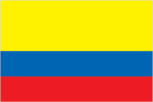
Geography
Agriculture
main crops — coffee, rice, corn, sugarcane, marijuana, coca, plantains, bananas, cotton, tobacco
Airfields
625 total, 619 usable; 57 with permanent-surface runways; 1 with runways over 3,660 m; 8 with runways 2,440-3,659 m, 94 with runways 1,220-2,439 m
Branches
- President, bicameral legislature (Parliament — Senate, House of Representatives), judiciary
- Army of Colombia, Colombian Air Force, National Navy
Budget
(1982) revenues $3.9 billion; expenditures $5.3 billion
Capital
Bogota
Civil air
1 13 major transport aircraft
Communists
10,000-12,000 members est.
Crude steel
391,000 metric tons produced (1980/81 est.), 14 kg per capita
Elections
every fourth year; last presidential election held in May 1982; last congressional election March 1982; municipal and departmental elections every two years, next scheduled for March 1984 Political parties and leaders: Liberal Party — leadership currently undergoing changes, with light congressmen sharing plural leadership; two main dissident factions are headed by Luis Carlos Galan and Alberto Santofimio; official group leadership supplemented by Luis Carlos Galan, who heads a new faction within the party; Conservative Party — Alvaro Gomez Hurtado and Misael Pastrana Borrero head the two principal wings united behind current President Belisario Betancur, who leads a small faction
Electric power
7,520,000 kW capacity (1983); 24.0 billion kWh produced(1983), 870 kWh per capita
Exports
$3.2 billion (f.o.b., 1982); coffee, fuel oil, cotton, tobacco, sugar, textiles, cattle and hides, bananas, fresh cut flowers
Fiscal year
calendar year Communications
Fishing
catch 68,525 metric tons 1981
GNP
$40 million (1983 est.; in current dollars), $1,435 per capita (1983; in current dollars); 68% private consumption, 28% gross investment 8% public consumption, (1981); growth rate 1% (1983)
Government leader
Belisario BETANCUR Cuartas, President
Highways
75,450 km total; 9,350 km paved, 66,100 km earth and gravel surfaces
Imports
$5.5 billion (c.i.f., 1982); transportation equipment, machinery, industrial metals and raw materials, chemicals and Pharmaceuticals, fuels, fertilizers, paper and paper products, foodstuffs and beverages
Inland waterways
14,300 km, navigable by river boats
Legal system
based on Spanish law; religious courts regulate marriage and divorce; constitution decreed in 1886, amendments codified in 1946 and 1968; judicial review of legislative acts in the Supreme Court; accepts compulsory ICJ jurisdiction, with reservations
Major industries
textiles, food processing, clothing and footwear, beverages, chemicals, metal products, and cement
Major trade partners
exports — 25% US, 17% FRG, 10% Venezuela, 4% Japan, 3% Netherlands; imports — 38% US, 12% Japan, 6% Venezuela, 5% FRG, 2% France, 1.8% UK, 1% Ecuador (1982)
Member of
FAO, G-77, GATT, IADB, IAEA, IBRD, ICAC, ICAO, ICO, IDA, IDB — InterAmerican Development Bank, IFAD, IFC, IHO, ILO, IMF, IMO, INTELSAT, INTERPOL, IRC, ISO, ITU, LAIA and Andean Sub-Regional Group, NAM, OAS, PAHO, SELA, UN, UNESCO, UPEB, UPU, WFTU, WHO, WIPO, WMO, WSG, WTO Economy
Military budget
estimated for fiscal year ending 31 December 1983, $468.1 million; about 10.3% of central government budget
Military manpower
males 15-49, 7,270,000; 5,154,000 fit for military service; about 349,000 reach military age (18) annually
Monetary conversion rate
84.25 pesos= US$1 (31 October 1983)
National holiday
Independence Day, 30 July
Official name
Republic of Colombia
Other political or pressure groups
Communist Party (PCC), Gilberto Vieira White; Communist Party/Marxist-Leninist (PCC/ML), Maoist orientation
Pipelines
crude oil, 3,585 km; refined products, 1,350 km; natural gas, 830 km; natural gas liquids, 125 km
Political subdivisions
22 departments, 3 Intendancies, 5 Commissariats, Bogota Special District
Ports
6 major (Barranquilla, Buenaventura, Cartagena, Covenas, Santa Marta, and Tumaco)
Railroads
3,403 km, all 0.914-meter gauge, single track
Suffrage
age 18 and over
Telecommunications
nationwide radio-relay system; 1 Atlantic Ocean satellite station with 2 antennas and 8 domestic satellite stations; 1.62 million telephones (6.0 per 100 popl.); 375 AM, 130 FM, and 85 TV stations Comoros Defense Forces
Type
republic; executive branch dominates government structure
Voting strength
(1982 presidential election) Belisario Betancur 46.8%, Alfonso Lopez Michelsen 40.7%, Luis Carlos Galan 11.1%, Gerardo Molina 1.2%, other 1.2%; 49% abstention