Introduction
Colombia was one of three countries that emerged after the dissolution of Gran Colombia in 1830 -- the others are Ecuador and Venezuela. A decades-long conflict among government forces, paramilitaries, and antigovernment insurgent groups heavily funded by the drug trade -- principally the Revolutionary Armed Forces of Colombia (FARC) -- escalated during the 1990s. In the wake of the paramilitary demobilization in the 2000s, new criminal groups arose that included some former paramilitaries. After four years of formal peace negotiations, the Colombian Government signed a final accord with the FARC in 2016 that called for its members to demobilize, disarm, and reincorporate into society and politics. The accord also committed the Colombian Government to create three new institutions to form a 'comprehensive system for truth, justice, reparation, and non-repetition,' including a truth commission, a special unit to coordinate the search for those who disappeared during the conflict, and a 'Special Jurisdiction for Peace' to administer justice for conflict-related crimes. Despite decades of internal conflict and drug-trade-related security challenges, Colombia maintains relatively strong and independent democratic institutions characterized by peaceful, transparent elections and the protection of civil liberties.
Geography
- Land
- 1,038,700 sq km
- Note
- <strong>note:</strong> includes Isla de Malpelo, Roncador Cay, and Serrana Bank
- Total
- 1,138,910 sq km
- Water
- 100,210 sq km
slightly less than twice the size of Texas
tropical along coast and eastern plains; cooler in highlands
3,208 km (Caribbean Sea 1,760 km, North Pacific Ocean 1,448 km)
South America
- Highest point
- Pico Cristobal Colon 5,730 m
- Lowest point
- Pacific Ocean 0 m
- Mean elevation
- 593 m
4 00 N, 72 00 W
only South American country with coastlines on both the North Pacific Ocean and Caribbean Sea
6,506 sq km (2013)
- Border countries
- Brazil 1,790 km; Ecuador 708 km; Panama 339 km; Peru 1,494 km; Venezuela 2,341 km
- number of neighbors
- 5
- Total
- 6,672 km
- Agricultural land
- 36.5% (2023 est.)
- Agricultural land: arable land
- arable land: 2.3% (2023 est.)
- Agricultural land: permanent crops
- permanent crops: 2.2% (2023 est.)
- Agricultural land: permanent pasture
- permanent pasture: 32% (2023 est.)
- arable land
- 2.3%
- Forest
- 53.8% (2023 est.)
- Other
- 9.7% (2023 est.)
- permanent crops
- 2.2%
No
Northern South America, bordering the Caribbean Sea, between Panama and Venezuela, and bordering the North Pacific Ocean, between Ecuador and Panama
Amazon Basin
Rio Negro river source (shared with Venezuela and Brazil [m]) - 2,250 km; Orinoco (shared with Venezuela [s]) - 2,101 km<br><br><strong>note:</strong> [s] after country name indicates river source; [m] after country name indicates river mouth
- Atlantic Ocean drainage
- Amazon (6,145,186 sq km), Orinoco (953,675 sq km)
- Google Maps
- https://goo.gl/maps/zix9qNFX69E9yZ2M6
- OpenStreetMap
- https://www.openstreetmap.org/relation/120027
South America
- Continental shelf
- 200-m depth or to the depth of exploitation
- Exclusive economic zone
- 200 nm
- Territorial sea
- 12 nm
highlands subject to volcanic eruptions; occasional earthquakes; periodic droughts <br><br><strong>volcanism:</strong> Galeras (4,276 m) is one of Colombia's most active volcanoes; it has been deemed a Decade Volcano by the International Association of Volcanology and Chemistry of the Earth's Interior, worthy of study due to its explosive history and close proximity to human populations; Nevado del Ruiz (5,321 m), 129 km (80 mi) west of Bogota, erupted in 1985, producing lahars (mudflows) that killed 23,000 people; the volcano last erupted in 1991; after 500 years of dormancy, Nevado del Huila reawakened in 2007 and has experienced frequent eruptions since then; other historically active volcanoes include Cumbal, Dona Juana, Nevado del Tolima, and Purace
petroleum, natural gas, coal, iron ore, nickel, gold, copper, emeralds, hydropower
the majority of people live in the north and west, where agricultural opportunities and natural resources are found; the vast grasslands of the llanos to the south and east, which make up approximately 60% of the country, are sparsely populated
South America
flat coastal lowlands, central highlands, high Andes Mountains, eastern lowland plains (Llanos)
- UTC-05:00
- number of time zones
- 1
People and Society
- 0-14 years
- 22.3% (male 5,643,995/female 5,394,147)
- 15-64 years
- 66.5% (male 16,127,377/female 16,859,161)
- 65 years and over
- 11.2% (2024 est.) (male 2,434,999/female 3,128,678)
- Beer
- 3.09 liters of pure alcohol (2019 est.)
- Other alcohols
- 0.02 liters of pure alcohol (2019 est.)
- Spirits
- 0.92 liters of pure alcohol (2019 est.)
- Total
- 4.09 liters of pure alcohol (2019 est.)
- Wine
- 0.06 liters of pure alcohol (2019 est.)
14.73 births/1,000 population (2025 est.)
- Men married by age 18
- 6.7% (2015)
- Women married by age 15
- 4.9% (2015)
- Women married by age 18
- 23.4% (2015)
3.7% (2016 est.)
50.9% (2018 est.)
- 6.96 deaths/1,000 population (2025 est.)
- adult female
- 66 per 1,000
- adult male
- 123 per 1,000
- Elderly dependency ratio
- 17.5 (2025 est.)
- Potential support ratio
- 5.7 (2025 est.)
- Total dependency ratio
- 50.7 (2025 est.)
- Youth dependency ratio
- 33.2 (2025 est.)
- improved total
- 74.34%
- Improved: rural
- rural: 86.7% of population (2022 est.)
- Improved: total
- total: 97.5% of population (2022 est.)
- Improved: urban
- urban: 99.9% of population (2022 est.)
- Unimproved: rural
- rural: 13.3% of population (2022 est.)
- Unimproved: total
- total: 2.5% of population (2022 est.)
- Unimproved: urban
- urban: 0.1% of population (2022 est.)
5.3% of GDP (2020 est.)
Mestizo and White 87.6%, Afro-Colombian (includes Mulatto, Raizal, and Palenquero) 6.8%, Indigenous 4.3%, unspecified 1.4% (2018 est.)
0.94 (2025 est.)
- 8 % of GDP
- Health expenditure (as % of GDP)
- 9% of GDP (2021)
- Health expenditure (as % of national budget)
- 15.7% of national budget (2022 est.)
0.42%
1.7 beds/1,000 population (2020 est.)
- Female
- 10.2 deaths/1,000 live births
- Male
- 13.1 deaths/1,000 live births
- neonatal
- 7 deaths/1,000 live births
- Total
- 11.6 deaths/1,000 live births (2025 est.)
- Languages
- Spanish (official) 98.9%, indigenous 1%, Portuguese 0.1%; 65 indigenous languages exist (2023 est.)
- Major-language sample(s)
- <br>La Libreta Informativa del Mundo, la fuente indispensable de información básica. (Spanish)<br><br>The World Factbook, the indispensable source for basic information.
- number of languages
- 1
- Female
- 78.7 years
- Male
- 71.3 years
- Total population
- 74.9 years (2024 est.)
- Female
- 95.7% (2024 est.)
- Male
- 95% (2024 est.)
- Total population
- 95.3% (2024 est.)
11.508 million BOGOTA (capital), 4.102 million Medellin, 2.864 million Cali, 2.349 million Barranquilla, 1.381 million Bucaramanga, 1.088 million Cartagena (2023)
59 deaths/100,000 live births (2023 est.)
- Female
- 34 years
- Male
- 31.5 years
- Total
- 33.1 years (2025 est.)
- 21.7 years (2015 est.)
- note
- <strong>note:</strong> data represents median age at first birth among women 25-49
- Adjective
- Colombian
- Noun
- Colombian(s)
-2.38 migrant(s)/1,000 population (2025 est.)
22.3% (2016)
2.54 physicians/1,000 population (2023)
- Female
- 25,521,339
- Male
- 24,320,959
- Total
- 49,842,298 (2025 est.)
0.54% (2025 est.)
Roman Catholic 63.6%, Protestant 17.2% (Evangelical 16.7%, Adventist 0.3%, other Protestant 0.2%), Jehovah's Witness 0.6%, Church of Jesus Christ 0.1%, other 0.3%, believer, 0.2%. agnostic 1%, atheist 1%, none 14.2%, unspecified 1.8% (2023 est.)
- improved total
- 18.69%
- Improved: rural
- rural: 88.2% of population (2022 est.)
- Improved: total
- total: 97% of population (2022 est.)
- Improved: urban
- urban: 98.9% of population (2022 est.)
- Unimproved: rural
- rural: 11.8% of population (2022 est.)
- Unimproved: total
- total: 3% of population (2022 est.)
- Unimproved: urban
- urban: 1.1% of population (2022 est.)
- Female
- 15 years (2022 est.)
- Male
- 14 years (2022 est.)
- Total
- 14 years (2022 est.)
- 0-14 years
- 1.05 male(s)/female
- 15-64 years
- 0.96 male(s)/female
- 65 years and over
- 0.78 male(s)/female
- At birth
- 1.05 male(s)/female
- Total population
- 0.95 male(s)/female (2024 est.)
- Female
- 4.1% (2025 est.)
- Male
- 11.2% (2025 est.)
- Total
- 7.6% (2025 est.)
1.94 children born/woman (2025 est.)
- Rate of urbanization
- 1.01% annual rate of change (2020-25 est.)
- Urban population
- 82.4% of total population (2023)
- measles
- 93%
Government
32 departments (<em>departamentos</em>, singular - <em>departamento</em>) and 1 capital district* (<em>distrito capital</em>); Amazonas, Antioquia, Arauca, Atlántico, Bogota*, Bolivar, Boyacá, Caldas, Caquetá, Casanare, Cauca, Cesar, Choco, Cordoba, Cundinamarca, Guainía, Guaviare, Huila, La Guajira, Magdalena, Meta, Nariño, Norte de Santander, Putumayo, Quindío, Risaralda, Archipiélago de San Andres, Providencia y Santa Catalina (colloquially San Andres y Providencia), Santander, Sucre, Tolima, Valle del Cauca, Vaupes, Vichada
- Etymology
- originally named Santa Fe de Bacatá in 1538, after the Chibcha people's nearby settlement of Bacatá; the name was later corrupted to Bogotá
- Geographic coordinates
- 4 36 N, 74 05 W
- Name
- Bogotá
- Time difference
- UTC-5 (same time as Washington, DC, during Standard Time)
- Citizenship by birth
- no
- Citizenship by descent only
- least one parent must be a citizen or permanent resident of Colombia
- Dual citizenship recognized
- yes
- Residency requirement for naturalization
- 5 years
- svg
- https://mainfacts.com/media/images/coats_of_arms/co.svg
- Amendment process
- proposed by the government, by Congress, by a constituent assembly, or by public petition; passage requires a majority vote by Congress in each of two consecutive sessions; passage of amendments to constitutional articles on citizen rights, guarantees, and duties also require approval in a referendum by over one half of voters and participation of over one fourth of citizens registered to vote
- History
- several previous; latest promulgated 4 July 1991
- alternative spellings
- CO, Republic of Colombia, República de Colombia
- Conventional long form
- Republic of Colombia
- Conventional short form
- Colombia
- Etymology
- named after explorer Christopher COLUMBUS
- FIFA code
- COL
- Local long form
- República de Colombia
- local long form (spa)
- República de Colombia
- Local short form
- Colombia
- Chief of mission
- Ambassador (vacant); Chargé d'Affaires John McNAMARA (since 1 February 2025)
- Email address and website
- <br>ACSBogota@state.gov<br><br>https://co.usembassy.gov/
- Embassy
- Carrera 45, No. 24B-27, Bogota
- FAX
- [57] (601) 275-4600
- Mailing address
- 3030 Bogota Place, Washington DC 20521-3030
- Telephone
- [57] (601) 275-2000
- Chancery
- 1724 Massachusetts Avenue NW, Washington, DC 20036
- Chief of mission
- Ambassador Daniel GARCÍA-PEÑA JARAMILLO (since 18 September 2024)
- Consulate(s) general
- Atlanta, Boston, Chicago, Houston, Los Angeles, Miami, New York, Newark (NJ), Orlando, San Francisco, San Juan (Puerto Rico)
- Email address and website
- <br>eestadosunidos@cancilleria.gov.co<br><br>https://www.colombiaemb.org/
- FAX
- [1] (202) 232-8643
- Telephone
- [1] (202) 387-8338
- Cabinet
- Cabinet appointed by the president
- Chief of state
- President Gustavo Francisco PETRO Urrego (since 7 August 2022)
- Election results
- <em><br>2022:</em> Gustavo Francisco PETRO Urrego elected president in second round; percent of vote in first round - Gustavo Francisco PETRO Urrego (PHxC) 40.3%, Rodolfo HERNÁNDEZ Suárez (LIGA) 28.2%, Federico GUTIÉRREZ Zuluaga (Team for Colombia / CREEMOS) 23.9%, other 7.6%; percent of vote in second round - Gustavo Francisco PETRO Urrego 50.4%, Rodolfo HERNÁNDEZ Suarez 47.3%, blank 2.3%<br><em><br>2018:</em> Iván DUQUE Márquez elected president in second round; percent of vote - Iván DUQUE Márquez (CD) 54%, Gustavo Francisco PETRO Urrego (Humane Colombia) 41.8%, other/blank/invalid 4.2%
- Election/appointment process
- president directly elected by absolute majority vote in 2 rounds, if needed, for a single 4-year term
- Expected date of next election
- 31 May 2026
- Head of government
- President Gustavo Francisco PETRO Urrego (since 7 August 2022)
- Most recent election date
- 29 May 2022, with a runoff held on 19 June 2022
- Note
- <strong>note 1: </strong>the president is both chief of state and head of government<br><br><strong>note 2:</strong> reforms in 2015 eliminated presidential reelection
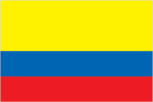
- <strong>description:</strong> three horizontal bands of yellow (top, double-width), blue, and red<br><br><strong>meaning:</strong> various interpretations of the colors exist; one has yellow for the gold in Colombia's land, blue for the sea, and red for the blood spilled in attaining freedom; another describes them as representing sovereignty and justice (yellow), loyalty and vigilance (blue), and valor and generosity (red); another has the colors standing for liberty, equality, and fraternity
- note
- <strong>note:</strong> similar to the flag of Ecuador, which is wider and has the Ecuadorian coat of arms in the center
The flag of Colombia is composed of three horizontal bands of yellow, blue and red, with the yellow band twice the height of the other two bands.
- svg
- https://flagcdn.com/co.svg
presidential republic
20 July 1810 (from Spain)
has not submitted an ICJ jurisdiction declaration; accepts ICCt jurisdiction
ACS, BCIE, BIS, CABEI, CAN, Caricom (observer), CD, CDB, CELAC, EITI (candidate country), FAO, G-3, G-24, G-77, IADB, IAEA, IBRD, ICAO, ICC (national committees), ICCt, ICRM, IDA, IFAD, IFC, IFRCS, IHO, ILO, IMF, IMO, IMSO, Interpol, IOC, IOM, IPU, ISO, ITSO, ITU, ITUC (NGOs), LAES, LAIA, Mercosur (associate), MIGA, NAM, OAS, OPANAL, OPCW, Pacific Alliance, PCA, PROSUR, UN, UNASUR, UNCTAD, UNESCO, UNHCR, UNIDO, Union Latina, UNOOSA, UNWTO, UPU, WCO, WFTU (NGOs), WHO, WIPO, WMO, WTO
- Highest court(s)
- Supreme Court of Justice or Corte Suprema de Justicia (consists of the Civil-Agrarian and Labor Chambers each with 7 judges, and the Penal Chamber with 9 judges); Constitutional Court (consists of 9 magistrates); Council of State (consists of 27 judges); Superior Judiciary Council (consists of 13 magistrates)
- Judge selection and term of office
- Supreme Court judges appointed by the Supreme Court members from candidates submitted by the Superior Judiciary Council; judges elected for individual 8-year terms; Constitutional Court magistrates - nominated by the president, by the Supreme Court, and elected by the Senate; judges elected for individual 8-year terms; Council of State members appointed by the State Council plenary from lists nominated by the Superior Judiciary Council
- Subordinate courts
- Superior Tribunals (appellate courts for each of the judicial districts); regional courts; civil municipal courts; Superior Military Tribunal; first instance administrative courts
civil law system influenced by the Spanish and French civil codes
- Legislative structure
- bicameral
- Legislature name
- Congress (Congreso)
- Chamber name
- House of Representatives (Cámara de Representantes)
- Electoral system
- proportional representation
- Expected date of next election
- March 2026
- Most recent election date
- 3/13/2022
- Number of seats
- 187 (all directly elected)
- Parties elected and seats per party
- Liberal Party (PL) (32); Historic Pact (27); Conservative Party (CP) (25); Democratic Centre (CD) (16); Radical Change (CR) (16); Union Party for the People “Partido de la U” (15); Green Alliance - Hope Centre coalition (11); Other (14)
- Percentage of women in chamber
- 29.4%
- Scope of elections
- full renewal
- Term in office
- 4 years
- Chamber name
- Senate (Senado de la República)
- Electoral system
- proportional representation
- Expected date of next election
- March 2026
- Most recent election date
- 3/13/2022
- Number of seats
- 108 (all directly elected)
- Parties elected and seats per party
- Historic Pact (20); Conservative Party (CP) (15); Liberal Party (PL) (14); Green Alliance - Hope Centre coalition (13); Democratic Centre (CD) (13); Radical Change (CR) (11); Union Party for the People “Partido de la U” (10); Other (4)
- Percentage of women in chamber
- 31.4%
- Scope of elections
- full renewal
- Term in office
- 4 years
yellow, blue, red
- Selected World Heritage Site locales
- Chiribiquete National Park (m); Coffee Cultural Landscape of Colombia (c); Historic Center of Santa Cruz de Mompox (c); Los Katíos National Park (n); Malpelo Fauna and Flora Sanctuary (n); Tierradentro National Archeological Park (c); San Agustín Archaeological Park (c); Colonial Cartagena (c); Qhapaq Ñan/Andean Road System (c)
- Total World Heritage Sites
- 9 (6 cultural, 2 natural, 1 mixed)
Independence Day, 20 July (1810)
Andean condor
- Alternative Democratic Pole or PDA<br>Citizens Option (Opcion Ciudadana) or OC (formerly known as the National Integration Party or PIN)<br>The Commons (formerly People's Alternative Revolutionary Force or FARC)<br>Conservative Party or PC<br>Democratic Center Party or CD<br>Fair and Free Colombia (Colombia Justa Libres)<br>Green Alliance <br>Historic Pact for Colombia or PHxC (coalition composed of several left-leaning political parties and social movements)<br>Humane Colombia<br>Independent Movement of Absolute Renovation or MIRA<br>League of Anti-Corruption Rulers or LIGA<br>Liberal Party or PL<br>People's Alternative Revolutionary Force or FARC<br>Radical Change or CR<br>Team for Colombia - also known as the Experience Coalition or Coalition of the Regions (coalition composed of center-right and right-wing parties)<br>Union Party for the People or U Party<br>We Believe Colombia or CREEMOS
- note
- <strong>note: </strong>Colombia has numerous smaller political parties and movements
Monday
18 years of age; universal
Yes
Economy
- sugarcane, oil palm fruit, milk, rice, plantains, potatoes, bananas, maize, chicken, avocados (2023)
- note
- <b>note:</b> top ten agricultural products based on tonnage
- On alcohol and tobacco
- 3.6% of household expenditures (2023 est.)
- On food
- 20.6% of household expenditures (2023 est.)
- Expenditures
- $123.966 billion (2023 est.)
- Note
- <b>note:</b> central government revenues (excluding grants) and expenditures converted to US dollars at average official exchange rate for year indicated
- Revenues
- $116.49 billion (2023 est.)
- code
- COP
- name
- Colombian peso (COP) [$]
- $-6,880,114,731
- Current account balance 2022
- -$20.879 billion (2022 est.)
- Current account balance 2023
- -$8.285 billion (2023 est.)
- Current account balance 2024
- -$7.412 billion (2024 est.)
- Note
- <b>note:</b> balance of payments - net trade and primary/secondary income in current dollars
- $201.76 billion
- Debt - external 2023
- $108.027 billion (2023 est.)
- Note
- <b>note:</b> present value of external debt in current US dollars
prior to COVID-19, one of the most consistent growth economies; declining poverty; large stimulus package has mitigated economic fallout, but delayed key infrastructure investments; successful inflation management; sound flexible exchange rate regime; domestic economy suffers from lack of trade integration and infrastructure
- Currency
- Colombian pesos (COP) per US dollar -
- Exchange rates 2020
- 3,693.276 (2020 est.)
- Exchange rates 2021
- 3,744.244 (2021 est.)
- Exchange rates 2022
- 4,256.194 (2022 est.)
- Exchange rates 2023
- 4,325.955 (2023 est.)
- Exchange rates 2024
- 4,074.434 (2024 est.)
- $67.43 billion
- Exports 2022
- $73.514 billion (2022 est.)
- Exports 2023
- $68.674 billion (2023 est.)
- Exports 2024
- $68.866 billion (2024 est.)
- Note
- <b>note:</b> balance of payments - exports of goods and services in current dollars
- crude petroleum, coal, gold, coffee, refined petroleum (2023)
- note
- <b>note:</b> top five export commodities based on value in dollars
- USA 27%, Panama 9%, India 5%, China 5%, Netherlands 4% (2023)
- note
- <b>note:</b> top five export partners based on percentage share of exports
- net inflows
- $13.68 billion
- Exports of goods and services
- 16% (2024 est.)
- Government consumption
- 14.7% (2024 est.)
- Household consumption
- 73.1% (2024 est.)
- Imports of goods and services
- -20.9% (2024 est.)
- Investment in fixed capital
- 16.5% (2024 est.)
- Investment in inventories
- 0.6% (2024 est.)
- Note
- <b>note:</b> figures may not total 100% due to rounding or gaps in data collection
- Agriculture
- 9.3% (2024 est.)
- Industry
- 23.1% (2024 est.)
- Note
- <b>note:</b> figures may not total 100% due to non-allocated consumption not captured in sector-reported data
- Services
- 58.2% (2024 est.)
- $418.542 billion (2024 est.)
- note
- <b>note:</b> data in current dollars at official exchange rate
$7,919
- 51.3 (2019)
- Gini Index coefficient - distribution of family income 2023
- 53.9 (2023 est.)
- Note
- <b>note:</b> index (0-100) of income distribution; higher values represent greater inequality
$410.21 billion
$7,040
17 % of GDP
- Highest 10%
- 42.7% (2023 est.)
- Lowest 10%
- 1.1% (2023 est.)
- Note
- <b>note:</b> % share of income accruing to lowest and highest 10% of population
- $87.64 billion
- Imports 2022
- $89.608 billion (2022 est.)
- Imports 2023
- $76.449 billion (2023 est.)
- Imports 2024
- $78.633 billion (2024 est.)
- Note
- <b>note:</b> balance of payments - imports of goods and services in current dollars
- refined petroleum, cars, broadcasting equipment, aircraft, packaged medicine (2023)
- note
- <b>note:</b> top five import commodities based on value in dollars
- USA 26%, China 22%, Brazil 6%, Mexico 5%, Germany 4% (2023)
- note
- <b>note:</b> top five import partners based on percentage share of imports
- -1.3% (2024 est.)
- note
- <b>note:</b> annual % change in industrial value added based on constant local currency
textiles, food processing, oil, clothing and footwear, beverages, chemicals, cement; gold, coal, emeralds
- 6.61%
- Inflation rate (consumer prices) 2022
- 10.2% (2022 est.)
- Inflation rate (consumer prices) 2023
- 11.7% (2023 est.)
- Inflation rate (consumer prices) 2024
- 6.6% (2024 est.)
- Note
- <b>note:</b> annual % change based on consumer prices
- 26.822 million (2024 est.)
- note
- <b>note:</b> number of people ages 15 or older who are employed or seeking work
- total
- 27.1 million persons
- agriculture
- 14.16%
- industry
- 20%
- services
- 65.84%
- 33% (2023 est.)
- note
- <b>note:</b> % of population with income below national poverty line
- 71 % of GDP
- Note
- <b>note:</b> central government debt as a % of GDP
- Public debt 2023
- 71.3% of GDP (2023 est.)
- $1.18 trillion
- Note
- <b>note:</b> data in 2021 dollars
- Real GDP (purchasing power parity) 2022
- $955.016 billion (2022 est.)
- Real GDP (purchasing power parity) 2023
- $961.82 billion (2023 est.)
- Real GDP (purchasing power parity) 2024
- $978.592 billion (2024 est.)
- 1.6%
- Note
- <b>note:</b> annual GDP % growth based on constant local currency
- Real GDP growth rate 2022
- 7.3% (2022 est.)
- Real GDP growth rate 2023
- 0.7% (2023 est.)
- Real GDP growth rate 2024
- 1.7% (2024 est.)
- $22,349
- Note
- <b>note:</b> data in 2021 dollars
- Real GDP per capita 2022
- $18,500 (2022 est.)
- Real GDP per capita 2023
- $18,400 (2023 est.)
- Real GDP per capita 2024
- $18,500 (2024 est.)
- $11.87 billion
- Note
- <b>note:</b> personal transfers and compensation between resident and non-resident individuals/households/entities
- Remittances 2022
- 2.7% of GDP (2022 est.)
- Remittances 2023
- 2.8% of GDP (2023 est.)
- Remittances 2024
- 2.8% of GDP (2024 est.)
- $61.9 billion
- Note
- <b>note:</b> holdings of gold (year-end prices)/foreign exchange/special drawing rights in current dollars
- Reserves of foreign exchange and gold 2022
- $56.704 billion (2022 est.)
- Reserves of foreign exchange and gold 2023
- $59.041 billion (2023 est.)
- Reserves of foreign exchange and gold 2024
- $61.898 billion (2024 est.)
26 % of GDP
15 % of GDP
- 17.6% (of GDP) (2023 est.)
- note
- <b>note:</b> central government tax revenue as a % of GDP
- 8.29%
- Note
- <b>note:</b> % of labor force seeking employment
- Unemployment rate 2022
- 10.6% (2022 est.)
- Unemployment rate 2023
- 9.6% (2023 est.)
- Unemployment rate 2024
- 9.7% (2024 est.)
- Female
- 24.3% (2024 est.)
- Male
- 16.5% (2024 est.)
- Note
- <b>note:</b> % of labor force ages 15-24 seeking employment
- Total
- 19.8% (2024 est.)
Energy
- Consumption
- 9.72 million metric tons (2023 est.)
- Exports
- 46.425 million metric tons (2023 est.)
- Imports
- 1,000 metric tons (2023 est.)
- Production
- 52.376 million metric tons (2023 est.)
- Proven reserves
- 4.554 billion metric tons (2023 est.)
- Consumption
- 82.309 billion kWh (2023 est.)
- consumption per capita
- 1,553 kWh
- Exports
- 1.293 billion kWh (2023 est.)
- Imports
- 407.788 million kWh (2023 est.)
- Installed generating capacity
- 21.053 million kW (2023 est.)
- Transmission/distribution losses
- 7.232 billion kWh (2023 est.)
- Electrification - total population
- 100% (2022 est.)
- Biomass and waste
- 2.5% of total installed capacity (2023 est.)
- Fossil fuels
- 34% of total installed capacity (2023 est.)
- hydroelectric
- 64.84%
- Hydroelectricity
- 62.1% of total installed capacity (2023 est.)
- nuclear
- 0%
- renewable
- 75.12%
- Solar
- 1.3% of total installed capacity (2023 est.)
- Wind
- 0.1% of total installed capacity (2023 est.)
- 863 kg of oil equivalent
- Total energy consumption per capita 2023
- 29.305 million Btu/person (2023 est.)
- Consumption
- 11.885 billion cubic meters (2023 est.)
- Imports
- 958.724 million cubic meters (2023 est.)
- Production
- 10.927 billion cubic meters (2023 est.)
- Proven reserves
- 87.782 billion cubic meters (2021 est.)
- Crude oil estimated reserves
- 2.036 billion barrels (2021 est.)
- Refined petroleum consumption
- 374,000 bbl/day (2023 est.)
- Total petroleum production
- 800,000 bbl/day (2023 est.)
29.7%
Communications
- per 100 inhabitants
- 17 per 100
- Subscriptions per 100 inhabitants
- 17 (2023 est.)
- Total
- 8.91 million (2023 est.)
combination of state-owned and privately owned broadcast media provide service; more than 500 radio stations and many national, regional, and local TV stations (2019)
.co
- Percent of population
- 77% (2023 est.)
+57
- Subscriptions per 100 inhabitants
- 12 (2024 est.)
- Total subscriptions
- 6.32 million (2024 est.)
- subscriptions per 100
- 167 per 100
- Subscriptions per 100 inhabitants
- 174 (2024 est.)
- Total subscriptions
- 92.1 million (2024 est.)
Transportation
- passengers carried
- 42.4 million passengers
- registered carrier departures
- 373,147 departures
661 (2025)
HJ, HK
Right
57 (2025)
- By type
- general cargo 28, oil tanker 13, other 112
- Total
- 153 (2023)
- Key ports
- Barranquilla, Buenaventura, Cartagena, Covenas, El Bosque, Mamonal, Pozos Colorados, Puerto Bolivar, Puerto Prodeco, Santa Marta
- Large
- 0
- Medium
- 2
- Ports with oil terminals
- 10
- Size unknown
- 1
- Small
- 8
- Total ports
- 14 (2024)
- Very small
- 3
- Narrow gauge
- 1,991 km (2019) 0.914-m gauge
- Standard gauge
- 150 km (2019) 1.435-m gauge
- Total
- 2,141 km (2019)
CO
Military and Security
- armored vehicles
- tanks
the Colombian military is responsible for defending and maintaining the country’s independence, national sovereignty, and territorial integrity but also has a considerable internal security role, which includes protecting the civilian population, as well as private and state-owned assets, and ensuring a secure environment; the military’s primary focus is the conduct of counterinsurgency and counter-narcotics operations against domestic illegal armed groups, including drug traffickers, several factions of the former Revolutionary Armed Forces of Colombia (FARC) terrorist group, and the insurgent/terrorist group National Liberation Army (ELN)<br><br>border security is also a focus, particularly with Venezuela where economic and political instability has brought refugees and attracted narcotics trafficking and other cross-border crime; both the ELN and FARC dissidents operate openly in the border region; ELN and FARC insurgents have also used neighboring Ecuador to rest, resupply, and shelter<br><br>Colombia has close security ties with the US, including joint training, military assistance, and designation in 2022 as a Major Non-NATO Ally, which provides foreign partners with certain benefits in the areas of defense, trade, and security cooperation; it also has close security ties with regional neighbors, such as Argentina, Brazil, Chile, and Peru; Colombian military and security forces have training programs with their counterparts from a variety of countries, mostly those from Mexico, Central America, and the Caribbean (2025)
- Military Forces of Colombia (Fuerzas Militares de Colombia<em lang="es">)</em>: National Army (Ejercito Nacional), Colombian Aerospace Force (Fuerza Aeroespacial Colombiana, FAC), Colombian Navy (Armada de Colombia; includes Coast Guard); National Police of Colombia (Policia Nacional de Colombia, PNC) (2025)
- active duty personnel
- 428,000
- note
- <strong>note:</strong> the PNC is a civilian force under the jurisdiction of the Ministry of Defense
- percent of total labor force
- 1.70 %
approximately 260,000 active Military Forces; approximately 150,000 National Police (2025)
275 Egypt (MFO) (2025)
the military's inventory includes a mix of domestically produced and imported armaments from a variety of suppliers, including Brazil, Canada, Germany, Israel, South Korea, and the US; Colombia's defense industry is active in producing air, land, and naval platforms (2025)
- 3 % of GDP
- current USD
- $15,096,259,112
- Military Expenditures 2020
- 3.4% of GDP (2020 est.)
- Military Expenditures 2021
- 3.2% of GDP (2021 est.)
- Military Expenditures 2022
- 3% of GDP (2022 est.)
- Military Expenditures 2023
- 3% of GDP (2023 est.)
- Military Expenditures 2024
- 3.4% of GDP (2024 est.)
- percent of central government expenditure
- 10.12 %
- percent of GDP
- 3.36 % of GDP
- 18-24 years of age for compulsory (men) and voluntary (men and women) military (and police) service; conscript service obligation is 18 months or 12 months for those with a college degree; conscripted soldiers reportedly include regular soldiers (conscripts without a high school degree), drafted high school graduates (bachilleres), and rural (campesino) soldiers who serve in their home regions (2025)
- note
- <strong>note:</strong> women comprised a little more than 3% of the active military in 2024
- PowerIndex score
- 0.7551
Transnational Issues
- USG identification
- <br>major illicit drug-producing and/or drug-transit country<br><br>major precursor-chemical producer (2025)
- IDPs
- 7,264,767 (2024 est.)
- Refugees
- 30,611 (2024 est.)
- Stateless persons
- 5 (2024 est.)
Space
2007 - first domestically produced technology-demonstration/remote-sensing (RS) nanosatellite (Libertad I) launched by Russia<br><br>2014 - second experimental RS nanosatellite (UAPSAT) launched by US<br><br>2018 - first RS satellite (FACSAT-1) for military use purchased from Denmark and launched by India<br><br>2022 - signed US-led Artemis Accords for space exploration<br><br>2023 - second RS satellite (FACSAT-2 or Chibiriquete) launched by US
- Colombian Space Commission (Comision Colombiana Del Espacio, CCE; established 2006) (2025)
- note
- <strong>note 1:</strong> the Colombian military has an Air and Space Operations Command<br><br><strong>note 2:</strong> the Colombian Space Agency (Agencia Espacial Del Colombia, AEC) is a private, non-profit agency established in 2017
has a small program focused on acquiring satellites, particularly remote sensing (RS) satellites; operates satellites and produces nanosatellites; researches other space technologies, including astronautics, satellite navigation, and telecommunications; works with a variety of foreign space agencies or commercial space industries, including those of Denmark, India, Russia, Sweden, the US, and some members of the Latin American and Caribbean Space Agency (2025)
Terrorism
- National Liberation Army (ELN); Revolutionary Armed Forces of Colombia - People's Army (FARC-EP); Segunda Marquetalia (SM); Tren de Aragua (TdA)
- note
- <strong>note:</strong> details about the history, aims, leadership, organization, areas of operation, tactics, targets, weapons, size, and sources of support of the group(s) appear(s) in the Terrorism reference guide
Environment
- From coal and metallurgical coke
- 15.463 million metric tonnes of CO2 (2023 est.)
- From consumed natural gas
- 20.688 million metric tonnes of CO2 (2023 est.)
- From petroleum and other liquids
- 49.727 million metric tonnes of CO2 (2023 est.)
- Total emissions
- 85.878 million metric tonnes of CO2 (2023 est.)
deforestation from timber exploitation in the Amazon and the Chocó region; soil erosion; soil and water pollution from overuse of pesticides; air pollution, especially in Bogota, from vehicle emissions
- Party to
- Antarctic-Environmental Protection, Antarctic Treaty, Biodiversity, Climate Change, Climate Change-Kyoto Protocol, Climate Change-Paris Agreement, Comprehensive Nuclear Test Ban, Desertification, Endangered Species, Hazardous Wastes, Marine Life Conservation, Nuclear Test Ban, Ozone Layer Protection, Ship Pollution, Tropical Timber 2006, Wetlands, Whaling
- Signed, but not ratified
- Law of the Sea
- Agriculture
- 1,791.5 kt (2019-2021 est.)
- Energy
- 814.5 kt (2022-2024 est.)
- Other
- 18.9 kt (2019-2021 est.)
- Waste
- 600.8 kt (2019-2021 est.)
13.1 micrograms per cubic meter (2019 est.)
26 % of total land area
1 % of total
2.36 trillion cubic meters (2022 est.)
- 1 % of internal resources
- Agricultural
- 20.46 billion cubic meters (2022)
- Industrial
- 1.033 billion cubic meters (2022)
- Municipal
- 3.405 billion cubic meters (2022)
- Municipal solid waste generated annually
- 12.15 million tons (2024 est.)
- Percent of municipal solid waste recycled
- 28.5% (2022 est.)