2022 Edition
CIA World Factbook 2022 (factbook.json @ 61dadec0c9c9)
Introduction
Background
China's historical civilization dates to at least 13th century B.C., first under the Shang (to 1046 B.C.) and then the Zhou (1046-221 B.C) dynasties. The imperial era of China began in 221 B.C. under the Qin Dynasty and lasted until the fall of the Qing Dynasty in 1912. During this period, China alternated between periods of unity and disunity under a succession of imperial dynasties. In the 19th century, the Qing Dynasty suffered heavily from overextension by territorial conquest, insolvency, civil war, imperialism, military defeats, and foreign expropriation of ports and infrastructure. It collapsed following the Revolution of 1911, and China became a republic under SUN Yat-sen of the Kuomintang (KMT or Nationalist) Party. However, the republic was beset by division, warlordism, and continued foreign intervention. In the late 1920s, a civil war erupted between the ruling KMT-controlled government led by CHIANG Kai-shek, and the Chinese Communist Party (CCP). Japan occupied much of northeastern China in the early 1930s, and then launched a full-scale invasion of the country in 1937. The resulting eight years of warfare devastated the country and cost up to 20 million Chinese lives by the time of Japan’s defeat in 1945. The Nationalist-Communist civil war continued with renewed intensity following the end of World War II and culminated with a CCP victory in 1949, under the leadership of MAO Zedong.MAO and the CCP established an autocratic socialist system that, while ensuring the PRC's sovereignty, imposed strict controls over everyday life and launched agricultural, economic, political, and social policies - such as the Great Leap Forward (1958-1962) and the Cultural Revolution (1966-1976) - that cost the lives of millions of people. MAO died in 1976. Beginning in 1978, subsequent leaders DENG Xiaoping, JIANG Zemin, and HU Jintao focused on market-oriented economic development and opening up the country to foreign trade, while maintaining the rule of the CCP. Since the change, China has been among the world’s fastest growing economies, with real gross domestic product averaging over 9% growth annually through 2021, lifting an estimated 800 million people out of poverty, and dramatically improving overall living standards. By 2011, the PRC’s economy was the second largest in the world. The growth, however, has created considerable social displacement, adversely affected the country’s environment, and reduced the country’s natural resources. Current leader XI Jinping has continued these policies, but also has maintained tight political controls. Over the past decade, China has also increased its global outreach, including military deployments, participation in international organizations, and initiating a global connectivity initiative in 2013 called the "Belt and Road Initiative" (BRI). While many nations have signed on to BRI agreements to attract PRC investment, others have balked at the opaque lending behavior; weak environment, social, and governance (ESG) standards; and other practices that undermine local governance and foster corruption associated with some BRI-linked projects. XI Jinping assumed the positions of General Secretary of the Chinese Communist Party and Chairman of the Central Military Commission in 2012 and President in 2013. In March 2018, the PRC’s National People’s Congress passed an amendment abolishing presidential term limits, opening the door for XI to seek a third five-year term in 2023.
Geography
Area
- land
- 9,326,410 sq km
- total
- 9,596,960 sq km
- water
- 270,550 sq km
Area - comparative
slightly smaller than the US
Climate
extremely diverse; tropical in south to subarctic in north
Coastline
14,500 km
Elevation
- highest point
- Mount Everest (highest peak in Asia and highest point on earth above sea level) 8,849 m
- lowest point
- Turpan Pendi (Turfan Depression) -154 m
- mean elevation
- 1,840 m
Geographic coordinates
35 00 N, 105 00 E
Geography - note
note 1: world's fourth largest country (after Russia, Canada, and US) and largest country situated entirely in Asia; Mount Everest on the border with Nepal is the world's tallest peak above sea levelnote 2: the largest cave chamber in the world is the Miao Room, in the Gebihe cave system at China's Ziyun Getu He Chuandong National Park, which encloses some 10.78 million cu m (380.7 million cu ft) of volume; the world's largest sinkhole is the Xiaoxhai Tiankeng sinkhole in Chongqing Municipality, which is 660 m deep, with a volume of 130 million cu mnote 3: China appears to have been the center of domestication for two of the world's leading cereal crops: millet in the north along the Yellow River and rice in the south along the lower or middle Yangtze River
Irrigated land
690,070 sq km (2012)
Land boundaries
- border countries
- Afghanistan 91 km; Bhutan 477 km; Burma 2,129 km; India 2,659 km; Kazakhstan 1,765 km; North Korea 1,352 km; Kyrgyzstan 1,063 km; Laos 475 km; Mongolia 4,630 km; Nepal 1,389 km; Pakistan 438 km; Russia (northeast) 4,133 km and Russia (northwest) 46 km; Tajikistan 477 km; Vietnam 1,297 km
- total
- 22,457 km
Land use
- agricultural land
- 54.7% (2018 est.)
- agricultural land: arable land
- arable land: 11.3% (2018 est.)
- agricultural land: permanent crops
- permanent crops: 1.6% (2018 est.)
- agricultural land: permanent pasture
- permanent pasture: 41.8% (2018 est.)
- forest
- 22.3% (2018 est.)
- other
- 23% (2018 est.)
Location
Eastern Asia, bordering the East China Sea, Korea Bay, Yellow Sea, and South China Sea, between North Korea and Vietnam
Major aquifers
North China Aquifer System (Huang Huai Hai Plain), Song-Liao Plain, Tarim Basin
Major lakes (area sq km)
- fresh water lake(s)
- Dongting Hu - 3,100 sq km; Poyang Hu - 3,350 sq km; Hongze Hu - 2,700 sq km; Tai Hu - 2,210 sq km; Hulun Nur - 1,590
- salt water lake(s)
- Quinghai Hu - 4,460 sq km; Nam Co - 2,500 sq km; Siling Co - 1,860 sq km; Tangra Yumco - 1,400 sq km; Bosten Hu 1,380 sq km
Major rivers (by length in km)
Yangtze - 6,300 km; Huang He - 5,464 km; Amur river source (shared with Mongolia and Russia [m]) - 4,444 km; Mekong river source (shared with Burma, Laos, Thailand, Cambodia, and Vietnam [m]) - 4,350 km; Brahmaputra river source (shared with India and Bangladesh [m]) - 3,969 km; Indus river source (shared with India and Pakistan [m]) - 3,610 km; Salween river source (shared with Thailand and Burma [m]) - 3,060 km; Irrawaddy river source (shared with Burma [m]) - 2,809 km; Pearl (shared with Vietnam [s]) - 2,200 km; Red river source (shared with Vietnam [m]) - 1,149 kmnote – [s] after country name indicates river source; [m] after country name indicates river mouth
Major watersheds (area sq km)
Pacific Ocean drainage: Amur (1,929,955 sq km), Huang He (944,970 sq km), Mekong (805,604 sq km), Yangtze (1,722,193 sq km)Indian Ocean drainage: Brahmaputra (651,335 sq km), Ganges (1,016,124 sq km), Indus (1,081,718 sq km), Irrawaddy (413,710 sq km), Salween (271,914 sq km)Arctic Ocean drainage: Ob (2,972,493 sq km)Internal (endorheic basin) drainage: Tarim Basin (1,152,448 sq km), Amu Darya (534,739 sq km), Syr Darya (782,617 sq km), Lake Balkash (510,015 sq km)
Map references
Asia
Maritime claims
- contiguous zone
- 24 nm
- continental shelf
- 200 nm or to the edge of the continental margin
- exclusive economic zone
- 200 nm
- territorial sea
- 12 nm
Natural hazards
frequent typhoons (about five per year along southern and eastern coasts); damaging floods; tsunamis; earthquakes; droughts; land subsidencevolcanism: China contains some historically active volcanoes including Changbaishan (also known as Baitoushan, Baegdu, or P'aektu-san), Hainan Dao, and Kunlun although most have been relatively inactive in recent centuries
Natural resources
coal, iron ore, helium, petroleum, natural gas, arsenic, bismuth, cobalt, cadmium, ferrosilicon, gallium, germanium, hafnium, indium, lithium, mercury, tantalum, tellurium, tin, titanium, tungsten, antimony, manganese, magnesium, molybdenum, selenium, strontium, vanadium, magnetite, aluminum, lead, zinc, rare earth elements, uranium, hydropower potential (world's largest), arable land
Population distribution
overwhelming majority of the population is found in the eastern half of the country; the west, with its vast mountainous and desert areas, remains sparsely populated; though ranked first in the world in total population, overall density is less than that of many other countries in Asia and Europe; high population density is found along the Yangtze and Yellow River valleys, the Xi Jiang River delta, the Sichuan Basin (around Chengdu), in and around Beijing, and the industrial area around Shenyang
Terrain
mostly mountains, high plateaus, deserts in west; plains, deltas, and hills in east
People and Society
Age structure
- 0-14 years
- 17.29% (male 129,296,339/female 111,782,427)
- 15-24 years
- 11.48% (male 86,129,841/female 73,876,148)
- 25-54 years
- 46.81% (male 333,789,731/female 318,711,557)
- 55-64 years
- 12.08% (male 84,827,645/female 83,557,507)
- 65 years and over
- 12.34% (male 81,586,490/female 90,458,292) (2020 est.)
Alcohol consumption per capita
- beer
- 1.66 liters of pure alcohol (2019 est.)
- other alcohols
- 0 liters of pure alcohol (2019 est.)
- spirits
- 2.63 liters of pure alcohol (2019 est.)
- total
- 4.48 liters of pure alcohol (2019 est.)
- wine
- 0.18 liters of pure alcohol (2019 est.)
Birth rate
9.93 births/1,000 population (2022 est.)
Children under the age of 5 years underweight
2.4% (2013)
Contraceptive prevalence rate
84.5% (2017)
Current health expenditure
5.4% of GDP (2019)
Death rate
7.9 deaths/1,000 population (2022 est.)
Dependency ratios
- elderly dependency ratio
- 19
- note
- note: data do not include Hong Kong, Macau, and Taiwan
- potential support ratio
- 5.3 (2021 est.)
- total dependency ratio
- 44.5
- youth dependency ratio
- 25.5
Drinking water source
- improved: rural
- rural: 91.5% of population
- improved: total
- total: 95.1% of population
- improved: urban
- urban: 97.3% of population
- unimproved: rural
- rural: 8.5% of population
- unimproved: total
- total: 4.9% of population (2020 est.)
- unimproved: urban
- urban: 2.7% of population
Education expenditures
3.6% of GDP (2020 est.)
Ethnic groups
- Han Chinese 91.1%, ethnic minorities 8.9% (includes Zhang, Hui, Manchu, Uighur, Miao, Yi, Tujia, Tibetan, Mongol, Dong, Buyei, Yao, Bai, Korean, Hani, Li, Kazakh, Dai, and other nationalities) (2021 est.)
- note
- note: the PRC officially recognizes 56 ethnic groups
HIV/AIDS - adult prevalence rate
NA
Hospital bed density
4.3 beds/1,000 population (2017)
Infant mortality rate
- female
- 6.3 deaths/1,000 live births (2022 est.)
- male
- 7.19 deaths/1,000 live births
- total
- 6.76 deaths/1,000 live births
Languages
- Languages
- Standard Chinese or Mandarin (official; Putonghua, based on the Beijing dialect), Yue (Cantonese), Wu (Shanghainese), Minbei (Fuzhou), Minnan (Hokkien-Taiwanese), Xiang, Gan, Hakka dialects, minority languages (see Ethnic groups entry); note - Zhuang is official in Guangxi Zhuang, Yue is official in Guangdong, Mongolian is official in Nei Mongol, Uighur is official in Xinjiang Uygur, Kyrgyz is official in Xinjiang Uygur, and Tibetan is official in Xizang (Tibet)
- major-language sample(s)
- 世界概況 – 不可缺少的基本消息來源 (Standard Chinese)The World Factbook, the indispensable source for basic information.
Life expectancy at birth
- female
- 80.7 years (2022 est.)
- male
- 75 years
- total population
- 77.72 years
Literacy
- definition
- age 15 and over can read and write
- female
- 95.2% (2018)
- male
- 98.5%
- total population
- 96.8%
Major infectious diseases
- degree of risk
- high (2020)
- food or waterborne diseases
- bacterial diarrhea, hepatitis A, and typhoid fever
- note
- note: a new coronavirus is causing an outbreak of respiratory illness (COVID-19) in China; illness with this virus has ranged from mild to severe with fatalities reported; the US Department of State has issued a do not travel advisory for China due to COVID-19; the Centers for Disease Control and Prevention has also recommended against travel to China and published additional guidance at https://wwwnc.cdc.gov/travel/notices/warning/novel-coronavirus-china; the US Department of Homeland Security has issued instructions requiring US passengers who have been in China to travel through select airports where the US Government has implemented enhanced screening procedures; as of 9 December 2022, China has reported a total of 9,862,129 cases of COVID-19 or 670.3 cumulative cases of COVID-19 per 100,000 population with a total of 30,717 cumulative deaths or a rate 2.1 cumulative deaths per 100,000 population; as of 28 November 2022, 91.5% of the population has received at least one dose of COVID-19 vaccine
- soil contact diseases
- hantaviral hemorrhagic fever with renal syndrome (HFRS)
- vectorborne diseases
- Crimean-Congo hemorrhagic fever, Japanese encephalitis
Major urban areas - population
29.211 million Shanghai, 21.766 million BEIJING (capital), 17.341 million Chongqing, 14.284 million Guangzhou, 14.239 million Tianjin, 13.073 million Shenzhen (2023)
Maternal mortality ratio
29 deaths/100,000 live births (2017 est.)
Median age
- female
- 39.4 years (2020 est.)
- male
- 37.5 years
- total
- 38.4 years
Nationality
- adjective
- Chinese
- noun
- Chinese (singular and plural)
Net migration rate
-0.11 migrant(s)/1,000 population (2022 est.)
Obesity - adult prevalence rate
6.2% (2016)
People - note
in October 2015, the Chinese Government announced that it would change its rules to allow all couples to have two children, loosening a 1979 mandate that restricted many couples to one child; the new policy was implemented on 1 January 2016 to address China’s rapidly aging population and future economic needs
Physicians density
2.23 physicians/1,000 population (2019)
Population
1,410,539,758 (2022 est.)
Population distribution
overwhelming majority of the population is found in the eastern half of the country; the west, with its vast mountainous and desert areas, remains sparsely populated; though ranked first in the world in total population, overall density is less than that of many other countries in Asia and Europe; high population density is found along the Yangtze and Yellow River valleys, the Xi Jiang River delta, the Sichuan Basin (around Chengdu), in and around Beijing, and the industrial area around Shenyang
Population growth rate
0.19% (2022 est.)
Religions
- folk religion 21.9%, Buddhist 18.2%, Christian 5.1%, Muslim 1.8%, Hindu < 0.1%, Jewish < 0.1%, other 0.7% (includes Daoist (Taoist)), unaffiliated 52.1% (2021 est.)
- note
- note: officially atheist
Sanitation facility access
- improved: rural
- rural: 90.6% of population
- improved: total
- total: 94.9% of population
- improved: urban
- urban: 97.6% of population
- unimproved: rural
- rural: 9.4% of population
- unimproved: total
- total: 5.1% of population (2020 est.)
- unimproved: urban
- urban: 2.4% of population
School life expectancy (primary to tertiary education)
- female
- 14 years (2015)
- male
- 14 years
- total
- 14 years
Sex ratio
- 0-14 years
- 1.15 male(s)/female
- 15-24 years
- 1.16 male(s)/female
- 25-54 years
- 1.05 male(s)/female
- 55-64 years
- 1 male(s)/female
- 65 years and over
- 0.68 male(s)/female
- at birth
- 1.1 male(s)/female
- total population
- 1.04 male(s)/female (2022 est.)
Tobacco use
- female
- 1.7% (2020 est.)
- male
- 49.4% (2020 est.)
- total
- 25.6% (2020 est.)
Total fertility rate
1.45 children born/woman (2022 est.)
Urbanization
- note
- note: data do not include Hong Kong and Macau
- rate of urbanization
- 1.78% annual rate of change (2020-25 est.)
- urban population
- 64.6% of total population (2023)
Government
Administrative divisions
- 23 provinces (sheng, singular and plural), 5 autonomous regions (zizhiqu, singular and plural), 4 municipalities (shi, singular and plural), and two special administrative regions (tebie xingzhengqu, singular and plural) provinces: Anhui, Fujian, Gansu, Guangdong, Guizhou, Hainan, Hebei, Heilongjiang, Henan, Hubei, Hunan, Jiangsu, Jiangxi, Jilin, Liaoning, Qinghai, Shaanxi, Shandong, Shanxi, Sichuan, Yunnan, Zhejiang; (see note on Taiwan) autonomous regions: Guangxi, Nei Mongol (Inner Mongolia), Ningxia, Xinjiang Uyghur, Xizang (Tibet) municipalities: Beijing, Chongqing, Shanghai, Tianjinspecial administrative regions: Hong Kong, Macau
- note
- note: China considers Taiwan its 23rd province; see separate entries for the special administrative regions of Hong Kong and Macau
Capital
- etymology
- the Chinese meaning is "Northern Capital"
- geographic coordinates
- 39 55 N, 116 23 E
- name
- Beijing
- time difference
- UTC+8 (13 hours ahead of Washington, DC, during Standard Time)
- time zone note
- China is the largest country (in terms of area) with just one time zone; before 1949 it was divided into five
Citizenship
- citizenship by birth
- no
- citizenship by descent only
- least one parent must be a citizen of China
- dual citizenship recognized
- no
- residency requirement for naturalization
- while naturalization is theoretically possible, in practical terms it is extremely difficult; residency is required but not specified
Constitution
- amendments
- proposed by the Standing Committee of the National People’s Congress or supported by more than one fifth of the National People’s Congress membership; passage requires more than two-thirds majority vote of the Congress membership; amended several times, last in 2018
- history
- several previous; latest promulgated 4 December 1982
Country name
- abbreviation
- PRC
- conventional long form
- People's Republic of China
- conventional short form
- China
- etymology
- English name derives from the Qin (Chin) rulers of the 3rd century B.C., who comprised the first imperial dynasty of ancient China; the Chinese name Zhongguo translates as "Central Nation" or "Middle Kingdom"
- local long form
- Zhonghua Renmin Gongheguo
- local short form
- Zhongguo
Diplomatic representation from the US
- chief of mission
- Ambassador Nicholas BURNS (since 2 April 2022)
- consulate(s) general
- Guangzhou, Shanghai, Shenyang, Wuhan; note - the Chinese Government ordered closure of the US consulate in Chengdu in late July 2020
- email address and website
- BeijingACS@state.govhttps://china.usembassy-china.org.cn/
- embassy
- 55 An Jia Lou Road, Chaoyang District, Beijing 100600
- FAX
- [86] (10) 8531-4200
- mailing address
- 7300 Beijing Place, Washington DC 20521-7300
- telephone
- [86] (10) 8531-3000
Diplomatic representation in the US
- chancery
- 3505 International Place NW, Washington, DC 20008
- chief of mission
- Ambassador QIN Gang (since 15 Sep 2021)
- consulate(s) general
- Chicago, Los Angeles, New York, San Francisco; note - the US ordered closure of the Houston consulate in late July 2020
- email address and website
- chinaemppress_us@mfa.gov.cnhttp://www.china-embassy.org/eng/
- FAX
- [1] (202) 495-2138
- telephone
- [1] (202) 495-2266
Executive branch
- cabinet
- State Council appointed by National People's Congress
- chief of state
- President XI Jinping (since 14 March 2013); Vice President WANG Qishan (since 17 March 2018)
- election results
- 2018: XI Jinping reelected president; National People's Congress vote - 2,970 (unanimously); WANG Qishan elected vice president with 2,969 votes2013: XI Jinping elected president; National People's Congress vote - 2,952; LI Yuanchao elected vice president with 2,839 votes
- elections/appointments
- president and vice president indirectly elected by National People's Congress (no term limits); election last held on 17 March 2018 (next to be held in March 2023); premier nominated by president, confirmed by National People's Congress
- head of government
- Premier LI Keqiang (since 16 March 2013); Executive Vice Premiers HAN Zheng (since 19 March 2018), SUN Chunlan (since 19 March 2018), LIU He (since 19 March 2018), HU Chunhua (since 19 March 2018)
- note
- note - in March 2018, the PRC’s National People’s Congress passed an amendment abolishing presidential term limits, opening the door for XI to seek a third five-year term in 2023
Flag description
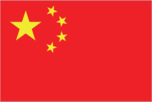
red with a large yellow five-pointed star and four smaller yellow five-pointed stars (arranged in a vertical arc toward the middle of the flag) in the upper hoist-side corner; the color red represents revolution, while the stars symbolize the four social classes - the working class, the peasantry, the urban petty bourgeoisie, and the national bourgeoisie (capitalists) - united under the Communist Party of China
Government - note
in 2018, the Beijing established an investigatory National Supervisory Commission to oversee all state employees
Government type
communist party-led state
Independence
1 October 1949 (People's Republic of China established); notable earlier dates: 221 B.C. (unification under the Qin Dynasty); 1 January 1912 (Qing Dynasty replaced by the Republic of China)
International law organization participation
has not submitted an ICJ jurisdiction declaration; non-party state to the ICCt
International organization participation
ADB, AfDB (nonregional member), APEC, Arctic Council (observer), ARF, ASEAN (dialogue partner), BIS, BRICS, CDB, CICA, EAS, FAO, FATF, G-20, G-24 (observer), G-5, G-77, IADB, IAEA, IBRD, ICAO, ICC (national committees), ICRM, IDA, IFAD, IFC, IFRCS, IHO, ILO, IMF, IMO, IMSO, Interpol, IOC, IOM (observer), IPU, ISO, ITSO, ITU, LAIA (observer), MIGA, MINURSO, MINUSMA, MONUSCO, NAM (observer), NSG, OAS (observer), OPCW, Pacific Alliance (observer), PCA, PIF (partner), SAARC (observer), SCO, SICA (observer), UN, UNAMID, UNCTAD, UNESCO, UNFICYP, UNHCR, UNHRC, UNIDO, UNIFIL, UNISFA, UNMIL, UNMISS, UNOCI, UN Security Council (permanent), UNTSO, UNWTO, UPU, WCO, WHO, WIPO, WMO, WTO, ZC
Judicial branch
- highest court(s)
- Supreme People's Court (consists of over 340 judges, including the chief justice and 13 grand justices organized into a civil committee and tribunals for civil, economic, administrative, complaint and appeal, and communication and transportation cases)
- judge selection and term of office
- chief justice appointed by the People's National Congress (NPC); limited to 2 consecutive 5-year-terms; other justices and judges nominated by the chief justice and appointed by the Standing Committee of the NPC; term of other justices and judges determined by the NPC
- subordinate courts
- Higher People's Courts; Intermediate People's Courts; District and County People's Courts; Autonomous Region People's Courts; International Commercial Courts; Special People's Courts for military, maritime, transportation, and forestry issues
Legal system
civil law influenced by Soviet and continental European civil law systems; legislature retains power to interpret statutes; note - on 28 May 2020, the National People's Congress adopted the PRC Civil Code, which codifies personal relations and property relations
Legislative branch
- description
- unicameral National People's Congress or Quanguo Renmin Daibiao Dahui (maximum of 3,000 seats; members indirectly elected by municipal, regional, and provincial people's congresses, and the People's Liberation Army; members serve 5-year terms); note - in practice, only members of the Chinese Communist Party (CCP), its 8 allied independent parties, and CCP-approved independent candidates are elected
- election results
- percent of vote - NA; seats by party - NA; composition - men 2,238, women 742, percent of women 24.9%
- elections
- last held in December 2017-February 2018 (next to be held in late 2022 to early 2023)
National anthem
- lyrics/music
- TIAN Han/NIE Er
- name
- "Yiyongjun Jinxingqu" (The March of the Volunteers)
- note
- note: adopted 1949; the anthem, though banned during the Cultural Revolution, is more commonly known as "Zhongguo Guoge" (Chinese National Song); it was originally the theme song to the 1935 Chinese movie, "Sons and Daughters in a Time of Storm"
National heritage
- selected World Heritage Site locales
- Imperial Palaces of the Ming and Qing Dynasties (c); Mausoleum of the First Qin Emperor (c); The Great Wall (c); Summer Palace (c); Jiuzhaigou Valley (n); Potala Palace (c); Ancient Pingyao (c); Historic Macau (c); Dengfeng (c); Grand Canal (c); Mount Huangshan (m)
- total World Heritage Sites
- 56 (14 natural, 38 cultural, 4 mixed)
National holiday
National Day (anniversary of the founding of the People's Republic of China), 1 October (1949)
National symbol(s)
dragon, giant panda; national colors: red, yellow
Political parties and leaders
- Chinese Communist Party or CCP [XI Jinping]
- note
- note: China has 8 nominally independent small parties controlled by the CCP
Suffrage
18 years of age; universal
Economy
Agricultural products
maize, rice, vegetables, wheat, sugar cane, potatoes, cucumbers, tomatoes, watermelons, sweet potatoes
Budget
- expenditures
- 3.008 trillion (2017 est.)
- revenues
- 2.553 trillion (2017 est.)
Budget surplus (+) or deficit (-)
-3.8% (of GDP) (2017 est.)
Credit ratings
- Fitch rating
- A+ (2007)
- Moody's rating
- A1 (2017)
- note
- note: The year refers to the year in which the current credit rating was first obtained.
- Standard & Poors rating
- A+ (2017)
Current account balance
- Current account balance 2018
- $25.499 billion (2018 est.)
- Current account balance 2019
- $141.335 billion (2019 est.)
Debt - external
- Debt - external 2018
- $1,935,206,000,000 (2018 est.)
- Debt - external 2019
- $2,027,950,000,000 (2019 est.)
Economic overview
Since the late 1970s, China has moved from a closed, centrally planned system to a more market-oriented one that plays a major global role. China has implemented reforms in a gradualist fashion, resulting in efficiency gains that have contributed to a more than tenfold increase in GDP since 1978. Reforms began with the phaseout of collectivized agriculture, and expanded to include the gradual liberalization of prices, fiscal decentralization, increased autonomy for state enterprises, growth of the private sector, development of stock markets and a modern banking system, and opening to foreign trade and investment. China continues to pursue an industrial policy, state support of key sectors, and a restrictive investment regime. From 2013 to 2017, China had one of the fastest growing economies in the world, averaging slightly more than 7% real growth per year. Measured on a purchasing power parity (PPP) basis that adjusts for price differences, China in 2017 stood as the largest economy in the world, surpassing the US in 2014 for the first time in modern history. China became the world's largest exporter in 2010, and the largest trading nation in 2013. Still, China's per capita income is below the world average. In July 2005 moved to an exchange rate system that references a basket of currencies. From mid-2005 to late 2008, the renminbi (RMB) appreciated more than 20% against the US dollar, but the exchange rate remained virtually pegged to the dollar from the onset of the global financial crisis until June 2010, when Beijing announced it would resume a gradual appreciation. From 2013 until early 2015, the renminbi held steady against the dollar, but it depreciated 13% from mid-2015 until end-2016 amid strong capital outflows; in 2017 the RMB resumed appreciating against the dollar – roughly 7% from end-of-2016 to end-of-2017. In 2015, the People’s Bank of China announced it would continue to carefully push for full convertibility of the renminbi, after the currency was accepted as part of the IMF’s special drawing rights basket. However, since late 2015 Beijing has strengthened capital controls and oversight of overseas investments to better manage the exchange rate and maintain financial stability. Beijing faces numerous economic challenges including: (a) reducing its high domestic savings rate and correspondingly low domestic household consumption; (b) managing its high corporate debt burden to maintain financial stability; (c) controlling off-balance sheet local government debt used to finance infrastructure stimulus; (d) facilitating higher-wage job opportunities for the aspiring middle class, including rural migrants and college graduates, while maintaining competitiveness; (e) dampening speculative investment in the real estate sector without sharply slowing the economy; (f) reducing industrial overcapacity; and (g) raising productivity growth rates through the more efficient allocation of capital and state-support for innovation. Economic development has progressed further in coastal provinces than in the interior, and by 2016 more than 169.3 million migrant workers and their dependents had relocated to urban areas to find work. One consequence of China’s population control policy known as the "one-child policy" - which was relaxed in 2016 to permit all families to have two children - is that China is now one of the most rapidly aging countries in the world. Deterioration in the environment - notably air pollution, soil erosion, and the steady fall of the water table, especially in the North - is another long-term problem. China continues to lose arable land because of erosion and urbanization. Beijing is seeking to add energy production capacity from sources other than coal and oil, focusing on natural gas, nuclear, and clean energy development. In 2016, China ratified the Paris Agreement, a multilateral agreement to combat climate change, and committed to peak its carbon dioxide emissions between 2025 and 2030. The government's 13th Five-Year Plan, unveiled in March 2016, emphasizes the need to increase innovation and boost domestic consumption to make the economy less dependent on government investment, exports, and heavy industry. However, China has made more progress on subsidizing innovation than rebalancing the economy. Beijing has committed to giving the market a more decisive role in allocating resources, but its policies continue to favor state-owned enterprises and emphasize stability. Beijing in 2010 pledged to double China’s GDP by 2020, and the 13th Five Year Plan includes annual economic growth targets of at least 6.5% through 2020 to achieve that goal. In recent years, China has renewed its support for state-owned enterprises in sectors considered important to "economic security," explicitly looking to foster globally competitive industries. Beijing also has undermined some market-oriented reforms by reaffirming the "dominant" role of the state in the economy, a stance that threatens to discourage private initiative and make the economy less efficient over time. The slight acceleration in economic growth in 2017—the first such uptick since 2010—gives Beijing more latitude to pursue its economic reforms, focusing on financial sector deleveraging and its Supply-Side Structural Reform agenda, first announced in late 2015.
Exchange rates
- Currency
- Renminbi yuan (RMB) per US dollar -
- Exchange rates 2013
- 6.1958 (2013 est.)
- Exchange rates 2014
- 6.1434 (2014 est.)
- Exchange rates 2018
- 6.8798 (2018 est.)
- Exchange rates 2019
- 7.0403 (2019 est.)
- Exchange rates 2020
- 6.5374 (2020 est.)
Exports
- Exports 2018
- $2,651,010,000,000 (2018 est.)
- Exports 2019
- $2.631 trillion (2019 est.)
- Exports 2020
- $2,732,370,000,000 (2020 est.)
- note
- note: Data are in current year dollars and do not include illicit exports or re-exports.
Exports - commodities
broadcasting equipment, computers, integrated circuits, office machinery and parts, telephones (2019)
Exports - partners
United States 17%, Hong Kong 10%, Japan 6% (2019)
Fiscal year
calendar year
GDP - composition, by end use
- exports of goods and services
- 20.4% (2017 est.)
- government consumption
- 14.5% (2017 est.)
- household consumption
- 39.1% (2017 est.)
- imports of goods and services
- -18.4% (2017 est.)
- investment in fixed capital
- 42.7% (2017 est.)
- investment in inventories
- 1.7% (2017 est.)
GDP - composition, by sector of origin
- agriculture
- 7.9% (2017 est.)
- industry
- 40.5% (2017 est.)
- services
- 51.6% (2017 est.)
GDP (official exchange rate)
- $14,327,359,000,000 (2019 est.)
- note
- note: because China's exchange rate is determined by fiat rather than by market forces, the official exchange rate measure of GDP is not an accurate measure of China's output; GDP at the official exchange rate substantially understates the actual level of China's output vis-a-vis the rest of the world; in China's situation, GDP at purchasing power parity provides the best measure for comparing output across countries
Gini Index coefficient - distribution of family income
- Gini Index coefficient - distribution of family income 2015
- 46.2 (2015 est.)
- Gini Index coefficient - distribution of family income 2016
- 38.5 (2016 est.)
Household income or consumption by percentage share
- highest 10%
- 31.4% (2012)
- lowest 10%
- 2.1%
- note
- note: data are for urban households only
Imports
- Imports 2018
- $2,563,100,000,000 (2018 est.) note: data are in current year dollars
- Imports 2019
- $2,499,150,000,000 (2019 est.) note: data are in current year dollars
- Imports 2020
- $2,362,690,000,000 (2020 est.) note: data are in current year dollars
Imports - commodities
crude petroleum, integrated circuits, iron, natural gas, cars, gold (2019)
Imports - partners
South Korea 9%, Japan 8%, Australia 7%, Germany 7%, US 7%, Taiwan 6% (2019)
Industrial production growth rate
6.1% (2017 est.)
Industries
world leader in gross value of industrial output; mining and ore processing, iron, steel, aluminum, and other metals, coal; machine building; armaments; textiles and apparel; petroleum; cement; chemicals; fertilizer; consumer products (including footwear, toys, and electronics); food processing; transportation equipment, including automobiles, railcars and locomotives, ships, aircraft; telecommunications equipment, commercial space launch vehicles, satellites
Inflation rate (consumer prices)
- Inflation rate (consumer prices) 2017
- 1.5% (2017 est.)
- Inflation rate (consumer prices) 2018
- 2% (2018 est.)
- Inflation rate (consumer prices) 2019
- 2.8% (2019 est.)
Labor force
- 774.71 million (2019 est.)
- note
- note: by the end of 2012, China's working age population (15-64 years) was 1.004 billion
Labor force - by occupation
- agriculture
- 27.7%
- industry
- 28.8%
- services
- 43.5% (2016 est.)
Population below poverty line
0.6% (2019 est.)
Public debt
- note
- note: official data; data cover both central and local government debt, including debt officially recognized by China's National Audit Office report in 2011; data exclude policy bank bonds, Ministry of Railway debt, and China Asset Management Company debt
- Public debt 2016
- 44.2% of GDP (2016 est.)
- Public debt 2017
- 47% of GDP (2017 est.)
Real GDP (purchasing power parity)
- note
- note: data are in 2017 dollars
- Real GDP (purchasing power parity) 2018
- $21,229,360,000,000 (2018 est.)
- Real GDP (purchasing power parity) 2019
- $22,492,450,000,000 (2019 est.)
- Real GDP (purchasing power parity) 2020
- $23,009,780,000,000 (2020 est.)
Real GDP growth rate
- Real GDP growth rate 2017
- 6.92% (2017 est.)
- Real GDP growth rate 2018
- 6.75% (2018 est.)
- Real GDP growth rate 2019
- 6.14% (2019 est.)
Real GDP per capita
- note
- note: data are in 2017 dollars
- Real GDP per capita 2018
- $15,200 (2018 est.)
- Real GDP per capita 2019
- $16,100 (2019 est.)
- Real GDP per capita 2020
- $16,400 (2020 est.)
Reserves of foreign exchange and gold
- Reserves of foreign exchange and gold 31 December 2016
- $3.098 trillion (31 December 2016 est.)
- Reserves of foreign exchange and gold 31 December 2017
- $3.236 trillion (31 December 2017 est.)
Taxes and other revenues
21.3% (of GDP) (2017 est.)
Unemployment rate
- note
- note: data are for registered urban unemployment, which excludes private enterprises and migrants
- Unemployment rate 2018
- 3.84% (2018 est.)
- Unemployment rate 2019
- 3.64% (2019 est.)
Energy
Carbon dioxide emissions
- from coal and metallurgical coke
- 8,652,419,000 metric tonnes of CO2 (2019 est.)
- from consumed natural gas
- 600.276 million metric tonnes of CO2 (2019 est.)
- from petroleum and other liquids
- 1,520,552,000 metric tonnes of CO2 (2019 est.)
- total emissions
- 10,773,248,000 metric tonnes of CO2 (2019 est.)
Coal
- consumption
- 4,506,387,000 metric tons (2020 est.)
- exports
- 6.652 million metric tons (2020 est.)
- imports
- 307.047 million metric tons (2020 est.)
- production
- 4,314,681,000 metric tons (2020 est.)
- proven reserves
- 141.595 billion metric tons (2019 est.)
Electricity
- consumption
- 6,875,088,640,000 kWh (2019 est.)
- exports
- 21.655 billion kWh (2019 est.)
- imports
- 4.858 billion kWh (2019 est.)
- installed generating capacity
- 2,217,925,000 kW (2020 est.)
- transmission/distribution losses
- 333.01 billion kWh (2019 est.)
Electricity access
- electrification - total population
- 100% (2020)
Electricity generation sources
- biomass and waste
- 1.6% of total installed capacity (2020 est.)
- fossil fuels
- 66% of total installed capacity (2020 est.)
- geothermal
- 0% of total installed capacity (2020 est.)
- hydroelectricity
- 17.8% of total installed capacity (2020 est.)
- nuclear
- 4.8% of total installed capacity (2020 est.)
- solar
- 3.5% of total installed capacity (2020 est.)
- tide and wave
- 0% of total installed capacity (2020 est.)
- wind
- 6.2% of total installed capacity (2020 est.)
Energy consumption per capita
- Total energy consumption per capita 2019
- 105.687 million Btu/person (2019 est.)
Natural gas
- consumption
- 306,576,649,000 cubic meters (2019 est.)
- exports
- 3,548,831,000 cubic meters (2019 est.)
- imports
- 131,608,161,000 cubic meters (2019 est.)
- production
- 179,317,495,000 cubic meters (2019 est.)
- proven reserves
- 6,654,250,000,000 cubic meters (2021 est.)
Petroleum
- crude oil and lease condensate exports
- 52,500 bbl/day (2018 est.)
- crude oil and lease condensate imports
- 9,238,100 bbl/day (2018 est.)
- crude oil estimated reserves
- 26,022,600,000 barrels (2021 est.)
- refined petroleum consumption
- 14,007,500 bbl/day (2019 est.)
- total petroleum production
- 4,712,200 bbl/day (2021 est.)
Refined petroleum products - exports
848,400 bbl/day (2015 est.)
Refined petroleum products - imports
1.16 million bbl/day (2015 est.)
Refined petroleum products - production
11.51 million bbl/day (2015 est.)
Communications
Broadband - fixed subscriptions
- subscriptions per 100 inhabitants
- 34 (2020 est.)
- total
- 483,549,500 (2020 est.)
Broadcast media
all broadcast media are owned by, or affiliated with, the Chinese Communisty Party (CCP) or a government agency; no privately owned TV or radio stations; state-run Chinese Central TV, provincial, and municipal stations offer more than 2,000 channels; the Central Propaganda Department as well as local (provincial, municipal) sends directives to all domestic media outlets to guide its reporting with the government maintaining authority to approve all programming; foreign-made TV programs must be approved/censored prior to broadcast; increasingly, PRC nationals turn to online platforms (Bilibili, Tencent Video, iQiyi, etc) to access PRC and international films and television shows. Video platforms have to abide by regulations issued by the Cyberspace Administration of China (CAC), which align with censorship policies from CCP propaganda authorities. (2022)
Internet country code
.cn
Internet users
- percent of population
- 70% (2020 est.)
- total
- 987 million (2020 est.)
Telecommunication systems
- domestic
- nearly 13 per 100 fixed line and 118 per 100 mobile-cellular; a domestic satellite system with several earth stations has been in place since 2018 (2020)
- general assessment
- China has the largest Internet market in the world with almost all subscribers accessing Internet through mobile devices; market is driven through government-allied investment; fast-developing data center market; government aims to provide universal and affordable broadband coverage through market competition and private investment in state-controlled enterprises; 3G and LTE subscribers will migrate to 5G aiming for 2 million 5G base stations by the end of 2022; government strengthens IoT policies to boost economic growth; China is pushing development of smart cities beyond Beijing; Beijing residents carry virtual card integrating identity, social security, health, and education documents; government controls gateways to global Internet through censorship, surveillance, and shut-downs; major exporter of broadcasting equipment world-wide (2022)
- international
- country code - 86; landing points for the RJCN, EAC-C2C, TPE, APCN-2, APG, NCP, TEA, SeaMeWe-3, SJC2, Taiwan Strait Express-1, AAE-1, APCN-2, AAG, FEA, FLAG and TSE submarine cables providing connectivity to Asia, the Middle East, Europe, and the US; satellite earth stations - 7 (5 Intelsat - 4 Pacific Ocean and 1 Indian Ocean; 1 Intersputnik - Indian Ocean region; and 1 Inmarsat - Pacific and Indian Ocean regions) (2019)
- note
- note: the COVID-19 pandemic continues to have a significant impact on production and supply chains globally; since 2020, some aspects of the telecom sector have experienced a downturn, particularly in mobile device production; progress toward 5G implementation has resumed, as well as upgrades to infrastructure; consumer spending on telecom services has increased due to the surge in demand for capacity and bandwidth; the crucial nature of telecom services as a tool for work and school from home is still evident, and the spike in this area has seen growth opportunities for development of new tools and increased services
Telephones - fixed lines
- subscriptions per 100 inhabitants
- 13 (2020 est.)
- total subscriptions
- 181.908 million (2020 est.)
Telephones - mobile cellular
- subscriptions per 100 inhabitants
- 119 (2020 est.)
- total subscriptions
- 1.72 billion (2020 est.)
Transportation
Airports
- total
- 507 (2021)
Airports - with paved runways
- 1,524 to 2,437 m
- 109
- 2,438 to 3,047 m
- 187
- 914 to 1,523 m
- 43
- over 3,047 m
- 87
- total
- 510
- under 914 m
- 84 (2021)
Airports - with unpaved runways
- 1,524 to 2,437 m
- 1
- 914 to 1,523 m
- 7
- over 3,047 m
- 2
- total
- 23
- under 914 m
- 13 (2021)
Civil aircraft registration country code prefix
B
Heliports
39 (2021)
Merchant marine
- by type
- bulk carrier 1,558, container ship 341, general cargo 957, oil tanker 1,061, other 2,745 (2021)
- total
- 6,662
National air transport system
- annual freight traffic on registered air carriers
- 611,439,830 (2018) mt-km
- annual passenger traffic on registered air carriers
- 436,183,969 (2018)
- inventory of registered aircraft operated by air carriers
- 2,890
- number of registered air carriers
- 56 (2020)
Pipelines
76,000 km gas, 30,400 km crude oil, 27,700 km refined petroleum products, 797,000 km water (2018)
Ports and terminals
- container port(s) (TEUs)
- Dalian (8,760,000), Guangzhou (23,236,200), Ningbo (27,530,000), Qingdao (21,010,000), Shanghai (43,303,000), Shenzhen (25,770,000), Tianjin (17,264,000) (2019)
- LNG terminal(s) (import)
- Fujian, Guangdong, Jiangsu, Shandong, Shanghai, Tangshan, Zhejiang
- major seaport(s)
- Dalian, Ningbo, Qingdao, Qinhuangdao, Shanghai, Shenzhen, Tianjin
- river port(s)
- Guangzhou (Pearl)
Railways
- total
- 150,000 km (2021) 1.435-m gauge (100,000 km electrified); 104,0000 traditional, 40,000 high-speed
Roadways
- paved
- 4.578 million km (2020) (includes 168000 km of expressways)
- total
- 5.2 million km (2020)
- unpaved
- 622,000 km (2017)
Transportation - note
note 1: seven of the world’s ten largest container ports are in Chinanote 2: China operates one PC 3 or 4 class medium ice breaker and three PC 5 or 6 class light icebreakersnote - PC indicates a Polar Class vessel: PC 3 - year-round operation in second-year ice which may include multi-year ice inclusions (ice thickness up to 2.5 m); PC 4 - year-round operation in thick first-year ice which may include old ice inclusions (ice thickness up to 120 cm); PC 5 - year-round operation in medium first-year ice which may include old ice inclusions (ice thickness up to 70-120 cm); PC 6 - summer/autumn operation in medium first-year ice which may include old ice inclusions (ice thickness up to 30-70 cm)
Waterways
27,700 km (2020) (navigable waterways)
Military and Security
Military - note
established in 1927, the PLA is the military arm of the ruling Chinese Communist Party (CCP), which oversees the PLA through its Central Military Commission; the Central Military Commission is China’s top military decision making body the PRC's internal security forces consist primarily of the Ministry of Public Security (MPS), the Ministry of State Security (MSS), the People’s Armed Police (PAP), and the militia; the PLA support the internal security forces as necessary: the MPS controls the civilian national police, which serves as the first-line force for public order; its primary mission is domestic law enforcement and maintaining order, including anti-rioting and anti-terrorism the MSS is the PRC’s main civilian intelligence and counterintelligence service the PAP is a paramilitary component (or adjunct) of the PLA; its primary missions include internal security, maintaining public order, maritime security, and assisting the PLA in times of war; it is under the command of the Central Military Commission (CMC); the China Coast Guard (CCG) administratively falls under the PAP; the CCG has a variety of missions, such as maritime sovereignty enforcement, surveillance, resource protection, anti-smuggling, and general law enforcement; as of 2022, it was the largest maritime law enforcement fleet in the world the militia is an armed reserve of civilians which serves as an auxiliary and reserve force for the PLA upon mobilization; it is distinct from the PLA’s reserve forces; militia units are organized around towns, villages, urban sub-districts, and enterprises, and vary widely in composition and mission; they have dual civilian-military command structures; a key component of the militia are the local maritime forces, commonly referred to as the People’s Armed Forces Maritime Militia (PAFMM); the PAFMM consists of mariners (and their vessels) who receive training, equipment, and other forms of support from the Navy and CCG (although the PAFMM remains separate from both) to perform tasks such as maritime patrolling, surveillance and reconnaissance, emergency/disaster response, transportation, search and rescue, and auxiliary tasks in support of naval operations in wartime; the PAFMM’s tasks are often conducted in conjunction or coordination with the Navy and the CCG; it has been used to assert Beijing's maritime claims in the Sea of Japan and South China Sea (2022)
Military and security forces
- People's Liberation Army (PLA): Ground Forces, Navy (PLAN, includes marines and naval aviation), Air Force (PLAAF, includes airborne forces), Rocket Force (strategic missile force), and Strategic Support Force (information, electronic, and cyber warfare, as well as space forces); People's Armed Police (PAP, includes Coast Guard, Border Defense Force, Internal Security Forces); PLA Reserve Force (2022)
- note
- note 1: the Strategic Support Force includes the Space Systems Department, which is responsible for nearly all PLA space operations, including space launch and support, space surveillance, space information support, space telemetry, tracking, and control, and space warfarenote 2: the PAP is a paramilitary police component of China’s armed forces that is under the command of the Central Military Commission (CMC) and charged with internal security, law enforcement, counterterrorism, and maritime rights protectionnote 3: in 2018, the Coast Guard was moved from the State Oceanic Administration to the PAP; in 2013, China merged four of its five major maritime law enforcement agencies – the China Marine Surveillance (CMS), Maritime Police, Fishery Law Enforcement (FLE), and Anti-Smuggling Police – into a unified coast guard
Military and security service personnel strengths
approximately 2 million active-duty troops (approximately 1 million Ground; 250,000 Navy/Marines; 350-400,000 Air Force; 120,000 Rocket Forces; 150-175,000 Strategic Support Forces); estimated 600-650,000 People’s Armed Police (2022)
Military deployments
425 Mali (MINUSMA); 225 Democratic Republic of the Congo (MONUSCO); 420 Lebanon (UNIFIL); 1,050 South Sudan (UNMISS); up to 2,000 Djibouti (May 2022)
Military equipment inventories and acquisitions
- the PLA is outfitted primarily with a wide mix of older and modern domestically-produced systems heavily influenced by technology derived from other countries; Russia has been the top supplier of foreign military equipment since 2010; China has a large defense-industrial sector capable of producing advanced weapons systems across all military domains (2022)
- note
- note: the PLA is in the midst of a decades-long modernization effort; in 2017, President XI set three developmental goals for the force - becoming a mechanized force with increased information and strategic capabilities by 2020, a fully modernized force by 2035, and a world-class military by mid-century
Military expenditures
- Military Expenditures 2017
- 1.8% of GDP (2017) (approximately $260 billion)
- Military Expenditures 2018
- 1.7% of GDP (2018) (approximately $265 billion)
- Military Expenditures 2019
- 1.7% of GDP (2019) (approximately $290 billion)
- Military Expenditures 2020
- 1.7% of GDP (2020 est.)
- Military Expenditures 2021
- 1.5% of GDP (2021 est.)
Military service age and obligation
- 18-22 years of age for men for selective compulsory military service, with a 2-year service obligation; women 18-19 years of age who are high school graduates and meet requirements for specific military jobs are subject to conscription; women may also volunteer; all officers are volunteers (2022)
- note
- note: the PLA’s conscription system functions as a levy; the PLA establishes the number of conscripts needed, which produces quotas for the provinces; each province provides a set number of soldiers or sailors; if the number of volunteers fails to meet quotas, the local governments may compel individuals to enter military service
Transnational Issues
Disputes - international
China and India continue their security and foreign policy dialogue started in 2005 related to a number of boundary disputes across the 2,000 mile shared border; India does not recognize Pakistan's 1964 ceding to China of the Aksai Chin, a territory designated as part of the princely state of Kashmir by the British Survey of India in 1865; China claims most of the Indian state Arunachal Pradesh to the base of the Himalayas, but the US recognizes the state of Arunachal Pradesh as Indian territory; Bhutan and China continue negotiations to establish a common boundary alignment to resolve territorial disputes arising from substantial cartographic discrepancies, the most contentious of which lie in Bhutan's west along China's Chumbi salient; Chinese maps show an international boundary symbol (the so-called “nine-dash line”) off the coasts of the littoral states of the South China Sea, where China has interrupted Vietnamese hydrocarbon exploration; China asserts sovereignty over Scarborough Reef along with the Philippines and Taiwan, and over the Spratly Islands together with Malaysia, the Philippines, Taiwan, Vietnam, and Brunei; the 2002 Declaration on the Conduct of Parties in the South China Sea eased tensions in the Spratlys, and in 2017 China and ASEAN began confidential negotiations for an updated Code of Conduct for the South China Sea designed not to settle territorial disputes but establish rules and norms in the region; this still is not the legally binding code of conduct sought by some parties; Vietnam and China continue to expand construction of facilities in the Spratlys and in early 2018 China began deploying advanced military systems to disputed Spratly outposts; China occupies some of the Paracel Islands also claimed by Vietnam and Taiwan; the Japanese-administered Senkaku Islands are also claimed by China and Taiwan; certain islands in the Yalu and Tumen Rivers are in dispute with North Korea; North Korea and China seek to stem illegal migration to China by North Koreans, fleeing privation and oppression; China and Russia have demarcated the once disputed islands at the Amur and Ussuri confluence and in the Argun River in accordance with their 2004 Agreement; China and Tajikistan have begun demarcating the revised boundary agreed to in the delimitation of 2002; the decade-long demarcation of the China-Vietnam land boundary was completed in 2009; citing environmental, cultural, and social concerns, China has reconsidered construction of 13 dams on the Salween River, but energy-starved Burma, with backing from Thailand, continues to consider building five hydro-electric dams downstream despite regional and international protests
Illicit drugs
a major source of precursor chemicals, new psychoactive substances (NPS), and synthetic drugs, including fentanyl precursors and methamphetamine; PRC criminal organizations, transnational crime, and organizations from Mexico and Southeast Asia traffic licit precursor chemical components and illicit finished drugs within the PRC as well as to international markets; significant illicit drug consumption of methamphetamine and ketamine; a major destination and transit country for heroin produced in neighboring countries; the PRC remains a major source of NPS sold in North America and Europe (2021)
Refugees and internally displaced persons
- IDPs
- undetermined (2021)
- refugees (country of origin)
- 303,107 (Vietnam), undetermined (North Korea) (mid-year 2021)
Trafficking in persons
- tier rating
- Tier 3 — China does not fully meet the minimum standards for elimination of trafficking and is not making significant efforts to do so; the government prosecuted and convicted some traffickers and continued to cooperate with international authorities to address forced and fraudulent marriages in China; however, there was a government policy or pattern of widespread forced labor, including the continued mass arbitrary detention of more than one million Uyghurs, ethnic Kazakhs, ethnic Kyrgyz, and other Muslims in the Xinjiang Uyghur Autonomous Region; the government did not report any investigations, prosecutions, or convictions of law enforcement officials allegedly complicit despite continued reports of officials benefiting from, permitting, or directly facilitating sex trafficking; authorities did not report identifying any trafficking victims or referring them to protective services; it is likely that law enforcement arrested and detained unidentified trafficking victims for crimes traffickers compelled them to commit; for the third consecutive year, the government did not report the extent to which it funded anti-trafficking activities in furtherance of the 2013-2020 National Action Plan on Combating Human Trafficking (2020)
- trafficking profile
- human traffickers exploit domestic and foreign victims in China and Chinese people abroad; Chinese men, women, and children are victims of forced labor and sex trafficking in at least 60 countries; traffickers also use China as a transit point to subject foreign individuals to trafficking in other countries throughout Asia and in international maritime industries; state-sponsored forced labor is intensifying under the government’s mass detention and political indoctrination campaign against Muslim minorities in the Xinjiang Uyghur Autonomous Region; well-organized criminal syndicates and local gangs subject Chinese women and girls to sex trafficking within China; women and girls from South Asia, Southeast Asia, and several countries in Africa experience forced labor in domestic service, forced concubinism leading to forced childbearing, and sex trafficking via forced and fraudulent marriage to Chinese men; African and Asian men reportedly experience conditions indicative of forced labor aboard Chinese-flagged fishing vessels; many North Korean refugees and asylum-seekers living in China illegally are particularly vulnerable to trafficking
Environment
Air pollutants
- carbon dioxide emissions
- 9,893.04 megatons (2016 est.)
- methane emissions
- 1,490.24 megatons (2020 est.)
- particulate matter emissions
- 49.16 micrograms per cubic meter (2016 est.)
Climate
extremely diverse; tropical in south to subarctic in north
Environment - current issues
air pollution (greenhouse gases, sulfur dioxide particulates) from reliance on coal produces acid rain; China is the world's largest single emitter of carbon dioxide from the burning of fossil fuels; water shortages, particularly in the north; water pollution from untreated wastes; coastal destruction due to land reclamation, industrial development, and aquaculture; deforestation and habitat destruction; poor land management leads to soil erosion, landslides, floods, droughts, dust storms, and desertification; trade in endangered species
Environment - international agreements
- party to
- Antarctic-Environmental Protection, Antarctic-Marine Living Resources, Antarctic Treaty, Biodiversity, Climate Change, Climate Change-Kyoto Protocol, Climate Change-Paris Agreement, Desertification, Endangered Species, Environmental Modification, Hazardous Wastes, Law of the Sea, Marine Dumping-London Convention, Marine Dumping-London Protocol, Ozone Layer Protection, Ship Pollution, Tropical Timber 2006, Wetlands, Whaling
- signed, but not ratified
- Comprehensive Nuclear Test Ban
Land use
- agricultural land
- 54.7% (2018 est.)
- agricultural land: arable land
- arable land: 11.3% (2018 est.)
- agricultural land: permanent crops
- permanent crops: 1.6% (2018 est.)
- agricultural land: permanent pasture
- permanent pasture: 41.8% (2018 est.)
- forest
- 22.3% (2018 est.)
- other
- 23% (2018 est.)
Major aquifers
North China Aquifer System (Huang Huai Hai Plain), Song-Liao Plain, Tarim Basin
Major infectious diseases
- degree of risk
- high (2020)
- food or waterborne diseases
- bacterial diarrhea, hepatitis A, and typhoid fever
- note
- note: a new coronavirus is causing an outbreak of respiratory illness (COVID-19) in China; illness with this virus has ranged from mild to severe with fatalities reported; the US Department of State has issued a do not travel advisory for China due to COVID-19; the Centers for Disease Control and Prevention has also recommended against travel to China and published additional guidance at https://wwwnc.cdc.gov/travel/notices/warning/novel-coronavirus-china; the US Department of Homeland Security has issued instructions requiring US passengers who have been in China to travel through select airports where the US Government has implemented enhanced screening procedures; as of 9 December 2022, China has reported a total of 9,862,129 cases of COVID-19 or 670.3 cumulative cases of COVID-19 per 100,000 population with a total of 30,717 cumulative deaths or a rate 2.1 cumulative deaths per 100,000 population; as of 28 November 2022, 91.5% of the population has received at least one dose of COVID-19 vaccine
- soil contact diseases
- hantaviral hemorrhagic fever with renal syndrome (HFRS)
- vectorborne diseases
- Crimean-Congo hemorrhagic fever, Japanese encephalitis
Major lakes (area sq km)
- fresh water lake(s)
- Dongting Hu - 3,100 sq km; Poyang Hu - 3,350 sq km; Hongze Hu - 2,700 sq km; Tai Hu - 2,210 sq km; Hulun Nur - 1,590
- salt water lake(s)
- Quinghai Hu - 4,460 sq km; Nam Co - 2,500 sq km; Siling Co - 1,860 sq km; Tangra Yumco - 1,400 sq km; Bosten Hu 1,380 sq km
Major rivers (by length in km)
Yangtze - 6,300 km; Huang He - 5,464 km; Amur river source (shared with Mongolia and Russia [m]) - 4,444 km; Mekong river source (shared with Burma, Laos, Thailand, Cambodia, and Vietnam [m]) - 4,350 km; Brahmaputra river source (shared with India and Bangladesh [m]) - 3,969 km; Indus river source (shared with India and Pakistan [m]) - 3,610 km; Salween river source (shared with Thailand and Burma [m]) - 3,060 km; Irrawaddy river source (shared with Burma [m]) - 2,809 km; Pearl (shared with Vietnam [s]) - 2,200 km; Red river source (shared with Vietnam [m]) - 1,149 kmnote – [s] after country name indicates river source; [m] after country name indicates river mouth
Major watersheds (area sq km)
Pacific Ocean drainage: Amur (1,929,955 sq km), Huang He (944,970 sq km), Mekong (805,604 sq km), Yangtze (1,722,193 sq km)Indian Ocean drainage: Brahmaputra (651,335 sq km), Ganges (1,016,124 sq km), Indus (1,081,718 sq km), Irrawaddy (413,710 sq km), Salween (271,914 sq km)Arctic Ocean drainage: Ob (2,972,493 sq km)Internal (endorheic basin) drainage: Tarim Basin (1,152,448 sq km), Amu Darya (534,739 sq km), Syr Darya (782,617 sq km), Lake Balkash (510,015 sq km)
Revenue from coal
- coal revenues
- 0.57% of GDP (2018 est.)
Revenue from forest resources
- forest revenues
- 0.08% of GDP (2018 est.)
Total renewable water resources
2.84 trillion cubic meters (2017 est.)
Total water withdrawal
- agricultural
- 385.2 billion cubic meters (2017 est.)
- industrial
- 133.5 billion cubic meters (2017 est.)
- municipal
- 79.4 billion cubic meters (2017 est.)
Urbanization
- note
- note: data do not include Hong Kong and Macau
- rate of urbanization
- 1.78% annual rate of change (2020-25 est.)
- urban population
- 64.6% of total population (2023)
Waste and recycling
- municipal solid waste generated annually
- 210 million tons (2015 est.)