1993 Edition
CIA World Factbook 1993 (Project Gutenberg)
Geography
Area
total area: 260 km2 land area: 260 km2 comparative area: slightly less than 1.5 times the size of Washington, DC
Climate
tropical marine; warm, rainy summers (May to October) and cool, relatively dry winters (November to April)
Coastline
160 km
Environment
within the Caribbean hurricane belt
International disputes
none
Irrigated land
NA km2
Land boundaries
0 km
Land use
arable land: 0% permanent crops: 0% meadows and pastures: 8% forest and woodland: 23% other: 69%
Location
in the northwestern Caribbean Sea, nearly halfway between Cuba and Honduras
Map references
Central America and the Caribbean
Maritime claims
exclusive fishing zone: 200 nm territorial sea: 3 nm
Natural resources
fish, climate and beaches that foster tourism
Note
important location between Cuba and Central America
Terrain
low-lying limestone base surrounded by coral reefs
People and Society
Birth rate
15.32 births/1,000 population (1993 est.)
Death rate
4.98 deaths/1,000 population (1993 est.)
Ethnic divisions
mixed 40%, white 20%, black 20%, expatriates of various ethnic groups 20%
Infant mortality rate
8.4 deaths/1,000 live births (1993 est.)
Labor force
8,061 by occupation: service workers 18.7%, clerical 18.6%, construction 12.5%, finance and investment 6.7%, directors and business managers 5.9% (1979)
Languages
English
Life expectancy at birth
total population: 77.1 years male: 75.37 years female: 78.81 years (1993 est.)
Literacy
age 15 and over having ever attended school (1970) total population: 98% male: 98% female: 98%
Nationality
noun: Caymanian(s) adjective: Caymanian
Net migration rate
33.2 migrant(s)/1,000 population (1993 est.)
Population
30,440 (July 1993 est.)
Population growth rate
4.35% (1993 est.)
Religions
United Church (Presbyterian and Congregational), Anglican, Baptist, Roman Catholic, Church of God, other Protestant denominations
Total fertility rate
1.48 children born/woman (1993 est.)
Government
Administrative divisions
8 districts; Creek, Eastern, Midland, South Town, Spot Bay, Stake Bay, West End, Western
Capital
George Town
Chief of State
Queen ELIZABETH II (since 6 February 1952)
Constitution
1959, revised 1972
Digraph
CJ
Diplomatic representation in US
as a dependent territory of the UK, Caymanian interests in the US are represented by the UK
Executive branch
British monarch, governor, Executive Council (cabinet)
Flag
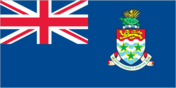
blue, with the flag of the UK in the upper hoist-side quadrant and the Caymanian coat of arms on a white disk centered on the outer half of the flag; the coat of arms includes a pineapple and turtle above a shield with three stars (representing the three islands) and a scroll at the bottom bearing the motto HE HATH FOUNDED IT UPON THE SEAS
Head of Government
Governor and President of the Executive Council Michael GORE (since NA May 1992)
Independence
none (dependent territory of the UK)
Judicial branch
Grand Court, Cayman Islands Court of Appeal
Legal system
British common law and local statutes
Legislative Assembly
last held November 1992 (next to be held November 1996); results - percent of vote by party NA; seats - (15 total, 12 elected)
Legislative branch
unicameral Legislative Assembly
Member of
CARICOM (observer), CDB, INTERPOL (subbureau), IOC
Names
conventional long form: none conventional short form: Cayman Islands
National holiday
Constitution Day (first Monday in July)
Political parties and leaders
no formal political parties
Suffrage
18 years of age; universal
Type
dependent territory of the UK
Economy
Agriculture
minor production of vegetables, fruit, livestock; turtle farming
Budget
revenues $141.5 million; expenditures $160.7 million, including capital expenditures of $NA (1991)
Currency
1 Caymanian dollar (CI$) = 100 cents
Economic aid
US commitments, including Ex-Im (FY70-89), $26.7 million; Western (non-US) countries, ODA and OOF bilateral commitments (1970-89), $35 million
Electricity
74,000 kW capacity; 256 million kWh produced, 8,780 kWh per capita (1992)
Exchange rates
Caymanian dollars (CI$) per US$1 - 1.20 (fixed rate)
Exports
$1.5 million (f.o.b., 1987 est.) commodities: turtle products, manufactured consumer goods partners: mostly US
External debt
$15 million (1986)
Fiscal year
1 April - 31 March
Imports
$136 million (c.i.f., 1987 est.) commodities: foodstuffs, manufactured goods partners: US, Trinidad and Tobago, UK, Netherlands Antilles, Japan
Industrial production
growth rate NA%
Industries
tourism, banking, insurance and finance, construction, building materials, furniture making
Inflation rate (consumer prices)
8% (1990 est.)
National product
GDP - exchange rate conversion - $670 million (1991 est.)
National product per capita
$23,000 (1991 est.)
National product real growth rate
4.4% (1991)
Overview
The economy depends heavily on tourism (70% of GDP and 75% of export earnings) and offshore financial services, with the tourist industry aimed at the luxury market and catering mainly to visitors from North America. About 90% of the islands' food and consumer goods needs must be imported. The Caymanians enjoy one of the highest standards of living in the region.
Unemployment rate
7% (1992)
Communications
Airports
total: 3 usable: 3 with permanent-surface runways: 2 with runways over 3,659 m: with runways 2,440-3,659 m: with runways 1,220-2,439 m: 2
Highways
160 km of main roads
Merchant marine
29 ships (1,000 GRT or over) totaling 307,738 GRT/468,659 DWT; includes 1 passenger-cargo, 8 cargo, 8 roll-on/roll-off cargo, 3 oil tanker, 2 chemical tanker, 1 liquefied gas carrier, 4 bulk, 2 combination bulk; note - a flag of convenience registry
Ports
George Town, Cayman Brac
Telecommunications
35,000 telephones; telephone system uses 1 submarine coaxial cable and 1 Atlantic Ocean INTELSAT earth station to link islands and access international services; broadcast stations - 2 AM, 1 FM, no TV
Military and Security
Branches
Royal Cayman Islands Police Force (RCIPF)
Note
defense is the responsibility of the UK