1998 Edition
CIA World Factbook 1998 (Internet Archive)
Geography
Area
total: 110,910 sq km land: 110,550 sq km water: 360 sq km
Area-comparative
slightly larger than Tennessee
Climate
temperate; cold, damp winters; hot, dry summers
Coastline
354 km
Elevation extremes
lowest point: Black Sea 0 m highest point: Musala 2,925 m
Environment-current issues
air pollution from industrial emissions; rivers polluted from raw sewage, heavy metals, detergents; deforestation; forest damage from air pollution and resulting acid rain; soil contamination from heavy metals from metallurgical plants and industrial wastes
Environment-international agreements
party to: Air Pollution, Air Pollution-Nitrogen Oxides, Air Pollution-Sulphur 85, Air Pollution-Volatile Organic Compounds, Antarctic Treaty, Biodiversity, Climate Change, Endangered Species, Environmental Modification, Hazardous Wastes, Law of the Sea, Nuclear Test Ban, Ozone Layer Protection, Ship Pollution, Wetlands signed, but not ratified: Air Pollution-Sulphur 94, Antarctic-Environmental Protocol
Geographic coordinates
43 00 N, 25 00 E
Geography-note
strategic location near Turkish Straits; controls key land routes from Europe to Middle East and Asia
Irrigated land
12,370 sq km (1993 est.)
Land boundaries
total: 1,808 km border countries: Greece 494 km, The Former Yugoslav Republic of Macedonia 148 km, Romania 608 km, Serbia and Montenegro 318 km (all with Serbia), Turkey 240 km
Land use
arable land: 37% permanent crops: 2% permanent pastures: 16% forests and woodland: 35% other: 10% (1993 est.)
Location
Southeastern Europe, bordering the Black Sea, between Romania and Turkey
Map references
Europe
Maritime claims
contiguous zone: 24 nm exclusive economic zone: 200 nm territorial sea: 12 nm
Natural hazards
earthquakes, landslides
Natural resources
bauxite, copper, lead, zinc, coal, timber, arable land
Terrain
mostly mountains with lowlands in north and southeast
People and Society
Age structure
0-14 years: 16% (male 696,131; female 662,335) 15-64 years: 68% (male 2,756,695; female 2,812,192) 65 years and over: 16% (male 564,698; female 748,375) (July 1998 est.)
Birth rate
8.08 births/1,000 population (1998 est.)
Death rate
13.24 deaths/1,000 population (1998 est.)
Ethnic groups
Bulgarian 85.3%, Turk 8.5%, Gypsy 2.6%, Macedonian 2.5%, Armenian 0.3%, Russian 0.2%, other 0.6%
Infant mortality rate
12.78 deaths/1,000 live births (1998 est.)
Languages
Bulgarian, secondary languages closely correspond to ethnic breakdown
Life expectancy at birth
total population: 71.96 years male: 68.39 years female: 75.74 years (1998 est.)
Literacy
definition: age 15 and over can read and write total population: 98% male: 99% female: 97% (1992 est.)
Nationality
noun: Bulgarian(s) adjective: Bulgarian
Net migration rate
-0.8 migrant(s)/1,000 population (1998 est.)
Population
8,240,426 (July 1998 est.)
Population growth rate
-0.6% (1998 est.)
Religions
Bulgarian Orthodox 85%, Muslim 13%, Jewish 0.8%, Roman Catholic 0.5%, Uniate Catholic 0.2%, Protestant, Gregorian-Armenian, and other 0.5%
Sex ratio
at birth: 1.06 male(s)/female under 15 years: 1.05 male(s)/female 15-64 years: 0.98 male(s)/female 65 years and over: 0.75 male(s)/female (1998 est.)
Total fertility rate
1.14 children born/woman (1998 est.)
Government
Administrative divisions
9 provinces (oblasti, singular-oblast); Burgas, Grad Sofiya, Khaskovo, Lovech, Montana, Plovdiv, Ruse, Sofiya, Varna
Constitution
adopted 12 July 1991
Country name
conventional long form: Republic of Bulgaria conventional short form: Bulgaria
Data code
BU
Executive branch
chief of state: President Petar STOYANOV (since 22 January 1997); Vice President Todor KAVALDZHIEV (since 22 January 1997) head of government: Chairman of the Council of Ministers (Prime Minister) Ivan Kostov (since 19 May 1997); Deputy Prime Ministers Aleksandur BOZHKOV (since 12 February 1997 Evgeniy BAKURDZHIEV (since 21 May 1997), Veselin METODIEV (since 21 May 1997) cabinet: Council of Ministers elected by the National Assembly elections: president and vice president elected on the same ticket by popular vote for five-year terms; election last held 27 October and 3 November 1996 (next to be held NA 2001); chairman of the Council of Ministers (prime minister) nominated by the president election results: Petar STOYANOV elected president; percent of vote-Petar STOYANOV 59.73%
FAX
- [1] (202) 234-7973 consulate(s): New York Diplomatic representation from the US: chief of mission: Ambassador Avis T. BOHLEN embassy: 1 Saborna Street, Sofia mailing address: Unit 1335, APO AE 09213-1335 telephone: [359] (2) 980-52-41 through 48
- [359] (2) 981-89-77
Flag description
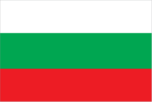
three equal horizontal bands of white (top), green, and red; the national emblem formerly on the hoist side of the white stripe has been removed-it contained a rampant lion within a wreath of wheat ears below a red five-pointed star and above a ribbon bearing the dates 681 (first Bulgarian state established) and 1944 (liberation from Nazi control)
Government type
republic
Independence
22 September 1908 (from Ottoman Empire)
International organization participation
ACCT, BIS, BSEC, CCC, CE, CEI, EAPC, EBRD, ECE, EU (applicant), FAO, G-9, IAEA, IBEC, IBRD, ICAO, ICFTU, ICRM, IFC, IFRCS, IHO, IIB, ILO, IMF, IMO, Inmarsat, Intelsat, Interpol, IOC, ISO, ITU, MONUA, NAM (guest), NSG, OSCE, PCA, PFP, UN, UNESCO, UNIDO, UNMIBH, UNMOT, UPU, WEU (associate partner), WFTU, WHO, WIPO, WMO, WToO, WTrO, ZC Diplomatic representation in the US: chief of mission: Ambassador Philip DIMITROV chancery: 1621 22nd Street NW, Washington, DC 20008 telephone: [1] (202) 387-7969
Judicial branch
Supreme Court, chairman appointed for a seven-year term by the president; Constitutional Court, 12 justices appointed or elected for a nine-year term Political parties and leaders: Bulgarian Socialist Party or BSP [Georgi PURVANOV, chairman]; Union of Democratic Forces or UDF (an alliance of pro-Democratic parties) [Ivan KOSTOV]; Euro-left [Aleksandur TOMOV]; Alliance for National Salvation or ANS (coalition led mainly by Movement for Rights and Freedoms or DPS [Ahmed DOGAN]); Bulgarian Business Bloc or BBB [Georgi GANCHEV]; People's Union [Anastasiya MOZER and Stefan SAVOV, cochairmen] Political pressure groups and leaders: Democratic Alliance for the Republic or DAR; New Union for Democracy or NUD; Podkrepa Labor Confederation; Confederation of Independent Trade Unions of Bulgaria or CITUB; Bulgarian Agrarian National Union-United or BZNS; Bulgarian Democratic Center; "Nikola Petkov" Bulgarian Agrarian National Union; Internal Macedonian Revolutionary Organization or IMRO; Agrarian movement; numerous regional, ethnic, and national interest groups with various agendas
Legal system
civil law and criminal law based on Roman law; accepts compulsory ICJ jurisdiction
Legislative branch
unicameral National Assembly or Narodno Sobranie (240 seats; members are popularly elected to serve four-year terms) elections: last held 19 April 1997 (next to be held NA 2001) election results: percent of vote by party-UDF 52%, BSP 22%, ANS 7%, Euro-left 5.5%, BBB 4.95%; seats by party-UDF 137, BSP 58, ANS 19, Euro-left 14, BBB 12
National capital
Sofia
National holiday
Independence Day, 3 March (1878)
Suffrage
18 years of age; universal
Economy
Agriculture-products
grain, oilseed, vegetables, fruits, tobacco; livestock
Budget
revenues: $2.7 billion expenditures: $3.2 billion, including capital expenditures of $NA (1997 est.)
Currency
1 lev (Lv) = 100 stotinki
Debt-external
$10 billion (1997 est.)
Economic aid
NA
Economy-overview
One of the poorest countries of central Europe, Bulgaria has slowly been moving from its old command economy towards a market-oriented economy. The economy faced a major crisis in 1996, marked by a banking system in turmoil, a depreciating currency, and contracting production and foreign trade. Foreign exchange reserves dwindled to $518 million, while dramatically hiked interest rates added to the domestic debt burden and stifled growth. GDP fell by 11% in 1996, after experiencing 2.0% growth in 1995. Privatization of state-owned industries stagnated, although the first auction of a mass privatization program was undertaken in late 1996. Lagging progress on structural reforms led to postponement of IMF disbursements under a $580 million standby loan agreed to in July 1996. In November 1996, the IMF proposed a currency board as Bulgaria's best chance to restore confidence in the lev, eliminate unnecessary spending, and avoid hyperinflation. The board was set up on 1 July 1997. Its establishment was followed by a reduction in inflation and interest rates and by a rise in foreign investment. Simultaneously the government pledged to sell off some of the most attractive state assets. GDP in 1997 dropped 7.4%, but is expected to rebound to an estimated 2% in 1998. Other government objectives include: the completion of land reform, the privatization and strengthening of the banking system, and the modernization of the legal environment of business.
Electricity-capacity
12.087 million kW (1995)
Electricity-consumption per capita
4,821 kWh (1995)
Electricity-production
41.449 billion kWh (1995)
Exchange rates
leva (Lv) per US$1-1,740 (1997), 483.4 (1996), 70.7 (1995), 54.2 (1994), 27.1 (1993)
Exports
total value: $4.9 billion (f.o.b., 1997) commodities: machinery and equipment 15.2%; agriculture and food 18.9%; textiles and apparel 14.8%; metals, minerals, and fuels 26.5%; chemicals and plastics 20%; other 4.6% (1996) partners: OECD 50.0% (EU 37.2%); CIS and Central and Eastern Europe 32.4%; Arab countries 5.8%; other 11.8% (1995)
Fiscal year
calendar year Communications
GDP
purchasing power parity-$35.6 billion (1997 est.)
GDP-composition by sector
agriculture: 12% industry: 31% services: 57% (1997 est.)
GDP-per capita
purchasing power parity-$4,100 (1997 est.)
GDP-real growth rate
-7.4% (1997 est.)
Imports
total value: $4.5 billion (f.o.b., 1997 est.) commodities: fuels, minerals, and raw materials 40.7%; machinery and equipment 18.4%; textiles and apparel 11.6%; agricultural products 7.5%; metals and ores 5.2%; chemicals and plastics 12.2%; other 4.4% (1996) partners: OECD 45.5% (EU 38.1%); CIS and Central and Eastern European countries 41.1%; Arab countries 1.8%; other 11.6% (1995)
Industrial production growth rate
-7.4% (1997 est.)
Industries
machine building and metal working, food processing, chemicals, textiles, construction materials, ferrous and nonferrous metals
Inflation rate-consumer price index
1% (1998 est.)
Labor force
total: 3.57 million (1996 est.) by occupation: industry 41%, agriculture 18%, other 41% (1992)
Radio broadcast stations
AM 20, FM 15, shortwave 0
Radios
NA
Telephone system
almost two-thirds of the lines are residential; 67% of Sofia households have telephones (November 1988 est.) domestic: extensive but antiquated transmission system of coaxial cable and microwave radio relay; telephone service is available in most villages international: direct dialing to 36 countries; satellite earth stations-1 Intersputnik (Atlantic Ocean Region); Intelsat available through a Greek earth station
Telephones
2,773,293 (1993 est.)
Television broadcast stations
29 (Russian repeater in Sofia 1)
Televisions
2.1 million (May 1990 est.)
Unemployment rate
14% (1997 est.)
Transportation
Airports
34 (1997 est.) Airports-with paved runways: total: 34 over 3,047 m: 1 2,438 to 3,047 m: 14 1,524 to 2,437 m: 9 under 914 m: 10 (1997 est.)
Highways
total: 36,720 km paved: 33,746 km (including 314 km of expressways) unpaved: 2,974 km (1996 est.)
Merchant marine
total: 94 ships (1,000 GRT or over) totaling 1,027,117 GRT/1,541,266 DWT ships by type: bulk 45, cargo 23, chemical tanker 4, container 2, oil tanker 9, passenger-cargo 1, railcar carrier 2, refrigerated cargo 1, roll-on/roll-off cargo 6, short-sea passenger 1 (1997 est.)
Pipelines
crude oil 193 km; petroleum products 525 km; natural gas 1,400 km (1992) Ports and harbors: Burgas, Lom, Nesebur, Ruse, Varna, Vidin
Railways
total: 4,292 km standard gauge: 4,047 km 1.435-m gauge (2,650 km electrified; 917 double track) other gauge: 245 km 0.760-m gauge (1995)
Waterways
470 km (1987)
Military and Security
Military branches
Army, Navy, Air and Air Defense Forces, Border Troops, Internal Troops
Military expenditures-dollar figure
$418.6 million (1996)
Military expenditures-percent of GDP
2.0% to 2.5% (1996)
Military manpower-availability
males age 15-49: 2,042,441 (1998 est.) Military manpower-fit for military service: males: 1,703,879 (1998 est.)
Military manpower-military age
19 years of age
Military manpower-reaching military age annually
males: 61,643 (1998 est.)
Transnational Issues
Disputes-international
twenty bilateral agreements remain unsigned in a dispute over Bulgarian nonrecognition of Macedonian as a language distinct from Bulgarian
Illicit drugs
major European transshipment point for Southwest Asian heroin and, to a lesser degree, South American cocaine for the European market; limited producer of precursor chemicals; significant producer of amphetamines, much of which are consumed in the Middle East