1993 Edition
CIA World Factbook 1993 (Project Gutenberg)
Geography
Area
total area: 110,910 km2 land area: 110,550 km2 comparative area: slightly larger than Tennessee
Climate
temperate; cold, damp winters; hot, dry summers
Coastline
354 km
Environment
subject to earthquakes, landslides; deforestation; air pollution
International disputes
Macedonia question with Greece and Macedonia
Irrigated land
10 km2 (1989 est.)
Land boundaries
total 1,808 km, Greece 494 km, Macedonia 148 km, Romania 608 km, Serbia and Montenegro 318 km (all with Serbia), Turkey 240 km
Land use
arable land: 34% permanent crops: 3% meadows and pastures: 18% forest and woodland: 35% other: 10%
Location
Southeastern Europe, bordering the Black Sea, between Romania and Turkey
Map references
Africa, Arctic Region, Ethnic Groups in Eastern Europe, Europe, Middle East, Standard Time Zones of the World
Maritime claims
contiguous zone: 24 nm exclusive economic zone: 200 nm territorial sea: 12 nm
Natural resources
bauxite, copper, lead, zinc, coal, timber, arable land
Note
strategic location near Turkish Straits; controls key land routes from Europe to Middle East and Asia
Terrain
mostly mountains with lowlands in north and south
People and Society
Birth rate
11.69 births/1,000 population (1993 est.)
Death rate
11.54 deaths/1,000 population (1993 est.)
Ethnic divisions
Bulgarian 85.3%, Turk 8.5%, Gypsy 2.6%, Macedonian 2.5%, Armenian 0.3%, Russian 0.2%, other 0.6%
Infant mortality rate
12.6 deaths/1,000 live births (1993 est.)
Labor force
4.3 million by occupation: industry 33%, agriculture 20%, other 47% (1987)
Languages
Bulgarian; secondary languages closely correspond to ethnic breakdown
Life expectancy at birth
total population: 72.82 years male: 69.55 years female: 76.26 years (1993 est.)
Literacy
age 15 and over can read and write (1970) total population: 93% male: NA% female: NA%
Nationality
noun: Bulgarian(s) adjective: Bulgarian
Net migration rate
-4.05 migrant(s)/1,000 population (1993 est.)
Population
8,831,168 (July 1993 est.)
Population growth rate
-0.39% (1993 est.)
Religions
Bulgarian Orthodox 85%, Muslim 13%, Jewish 0.8%, Roman Catholic 0.5%, Uniate Catholic 0.2%, Protestant, Gregorian-Armenian, and other 0.5%
Total fertility rate
1.71 children born/woman (1993 est.)
Government
Administrative divisions
9 provinces (oblasti, singular - oblast); Burgas, Grad Sofiya, Khaskovo, Lovech, Mikhaylovgrad, Plovdiv, Razgrad, Sofiya, Varna
Capital
Sofia
Chief of State
President Zhelyu Mitev ZHELEV (since 1 August 1990); Vice President Blaga Nikolova DIMITROVA (since NA)
Constitution
adopted 12 July 1991
Digraph
BU
Diplomatic representation in US
chief of mission: Ambassador Ognyan Raytchev PISHEV chancery: 1621 22nd Street NW, Washington, DC 20008 telephone: (202) 387-7969
Executive branch
president, chairman of the Council of Ministers (prime minister), three deputy chairmen of the Council of Ministers, Council of Ministers
FAX
- (202) 234-7973
- [359] (2) 80-19-77
Flag
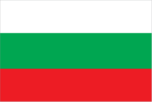
three equal horizontal bands of white (top), green, and red; the national emblem formerly on the hoist side of the white stripe has been removed - it contained a rampant lion within a wreath of wheat ears below a red five-pointed star and above a ribbon bearing the dates 681 (first Bulgarian state established) and 1944 (liberation from Nazi control)
Head of Government
Chairman of the Council of Ministers (Prime Minister) Lyuben Borisov BEROV (since 30 December 1992); Deputy Chairmen of the Council of Ministers (Deputy Prime Ministers) Valentin KARABASHEV, Neycho NEEV, and Evgeniy MATINCHEV (since 30 December 1992)
Independence
22 September 1908 (from Ottoman Empire)
Judicial branch
Supreme Court, Constitutional Court
Legal system
based on civil law system, with Soviet law influence; has accepted compulsory ICJ jurisdiction
Legislative branch
unicameral National Assembly (Narodno Sobranie)
Member of
BIS, BSEC, CCC, CE, CSCE, EBRD, ECE, FAO, G-9, IAEA, IBRD, ICAO, ICFTU, IFC, ILO, IMF, IMO, INMARSAT, INTERPOL, IOC, IOM (observer), ISO, ITU, LORCS, NACC, NAM (guest), NSG, PCA, UN, UNCTAD, UNESCO, UNIDO, UNTAC, UPU, WHO, WIPO, WMO, WTO, ZC
Names
conventional long form: Republic of Bulgaria conventional short form: Bulgaria
National Assembly
last held 13 October 1991; results - UDF 34%, BSP 33%, MRF 7.5%; seats - (240 total) UDF 110, BSP 106, Movement for Rights and Freedoms 24
National holiday
3 March (1878)
Other political or pressure groups
Ecoglasnost; Podkrepa (Support) Labor Confederation; Fatherland Union; Bulgarian Democratic Youth (formerly Communist Youth Union); Confederation of Independent Trade Unions of Bulgaria (KNSB); Nationwide Committee for Defense of National Interests; Peasant Youth League; Bulgarian Agrarian National Union - United (BZNS); Bulgarian Democratic Center; "Nikola Petkov" Bulgarian Agrarian National Union; Internal Macedonian Revolutionary Organization - Union of Macedonian Societies (IMRO-UMS); numerous regional, ethnic, and national interest groups with various agendas
Political parties and leaders
Union of Democratic Forces (UDF), Filip DIMITROV, chairman, an alliance of approximately 20 pro-Democratic parties including United Democratic Center, Democratic Party, Radical Democratic Party, Christian Democratic Union, Alternative Social Liberal Party, Republican Party, Civic Initiative Movement, Union of the Repressed, and about a dozen other groups; Movement for Rights and Freedoms (ethnic Turkish party) (MRF), Ahmed DOGAN, chairman; Bulgarian Socialist Party (BSP), Zhan VIDENOV, chairman
President
last held January 1992; results - Zhelyu ZHELEV was elected by popular vote
Suffrage
18 years of age; universal and compulsory
Type
emerging democracy
US diplomatic representation
chief of mission: Ambassador Hugh Kenneth HILL embassy: 1 Alexander Stamboliski Boulevard, Sofia, Unit 25402 mailing address: APO AE 09213-5740 telephone: [359] (2) 88-48-01 through 05
Economy
Agriculture
accounts for 22% of GDP (1990); climate and soil conditions support livestock raising and the growing of various grain crops, oilseeds, vegetables, fruits, and tobacco; more than one-third of the arable land devoted to grain; world's fourth-largest tobacco exporter; surplus food producer
Budget
revenues $8 billion; expenditures $5 billion, including capital expenditures of $NA (1991 est.)
Currency
1 lev (Lv) = 100 stotinki
Economic aid
donor - $1.6 billion in bilateral aid to non-Communist less developed countries (1956-89)
Electricity
11,500,000 kW capacity; 45,000 million kWh produced, 5,070 kWh per capita (1992)
Exchange rates
leva (Lv) per US$1 - 24.56 (January 1993),17.18 (January 1992), 16.13 (March 1991), 0.7446 (November 1990), 0.84 (1989), 0.82 (1988), 0.90 (1987); note - floating exchange rate since February 1991
Exports
$3.5 billion (f.o.b., 1991) commodities: machinery and equipment 30.6%; agricultural products 24%; manufactured consumer goods 22.2%; fuels, minerals, raw materials, and metals 10.5%; other 12.7% (1991) partners: former CEMA countries 57.7% (USSR 48.6%, Poland 2.1%, Czechoslovakia 0.9%); developed countries 26.3% (Germany 4.8%, Greece 2.2%); less developed countries 15.9% (Libya 2.1%, Iran 0.7%) (1991)
External debt
$12 billion (1991)
Fiscal year
calendar year
Illicit drugs
transshipment point for southwest Asian heroin transiting the Balkan route
Imports
$2.8 billion (f.o.b., 1991) commodities: fuels, minerals, and raw materials 58.7%; machinery and equipment 15.8%; manufactured consumer goods 4.4%; agricultural products 15.2%; other 5.9% partners: former CEMA countries 51.0% (former USSR 43.2%, Poland 3.7%); developed countries 32.8% (Germany 7.0%, Austria 4.7%); less developed countries 16.2% (Iran 2.8%, Libya 2.5%)
Industrial production
growth rate -21% (1992 est.); accounts for about 37% of GDP (1990)
Industries
machine building and metal working, food processing, chemicals, textiles, building materials, ferrous and nonferrous metals
Inflation rate (consumer prices)
80% (1992)
National product
GDP - purchasing power equivalent - $34.1 billion (1992)
National product per capita
$3,800 (1992)
National product real growth rate
-7.7% (1992)
Overview
Growth in the lackluster Bulgarian economy fell to the 2% annual level in the 1980s. By 1990, Sofia's foreign debt had skyrocketed to over $10 billion - giving a debt-service ratio of more than 40% of hard currency earnings and leading the regime to declare a moratorium on its hard currency payments. The post-Communist government faces major problems of renovating an aging industrial plant; keeping abreast of rapidly unfolding technological developments; investing in additional energy capacity (the portion of electric power from nuclear energy reached over one-third in 1990); and motivating workers, in part by giving them a share in the earnings of their enterprises. Political bickering in Sofia and the collapse of the DIMITROV government in October 1992 have slowed the economic reform process. New Prime Minister BEROV, however, has pledged to continue the reforms initiated by the previous government. He has promised to continue cooperation with the World Bank and IMF, advance negotiations on rescheduling commercial debt, and push ahead with privatization. BEROV's government - whose main parliamentary supporters are the former Communist Bulgarian Socialist Party (BSP) - nonetheless appears likely to pursue more interventionist tactics in overcoming the country's economic problems.
Unemployment rate
15% (1992)
Communications
Airports
total: 380 usable: 380 with permanent-surface runways: 120 with runways over 3659 m: with runways 2,440-3,659 m: 20 with runways 1,220-2,439 m: 20
Highways
36,908 km total; 33,535 km hard surface (including 242 km superhighways); 3,373 km earth roads (1987)
Inland waterways
470 km (1987)
Merchant marine
112 ships (1,000 GRT and over) totaling 1,262,320 GRT/1,887,729 DWT; includes 2 short-sea passenger, 30 cargo, 2 container, 1 passenger-cargo training, 6 roll-on/roll-off, 15 oil tanker, 4 chemical carrier, 2 railcar carrier, 50 bulk; Bulgaria owns 1 ship (1,000 GRT or over) totaling 8,717 DWT operating under Liberian registry
Pipelines
crude oil 193 km; petroleum products 525 km; natural gas 1,400 km (1992)
Ports
coastal - Burgas, Varna, Varna West; inland - Ruse, Vidin, and Lom on the Danube
Railroads
4,300 km total, all government owned (1987); 4,055 km 1.435-meter standard gauge, 245 km narrow gauge; 917 km double track; 2,640 km electrified
Telecommunications
extensive but antiquated transmission system of coaxial cable and mirowave radio relay; 2.6 million telephones; direct dialing to 36 countries; phone density is 29 phones per 100 persons (1992); almost two-thirds of the lines are residential; 67% of Sofia households have phones (November 1988); telephone service is available in most villages; broadcast stations - 20 AM, 15 FM, and 29 TV, with 1 Soviet TV repeater in Sofia; 2.1 million TV sets (1990); 92% of country receives No. 1 television program (May 1990); 1 satellite ground station using Intersputnik; INTELSAT is used through a Greek earth station
Military and Security
Branches
Army, Navy, Air and Air Defense Forces, Frontier Troops, Internal Troops
Defense expenditures
5.77 billion leva, NA% of GDP (1993 est.); note - conversion of defense expenditures into US dollars using the current exchange rate could produce misleading results
Manpower availability
males age 15-49 2,178,136; fit for military service 1,819,901; reach military age (19) annually 69,495 (1993 est.)