1989 Edition
CIA World Factbook 1989 (Internet Archive)
Geography
Administrative divisions
8 provinces (oblasti, singular — oblast) and 1 city* (grad); Burgas, Grad Sofiya*, Khaskovo, Lovech, Mikhaylovgrad, Plovdiv, Razgrad, Sofiya, Varna
Capital
Sofia
Climate
- temperate; cold, damp winters; hot, dry summers
- tropical; warm, dry winters; hot, wet summers
Coastline
- 354 km
- none — landlocked
Communists
932,055 party members (April 1986)
Comparative area
- slightly larger than Tennessee
- slightly larger than Colorado
Constitution
16 May 1971, effective 18 May 1971
Contiguous zone
24 nm
Diplomatic representation
Ambassador Velichko Filipov VELICHKOV; Chancery at 1621 22nd Street NW, Washington DC 20008; telephone (202) 387-7969; US— Ambassador Sol POLANSKY; Embassy at 1 Alexander Stamboliski Boulevard, Sofia (mailing address is APO New York 09213); telephone [359] (2) 88-48-01 through 05
Disputes
- Macedonia question with Greece and Yugoslavia
- the disputed international boundary between Burkina and Mali was submitted to the International Court of Justice (ICJ) in October 1983 and the ICJ issued its final ruling in December 1986, which both sides agreed to accept; Burkina and Mali are proceeding with boundary demarcation, including the tripoint with Niger
Elections
Chairman of the State Council— last held 17 June 1986 (next to be held May 1990); results— Todor Zhivkov reelected but was replaced by Petur Toshev Mladenov on 11 November 1989; National Assembly — last held 8 June 1986 (next to be held May 1'990); results — percent of vote by party NA; seats— (400 total) BKP 276, BZNS 99, others 25
Environment
- subject to earthquakes, landslides; deforestation; air pollution
- recent droughts and desertification severely affecting marginal agricultural activities, population distribution, economy; overgrazing; deforestation
Executive branch
president, chairman of the Council of Ministers, four deputy chairmen of the Council of Ministers, Council of Ministers
Extended economic zone
200 nm
Flag
- yellow with two diagonal bands of white (top, almost double width) and black starting from the upper hoist side; the national emblem in red is superimposed at the center; the emblem includes a swallow-tailed flag on top of a winged column within an upturned crescent above a scroll and flanked by two upraised hands
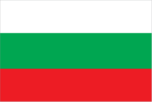
- three equal horizontal bands of white (top), green, and red with the national emblem on the hoist side of the white stripe; the emblem contains a rampant lion within a wreath of wheat ears below a red five-pointed star and above a ribbon bearing the dates 68 1 (first Bulgarian state established) and 1944 (liberation from Nazi control)
Independence
22 September 1908 (from Ottoman Empire)
Judicial branch
Supreme Court
Land boundaries
- 1,881 km total; Greece 494 km, Romania 608 km, Turkey 240 km, Yugoslavia 539 km
- 3,192 km total; Benin 306 km, Ghana 548 km, Ivory Coast 584 km, Mali 1,000 km, Niger 628 km, Togo 126km
Land use
- 34% arable land; 3% permanent crops; 18% meadows and pastures; 35% forest and woodland; 10% other; includes 11% irrigated
- 10% arable land; NEGL% permanent crops; 37% meadows and pastures; 26% forest and woodland; 27% other; includes NEGL% irrigated
Leaders
Chief of State — President Petur Toshev MLADENOV (chairman of the State Council since 11 November 1989; became president on 3 April 1990 when the State Council was abolished); Head of Government — Chairman of the Council of Ministers Andrey LUKANOV (since 3 February 1990); Deputy Chairman of the Council of Ministers Chudomir Asenov ALEKSANDROV (since 8 February 1990); Deputy Chairman of the Council of Ministers Belcho Antonov BELCHEV (since 8 February 1990); Deputy Chairman of the Council of Ministers Konstantin Dimitrov KOSEV (since 8 February 1990); Deputy Chairman of the Council of Ministers Nora Krachunova ANANIEVA (since 8 February 1990) Political parties and leaders: Bulgarian Communist Party (BKP), Aleksandur Lilov, chairman; Bulgarian National Agrarian Union (BZNS), Angel Angelov Dimitrov, secretary of Permanent Board; Bulgarian Social Democratic Party, Petur Dentlieu; Green Party; Christian Democrats; Radical Democratic Party; others forming
Legal system
based on civil law system, with Soviet law influence; judicial review of legislative acts in the State Council; has accepted compulsory ICJ jurisdiction
Legislative branch
unicameral National Assembly (Narodno Sobranyie)
Maritime claims
none — landlocked
Member of
CCC, CEMA, FAO, IAEA, IBEC, ICAO, ILO, ILZSG, IMO, IPU, ITC, ITU, IWC— International Wheat Council, UN, UNESCO, UPU, Warsaw Pact WFTU, WHO, WIPO, WMO, WTO
National holiday
Anniversary of the Socialist Revolution in Bulgaria, 9 September (1944)
Natural resources
- bauxite, copper, lead, zinc, coal, timber, arable land
- manganese, limestone, marble; small deposits of gold, antimony, copper, nickel, bauxite, lead, phosphates, zinc, silver
Note
- strategic location near Turkish Straits; controls key land routes from Europe to Middle East and Asia
- landlocked
Other political or pressure groups
Union of Democratic Forces (umbrella organization for opposition groups); Ecoglenost, Podkrepa Independent Trade Union, Fatherland Front, Communist Youth Union, Central Council of Trade Unions, National Committee for Defense of Peace, Union of Fighters Against Fascism and Capitalism, Committee of Bulgarian Women, All-National Committee for Bulgarian-Soviet Friendship; Union of Democratic Forces, a coalition of about a dozen dissident groups; numerous regional and national interest groups with various agendas
Suffrage
universal and compulsory at age
Terrain
- mostly mountains with lowlands in north and south
- mostly flat to dissected, undulating plains; hills in west and southeast
Territorial sea
1 2 nm
Total area
- 1 10,910 km2; land area: 110,550km2
- 274,200 km2; land area: 273,800 km2
Total area
dress is P. O. Box 2991, Bandar Seri Begawan); telephone [673] (2) 29670
Type
Communist state, but democratic elections planned for 1990
People and Society
Birth rate
- 13 births/ 1,000 population (1990)
- 50 births/ 1,000 population (1990)
Death rate
- 1 2 deaths/ 1 ,000 population (1990)
- 17 deaths/ 1,000 population (1990) Burkina (continued)
Ethnic divisions
- 85.3% Bulgarian, 8.5% Turk, 2.6% Gypsy, 2.5% Macedonian, 0.3% Armenian, 0.2% Russian, 0.6% other
- more than SO tribes; principal tribe is Mossi (about 2.5 million); other important groups are Gurunsi, Senufo, Lobi, Bobo, Mande, and Fulani
Infant mortality rate
- 13 deaths/ 1,000 live births (1990)
- 121 deaths/ 1,000 live births (1990)
Labor force
- 4,300,000; 33% industry, 20% agriculture, 47% other (1987)
- 3,300,000 residents; 30,000 are wage earners; 82% agriculture, 13% industry, 5% commerce, services, and government; 20% of male labor force migrates annually to neighboring countries for seasonal employment (1984); 44% of population of working age (1985)
Language
- Bulgarian; secondary languages closely correspond to ethnic breakdown
- French (official); tribal languages belong to Sudanic family, spoken by 90% of the population
Life expectancy at birth
- 69 years male, 76 years female (1990) Bulgaria (continued)
- 5 1 years male, 52 years female (1990)
Literacy
- 95% (est.)
- 13.2%
Nationality
- noun — Bulgarian(s); adjective— Bulgarian
- noun — Burkinabe; adjective — Burkinabe
Net migration rate
- — 4 migrants/ 1 ,000 population (1990)
- — 3 migrants/ 1 ,000 population (1990)
Organized labor
- all workers are members of the Central Council of Trade Unions (CCTU); Pod Krepa (Support), an independent trade union, legally registered in January 1990
- four principal trade union groups represent less than 1% of population
Population
- 8,933,544 (July 1990), growth rate -0.3% (1990)
- 9,077,828 (July 1990), growth rate 3.1% (1990)
Religion
- religious background of population is 85% Bulgarian Orthodox, 13% Muslim, 0.8% Jewish, 0.7% Roman Catholic, 0.5% Protestant, Gregorian-Armenian, and other
- 65% indigenous beliefs, about 25% Muslim, 10% Christian (mainly Roman Catholic)
Total fertility rate
- 1 .9 children born/ woman (1990)
- 7.2 children born/ woman (1990)
Government
Administrative divisions
30 provinces; Bam, Bazega, Bougouriba, Boulgou, Boulkiemde, Ganzourgou, Gnagna, Gourma, Houet, Kadiogo, Kenedougou, Komoe, Kossi, Kouritenga, Mouhoun, Namentenga, Naouri, Oubritenga, Oudalan, Passore, Poni, Sanguie, Sanmatenga, Seno, Sissili, Soum, Sourou, Tapoa, Yatenga, Zoundweogo
Capital
Ouagadougou
Communists
small Communist party front group; some sympathizers
Constitution
none; constitution of 27 November 1977 was abolished following coup of 25 November 1980
Diplomatic representation
Ambassador Paul Desire KABORE; Chancery at 2340 Massachusetts Avenue NW, Washington DC 20008; telephone (202) 332-5577 or 6895; US— Ambassador David H. SHINN; Embassy at Avenue Raoul Follerau, Ouagadougou (mailing address is B. P. 35, Ouagadougou); telephone [226] 3067-23 through 25
Elections
the National Assembly was dissolved 25 November 1980 and no elections are scheduled
Executive branch
chairman of the Popular Front, Council of Ministers
Flag
two equal horizontal bands of red (top) and green with a yellow five-pointed star in the center; uses the popular panAfrican colors of Ethiopia
Independence
5 August 1 960 (from France; formerly Upper Volta)
Judicial branch
Appeals Court
Leaders
Chief of State and Head of Government— Chairman of the Popular Front Captain Blaise COMPAORE (since 15 October 1987) Political parties and leaders: all political parties banned following November 1980 coup
Legal system
based on French civil law system and customary law
Legislative branch
unicameral National Assembly (Assemblee Nationale) was dissolved on 25 November 1980
Long-form name
- People's Republic of
- Burkina Faso
Member of
ACP, AfDB, CCC, CEAO, EAMA, ECA, EIB (associate). Entente, FAO, GATT, G-77, IBRD, ICAO, IDA, IDB — Islamic Development Bank, I FAD, IFC, ILO, IMF, INTELSAT, INTERPOL, IPU, IRC, ITU, NAM, Niger River Commission, OAU, OCAM, QIC, UN, UNESCO, UPU. WCL, WFTU, WHO, WIPO, WMO, WTO
National holiday
Anniversary of the Revolution, 4 August (1983)
Other political or pressure groups
committees for the defense of the revolution, watchdog/political action groups throughout the country in both organizations and communities
Suffrage
none
Type
military; established by coup on 4 August 1983
Economy
Agriculture
- imports about 80% of its food needs; principal crops and livestock include rice, cassava, bananas, buffaloes, and pigs
- accounts for 1 5% of GNP; climate and soil conditions support livestock raising and the growing of various grain crops, oilseeds, vegetables, fruits and tobacco; more than one-third of the arable land devoted to grain; world's fourth-largest tobacco exporter; surplus food producer
- cash crops — peanuts, shea nuts, sesame, cotton; food crops — sorghum, millet, corn, rice; livestock; not self-sufficient in food grains
Aid
- US commitments, including Ex-Im (FY70-87), $20.6 million; Western (nonUS) countries, ODA and OOF bilateral commitments (1970-87), $143.7 million
- donor — SI. 6 billion in bilateral aid to non-Communist less developed countries (1956-88)
- US commitments, including Ex-Im (FY70-88), $271 million; Western (nonUS) countries, ODA and OOF bilateral commitments (1970-87), $2.5 billion; Communist countries (1970-88), $94 million
Budget
- revenues $1.2 billion (1987); expenditures $1.6 billion, including capital expenditures of NA (1989 est.)
- revenues $26 billion; expenditures $28 billion, including capital expenditures of $NA billion (1988)
- revenues S422 million; expenditures $516 million, including capital expenditures of $25 million (1987)
Currency
- Bruneian dollar (plural — dollars); 1 Bruneian dollar (B$) = 100 cents
- lev (plural — leva); 1 lev (Lv) = 100 stotinki
- Communaute Financiere Africaine franc (plural — francs); 1 CFA franc (CFAF) = 100 centimes
Electricity
- 310,000 kW capacity; 890 million kWh produced, 2,580 kWh per capita (1989)
- 11,500,000 kW capacity; 45,000 million kWh produced, 5,000 kWh per capita (1989)
- 121,000 kW capacity; 320 million kWh produced, 37 kWh per capita (1989)
Exchange rates
- Bruneian dollars (B$) per US$1— 1.8895 (January 1990), 1.9503 (1989), 2.0124 (1988), 2.1060 (1987), 2.1774 (1986), 2.2002 (1985); note— the Bruneian dollar is at par with the Singapore dollar
- leva (Lv) per US$1 — 0.84 (1989), 0.82 (1988), 0.90 (1987), 0.95 (1986), 1.03(1985) Fiscal yean calendar year
- CFA francs (CFAF) per US$1— 284.55 (January 1990), 319.01 (1989), 297.85 (1988), 300.54 (1987), 346.30(1986), 449.26(1985)
Exports
- $2.07 billion (f.o.b., 1987); commodities— crude oil, liquefied natural gas, petroleum products; partners — Japan 55% (1986)
- $20.3 billion (f.o.b., 1988); commodities— machinery and equipment 60.5%; agricultural products 14.7%; manufactured consumer goods 10.6%; fuels, minerals, raw materials, and metals 8.5%; other 5.7%; partners — Socialist countries 82.5% (USSR 61%, GDR 5.5%, Czechoslovakia 4.9%); developed countries 6.8% (FRG 1 .2%, Greece 1 .0%); less developed countries 10.7% (Libya 3.5%, Iraq 2.9%)
- $249 million (f.o.b., 1988); commodities— oilseeds, cotton, live animals, gold; partners—EC 42% (France 30%, other 12%), Taiwan 17%, Ivory Coast 15% (1985)
External debt
- none
- $10 billion (1989)
- $969 million (December 1988)
Fiscal year
- calendar year
- calendar year
GDP
- $3.3 billion, per capita $9,600; real growth rate 2.5% (1989 est.)
- $1.43 billion, per capita $170; real growth rate 7.7% (1988)
GNP
$51.2 billion, per capita $5,710; real growth rate -0.1% (1989 est.)
Imports
- $800 million (c.i.f., 1987); commodities— machinery and transport equipment, manufactured goods; food, beverages, tobacco; consumer goods; partners — Singapore 31%, US 20%, Japan 6% (1986)
- $21.0 billion (f.o.b., 1988); commodities— fuels, minerals, and raw materials 45.2%; machinery and equipment 39.8%; manufactured consumer goods 4.6%; agricultural products 3.8%; other Burkina 6.6%; partners — Socialist countries 80.5% (USSR 57.5%, GDR 5.7%), developed countries 15.1% (FRG 4.8%, Austria 1.6%); less developed countries 4.4% (Libya 1.0%, Brazil 0.9%)
- $591 million (f.o.b., 1988); commodities— grain, dairy products, petroleum, machinery; partners — EC 37% (France 23%, other 14%), Africa 31%, US 15% (1985)
Industrial production
- growth rate NA%
- growth rate 0.9% (1988)
- growth rate 7.1% (1985)
Industries
- petroleum, liquefied natural gas, construction
- food processing, machine and metal building, electronics, chemicals
- agricultural processing plants; brewery, cement, and brick plants; a few other small consumer goods enterprises
Inflation rate (consumer prices)
- 2.5% (1989 est.)
- 12% (1989)
- 4.3% (1988)
Overview
- The economy is a mixture of foreign and domestic entrepreneurship, government regulation and welfare measures, and village tradition. It is almost totally supported by exports of crude oil and natural gas, with revenues from the petroleum sector accounting for more than 70% of GDP. Per capita GDP of $9,600 is among the highest in the Third World, and substantial income from overseas investment supplements domestic production. The government provides for all medical services and subsidizes food and housing.
- Growth in the sluggish Bulgarian economy fell to the 2% annual level in the 1980s, and by 1989 Sofia's foreign debt had skyrocketed to $10 billion — giv ing a debt service ratio of more than 40% of hard currency earnings. The post-Zhivkov regime faces major problems of renovating an aging industrial plant, keeping abreast of rapidly unfolding technological developments, investing in additional energy capacity (the portion of electric power from nuclear energy reached 37% in 1988), and motivating workers, in part by giving them a share in the earnings of their enterprises. A major decree of January 1 989 summarized and extended the government's economic restructuring efforts, which include a partial decentralization of controls over production decisions and foreign trade. The new regime promises more extensive reforms and eventually a market economy. But the ruling group cannot (so far) bring itself to give up ultimate control over economic affairs exercised through the vertical Party/ ministerial command structure. Reforms have not led to improved economic performance, in particular the provision of more and better consumer goods. A further blow to the economy was the exodus of 310,000 ethnic Turks in mid1989, which caused temporary shortages of skilled labor in glassware, aluminum, and other industrial plants and in tobacco fields.
- One of the poorest countries in the world, Burkina has a high population density, few natural resources, and relatively infertile soil. Economic development is hindered by a poor communications network within a landlocked country. Agriculture provides about 40% of GDP and is entirely of a subsistence nature. Industry, dominated by unprofitable governmentcontrolled corporations, accounted for 13% of GDP in 1985.
Unemployment
2.5%, shortage of skilled labor (1989 est.)
Unemployment rate
- NA%
- NA%
Communications
Airports
- 2 total, 2 usable; 1 with permanent-surface runways; 1 with runway over 3,659 m; 1 with runway 1,406 m
- 380 total, 380 usable; about 120 with permanent-surface runways; 20 with runways 2,440-3,659 m; 20 with runways 1,220-2,439 m
- 50 total, 43 usable; 2 with permanent-surface runways; none with runways over 3,659 m; 2 with runways 2,440-3,659 m; 7 with runways 1, 220-2,439 m
Branches
- Royal Brunei Armed Forces, including air wing, navy, and ground forces; British Gurkha Battalion; Royal Brunei Police; Gurkha Reserve Unit
- Bulgarian People's Army, Frontier Troops, Air and Air Defense Forces, Bulgarian Navy
- Army, Air Force Military manpower males 15-49, 1,775,143; 904,552 fit for military service; no conscription
Civil air
- 4 major transport aircraft (3 Boeing 757-200, 1 Boeing 737-200)
- 65 major transport aircraft
- 2 major transport aircraft
Defense expenditures
- $197.6 million, 17% of central government budget (FY86) lZ5km Set ref lonil m«p V
- 1.6051 billion leva (1989); note — conversion of the military budget into US dollars using the official administratively set exchange rate would produce misleading results Ouahtgouy* Koudougou, .OUAGADOUGOU Bobo-DtoulaMO Boundary representation is not necessarily authoritative Sef region*! map VII
- 3.1% of GDP (1987)
Highways
- 1,090 km total; 370 km paved (bituminous treated) and another 52 km under construction, 720 km gravel or unimproved
- 37,397 km total; 33,352 km hard surface (including 228 km superhighways); 4,045 km earth roads (1986)
- 16,500 km total; 1,300 km paved, 7,400 km improved, 7,800 km unimproved (1985)
Inland waterways
- 209 km; navigable by craft drawing less than 1 .2 meters
- 470 km (1986)
Merchant marine
- 7 liquefied gas carriers (1,000 GRT or over) totaling 348,476 GRT/ 340,635 DWT
- 108 ships (1,000 GRT and over) totaling 1 ,240,204 GRT/ 1,872,723 DWT; includes 2 short-sea passenger, 32 cargo, 2 container, 1 passengercargo training, 5 roll-on/roll-off, 16 petroleum, oils, and lubricants (POL) tanker, 2 railcar carriers, 48 bulk
Military manpower
- males 15-49, 104,398; 60,242 fit for military service; 3,106 reach military age (18) annually
- males 15-49, 2,177,404; 1,823,111 fit for military service; 66,744 reach military age (19) annually
Pipelines
- crude oil, 1 35 km; refined products, 418 km; natural gas, 920 km
- crude, 193 km; refined product, 418 km; natural gas, 1,400 km (1986)
Ports
- Kuala Belait, Muara
- Burgas, Varna, Varna West; river ports are Ruse, Vidin, and Lorn on the Danube
Railroads
- 13 km 0.6 10-meter narrowgauge private line
- 4,294 km total, all government owned (1986); 4,049 km 1.435-meter standard gauge, 245 km narrow gauge; 908 km double track; 2,342 km electrified
- 620 km total; 520 km Ouagadougou to Ivory Coast border and 100 km Ouagadougou to Kaya; all 1 .00-meter gauge and single track
Telecommunications
- service throughout country is adequate for present needs; international service good to adjacent Malaysia; radiobroadcast coverage good; 33,000 telephones (1987); stations — 4 AM/ FM, 1 TV; 74,000 radio receivers (1987); satellite earth stations — 1 Indian Ocean INTELSAT and 1 Pacific Ocean INTELSAT Defense Forces
- stations — 15 AM, 16 FM, 13 TV; 1 Soviet TV relay; 2,100,000 TV sets; 2,100,000 radio receivers; at least 1 satellite earth station Defense Forces
- all services only fair; radio relay, wire, and radio communication stations in use; 13,900 telephones; stations— 2 AM, 2 FM, 2 TV; 1 Atlantic Ocean INTELSAT earth station Defense Forces