1988 Edition
CIA World Factbook 1988 (Internet Archive)
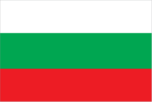
Geography
Boundary disputes
none; Macedonia question with Greece and Yugoslavia
Climate
- temperate; cold, damp winters; hot, dry summers
- tropical; warm, dry winters; hot, wet summers
Coastline
354 km
Comparative area
- slightly larger than Ohio
- about the size of Colorado
Environment
- subject to earthquakes, landslides; deforestation
- recent droughts and desertification severely affecting marginal agricultural activities, population distribution, economy; overgrazing; deforestation
Ethnic divisions
- 85.3% Bulgarian, 8.5% Turk, 2.6% Gypsy, 2.5% Macedonian, 0.3% Armenian, 0.2% Russian, 0.6% other
- more than 50 tribes; principal tribe is Mossi (about 2.5 million); other important groups are Gurunsi, Senufo, Lobi, Bobo, Mande, and Fulani
Extended economic zone
200 nm
Infant mortality rate
- 20.2/1,000 (1983)
- 182/1,000 (1984)
Labor force
- 4,113,546 (1983); 34% industry, 22% agriculture, 44% other
- 90% agriculture; 10% industry, commerce, services, and government; about 30,000 are wage earners; about 20% of male labor force migrates annually to neighboring countries for seasonal employment
Land boundaries
- 1,883 km total
- 3,307 km total
Land use
- 34% arable land; 3% permanent crops; 18% meadows and pastures; 35% forest and woodland; 10% other; includes 11% irrigated
- 10% arable land; NEGL% permanent crops; 37% meadows and pastures; 26% forest and woodland; 27% other; includes NEGL% irrigated
Language
- Bulgarian; secondary languages closely correspond to ethnic breakdown
- French (official); tribal languages belong to Sudanic family, spoken by 50% of the population
Life expectancy
- men 69, women 74
- 42
Literacy
- 95% (est.)
- 7%
Member of
ASEAN, ESCAP (associate member), IMO, INTERPOL, QIC, UN
Nationality
- noun — Bulgarian(s); adjective— Bulgarian
- noun — Burkinabe; adjective — Burkinabe
Organized labor
four principal trade union groups represent less than 1% of population
Population
- 8,960,749 (July 1987), average annual growth rate 0.08%
- 8,276,272 (July 1987), average annual growth rate 2.42%
Religion
- regime promotes atheism; religious background of population is 85% Bulgarian Orthodox, 13% Muslim, 0.8% Jewish, 0.7% Roman Catholic, 0.5% Protestant, Gregorian-Armenian, and other
- 65% indigenous beliefs, about 25% Muslim, 10% Christian (mainly Catholic)
Special notes
- strategic location near Turkish Straits; controls key land routes from Europe to Middle East and Asia
- landlocked
Terrain
- mostly mountains with lowlands in north and south
- mostly flat to dissected, undulating plains; hills in south
Territorial sea
12 nm
Total area
- 110,910 km2; land area: 110,550 km2
- 274,200 km2; land area: 273,800 km2
Government
Administrative divisions
- 27 okrugs (districts); capital city of Sofia has equivalent status
- 30 provinces; 250 departments
Branches
- legislative (National Assembly); judiciary, Supreme Court
- President is an army officer; military council of unknown number; 21-member military and civilian Cabinet; judiciary
Capital
- Sofia
- Ouagadougou
Communists
- 932,055 party members (April 1986) Mass organizations and front groups: Fatherland Front, Dimitrov Communist Youth Union, Central Council of Trade Unions, National Committee for Defense of Peace, Union of Fighters Against Fascism and Capitalism, Committee of Bulgarian Women, All-National Committee for Bulgarian-Soviet Friendship
- small Communist party front group; some sympathizers
Elections
- held every five years for National Assembly; last election held in June 1986; more than 99% of electorate voted Political parties and leaders: Bulgarian Communist Party, Todor Zhivkov, General Secretary; Bulgarian National Agrarian Union, a puppet party, Petur Tanchev, secretary of Permanent Board
- political process suspended; no talk of returning to constitutional rule Political parties and leaders: all political parties banned following November 1980 coup
Government leaders
- Todor Khristov ZHIVKOV, Chairman, State Council (President and Chief of State; since July 1971); Georgi Ivanov ATANASOV, Chairman, Council of Ministers (Premier; since March 1986)
- Cdr. Thomas SANKARA, President (since August 1983)
Legal system
- based on civil law system, with Soviet law influence; new constitution adopted in 1971; judicial review of legislative acts in the State Council; has accepted compulsory ICJ jurisdiction
- based on French civil law system and customary law
Member of
- CEMA, FAO, IAEA, ICAO, ILO, International Lead and Zinc Study Group, IMO, IPU, ITC, ITU, IWC— International Wheat Council, UN, UNESCO, UPU, WFTU, WHO, WIPO, WMO, WTO; Warsaw Pact, International Organization of Journalists, International Medical Association, International Radio and Television Organization
- AfDB, CEAO, EAMA, ECA, EIB (associate), Entente, FAO, GATT, G-77, IBRD, ICAO, IDA, IDE— Islamic Development Bank, IFAD, IFC, ILO, IMF, INTELSAT, INTERPOL, IPU, IRC, ITU, NAM, Niger River Commission, OAU, OCAM, QIC, UN, UNESCO, UPU, WCL, WFTU, WHO, WIPO, WMO, WTO
National holiday
- National Liberation Day, 9 September
- Independence Day, 4 August
Official name
- People's Republic of Bulgaria
- Burkina Faso (since August 1984)
Other political or pressure groups
committees for the defense of the revolution, watchdog/political action groups established by current regime throughout the country in both organizations and communities
Suffrage
- universal and compulsory over age 18
- none
Type
- Communist state
- military; established by coup on 4 August 1983
Economy
Agriculture
- rice, pepper; imports most food
- mainly self-sufficient; main crops — grain, tobacco, fruits, vegetables, sheep, hogs, poultry, cheese, sunflower seeds
- cash crops — peanuts, shea nuts, sesame, cotton; food crops — sorghum, millet, corn, rice; livestock; food deficiency
Aid
Western (non-US) countries, ODA and OOF (1970-84), $1.8 billion; US authorized, including Ex-Im (FY70-85), $223 million; Communist countries (1970-85), $64 million
Budget
- revenues, $2,109 million; expenditures, $1,219 million; surplus $890 million (1985)
- revenues, $220 million; current expenditures, $148 million; development expenditures, $161 million (1983)
Crude steel
2.9 million metric tons produced (1985), 324 kg per capita
Electric power
- 163,000 kW capacity; 470 million kWh produced, 2,000 kWh per capita (1986)
- 11,298,000 kW capacity; 45,000 million kWh produced, 4,956 kWh per capita (1986)
- 73,000 kW capacity; 159 million kWh produced, 22 kWh per capita (1986)
Exports
- $3.1 billion (1985); 98-99% crude oil, liquefied natural gas, and petroleum products
- $ 13.8 billion (f.o.b., 1986 est.); 54% machinery and equipment; 19% agricultural products; 10% fuels, mineral raw materials, and metals; 10% manufactured consumer goods; 7% other
- $110 million (f.o.b., 1983); livestock (on the hoof), peanuts, shea nut products, cotton, sesame
Fiscal year
- calendar year
- calendar year
- calendar year
Fishing
- catch 121,000 metric tons (1983)
- catch 7,000 metric tons (1983 est.)
GDP
- $3.422 billion, $14,750 per capita (1985)
- $1.1 billion, $170 per capita; real growth, - 1.3% (1983)
GNP
$57.8 billion, $6,460 per capita; real growth rate, - 0.8% (1985)
Imports
- $640 million (1985); includes machinery and transport equipment, manufactured goods, food, beverages, tobacco, and other; most consumer goods imported
- $14.1 billion (f.o.b., 1986 est.); 47% fuels and minerals, 33% machinery and equipment, 5% chemicals, 4% manufactured consumer goods, 11% other (1982)
- $230 million (f.o.b., 1983); textiles, food, and other consumer goods, transport equipment, machinery, fuels
Major industries
- food processing, machine and metal building, electronics, chemicals
- agricultural processing plants, brewery, bottling, and brick plants; a few other light industries
Major industry
crude petroleum, liquefied natural gas, construction
Major trade partners
- exports — (crude petroleum and liquefied natural gas) roughly two-thirds to Japan; imports — Singapore 24%, Japan 20%, US 16% (1985)
- 56% USSR, 19% other Communist countries, 25% nonCommunist countries
- Ivory Coast and Ghana; overseas trade mainly with France and other EC countries; preferential tariff to EC and franc zone countries
Monetary conversion rate
- 2.16 Brunei dollars=US$l (March 1986) inflation under 2.0% (1985/86)
- 0.95 leva=US$l (July 1986)
- about 331.24 Communaute Financiere Africaine (CFA) francs=US$l (November 1986)
Natural resources
- oil, natural gas
- bauxite, copper, lead, zinc, coal, lignite, lumber
- manganese, limestone, marble, gold, antimony, copper, nickel, bauxite, lead, phosphates
Shortages
some raw materials; scattered energy and food shortages in 1985
Communications
Airfields
- 3 total, 2 usable; 2 with permanent-surface runways; 1 with runways over 3,659 m; 1 with runways 1,220-2,439 m
- 380 total; 15 with runways 2,500 m or longer
Branches
- Royal Brunei Armed Forces, including air wing, navy, and ground forces; British Gurkha Battalion; Royal Brunei Police; Gurkha Reserve Unit
- Bulgarian People's Army, Frontier Troops, Air and Air Defense Forces, Bulgarian Navy
Civil air
- 3 major transport aircraft
- 65 major transport aircraft
Freight carried
rail — 82.9 million metric tons, 18.1 billion metric tons/km; highway— 914 million metric tons, 17.1 billion metric tons/km; waterway — 4.0 million metric tons, 2.0 billion metric tons/km (1985)
Highways
- 1,090 km total; 370 km paved (bituminous treated) and another 52 km under construction, 720 km gravel or unimproved
- 36,336 km total; 33,042 km hard surface (including 211 km superhighways); 3,294 km earth roads (1984)
Inland waterways
- 209 km; navigable by craft drawing less than 1.2 meters
- 471 km (1981)
Military budget
- for fiscal year ending 31 December 1986, $197.6 million; about 17% of central government budget 125km
- est. for fiscal year ending 31 December 1986, 1.2 billion leva; 6.0% of total budget Burkina
Military manpower
- males 15-49, 61,000; 37,000 fit for military service; about 3,300 reach military age (18) annually
- males 15-49, 2,156,000; 1,808,000 fit for military service; 65,000 reach military age (19) annually
Pipelines
- crude oil, 135 km; refined products, 418 km; natural gas, 920 km
- crude, 193 km; refined product, 418 km; natural gas, 1,400 km
Ports
- 1 major (Muara), 4 minor
- 3 major (Varna, Varna West, Burgas), 6 minor; principal river ports are Ruse and Lorn
Railroads
- 13 km 0.610-meter narrowgauge private line
- 4,278 km total; all government owned (1984); about 4,033 km 1.435-meter standard gauge, 245 km narrow gauge; 823 km double track; 2,053 km electrified
Telecommunications
- service throughout country is adequate for present needs; international service good to adjacent Sabah and Sarawak; radiobroadcast coverage good; 27,000 telephones (11.0 per 100 popl.); Radio Brunei broadcasts from 4 AM/FM stations and 1 TV station; 52,000 radio receivers; 1 satellite station Defense Forces
- 15 AM, 14 FM, 13 TV stations; 1 Soviet TV relay; 2,002,000 TV sets; 2,100,000 receiver sets; at least 1 satellite ground station Defense Forces