1982 Edition
CIA World Factbook 1982 (Wikisource)
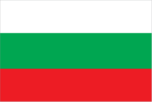
Geography
Area
111,852 km2; 41% arable, 11% other agricultural, 33% forested, 15% other
Coastline
354 km
Land boundaries
1,883 km WATER
Limits of territorial waters (claimed)
12 nm
People and Society
Ethnic divisions
85.3% Bulgarians, 8.5% Turks, 2.6% Gypsies, 2.5% Macedonians, 0.3% Armenians, 0.2% Russians, 0.6% other
Labor force
4.0 million (1981); 23% agriculture, 35% industry, 42% other
Language
Bulgarian; secondary languages closely correspond to ethnic breakdown
Literacy
95% (est.)
Nationality
noun—Bulgarian(s); adjective—Bulgarian
Population
8,940,000 (July 1982), average annual growth rate 0.4%
Religion
regime promotes atheism; religious background of population is 85% Bulgarian Orthodox, 13% Muslim, 0.8% Jewish, 0.7% Roman Catholic, 0.5% Protestant, Gregorian-Armenian and other
Government
Branches
legislative, National Assembly; judiciary, Supreme Court
Capital
Sofia
Communists
820,000 party members (April 1981) Mass organizations and front groups: Fatherland Front, Dimitrov Communist Youth League, Central Council of Trade Unions, National Committee for Defense of Peace, Union of Fighters Against Fascism and Capitalism, Committee of Bulgarian Women, All-National Committee for Bulgarian-Soviet Friendship
Elections
theoretically held every five years for National Assembly; last elections held on 7 June 1981; 99.96% of the electorate voted Political parties and leaders: Bulgarian Communist Party, Todor Zhivkov, General Secretary; Bulgarian National Agrarian Union, a puppet party, Petur Tanchev, secretary of Permanent Board
Government leaders
Todor ZHIVKOV, Chairman, State Council (President and Chief of State); Georgi Stanchev FILIPOV, Chairman, Council of Ministers (Premier)
Legal system
based on civil law system, with Soviet law influence; new constitution adopted in 1971; judicial review of legislative acts in the State Council; legal education at University of Sofia; has accepted compulsory ICJ jurisdiction
Member of
CEMA, FAO, IAEA, ICAO, ILO, International Lead and Zinc Study Group, IMCO, IPU, ITC, ITU, IWC—International Wheat Council, UN, UNESCO, UPU, WHO, WIPO, WMO, WTO; Warsaw Pact, International Organization of Journalists, International Medical Association, International Radio and Television Organization
National holiday
National Liberation Day, 9 September
Official name
People's Republic of Bulgaria
Political subdivisions
28 okrugs (districts), including capital city of Sofia
Suffrage
universal and compulsory over age 18
Type
Communist state
Economy
Agriculture
mainly self-sufficient; main crops—grain, vegetables; caloric intake, 3,461 calories per day per capita (1972/74)
Crude steel
2.6 million metric tons produced (1980), 293 kg per capita
Electric power
9,333,000 kW capacity (1981); 32,700 million kWh produced (1981), 3,665 kWh per capita
Exports
$10.5 billion (f.o.b., 1980); 45% machinery, equipment, and transportation equipment; 21% fuels, minerals, raw materials, metals, and other industrial material; 2% agricultural raw materials; 23% foodstuffs, raw materials for food industry, and animals; 9% industrial consumer goods (1980)
Fiscal year
calendar year; economic data reported for calendar years except for caloric intake, which is reported for consumption year 1 July-30 June
Fishing
catch 89,000 metric tons (1979)
GNP
$39.8 billion, 1980 (1980 dollars), $4,489 per capita; 1980 real growth rate, -0.2%
Imports
$9.7 billion (f.o.b., 1980); 35% machinery, equipment, and transportation equipment; 50% fuels, minerals, raw materials, metals, other materials; 5% agricultural raw materials; 5% foodstuffs, raw materials for food industry, and animals; 5% industrial consumer goods (1979)
Major industries
agricultural processing, machinery, textiles and clothing, mining, ore processing, timber
Major trade partners
$20,217 million in 1980; 25% with non-Communist countries, 53% with USSR, 22% with other Communist countries
Monetary conversion rate
0.95 leva=US$1 (August 1981)
NOTE
Foreign trade figures were converted at the 1980 rate of 0.85 leva=US$1
Shortages
some raw materials, metal products, meat and dairy products, fodder
Communications
Freight carried
rail—77.6 million metric tons, 17.6 billion metric ton/km (1979); highway—836 million metric tons, 15.6 billion metric ton/km (1979); waterway—4.9 million metric tons, 2.6 billion metric ton/km (excluding international transit traffic; 1979)
Highways
32,236 km total; 2,360 km trunk roads, 4,291 km class I concrete, asphalt, stone block; 6,062 km class II asphalt treated, gravel, crushed stone; 19,523 km class 111 earth (1979)
Inland waterways
471 km (1979)
Ports
3 major (Varna, Varna West, Burgas), 6 minor (1981); principal river ports are Ruse and Lorn (1981)
Railroads
4,341 km total; about 4,096 km standard gauge (1.435 m), 245 km narrow gauge; 437 km double track; 1,449 km electrified; government owned (1979)
Military and Security
Military budget
for fiscal year ending 31 December 1981, est. 900 million leva; 5.9% of total budget
Military manpower
males 15-49, 2,173,000; 1,818,000 fit for military service; 63,000 reach military age (19) annually