1981 Edition
CIA World Factbook 1981 (Internet Archive)
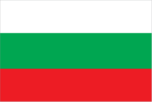
Geography
Area
- 111,852 km1; 41% arable, 11% other agricultural, 33% forested, 15% other
- 678,600 km2; 28% arable, of which 12% is cultivated, 62% forest, 10% urban and other (1969)
Coastline
- 354 km
- 3,060 km
Fiscal year
calendar year; economic data reported for calendar years except for caloric intake, which is reported for consumption year 1 July-30 June
Land boundaries
- 1,883 km
- 5,850 km
Limits of territorial waters (claimed)
- 12 nm
- 200 nm (200 nm exclusive economic zone)
Major trade partners
$20,217 million in 1980; 25% with non-Communist countries, 53% with USSR, 22% with other Communist countries
Monetary conversion rate
0.95 leva=US$l (August 1981)
NOTE
Foreign trade figures were converted at the 1980 rate of 0.85 leva=US$l
People and Society
Ethnic divisions
- 85.3% Bulgarians, 8.5% Turks, 2.6% Gypsies, 2.5% Macedonians, 0.3% Armenians, 0.2% Russians, 0.6% other
- 72% Burman, 7% Karen, 6% Shan, 3% Indian, 2% Kachin, 2% Chin, 2% Chinese, 6% other
Labor force
- 4.0 million (1981); 23% agriculture, 35% industry, 42% other
- 12.2 million (1976); 67% agriculture, 9% industry, 20% services, commerce, and transportation
Language
- Bulgarian; secondary languages closely correspond to ethnic breakdown
- Burmese; minority ethnic groups have their own languages
Literacy
- 95% (est.)
- 70% (official claim)
Nationality
- noun — Bulgarian(s); adjective — Bulgarian
- noun — Burman(s); adjective — Burmese
Organized labor
no figure available; old labor organizations have been disbanded, and government is forming one central labor organization
Population
- 8,940,000 (July 1982), average annual growth rate 0.4%
- 36,166,000 (July 1982), average annual growth rate 2.5%
Religion
- regime promotes atheism; religious background of population is 85% Bulgarian Orthodox, 13% Muslim, 0.8% Jewish, 0.7% Roman Catholic, 0.5% Protestant, GregorianArmenian and other
- 85% Buddhist, 15% animist, and other
Government
Branches
- legislative, National Assembly; judiciary, Supreme Court
- State Council rules through a Council of Ministers; People's Assembly has legislative power
Capital
- Sofia
- Rangoon
Communists
- 820,000 party members (April 1981) Mass organizations and front groups: Fatherland Front, Dimitrov Communist Youth League, Central Council of Trade Unions, National Committee for Defense of Peace, Union of Fighters Against Fascism and Capitalism, Committee of Bulgarian Women, All-National Committee for Bulgarian-Soviet Friendship
- estimated between 12,000 and 14,000
Elections
- theoretically held every five years for National Assembly; last elections held on 7 June 1981; 99.96% of the electorate voted Political parties and leaders: Bulgarian Communist Party, Todor Zhivkov, General Secretary; Bulgarian National Agrarian Union, a puppet party, Petur Tanchev, secretary of Permanent Board
- People's Assembly and local People's Councils elected in 1978 Political parties and leaders: government-sponsored Burma Socialist Program Party only legal party; U Ne Win, party chairman
Government leader
Chairman of State Council and President Gen. U SAN YU
Government leaders
Todor ZHIVKOV, Chairman, State Council (President and Chief of State); Georgi Stanchev FILIPOV, Chairman, Council of Ministers (Premier)
Legal system
- based on civil law system, with Soviet law influence; new constitution adopted in 1971; judicial review of legislative acts in the State Council; legal education at University of Sofia; has accepted compulsory ICJ jurisdiction
- People's Justice system and People's Courts instituted under 1974 constitution; legal education at Universities of Rangoon and Mandalay; has not accepted compulsory ICJ jurisdiction
Member of
- CEMA, FAO, IAEA, ICAO, ILO, International Lead and Zinc Study Group, IMCO, IPU, ITC, ITU, IWC— International Wheat Council, UN, UNESCO, UPU, WHO, WIPO, WMO, WTO; Warsaw Pact, International Organization of Journalists, International Medical Association, International Radio and Television Organization
- ADB, Colombo Plan, FAO, G-77, GATT, IAEA, IBRD, ICAO, IDA, IFC, IHO, ILO, IMCO, IMF, ITU, UN, UNESCO, UPU, WHO, WMO
National holiday
- National Liberation Day, 9 September
- Independence Day, 4 January BURMA (Continued)
Official name
- People's Republic of Bulgaria
- Socialist Republic of the Union of Burma
Other political or pressure groups
Kachin Independence Army; Karen Nationalist Union, several Shan factions
Political subdivisions
- 28 okrugs (districts), including capital city of Sofia
- seven divisions and seven constituent states; subdivided into townships, villages, and wards
Suffrage
- universal and compulsory over age 18
- universal over age 18
Type
- Communist state
- republic under 1974 constitution
Economy
Agriculture
- mainly self-sufficient; main crops — grain, vegetables; caloric intake, 3,461 calories per day per capita (1972/74)
- accounts for nearly 70% of total employment and about 27% of GDP; main crops — paddy, sugarcane, corn, peanuts; almost 100% self-sufficient; most rice grown in deltaic land
Budget
(1979/80) $3.4 billion est. revenues, $4.0 billion expenditures, $600 million deficit
Crude steel
2.6 million metric tons produced (1980), 293 kg per capita
Electric power
- 9,333,000 kW capacity (1981); 32,700 million kWh produced (1981), 3,665 kWh per capita
- 719,000 kW capacity (1980); 1.438 billion kWh produced (1980), 42 kWh per capita
Exports
- $10.5 billion (f.o.b., 1980); 45% machinery, equipment, and transportation equipment; 21% fuels, minerals, raw materials, metals, and other industrial material; 2% agricultural raw materials; 23% foodstuffs, raw materials for food industry, and animals; 9% industrial consumer goods (1980)
- $480 million (1980/81); rice, teak
Fiscal year
1 April-31 March
Fishing
- catch 89,000 metric tons (1979)
- catch 518,700 metric tons (1977)
GDP
$5.0 billion (1979/80, in current prices), $170 per capita; real growth rate 5.9% (1979/80)
GNP
$39.8 billion, 1980 (1980 dollars), $4,489 per capita; 1980 real growth rate, —0.2%
Imports
- $9.7 billion (f.o.b., 1980); 35% machinery, equipment, and transportation equipment; 50% fuels, minerals, raw materials, metals, other materials; 5% agricultural raw materials; 5% foodstuffs, raw materials for food industry, and animals; 5% industrial consumer goods (1979)
- $650 million (c.i.f, 1979); machinery and transportation equipment, textiles, other manufactured goods
Major industries
- agricultural processing, machinery, textiles and clothing, mining, ore processing, timber
- agricultural processing; textiles and footwear; wood and wood products; petroleum refining
Major trade partners
exports — Singapore, Western Europe, China, UK, Japan; imports — Japan, Western Europe, Singapore, UK
Monetary conversion rate
7.0 kyat=US$l (1981)
Shortages
some raw materials, metal products, meat and dairy products, fodder
Communications
Airfields
81 total, 80 usable; 21 with permanent-surface runways; 2 with runways 2,440-3,659 m, 40 with runways 1,220-2,439 m
Civil air
about 20 major transport aircraft
Freight carried
rail — 77.6 million metric tons, 17.6 billion metric ton/km (1979); highway — 836 million metric tons, 15.6 billion metric ton/km (1979); waterway— 4.9 million metric tons, 2.6 billion metric ton/km (excluding international transit traffic; 1979)
Highways
- 32,236 km total; 2,360 km trunk roads, 4,291 km class I concrete, asphalt, stone block; 6,062 km class II asphalt treated, gravel, crushed stone; 19,523 km class III earth (1979)
- 27,000 km total; 3,200 km bituminous, 17,700 km improved earth, gravel, 6,100 km unimproved earth
Inland waterways
- 471 km (1979)
- 12,800 km; 3,200 km navigable by large commercial vessels
Military budget
for fiscal year ending 31 December 1981, est. 900 million leva; 5.9% of total budget CSee reference maps VIII and IX)
Military manpower
- males 15-49, 2,173,000; 1,818,000 fit for military service; 63,000 reach military age (19) annually
- eligible 15-49, 16,523,000; of the 8,203,000 males 15-49, 4,535,000 are fit for military service; about 374,000 males and 365,000 females reach military age (18) annually; both sexes are liable for military service
Ports
- 3 major (Varna, Varna West, Burgas), 6 minor (1981); principal river ports are Ruse and Lorn (1981) DEFENSE FORCES
- 4 major, 6 minor
Railroads
- 4,341 km total; about 4,096 km standard gauge (1.435 m), 245 km narrow gauge; 437 km double track; 1,449 km electrified; government owned (1979)
- 3,243 km total; 3,130 km meter gauge (1.00 m), 1 13 km narrow-gauge industrial lines; 328 km double track; government owned
Telecommunications
provide minimum requirements for local and intercity service; international service is good; radiobroadcast coverage is limited to the most populous areas; 33,000 telephones (0.1 per 100 popl.); 1 AM station, 1 FM station, and 1 TV station; 1 ground satellite station DEFENSE FORCES