2016 Edition
CIA World Factbook 2016 Archive (HTML)
Introduction
Background
This uninhabited, volcanic, Antarctic island is almost entirely covered by glaciers making it difficult to approach; it is recognized as the most remote island on Earth. Bouvet Island was discovered in 1739 by a French naval officer after whom it is named. No claim was made until 1825, when the British flag was raised. In 1928, the UK waived its claim in favor of Norway, which had occupied the island the previous year. In 1971, Norway designated Bouvet Island and the adjacent territorial waters a nature reserve. Since 1977, Norway has run an automated meteorological station and studied foraging strategies and distribution of fur seals and penguins on the island. In February 2006, an earthquake weakened the station's foundation causing it to be blown out to sea in a winter storm. Norway erected a new research station in 2014 that can hold six people for periods of two to four months.
Geography
Area
- 49 sq km 49 sq km 0 sq km
- land
- 49 sq km
- total
- 49 sq km
- water
- 0 sq km
Area - comparative
about 0.3 times the size of Washington, DC
Climate
antarctic
Coastline
29.6 km
Elevation
- NA lowest point: South Atlantic Ocean 0 m highest point: Olav Peak 935 m
- elevation extremes
- lowest point: South Atlantic Ocean 0 m
- highest point
- Olav Peak 935 m
- mean elevation
- NA
Environment - current issues
NA
Geographic coordinates
54 26 S, 3 24 E
Geography - note
covered by glacial ice; declared a nature reserve by Norway
Land boundaries
0 km
Land use
- 0% arable land 0%; permanent crops 0%; permanent pasture 0% 0% 100% (93% ice) (2011 est.)
- agricultural land
- 0%
- forest
- 0%
- other
- 100% (93% ice) (2011 est.)
Location
island in the South Atlantic Ocean, southwest of the Cape of Good Hope (South Africa)
Map references
Antarctic Region
Maritime claims
- 4 nm
- territorial sea
- 4 nm
Natural hazards
NA
Natural resources
none
Terrain
volcanic; coast is mostly inaccessible
People and Society
Population
uninhabited
Government
Country name
- none Bouvet Island named after the French naval officer Jean-Baptiste Charles BOUVET who discovered the island in 1739
- conventional long form
- none
- conventional short form
- Bouvet Island
- etymology
- named after the French naval officer Jean-Baptiste Charles BOUVET who discovered the island in 1739
Dependency status
territory of Norway; administered by the Polar Department of the Ministry of Justice and Oslo Police
Flag description
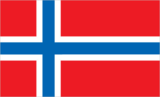
the flag of Norway is used
Legal system
the laws of Norway, where applicable, apply
Economy
Economy - overview
no economic activity; declared a nature reserve
Communications
Communications - note
has an automated meteorological station
Internet country code
.bv
Transportation
Ports and terminals
none; offshore anchorage only
Military and Security
Military - note
defense is the responsibility of Norway
Transnational Issues
Disputes - international
none