2022 Edition
CIA World Factbook 2022 (factbook.json @ 61dadec0c9c9)
Introduction
Background
Bermuda was first settled in 1609 by shipwrecked English colonists heading for Virginia. Self-governing since 1620, Bermuda is the oldest and most populous of the British overseas territories. Vacationing to the island to escape North American winters first developed in Victorian times. Tourism continues to be important to the island's economy, although international business has overtaken it in recent years. Bermuda has also developed into a highly successful offshore financial center. A referendum on independence from the UK was soundly defeated in 1995.
Geography
Area
- land
- 54 sq km
- total
- 54 sq km
- water
- 0 sq km
Area - comparative
about one-third the size of Washington, DC
Climate
subtropical; mild, humid; gales, strong winds common in winter
Coastline
103 km
Elevation
- highest point
- Town Hill 79 m
- lowest point
- Atlantic Ocean 0 m
Geographic coordinates
32 20 N, 64 45 W
Geography - note
consists of about 138 coral islands and islets with ample rainfall, but no rivers or freshwater lakes; some land was leased by the US Government from 1941 to 1995
Irrigated land
NA
Land boundaries
- total
- 0 km
Land use
- agricultural land
- 14.8% (2018 est.)
- agricultural land: arable land
- arable land: 14.8% (2018 est.)
- agricultural land: permanent crops
- permanent crops: 0% (2018 est.)
- agricultural land: permanent pasture
- permanent pasture: 0% (2018 est.)
- forest
- 20% (2018 est.)
- other
- 65.2% (2018 est.)
Location
North America, group of islands in the North Atlantic Ocean, east of South Carolina (US)
Map references
North America
Maritime claims
- exclusive economic zone
- 200 nm
- exclusive fishing zone
- 200 nm
- territorial sea
- 12 nm
Natural hazards
hurricanes (June to November)
Natural resources
limestone, pleasant climate fostering tourism
Population distribution
relatively even population distribution throughout
Terrain
low hills separated by fertile depressions
People and Society
Age structure
- 0-14 years
- 16.7% (male 6,053/female 5,928)
- 15-24 years
- 11.88% (male 4,290/female 4,235)
- 25-54 years
- 35.31% (male 12,758/female 12,575)
- 55-64 years
- 16.37% (male 5,560/female 6,185)
- 65 years and over
- 19.74% (male 6,032/female 8,134) (2020 est.)
Birth rate
11.03 births/1,000 population (2022 est.)
Children under the age of 5 years underweight
NA
Contraceptive prevalence rate
NA
Current health expenditure
NA
Death rate
9.11 deaths/1,000 population (2022 est.)
Dependency ratios
- elderly dependency ratio
- 30.1
- potential support ratio
- 3.3 (2021)
- total dependency ratio
- 52.9
- youth dependency ratio
- 22.8
Drinking water source
- improved: rural
- rural: NA
- improved: total
- total: 99.9% of population
- improved: urban
- urban: 99.9% of population
- unimproved: rural
- rural: NA
- unimproved: total
- total: 0.1% of population (2020)
- unimproved: urban
- urban: 0.1% of population
Education expenditures
1.9% of GDP (2021 est.)
Ethnic groups
African descent 52%, White 31%, mixed 9%, Asian 4%, other 4% (2010 est.)
HIV/AIDS - adult prevalence rate
NA
Infant mortality rate
- female
- 1.86 deaths/1,000 live births (2022 est.)
- male
- 2.51 deaths/1,000 live births
- total
- 2.19 deaths/1,000 live births
Languages
English (official), Portuguese
Life expectancy at birth
- female
- 85.28 years (2022 est.)
- male
- 78.96 years
- total population
- 82.04 years
Literacy
- female
- NA
- male
- NA
- total population
- NA
Major urban areas - population
10,000 HAMILTON (capital) (2018)
Median age
- female
- 45.7 years (2020 est.)
- male
- 41.6 years
- total
- 43.6 years
Nationality
- adjective
- Bermudian
- noun
- Bermudian(s)
Net migration rate
1.49 migrant(s)/1,000 population (2022 est.)
Physicians density
NA
Population
72,337 (2022 est.)
Population distribution
relatively even population distribution throughout
Population growth rate
0.34% (2022 est.)
Religions
Protestant 46.2% (includes Anglican 15.8%, African Methodist Episcopal 8.6%, Seventh Day Adventist 6.7, Pentecostal 3.5%, Methodist 2.7%, Presbyterian 2.0%, Church of God 1.6%, Baptist 1.2%, Salvation Army 1.1%, Brethren 1.0%, other Protestant 2.0%), Roman Catholic 14.5%, Jehovah's Witness 1.3%, other Christian 9.1%, Muslim 1%, other 3.9%, none 17.8%, unspecified 6.2% (2010 est.)
Sanitation facility access
- improved: rural
- rural: NA
- improved: total
- total: 99.9% of population
- improved: urban
- urban: 99.9% of population
- unimproved: rural
- rural: NA
- unimproved: total
- total: 0.1% of population (2020)
- unimproved: urban
- urban: 0.1% of population
School life expectancy (primary to tertiary education)
- female
- 13 years (2015)
- male
- 12 years
- total
- 13 years
Sex ratio
- 0-14 years
- 1.05 male(s)/female
- 15-24 years
- 1.06 male(s)/female
- 25-54 years
- 1.02 male(s)/female
- 55-64 years
- 0.91 male(s)/female
- 65 years and over
- 0.6 male(s)/female
- at birth
- 1.05 male(s)/female
- total population
- 0.95 male(s)/female (2022 est.)
Total fertility rate
1.9 children born/woman (2022 est.)
Urbanization
- rate of urbanization
- -0.2% annual rate of change (2020-25 est.)
- urban population
- 100% of total population (2023)
Youth unemployment rate (ages 15-24)
- female
- 29% (2014 est.)
- male
- 29.7%
- total
- 29.3%
Government
Administrative divisions
9 parishes and 2 municipalities*; Devonshire, Hamilton, Hamilton*, Paget, Pembroke, Saint George*, Saint George's, Sandys, Smith's, Southampton, Warwick
Capital
- daylight saving time
- +1hr, begins second Sunday in March; ends first Sunday in November
- etymology
- named after Henry HAMILTON (ca. 1734-1796) who served as governor of Bermuda from 1788-1794
- geographic coordinates
- 32 17 N, 64 47 W
- name
- Hamilton
- time difference
- UTC-4 (1 hour ahead of Washington, DC, during Standard Time)
Citizenship
- citizenship by birth
- no
- citizenship by descent only
- at least one parent must be a citizen of the UK
- dual citizenship recognized
- yes
- residency requirement for naturalization
- 10 years
Constitution
- amendments
- proposal procedure - NA; passage by an Order in Council in the UK; amended several times, last in 2012
- history
- several previous (dating to 1684); latest entered into force 8 June 1968 (Bermuda Constitution Order 1968)
Country name
- conventional long form
- none
- conventional short form
- Bermuda
- etymology
- the islands making up Bermuda are named after Juan de BERMUDEZ, an early 16th century Spanish sea captain and the first European explorer of the archipelago
- former
- Somers Islands
Dependency status
overseas territory of the UK
Diplomatic representation from the US
- chief of mission
- Consul General Karen GRISSETTE (since 6 July 2021)
- consulate(s) general
- 16 Middle Road, Devonshire DV O3
- email address and website
- HamiltonConsulate@state.govhttps://bm.usconsulate.gov/
- embassy
- US Consulate Bermuda, 16 Middle Road, Devonshire, DV 03, Bermuda
- FAX
- (441) 295-1592
- mailing address
- 5300 Hamilton Place, Washington, DC 20520-5300
- telephone
- (441) 295-1342
Diplomatic representation in the US
none (overseas territory of the UK)
Executive branch
- cabinet
- Cabinet nominated by the premier, appointed by the governor
- chief of state
- King CHARLES III (since 8 September 2022); represented by Governor Rena LALGIE (since 14 December 2020)
- elections/appointments
- the monarchy is hereditary; governor appointed by the monarch; following legislative elections, the leader of the majority party or majority coalition usually appointed premier by the governor
- head of government
- Premier David BURT (since 19 July 2017)
Flag description
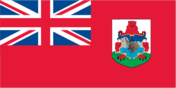
- red, with the flag of the UK in the upper hoist-side quadrant and the Bermudian coat of arms (a white shield with a red lion standing on a green grassy field holding a scrolled shield showing the sinking of the ship Sea Venture off Bermuda in 1609) centered on the outer half of the flag; it was the shipwreck of the vessel, filled with English colonists originally bound for Virginia, that led to the settling of Bermuda
- note
- note: the flag is unusual in that it is only British overseas territory that uses a red ensign, all others use blue
Government type
Overseas Territory of the UK with limited self-government; parliamentary democracy
Independence
none (overseas territory of the UK)
International law organization participation
has not submitted an ICJ jurisdiction declaration; non-party state to the ICCt
International organization participation
Caricom (associate), ICC (NGOs), Interpol (subbureau), IOC, ITUC (NGOs), UPU, WCO
Judicial branch
- highest court(s)
- Court of Appeal (consists of the court president and at least 2 justices); Supreme Court (consists of the chief justice, 4 puisne judges, and 1 associate justice); note - the Judicial Committee of the Privy Council (in London) is the court of final appeal
- judge selection and term of office
- Court of Appeal justice appointed by the governor; justice tenure by individual appointment; Supreme Court judges nominated by the Judicial and Legal Services Commission and appointed by the governor; judge tenure based on terms of appointment
- subordinate courts
- commercial court (began in 2006); magistrates' courts
Legal system
English common law
Legislative branch
- description
- bicameral Parliament consists of:Senate (11 seats; 3 members appointed by the governor, 5 by the premier, and 3 by the opposition party; members serve 5-year terms) and the House of Assembly (36 seats; members directly elected in single-seat constituencies by simple majority vote to serve up to 5-year terms)House of Assembly (36 seats; members directly elected in single-seat constituencies by simple majority vote to serve up to 5-year terms)
- election results
- Senate - composition as of March 2022 - men 5, women 6, percent of women 54.5%House of Assembly - percent of vote by party - PLP 62.1%, OBA 32.3%, other 5.4%, independent 0.2%; seats by party - PLP 30, OBA 6; composition as of March 2022 - men 28, women 8, percent of women 22.2%; note - total Parliament percent of women as of March 2022 - 29.8%
- elections
- Senate - last appointments in August 2017 (next appointments in 2022)House of Assembly - last held on 1 October 2020 (next to be held not later than 2025)
National anthem
- lyrics/music
- Bette JOHNS
- name
- Hail to Bermuda
- note
- note: serves as a local anthem; as a territory of the United Kingdom, "God Save the King" is official (see United Kingdom)
National heritage
- selected World Heritage Site locales
- Historic Town of St George and Related Fortifications
- total World Heritage Sites
- 1 (cultural); note - excerpted from the UK entry
National holiday
Bermuda Day, 24 May; note - formerly known as Victoria Day, Empire Day, and Commonwealth Day
National symbol(s)
red lion
Political parties and leaders
Free Democratic Movement or FDM [Marc A. R. BEAN]One Bermuda Alliance or OBA [N. H. Cole SIMONS]Progressive Labor Party or PLP [E. David BURT]
Suffrage
18 years of age; universal
Economy
Agricultural products
bananas, vegetables, citrus, flowers; dairy products, honey
Budget
- expenditures
- 1.176 billion (2017 est.)
- revenues
- 999.2 million (2017 est.)
Budget surplus (+) or deficit (-)
-2.9% (of GDP) (2017 est.)
Credit ratings
- Fitch rating
- N/A (2015)
- Moody's rating
- A2 (2016)
- note
- note: The year refers to the year in which the current credit rating was first obtained.
- Standard & Poors rating
- A+ (2015)
Current account balance
- Current account balance 2016
- $763 million (2016 est.)
- Current account balance 2017
- $818.6 million (2017 est.)
Debt - external
- Debt - external 2015
- $2.435 billion (2015 est.)
- Debt - external 2017
- $2.515 billion (2017 est.)
Economic overview
International business, which consists primarily of insurance and other financial services, is the real bedrock of Bermuda's economy, consistently accounting for about 85% of the island's GDP. Tourism is the country’s second largest industry, accounting for about 5% of Bermuda's GDP but a much larger share of employment. Over 80% of visitors come from the US and the sector struggled in the wake of the global recession of 2008-09. Even the financial sector has lost roughly 5,000 high-paying expatriate jobs since 2008, weighing heavily on household consumption and retail sales. Bermuda must import almost everything. Agriculture and industry are limited due to the small size of the island. Bermuda's economy returned to negative growth in 2016, reporting a contraction of 0.1% GDP, after growing by 0.6% in 2015. Unemployment reached 7% in 2016 and 2017, public debt is growing and exceeds $2.4 billion, and the government continues to work on attracting foreign investment. Still, Bermuda enjoys one of the highest per capita incomes in the world.
Exchange rates
- Currency
- Bermudian dollars (BMD) per US dollar -
- Exchange rates 2013
- 1 (2013 est.)
- Exchange rates 2014
- 1 (2014 est.)
- Exchange rates 2018
- 1 (2018 est.)
- Exchange rates 2019
- 1 (2019 est.)
- Exchange rates 2020
- 1 (2020 est.)
Exports
- Exports 2018
- $1.59 billion (2018 est.)
- Exports 2019
- $1.59 billion (2019 est.)
- note
- note: Data are in current year dollars and do not include illicit exports or re-exports.
Exports - commodities
re-exports of pharmaceuticals
Exports - partners
Jamaica 49.1%, Luxembourg 36.1%, US 4.9% (2017)
Fiscal year
1 April - 31 March
GDP - composition, by end use
- exports of goods and services
- 49.8% (2017 est.)
- government consumption
- 15.7% (2017 est.)
- household consumption
- 51.3% (2017 est.)
- imports of goods and services
- -30.4% (2017 est.)
- investment in fixed capital
- 13.7% (2017 est.)
- investment in inventories
- 0% (2017 est.)
GDP - composition, by sector of origin
- agriculture
- 0.9% (2017 est.)
- industry
- 5.3% (2017 est.)
- services
- 93.8% (2017 est.)
GDP (official exchange rate)
$6.127 billion (2016 est.)
Household income or consumption by percentage share
- highest 10%
- NA
- lowest 10%
- NA
Imports
- Imports 2018
- $2.2 billion (2018 est.) note: data are in current year dollars
- Imports 2019
- $2.23 billion (2019 est.) note: data are in current year dollars
Imports - commodities
ships, refined petroleum, postage stamps, recreational boats, aircraft (2019)
Imports - partners
United States 44%, South Korea 17%, Germany 10%, Canada 8% (2019)
Industrial production growth rate
2% (2017 est.)
Industries
international business, tourism, light manufacturing
Inflation rate (consumer prices)
- Inflation rate (consumer prices) 2016
- 1.4% (2016 est.)
- Inflation rate (consumer prices) 2017
- 1.9% (2017 est.)
Labor force
33,480 (2016 est.)
Labor force - by occupation
- agriculture
- 2%
- industry
- 13%
- services
- 85% (2016 est.)
Population below poverty line
11% (2008 est.)
Public debt
- Public debt FY14/15
- 43% of GDP (FY14/15)
Real GDP (purchasing power parity)
- Real GDP (purchasing power parity) 2017
- $5.227 billion (2017 est.)
- Real GDP (purchasing power parity) 2018
- $5.2 billion (2018 est.) note: data are in 2017 dollars
- Real GDP (purchasing power parity) 2019
- $5.23 billion (2019 est.) note: data are in 2017 dollars
Real GDP growth rate
- Real GDP growth rate 2014
- -0.3% (2014 est.)
- Real GDP growth rate 2015
- 0.6% (2015 est.)
- Real GDP growth rate 2016
- -0.1% (2016 est.)
Real GDP per capita
- Real GDP per capita 2017
- $81,835 (2017 est.)
- Real GDP per capita 2018
- $81,400 (2018 est.) note: data are in 2017 dollars
- Real GDP per capita 2019
- $81,800 (2019 est.) note: data are in 2017 dollars
Taxes and other revenues
16.3% (of GDP) (2017 est.)
Unemployment rate
- Unemployment rate 2016
- 7% (2016 est.)
- Unemployment rate 2017
- 7% (2017 est.)
Youth unemployment rate (ages 15-24)
- female
- 29% (2014 est.)
- male
- 29.7%
- total
- 29.3%
Energy
Carbon dioxide emissions
- from coal and metallurgical coke
- 0 metric tonnes of CO2 (2019 est.)
- from consumed natural gas
- 0 metric tonnes of CO2 (2019 est.)
- from petroleum and other liquids
- 796,000 metric tonnes of CO2 (2019 est.)
- total emissions
- 796,000 metric tonnes of CO2 (2019 est.)
Coal
- consumption
- 0 metric tons (2020 est.)
- exports
- 0 metric tons (2020 est.)
- imports
- 0 metric tons (2020 est.)
- production
- 0 metric tons (2020 est.)
- proven reserves
- 0 metric tons (2019 est.)
Electricity
- consumption
- 533.434 million kWh (2019 est.)
- exports
- 0 kWh (2020 est.)
- imports
- 0 kWh (2020 est.)
- installed generating capacity
- 172,000 kW (2020 est.)
- transmission/distribution losses
- 41 million kWh (2019 est.)
Electricity access
- electrification - total population
- 100% (2020)
Electricity generation sources
- biomass and waste
- 0% of total installed capacity (2020 est.)
- fossil fuels
- 100% of total installed capacity (2020 est.)
- geothermal
- 0% of total installed capacity (2020 est.)
- hydroelectricity
- 0% of total installed capacity (2020 est.)
- nuclear
- 0% of total installed capacity (2020 est.)
- solar
- 0% of total installed capacity (2020 est.)
- tide and wave
- 0% of total installed capacity (2020 est.)
- wind
- 0% of total installed capacity (2020 est.)
Energy consumption per capita
- Total energy consumption per capita 2019
- 176.312 million Btu/person (2019 est.)
Natural gas
- consumption
- 0 cubic meters (2021 est.)
- exports
- 0 cubic meters (2021 est.)
- imports
- 0 cubic meters (2021 est.)
- production
- 0 cubic meters (2021 est.)
- proven reserves
- 0 cubic meters (2021 est.)
Petroleum
- crude oil and lease condensate exports
- 0 bbl/day (2018 est.)
- crude oil and lease condensate imports
- 0 bbl/day (2018 est.)
- crude oil estimated reserves
- 0 barrels (2021 est.)
- refined petroleum consumption
- 5,200 bbl/day (2019 est.)
- total petroleum production
- 0 bbl/day (2021 est.)
Refined petroleum products - exports
0 bbl/day (2015 est.)
Refined petroleum products - imports
3,939 bbl/day (2015 est.)
Refined petroleum products - production
0 bbl/day (2017 est.)
Communications
Broadband - fixed subscriptions
- subscriptions per 100 inhabitants
- 37 (2020 est.)
- total
- 23,000 (2020 est.)
Broadcast media
3 TV stations; cable and satellite TV subscription services are available; roughly 13 radio stations operating
Internet country code
.bm
Internet users
- percent of population
- 98% (2020 est.)
- total
- 62,625 (2020 est.)
Telecommunication systems
- domestic
- the system has a high fixed-line teledensity nearing 40 per 100, coupled with a mobile-cellular teledensity of roughly 109 per 100 persons (2020)
- general assessment
- the telecom sector has seen a decline in subscriber numbers (particularly for prepaid mobile services the mainstay of short term visitors) and revenue; fixed and mobile broadband services are two areas that have benefited from the crisis as employees and students have resorted to working from home; one area of the telecom market that is not prepared for growth is 5G mobile; governments, regulators, and even the mobile network operators have shown that they have not been investing in 5G opportunities at the present time; network expansion and enhancements remain concentrated around improving LTE coverage (2021)
- international
- country code - 1-441; landing points for the GlobeNet, Gemini Bermuda, CBUS, and the CB-1 submarine cables to the Caribbean, South America and the US; satellite earth stations - 3 (2019)
- note
- note: the COVID-19 pandemic continues to have a significant impact on production and supply chains globally; since 2020, some aspects of the telecom sector have experienced a downturn, particularly in mobile device production; progress toward 5G implementation has resumed, as well as upgrades to infrastructure; consumer spending on telecom services has increased due to the surge in demand for capacity and bandwidth; the crucial nature of telecom services as a tool for work and school from home is still evident, and the spike in this area has seen growth opportunities for development of new tools and increased services
Telephones - fixed lines
- subscriptions per 100 inhabitants
- 40 (2020 est.)
- total subscriptions
- 25,000 (2020 est.)
Telephones - mobile cellular
- subscriptions per 100 inhabitants
- 109 (2020 est.)
- total subscriptions
- 68,000 (2020 est.)
Transportation
Airports
- total
- 1 (2021)
Airports - with paved runways
- 2,438 to 3,047 m
- 1 (2021)
- total
- 1
Civil aircraft registration country code prefix
VP-B
Merchant marine
- by type
- container ship 12, oil tanker 18, other 117 (2021)
- total
- 147
Ports and terminals
- major seaport(s)
- Hamilton, Ireland Island, Saint George
Roadways
- note
- note: 225 km public roads; 222 km private roads
- paved
- 447 km (2010)
- total
- 447 km (2010)
Military and Security
Military - note
defense is the responsibility of the UK
Military and security forces
- Royal Bermuda Regiment; Bermuda Police Service (2022)
- note
- note: the Royal Bermuda Regiment is a reserve multi-role battalion that carries out two primary functions – providing military aid to civil authorities and humanitarian and disaster relief
Military and security service personnel strengths
the Royal Bermuda Regiment has about 350 troops (2022)
Military equipment inventories and acquisitions
the Regiment is equipped with small arms (2021)
Military service age and obligation
men and women who are Commonwealth citizens and 18-45 years of age can volunteer for the Bermuda Regiment; service is for a minimum period of three years and two months from the date of enlistment; service can be extended only by volunteering or an executive order from the Governor; annual training commitment is about 30 days a year, which includes a two-week camp, weekends, and drill nights (2022)
Transnational Issues
Disputes - international
none identified
Environment
Air pollutants
- carbon dioxide emissions
- 0.61 megatons (2016 est.)
Climate
subtropical; mild, humid; gales, strong winds common in winter
Environment - current issues
dense population and heavy vehicle traffic create serious congestion and air pollution problems; water resources scarce (most obtained as rainwater or from wells); solid waste disposal; hazardous waste disposal; sewage disposal; overfishing; oil spills
Land use
- agricultural land
- 14.8% (2018 est.)
- agricultural land: arable land
- arable land: 14.8% (2018 est.)
- agricultural land: permanent crops
- permanent crops: 0% (2018 est.)
- agricultural land: permanent pasture
- permanent pasture: 0% (2018 est.)
- forest
- 20% (2018 est.)
- other
- 65.2% (2018 est.)
Urbanization
- rate of urbanization
- -0.2% annual rate of change (2020-25 est.)
- urban population
- 100% of total population (2023)
Waste and recycling
- municipal solid waste generated annually
- 82,000 tons (2012 est.)
- municipal solid waste recycled annually
- 1,640 tons (2012 est.)
- percent of municipal solid waste recycled
- 2% (2012 est.)