1988 Edition
CIA World Factbook 1988 (Internet Archive)
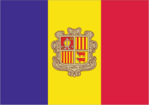
Geography
Climate
temperate; snowy, cold winters with cool, dry summers
Comparative area
about two and onehalf times the size of Washington, D.C.
Environment
deforestation, overgrazing
Land boundaries
105 km total
Land use
2% arable land; 0% permanent crops; 56% meadows and pastures; 22% forest and woodland; 20% other
Special notes
landlocked
Terrain
rugged mountains dissected by narrow valleys
Total area
450 km2; land area: 450 km2
People and Society
Ethnic divisions
Catalan stock; 61% Spanish, 30% Andorran, 6% French, 3% other
Labor force
largely shepherds and farmers
Language
Catalan (official); many also speak some French and Castilian
Literacy
100%
Nationality
noun — Andorran(s); adjective— Andorran
Population
47,973 (July 1987), average annual growth rate 3.19%
Religion
virtually all Roman Catholic
Government
Administrative divisions
7 districts
Branches
legislative (General Council of the Valleys) consisting of 28 members; executive — syndic (manager) and a deputy subsyndic chosen by General Council; judiciary chosen by Co-Princes who appoint two civil judges, a judge of appeals, and two battles (court prosecutors); final appeal to the Supreme Court of Andorra at Perpignan, France, or to the Ecclesiastical Court of the Bishop of Seo de Urgel, Spain
Capital
Andorra la Vella
Communists
negligible
Elections
28-member General Council chosen every four years; last election December 1985 Political parties and leaders: political parties not yet legally recognized; traditionally no political parties but partisans for particular independent candidates for the General Council on the basis of competence, personality, and orientation toward Spain or France; various small pressure groups developed in 1972; first formal political party, Andorran Democratic Association, was formed in 1976 and reorganized in 1979 as Andorran Democratic Party
Government leaders
head of state — French Co-Prince Francois MITTERRAND (President of France since 1981) and Spanish Episcopal Co-Prince Mgr. Juan MARTI y Alanis (Bishop of Seo de Urgel, Spain, since 1971); Syndic— Francesc CERQUEDA Pasquet (since 1982); Subsyndic — Antoni GARRALLA Rossell (since 1986); head of government — Josep PINTAT Solans (Chief Executive since 1984; re-elected 1986)
Legal system
based on French and Spanish civil codes; Plan of Reform adopted 1866 serves as constitution; no judicial review of legislative acts; has not accepted compulsory ICJ jurisdiction
Member of
UNESCO
Official name
Principality of Andorra
Suffrage
those of 21 or over who are third-generation Andorrans can vote for General Council members
Type
unique co-principality under formal sovereignty of President of France and Spanish Bishop of Seo de Urgel, who are represented locally by officials called verguers
Economy
Agriculture
sheep raising; small quantities of tobacco, rye, wheat, barley, oats, and some vegetables
Electric power
35,000 kW capacity; 140 million kWh produced, 2,860 kWh per capita (1986); power is mainly exported to Spain and France
Major industries
tourism (particularly skiing), sheep, timber, tobacco, and smuggling
Major trade partners
Spain, France
Monetary conversion rate
6.62 French francs=US$l, 136.13 Spanish pesetas=US$l (November 1986)
Natural resources
hydroelectric power, mineral water
Communications
Airfields
none
Civil air
no major transport aircraft
Highways
about 96 km
Railroads
none
Telecommunications
international landline circuits to Spain and France; 1 AM station; about 12,800 telephones (43.5 per 100 popl.) (1982) Defense Forces Defense is the responsibility of Spain and