1985 Edition
CIA World Factbook 1985 (Internet Archive)
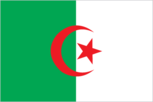
Geography
Agriculture
main crops — wheat, barley, oats, grapes, olives, citrus fruits, dates, vegetables, sheep, cattle, industrial crops
Airfields
161 total, 153 usable; 55 with permanent-surface runways; 28 with runways 2,440-3,659 m; 72 with runways 1,2202,439 m Defense Forces
Branches
- executive; unicameral legislature (National People's Assembly); judiciary
- Armed Forces, Army, Navy, Air Force, National Gendarmerie
Budget
$20 billion revenue, $20 billion expenditure (1984)
Capital
Algiers
Civil air
30 major transport aircraft
Communists
400 (est.); Communist Party illegal (banned 1962)
Crude steel
842,000 metric tons produced (1982)
Elections (latest)
presidential 12 January 1984; departmental assemblies 2 June 1974; local assemblies 30 March 1975; legislative 5 March 1982 Political parties and leaders: National Liberation Front (FLN), secretary General Chadli Bendjedid
Electric power
3,113,000 kW capacity (1984); 12.546 billion kWh produced (1984), 587 kWh per capita
Exports
$12.6 billion (f.o.b., 1984); major items— petroleum and gas 98.0%; US 39.0%, France 23.0% (1984)
Fiscal year
calendar year Communications
GDP
$51.9 billion (1984 est.), $2,430 per capita; 4.0% real growth in 1984
Government leaders
Col. Chadli BENDJEDID, President (since February 1979); Abdelhanio BRAHIM, Prime Minister (since January 1984)
Highways
78,410 km total; 45,070 km concrete or bituminous, 33,340 km gravel, crushed stone, unimproved earth
Imports
$10.0 billion (f.o.b., 1984); major items — capital goods 35.0%, semifinished goods 25.0%, foodstuffs 18.0%; France 25.7%, US 6.0%
Legal system
based on French and Islamic law, with socialist principles; new constitution adopted by referendum November 1976; judicial review of legislative acts in ad hoc Constitutional Council composed of various public officials, including several Supreme Court justices; Supreme Court divided into four chambers; legal education at Universities of Algiers, Oran, and Constantine; has not accepted compulsory ICJ jurisdiction
Major industries
petroleum, light industries, natural gas, mining, petrochemical, electrical, automotive plants (under construction), and food processing
Major trade partners
US, FRG, France, Italy, Belgium, Netherlands, Canada
Member of
Af DB, AIOEC, Arab League, ASSIMER, FAO, G-77, GATT (de facto), IAEA, IBRD, ICAO, IDA, IDB— Islamic Development Bank, IFAD, ILO, IMF, IMO, INTELSAT, International Lead and Zinc Study Group, INTERPOL, IOOC, ITU, NAM, OAPEC, OAU, QIC, OPEC, UN, UNESCO, UPU, WHO, WIPO, WMO Economy
Military manpower
males 15-49, 4,722,000; 2,919,000 fit for military service; 239,000 reach military age (19) annually
Monetary conversion rate
5.01 Algerian dinars=US$l (August 1984)
National holiday
Revolution Day, 1 November
Official name
Democratic and Popular Republic of Algeria
Organized labor
16-19% of labor force claimed; General Union of Algerian Workers (UGTA) is the only labor organization and is subordinate to the National Liberation Front Government
Pipelines
crude oil, 6,612 km; refined products, 298 km; natural gas, 2,948 km
Political subdivisions
48 wilayas (departments or provinces); 160 dairat (administrative districts); 691 communes
Ports
6 major, 6 secondary, 10 minor
Railroads
3,908 km total; 2,659 km standard gauge (1.435 m), 1,129 km 1.055-meter gauge, 120 km 1.000-meter gauge; 302 km electrified; 193 km double track
Suffrage
universal over age 19
Type
republic