Introduction
<p>The island of Timor was actively involved in Southeast Asian trading networks for centuries, and by the 14th century, it exported sandalwood, slaves, honey, and wax. The sandalwood trade attracted the Portuguese, who arrived in the early 16th century; by mid-century, they had colonized the island, which was previously ruled by local chieftains. In 1859, Portugal ceded the western portion of the island to the Dutch. Imperial Japan occupied Portuguese Timor from 1942 to 1945, but Portugal resumed colonial authority after the Japanese defeat in World War II. The eastern part of Timor declared itself independent from Portugal on 28 November 1975, but Indonesian forces invaded and occupied the area nine days later. It was incorporated into Indonesia in 1976 as the province of Timor Timur (East Timor or Timor Leste). Indonesia conducted an unsuccessful pacification campaign in the province over the next two decades, during which as many as 250,000 people died. <br><br>In a UN-supervised referendum in 1999, an overwhelming majority of the people of Timor-Leste voted for independence from Indonesia. However, anti-independence Timorese militias -- organized and supported by the Indonesian military -- began a large-scale, scorched-earth campaign of retribution, killing approximately 1,400 Timorese and displacing nearly 500,000. Most of the country's infrastructure was destroyed, including homes, irrigation systems, water supply systems, schools, and most of the electrical grid. Australian-led peacekeeping troops eventually deployed to the country and ended the violence. In 2002, Timor-Leste was internationally recognized as an independent state.</p> <p>In 2006, Australia and the UN had to step in again to stabilize the country, which allowed presidential and parliamentary elections to be conducted in 2007 in a largely peaceful atmosphere. In 2008, rebels staged an unsuccessful attack against the president and prime minister. Since that attack, Timor-Leste has made considerable progress in building stability and democratic institutions, holding a series of successful parliamentary and presidential elections since 2012. Nonetheless, weak and unstable political coalitions have led to periodic episodes of stalemate and crisis. The UN continues to provide assistance on economic development and strengthening governing institutions. Currently, Timor-Leste is one of the world's poorest nations, with an economy that relies heavily on energy resources in the Timor Sea.</p>
Geography
- Land
- 14,874 sq km
- Total
- 14,874 sq km
- Water
- 0 sq km
slightly larger than Connecticut; almost half the size of Maryland
tropical; hot, humid; distinct rainy and dry seasons
706 km
Oceania
- Highest point
- Foho Tatamailau 2,963 m
- Lowest point
- Timor Sea, Savu Sea, and Banda Sea 0 m
8 50 S, 125 55 E
the island of Timor is part of the Malay Archipelago and is the largest and easternmost of the Lesser Sunda Islands; the district of Oecussi is an exclave separated from Timor-Leste proper by Indonesia; Timor-Leste is the only Asian country located completely in the Southern Hemisphere
350 sq km (2012)
- Border countries
- Indonesia 253 km
- number of neighbors
- 1
- Total
- 253 km
- Agricultural land
- 23% (2023 est.)
- Agricultural land: arable land
- arable land: 7.5% (2023 est.)
- Agricultural land: permanent crops
- permanent crops: 5.4% (2023 est.)
- Agricultural land: permanent pasture
- permanent pasture: 10.1% (2023 est.)
- arable land
- 7.5%
- Forest
- 71% (2023 est.)
- Other
- 6% (2023 est.)
- permanent crops
- 5.37%
No
Southeastern Asia, northwest of Australia in the Lesser Sunda Islands at the eastern end of the Indonesian archipelago; note - Timor-Leste includes the eastern half of the island of Timor, the Oecussi (Ambeno) region on the northwest portion of the island of Timor, and the islands of Pulau Atauro and Pulau Jaco
- Google Maps
- https://goo.gl/maps/sFqBC9zjgUXPR1iTA
- OpenStreetMap
- https://www.openstreetmap.org/relation/305142
Southeast Asia
- Contiguous zone
- 24 nm
- Exclusive fishing zone
- 200 nm
- Territorial sea
- 12 nm
floods and landslides are common; earthquakes; tsunamis; tropical cyclones
gold, petroleum, natural gas, manganese, marble
most of the population is concentrated in the western third of the country, particularly around Dili
South-Eastern Asia
mountainous
- UTC+09:00
- number of time zones
- 1
People and Society
- 0-14 years
- 38.7% (male 299,929/female 283,416)
- 15-64 years
- 56.8% (male 418,493/female 437,727)
- 65 years and over
- 4.5% (2024 est.) (male 32,243/female 35,101)
- Beer
- 0.27 liters of pure alcohol (2019 est.)
- Other alcohols
- 0 liters of pure alcohol (2019 est.)
- Spirits
- 0.05 liters of pure alcohol (2019 est.)
- Total
- 0.41 liters of pure alcohol (2019 est.)
- Wine
- 0.09 liters of pure alcohol (2019 est.)
23.39 births/1,000 population (2025 est.)
- Men married by age 18
- 1.2% (2016)
- Women married by age 15
- 2.6% (2016)
- Women married by age 18
- 14.9% (2016)
31.9% (2020 est.)
56.4% (2022 est.)
- 6.86 deaths/1,000 population (2025 est.)
- adult female
- 158 per 1,000
- adult male
- 204 per 1,000
- Elderly dependency ratio
- 7.7 (2025 est.)
- Potential support ratio
- 12.9 (2025 est.)
- Total dependency ratio
- 62 (2025 est.)
- Youth dependency ratio
- 54.3 (2025 est.)
- Improved: rural
- rural: 81.6% of population (2022 est.)
- Improved: total
- total: 87% of population (2022 est.)
- Improved: urban
- urban: 98.4% of population (2022 est.)
- Unimproved: rural
- rural: 18.4% of population (2022 est.)
- Unimproved: total
- total: 13% of population (2022 est.)
- Unimproved: urban
- urban: 1.6% of population (2022 est.)
- Education expenditure (% GDP)
- 5.2% of GDP (2023 est.)
- Education expenditure (% national budget)
- 4.3% national budget (2025 est.)
5 % of GDP
Austronesian (Malayo-Polynesian) (includes Tetun, Mambai, Tokodede, Galoli, Kemak, Baikeno), Melanesian-Papuan (includes Bunak, Fataluku, Bakasai), small Chinese minority
1.35 (2025 est.)
- 10 % of GDP
- Health expenditure (as % of GDP)
- 11.4% of GDP (2021)
- Health expenditure (as % of national budget)
- 8.9% of national budget (2022 est.)
0.19%
- Female
- 28.9 deaths/1,000 live births
- Male
- 35.3 deaths/1,000 live births
- neonatal
- 22 deaths/1,000 live births
- Total
- 41.9 deaths/1,000 live births (2025 est.)
- Tetun Prasa 30.6%, Mambai 16.6%, Makasai 10.5%, Tetun Terik 6.1%, Baikenu 5.9%, Kemak 5.8%, Bunak 5.5%, Tokodede 4%, Fataluku 3.5%, Waima'a 1.8%, Galoli 1.4%, Naueti 1.4%, Idate 1.2%, Midiki 1.2%, other 4.5% (2015 est.)
- languages
- Portuguese, Tetum
- note
- <strong>note:</strong> data represent population by mother tongue; Tetun and Portuguese are official languages; Indonesian and English are working languages; there are about 32 indigenous languages
- number of languages
- 2
- Female
- 72.3 years
- Male
- 68.9 years
- Total population
- 70.5 years (2024 est.)
- Female
- 71.8% (2022 est.)
- Male
- 73.1% (2022 est.)
- Total population
- 72.5% (2022 est.)
281,000 DILI (capital) (2018)
192 deaths/100,000 live births (2023 est.)
- Female
- 21.3 years
- Male
- 19.8 years
- Total
- 23 years (2025 est.)
- 23 years (2016 est.)
- note
- <strong>note:</strong> data represents median age at first birth among women 25-49
- Adjective
- Timorese
- Noun
- Timorese
-3.73 migrant(s)/1,000 population (2025 est.)
3.8% (2016)
one of only two predominantly Christian nations in Southeast Asia, the other being the Philippines
0.75 physicians/1,000 population (2020)
- Female
- 710,845
- Male
- 693,940
- Total
- 1,404,785 (2025 est.)
1.28% (2025 est.)
Catholic 90.7%, other 7.1%, Protestant Evangelical 1.9%; less than 1%: Islam, Buddhist, Hindu (2022 est.)
- Improved: rural
- rural: 64% of population (2022 est.)
- Improved: total
- total: 73.7% of population (2022 est.)
- Improved: urban
- urban: 94.1% of population (2022 est.)
- Unimproved: rural
- rural: 36% of population (2022 est.)
- Unimproved: total
- total: 26.3% of population (2022 est.)
- Unimproved: urban
- urban: 5.9% of population (2022 est.)
- 0-14 years
- 1.06 male(s)/female
- 15-64 years
- 0.96 male(s)/female
- 65 years and over
- 0.92 male(s)/female
- At birth
- 1.07 male(s)/female
- Total population
- 0.99 male(s)/female (2024 est.)
- Female
- 8.9% (2025 est.)
- Male
- 62.6% (2025 est.)
- Total
- 36.1% (2025 est.)
2.79 children born/woman (2025 est.)
- Rate of urbanization
- 3.31% annual rate of change (2020-25 est.)
- Urban population
- 32.5% of total population (2023)
- measles
- 72%
Government
- 12 municipalities (<em>municipios</em>, singular - <em>municipio</em>) and 1 special adminstrative region* (<em>regiao administrativa especial</em>); Aileu, Ainaro, Baucau, Bobonaro (Maliana), Covalima (Suai), Dili, Ermera (Gleno), Lautem (Lospalos), Liquica, Manatuto, Manufahi (Same), Oe-Cusse Ambeno* (Pante Macassar), Viqueque
- note
- <strong>note:</strong> administrative divisions have the same names as their administrative centers; exceptions show the administrative center name in parentheses
- Geographic coordinates
- 8 35 S, 125 36 E
- Name
- Dili
- Time difference
- UTC+9 (14 hours ahead of Washington, DC, during Standard Time)
- Citizenship by birth
- no
- Citizenship by descent only
- at least one parent must be a citizen of Timor-Leste
- Dual citizenship recognized
- no
- Residency requirement for naturalization
- 10 years
- Amendment process
- proposed by Parliament and parliamentary groups; consideration of amendments requires at least four-fifths majority approval by Parliament; passage requires two-thirds majority vote by Parliament and promulgation by the president of the republic; passage of amendments to the republican form of government and the flag requires approval in a referendum
- History
- drafted 2001, approved 22 March 2002, entered into force 20 May 2002
- alternative spellings
- TL, East Timor, Democratic Republic of Timor-Leste, República Democrática de Timor-Leste, Repúblika Demokrátika Timór-Leste, Timór Lorosa'e, Timor Lorosae
- Conventional long form
- Democratic Republic of Timor-Leste
- Conventional short form
- Timor-Leste
- Etymology
- the name partly derives from the Indonesian and Malay word <em>timur</em>, meaning "east;" <em>leste </em>is the Portuguese word for "east," so "Timor-Leste" literally means "Eastern-East"
- FIFA code
- TLS
- Former
- East Timor, Portuguese Timor
- Local long form
- Republika Demokratika Timor Lorosa'e (Tetum)/ Republica Democratica de Timor-Leste (Portuguese)
- local long form (por)
- República Democrática de Timor-Leste
- Local short form
- Timor Lorosa'e (Tetum)/ Timor-Leste (Portuguese)
- Note
- <strong>note:</strong> pronounced TEE-mor LESS-tay
- Chief of mission
- Ambassador (vacant); Chargé d’Affaires Bruce BEGNELL (since July 2025)
- Email address and website
- <br>ConsDili@state.gov<br><br>https://tl.usembassy.gov/
- Embassy
- Avenida de Portugal, Praia dos Coqueiros, Dili
- FAX
- (670) 331-3206
- Mailing address
- 8250 Dili Place, Washington, DC 20521-8250
- Telephone
- (670) 332-4684, (670) 330-2400
- Chancery
- 4201 Connecticut Avenue NW, Suite 504, Washington, DC 20008
- Chief of mission
- Ambassador José Luis GUTERRES (since 17 June 2024)
- Email address and website
- <br>info@timorlesteembassy.org
- FAX
- [1] (202) 966-3205
- Telephone
- [1] (202) 966-3202
- Cabinet
- Council of Ministers; ministers proposed to the prime minister by the coalition in the Parliament and sworn in by the president
- Chief of state
- President José RAMOS-HORTA (since 20 May 2022)
- Election results
- <em><br>2022</em>: José RAMOS-HORTA elected president in second round - RAMOS-HORTA (CNRT) 62.1%, Francisco GUTERRES (FRETILIN) 37.9%<br><em><br>2017</em>: Francisco GUTERRES elected president; Francisco GUTERRES (FRETILIN) 57.1%, António da CONCEICAO (PD) 32.5%, other 10.4%
- Election/appointment process
- president directly elected by absolute-majority popular vote in 2 rounds, if needed, for a 5-year term (eligible for a second term); following parliamentary elections, the president appoints the leader of the majority party or majority coalition as the prime minister
- Expected date of next election
- April 2027
- Head of government
- Prime Minister Kay Rala Xanana GUSMAO (since 1 July 2023)
- Most recent election date
- 19 March 2022, with a runoff on 19 April 2022
- Note
- <strong>note:</strong> the president is commander in chief of the military and can veto legislation, dissolve parliament, and call national elections
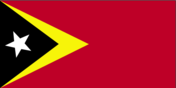
<strong>description:</strong> red with a black isosceles triangle (based on the left side) on a slightly longer yellow arrowhead that extends to the center of the flag; a white star is in the center of the black triangle<br><br><strong>meaning:</strong> yellow stands for past colonialism, black for obscurantism that needs to be overcome, and red for the struggle for freedom; the white star represents peace and a guiding light
The flag of Timor-Leste has a red field with two isosceles triangles which share a common base on the hoist end. The smaller black triangle, which bears a five-pointed white star at its center and spans one-third the width of the field, is superimposed on the larger yellow triangle that extends to the center of the field.
- svg
- https://flagcdn.com/tl.svg
semi-presidential republic
28 November 1975 (from Portugal); 20 May 2002 (from Indonesia)
accepts compulsory ICJ jurisdiction with reservations; accepts ICCt jurisdiction
ACP, ADB, AOSIS, ARF, ASEAN, CPLP, EITI (compliant country), FAO, G-77, IBRD, ICAO, ICCt, ICRM, IDA, IFAD, IFC, IFRCS, ILO, IMF, IMO, Interpol, IOC, IOM, IPU, ITU, MIGA, NAM, OPCW, PIF (observer), UN, UNCTAD, UNESCO, UNIDO, Union Latina, UNWTO, UPU, WCO, WHO, WMO
- Highest court(s)
- Court of Appeals (consists of the court president and NA judges)
- Judge selection and term of office
- court president appointed by the president of the republic from among the other court judges to serve a 4-year term; other court judges appointed - 1 by the Parliament and the others by the Supreme Council for the Judiciary, a body chaired by the court president and that includes mostly presidential and parliamentary appointees; other judges serve for life
- Subordinate courts
- Court of Appeal; High Administrative, Tax, and Audit Court; district courts; magistrates' courts; military courts
civil law system based on the Portuguese model
- Electoral system
- proportional representation
- Expected date of next election
- May 2028
- Legislative structure
- unicameral
- Legislature name
- National Parliament
- Most recent election date
- 5/21/2023
- Number of seats
- 65 (all directly elected)
- Parties elected and seats per party
- National Congress for the Reconstruction of Timor-Leste (CNRT) (31); Revolutionary Front for an independent East Timor (FRETILIN) (19); Democratic Party (PD) (6); Kmanek Haburas Unidade Nasional Timor Oan (KHUNTO) (5); People's Liberation Party (PLP) (4)
- Percentage of women in chamber
- 35.4%
- Scope of elections
- full renewal
- Term in office
- 5 years
red, yellow, black, white
Restoration of Independence Day, 20 May (2002); Proclamation of Independence Day, 28 November (1975)
Mount Ramelau
Democratic Party or PD <br>National Congress for Timorese Reconstruction or CNRT <br>National Unity of the Sons of Timor (Haburas Unidade Nasional Timor Oan or KHUNTO) <br>People's Liberation Party or PLP <br>Revolutionary Front of Independent Timor-Leste or FRETILIN
Monday
17 years of age; universal
Yes
Economy
- maize, rice, coconuts, root vegetables, vegetables, cassava, other meats, pork, beans, coffee (2023)
- note
- <b>note:</b> top ten agricultural products based on tonnage
- Expenditures
- $1.826 billion (2022 est.)
- Note
- <b>note:</b> central government revenues (excluding grants) and expenditures converted to US dollars at average official exchange rate for year indicated
- Revenues
- $1.877 billion (2022 est.)
- code
- USD
- name
- United States dollar (USD) [$]
- $-587,484,109
- Current account balance 2022
- $408.059 million (2022 est.)
- Current account balance 2023
- -$177.336 million (2023 est.)
- Current account balance 2024
- -$529.738 million (2024 est.)
- Note
- <b>note:</b> balance of payments - net trade and primary/secondary income in current dollars
- $296.67 million
- Debt - external 2023
- $238.042 million (2023 est.)
- Note
- <b>note:</b> present value of external debt in current US dollars
lower middle-income Southeast Asian economy; government expenditures funded via oil fund drawdowns; endemic corruption undermines growth; foreign aid-dependent; wide-scale poverty, unemployment, and illiteracy
<p>the US dollar is used</p>
- $196.96 million
- Exports 2022
- $1.858 billion (2022 est.)
- Exports 2023
- $701.808 million (2023 est.)
- Exports 2024
- $278.047 million (2024 est.)
- Note
- <b>note:</b> balance of payments - exports of goods and services in current dollars
- crude petroleum, natural gas, coffee, scrap iron, telephones (2023)
- note
- <b>note:</b> top five export commodities based on value in dollars
- China 46%, Singapore 25%, Japan 15%, Indonesia 5%, USA 3% (2023)
- note
- <b>note:</b> top five export partners based on percentage share of exports
- net inflows
- $215.6 million
- Exports of goods and services
- 22.9% (2023 est.)
- Government consumption
- 52.9% (2023 est.)
- Household consumption
- 70% (2023 est.)
- Imports of goods and services
- -66.4% (2023 est.)
- Investment in fixed capital
- 17.4% (2023 est.)
- Investment in inventories
- 3.1% (2023 est.)
- Note
- <b>note:</b> figures may not total 100% due to rounding or gaps in data collection
- Agriculture
- 16.9% (2023 est.)
- Industry
- 23.9% (2023 est.)
- Note
- <b>note:</b> figures may not total 100% due to non-allocated consumption not captured in sector-reported data
- Services
- 61% (2023 est.)
- $1.881 billion (2024 est.)
- note
- <b>note:</b> data in current dollars at official exchange rate
$1,332
28.7 (2014)
$2.13 billion
$1,650
30 % of GDP
- $1.58 billion
- Imports 2022
- $1.286 billion (2022 est.)
- Imports 2023
- $1.169 billion (2023 est.)
- Imports 2024
- $1.197 billion (2024 est.)
- Note
- <b>note:</b> balance of payments - imports of goods and services in current dollars
- refined petroleum, rice, cars, plastic products, trucks (2023)
- note
- <b>note:</b> top five import commodities based on value in dollars
- Indonesia 34%, China 26%, Singapore 9%, Taiwan 5%, India 4% (2023)
- note
- <b>note:</b> top five import partners based on percentage share of imports
- -57% (2023 est.)
- note
- <b>note:</b> annual % change in industrial value added based on constant local currency
printing, soap manufacturing, handicrafts, woven cloth
- 2.06%
- Inflation rate (consumer prices) 2022
- 7% (2022 est.)
- Inflation rate (consumer prices) 2023
- 8.4% (2023 est.)
- Inflation rate (consumer prices) 2024
- 2.1% (2024 est.)
- Note
- <b>note:</b> annual % change based on consumer prices
- 615,900 (2024 est.)
- note
- <b>note:</b> number of people ages 15 or older who are employed or seeking work
- total
- 635,489 persons
- agriculture
- 46.02%
- industry
- 3.8%
- services
- 50.18%
- Public debt 2016
- 3.1% of GDP (2016 est.)
- $6.19 billion
- Note
- <b>note:</b> data in 2021 dollars
- Real GDP (purchasing power parity) 2022
- $7.322 billion (2022 est.)
- Real GDP (purchasing power parity) 2023
- $5.995 billion (2023 est.)
- Real GDP (purchasing power parity) 2024
- $5.863 billion (2024 est.)
- -9.1%
- Note
- <b>note:</b> annual GDP % growth based on constant local currency
- Real GDP growth rate 2022
- -20.5% (2022 est.)
- Real GDP growth rate 2023
- -18.1% (2023 est.)
- Real GDP growth rate 2024
- -2.2% (2024 est.)
- $4,423
- Note
- <b>note:</b> data in 2021 dollars
- Real GDP per capita 2022
- $5,300 (2022 est.)
- Real GDP per capita 2023
- $4,300 (2023 est.)
- Real GDP per capita 2024
- $4,200 (2024 est.)
- $219.57 million
- Note
- <b>note:</b> personal transfers and compensation between resident and non-resident individuals/households/entities
- Remittances 2022
- 5.1% of GDP (2022 est.)
- Remittances 2023
- 9.3% of GDP (2023 est.)
- Remittances 2024
- 11.7% of GDP (2024 est.)
- $736.97 million
- Note
- <b>note:</b> holdings of gold (year-end prices)/foreign exchange/special drawing rights in current dollars
- Reserves of foreign exchange and gold 2022
- $830.81 million (2022 est.)
- Reserves of foreign exchange and gold 2023
- $781.995 million (2023 est.)
- Reserves of foreign exchange and gold 2024
- $736.967 million (2024 est.)
51 % of GDP
22 % of GDP
- 21.6% (of GDP) (2022 est.)
- note
- <b>note:</b> central government tax revenue as a % of GDP
- 1.59%
- Note
- <b>note:</b> % of labor force seeking employment
- Unemployment rate 2022
- 1.6% (2022 est.)
- Unemployment rate 2023
- 1.6% (2023 est.)
- Unemployment rate 2024
- 1.7% (2024 est.)
- Female
- 3.7% (2024 est.)
- Male
- 3.2% (2024 est.)
- Note
- <b>note:</b> % of labor force ages 15-24 seeking employment
- Total
- 3.4% (2024 est.)
Energy
- Imports
- 122,000 metric tons (2023 est.)
- Consumption
- 411.519 million kWh (2023 est.)
- Installed generating capacity
- 277,000 kW (2023 est.)
- Transmission/distribution losses
- 99.481 million kWh (2023 est.)
- Electrification - rural areas
- 100%
- Electrification - total population
- 99.7% (2022 est.)
- Electrification - urban areas
- 100%
- Fossil fuels
- 99.8% of total installed capacity (2023 est.)
- hydroelectric
- 0.27%
- nuclear
- 0%
- renewable
- 0.37%
- Solar
- 0.2% of total installed capacity (2023 est.)
- Total energy consumption per capita 2023
- 6.825 million Btu/person (2023 est.)
- Exports
- 521.034 million cubic meters (2023 est.)
- Production
- 521.034 million cubic meters (2023 est.)
- Refined petroleum consumption
- 5,000 bbl/day (2023 est.)
- Total petroleum production
- 5,000 bbl/day (2023 est.)
11.4%
Communications
- per 100 inhabitants
- 0 per 100
- Subscriptions per 100 inhabitants
- (2023 est.) less than 1
- Total
- 0 (2023 est.)
7 TV stations (3 nationwide satellite coverage; 2 terrestrial coverage, mostly in Dili; 2 cable) and 21 radio stations (3 nationwide coverage) (2019)
.tl
- Percent of population
- 34% (2023 est.)
+670
- Subscriptions per 100 inhabitants
- (2023 est.) less than 1
- Total subscriptions
- 2,000 (2023 est.)
- subscriptions per 100
- 113 per 100
- Subscriptions per 100 inhabitants
- 116 (2024 est.)
- Total subscriptions
- 1.63 million (2024 est.)
Transportation
11 (2025)
4W
Left
2 (2025)
- By type
- other 1
- Total
- 1 (2023)
- Key ports
- Dili
- Large
- 0
- Medium
- 0
- Ports with oil terminals
- 0
- Small
- 1
- Total ports
- 1 (2024)
- Very small
- 0
TL
Military and Security
the Timor-Leste Defense Force (F-FDTL) has both external defense and internal security roles; it also engages in national development missions, international peacekeeping, and regional security cooperation; the F-FDTL has ties with a variety of partners, including Australia, Brazil, Canada, China, Indonesia, Malaysia, New Zealand, the Philippines, Portugal, the UN, and the US (2025)
- Timor-Leste Defense Force (Falintil-Forcas de Defesa de Timor-L'este, Falintil (F-FDTL)): Land Component, Air Force Component, Naval Component<br><br>Ministry of Interior: National Police of Timor-Leste (Polícia Nacional de Timor-Leste, PNTL) (2025)
- active duty personnel
- 2,000
- percent of total labor force
- 0.36 %
approximately 2,000 Defense Forces (2025)
the military is lightly armed with a limited inventory consisting mostly of donated equipment from countries such as Australia, China, Portugal, South Korea, and the US (2025)
- 3 % of GDP
- current USD
- $46,400,000
- Military Expenditures 2020
- 1.8% of GDP (2020 est.)
- Military Expenditures 2021
- 1.2% of GDP (2021 est.)
- Military Expenditures 2022
- 1.4% of GDP (2022 est.)
- Military Expenditures 2023
- 2.5% of GDP (2023 est.)
- Military Expenditures 2024
- 2.5% of GDP (2024 est.)
- percent of central government expenditure
- 2.64 %
- percent of GDP
- 2.66 % of GDP
18 years of age for voluntary military service for men and women; according to Timorese law on military service, all citizens 18-30 must contribute to the defense of independence, sovereignty, and territorial integrity of the country and render their contribution through defense and security institutions (2025)
Environment
- From petroleum and other liquids
- 660,000 metric tonnes of CO2 (2023 est.)
- Total emissions
- 660,000 metric tonnes of CO2 (2023 est.)
air pollution and deterioration of air quality; water quality, scarcity, and access; land and soil degradation; forest depletion; deforestation and soil erosion from slash-and-burn agriculture; loss of biodiversity
- Party to
- Biodiversity, Climate Change, Climate Change-Kyoto Protocol, Climate Change-Paris Agreement, Desertification, Law of the Sea, Ozone Layer Protection
- Signed, but not ratified
- Comprehensive Nuclear Test Ban
20.4 micrograms per cubic meter (2019 est.)
5 % of total land area
0 % of total
8.215 billion cubic meters (2022 est.)
- 14 % of internal resources
- Agricultural
- 1.071 billion cubic meters (2022 est.)
- Industrial
- 2 million cubic meters (2022 est.)
- Municipal
- 99 million cubic meters (2022 est.)
- Municipal solid waste generated annually
- 63,900 tons (2024 est.)
- Percent of municipal solid waste recycled
- 13.5% (2022 est.)