1983 Edition
CIA World Factbook 1983 (Internet Archive)
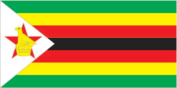
Geography
Agriculture
- main crops — corn, tobacco, cotton; net importer of most major agricultural products
- main crops — tobacco, corn, sugar, cotton; livestock; self-sufficient in foodstuffs
Aid
economic commitments — Western (non-US) countries, ODA and OOF (197081), $446 million; US, including Ex-Im (1980-82), $165 million
Airfields
- 128 total, 114 usable; 12 with permanent-surface runways; 1 with runways over 3,659 m, 4 with runways 2,440-3,659 m, 19 with runways 1,220-2,439 m
- 457 total, 431 usable; 19 with permanent-surface runways; 2 with runways over 3,659 m, 3 with runways 2,440-3,659 m, 29 with runways 1,220-2,439 m
Branches
- Army, Air Force
- legislative authority resides in a Parliament consisting of a 100-member House of Assembly (with 20 seats reserved for whites) and a 40-member Senate (10 elected by white members of the House, 14 elected by the other members of the House; 10 chiefs, 5 from Mashonaland and 5 from Matabeleland, elected by members of the Council of Chiefs; 6 appointed by the President, on the advice of the Prime Minister); executive authority lies with a Cabinet led by the Prime Minister; the High Court is the superior judicial authority
- Zimbabwe National Army, Zimbabwe Air Force, Police Support Unit, People's Militia
Budget
- (1982) revenue $1,259 million (est), expenditures $1,608 million (est.)
- FY82/83— revenues $1.757 billion, expenditures $2.223 billion, deficit $466 million
Capital
Harare
Civil air
- 9 major transport aircraft
- 21 major transport aircraft
Communists
negligible
Elections
at discretion of Prime Minister but must be held before expiration of five-year electoral mandate Political parties and leaders: Zimbabwe African National Union (ZANU), Robert Mugabe; Zimbabwe African People's Union (ZAPU), Joshua Nkomo; Republican Front (RF), Ian Smith; independent white (former RF) members of Parliament, Chris Andersen; United African National Council (UANC), Bishop Abel Muzorewa; others failed to win any seats in Parliament
Electric power
- 1,975,000 kW capacity (1983); 11.0 billion kWh produced (1983), 1,735 kWh per capita
- 1,610,000 kW capacity (1983); 7.5 billion kWh produced (1983), 895 kWh per capita
Ethnic divisions
about 97% African (over 77% members of Shona-speaking subtribes, 19% speak Ndebele); about 3% white, 1% mixed and Asian
Exports
- $1,057 million (f.o.b., 1982); copper, zinc, cobalt, lead, tobacco
- $1.312.1 billion (f.o.b., 1982), including net gold sales and reexports; tobacco, asbestos, cotton, copper, tin, chrome, gold, nickel, meat, clothing, sugar
Fiscal year
- calendar year Communications
- 1 July-30 June Communications
GDP
- $2.9 billion (1981), $476 per capita; real growth rate, -1.8% (1981)
- $7. 1 billion (1982), $880 per capita; real growth 12% (1980 and 1981), 2% (1982)
Government leaders
Rev. Canaan Sodindo BANANA, President; Robert MUGABE, Prime Minister
Highways
- 36,840 km total; 5,596 km paved, 8,374 km crushed stone, gravel, or stabilized soil; 22,870 km improved and unimproved earth
- 85,237 km total; 12,243 km paved, 28,090 km crushed stone, gravel, stabilized soil: 23,097 km improved earth; 21,807 km unimproved earth
Imports
- $830 million (f.o.b., 1982); machinery, transport equipment, foodstuffs, fuels, manufactures
- $1.472.1 billion (f.o.b. 1982); machinery, petroleum products, wheat, transport equipment
Inland waterways
- 2,250 km, including Zambezi River, Luapula River, Lake Tanganyika; Mpulungu is small port on Lake Tanganyika
- Lake Kariba is a potential line of communication
Labor force
1,048,000(1981); 35% agriculture; 25% mining, manufacturing, construction; 40% transport and services
Land boundaries
3,017 km People
Language
English (official); ChiShona and Si Ndebele
Legal system
Roman-Dutch
Literacy
45-55%
Major industries
- transport, construction, foodstuffs, beverages, chemicals, textiles, and fertilizer
- mining, steel, textiles, chemicals, and vehicles
Major trade partner
South Africa
Major trade partners
EC, Japan, China, South Africa
Member of
Af DB, Commonwealth, FAO, G-77, GATT, IBRD, ICAO, IDA, IFAD, IFC, ILO, IMF, INTERPOL, ITO, NAM, OAU, SADCC, UN, UNESCO, UPU, WFTU, WHO, WMO Economy
Military budget
for fiscal year ending 30 June 1983, $343 million; 11.9% of central government budget
Military manpower
- males 15-49, 1,413,000; 737,000 fit for military service Land 391,090 km2; 40% arable (of which 6% cultivated), 60% extensive grazing; of this total — 48% worked communally by Africans, 39% owned by Europeans (farmed by modern methods), 7% national land, 6% other
- males 15-49, 1,788,000; 1,098,000 fit for military service
Monetary conversion rate
- 1.3519 Zambia kwachas=US$l (October 1983)
- 1.05 Zimbabwean dollars=US$l (October 1983)
Nationality
noun — Zimbabwean(s); adjective — Zimbabwean
Official name
Republic of Zimbabwe
Organized labor
about one-third of European wage earners are unionized, but only a small minority of Africans
Pipelines
- 1,724 km crude oil
- 8 km refined products
Political subdivisions
eight provinces
Population
8,325,000 (July 1984), average annual growth rate 3.0%
Railroads
- 1,204 km, all 1.067-meter gauge; 13 km double track
- 3,394 km 1.067meter gauge; 42 km double track; 12% of railroad is electrified
Religion
50% syncretic (part Christian, part indigenous beliefs), 25% Christian, 24% indigenous beliefs, a few Muslim
Suffrage
universal over age 18; for at least seven years after independence (1980), white, mixed, and Asians vote on a separate roll for 20 seats in the House of Assembly
Telecommunications
- facilities are among the best in Sub-Saharan Africa; high-capacity radio relay connects most larger towns and cities; 60,500 telephones; ( 1 . 1 per 1 00 popl. ); 9 AM, 2 FM, and 10 TV stations; 1 Indian Ocean satellite station Defense Forces
- system is one of the best in Africa; consists of radio-relay links, open-wire lines, and radiocommunication stations; principal center Salisbury, secondary center Bulawayo; 224,500 telephones (3.0 per 100 popl.); 8 AM, 15 FM, and 8 TV stations; satellite station under construction Defense Forces
Type
independent; a British-style parliamentary democracy
Voting strength
(February 1980 elections) ZANU (also known as ZANU-PF), 57 seats; ZAPU (also known as the Patriotic Front), 20 seats; RF, 9 seats; independents, 1 1 seats; UANC, 3 seats