1994 Edition
CIA World Factbook 1994 (Project Gutenberg)
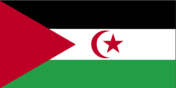
Introduction
Administrative divisions
none (under de facto control of Morocco)
Agriculture
limited largely to subsistence agriculture; some barley is grown in nondrought years; fruit and vegetables are grown in the few oases; food imports are essential; camels, sheep, and goats are kept by the nomadic natives; cash economy exists largely for the garrison forces
Airports
total: 14 usable: 14 with permanent-surface runways: 3 with runways over 3,659 m: with runways 2,440-3,659 m: 3 with runways 1,220-2,439 m: 5
Area
total area: 266,000 sq km land area: 266,000 sq km comparative area: slightly smaller than Colorado
Birth rate
47.22 births/1,000 population (1994 est.)
Branches
NA
Budget
revenues: $NA expenditures: $NA, including capital expenditures of $NA
Capital
none
Climate
hot, dry desert; rain is rare; cold offshore air currents produce fog and heavy dew
Coastline
1,110 km
Currency
1 Moroccan dirham (DH) = 100 centimes
Death rate
19.04 deaths/1,000 population (1994 est.)
Defense expenditures
$NA, NA% of GDP
Digraph
WI
Diplomatic representation in US
none
Economic aid
$NA
Electricity
capacity: 60,000 kW production: 79 million kWh consumption per capita: 425 kWh (1989)
Environment
current issues: sparse water and arable land natural hazards: hot, dry, dust/sand-laden sirocco wind can occur during winter and spring; widespread harmattan haze exists 60% of time, often severely restricting visibility international agreements: NA
Ethnic divisions
Arab, Berber
Exchange rates
Moroccan dirhams (DH) per US$1 - 9.669 (January 1994), 9.299 (1993), 8.538 (1992), 8.707 (1991), 8.242 (1990), 8.488 (1989)
Executive branch
none
Exports
$8 million (f.o.b., 1982 est.) commodities: phosphates 62% partners: Morocco claims and administers Western Sahara, so trade partners are included in overall Moroccan accounts
External debt
$NA
Fiscal year
NA
Highways
total: 6,200 km unpaved: gravel 1,450 km; improved, unimproved earth, tracks 4,750 km
Imports
$30 million (c.i.f., 1982 est.) commodities: fuel for fishing fleet, foodstuffs partners: Morocco claims and administers Western Sahara, so trade partners are included in overall Moroccan accounts
Industrial production
growth rate NA%
Industries
phosphate mining, fishing, handicrafts
Infant mortality rate
152.2 deaths/1,000 live births (1994 est.)
Inflation rate (consumer prices)
NA%
International disputes
claimed and administered by Morocco, but sovereignty is unresolved and the UN is attempting to hold a referendum on the issue; the UN-administered cease-fire has been currently in effect since September 1991
Irrigated land
NA sq km
Labor force
12,000 by occupation: animal husbandry and subsistence farming 50%
Land boundaries
total 2,046 km, Algeria 42 km, Mauritania 1,561 km, Morocco 443 km
Land use
arable land: 0% permanent crops: 0% meadows and pastures: 19% forest and woodland: 0% other: 81%
Languages
Hassaniya Arabic, Moroccan Arabic
Life expectancy at birth
total population: 45.59 years male: 44.66 years female: 46.83 years (1994 est.)
Literacy
total population: NA% male: NA% female: NA%
Location
Northern Africa, along the Atlantic Ocean, between Morocco and Mauritania
Map references
Africa, Standard Time Zones of the World
Maritime claims
contingent upon resolution of sovereignty issue
Member of
none
Names
conventional long form: none conventional short form: Western Sahara
National product
GDP - exchange rate conversion - $60 million (1991 est.)
National product per capita
$300 (1991 est.)
National product real growth rate
NA%
Nationality
noun: Sahrawi(s), Sahraoui(s) adjective: Sahrawian, Sahraouian
Natural resources
phosphates, iron ore
Net migration rate
-3.21 migrant(s)/1,000 population (1994 est.)
Overview
Western Sahara, a territory poor in natural resources and having little rainfall, has a per capita GDP of roughly $300. Pastoral nomadism, fishing, and phosphate mining are the principal sources of income for the population. Most of the food for the urban population must be imported. All trade and other economic activities are controlled by the Moroccan Government.
Population
211,877 (July 1994 est.)
Population growth rate
2.5% (1994 est.)
Ports
El Aaiun, Ad Dakhla
Religions
Muslim
Telecommunications
sparse and limited system; tied into Morocco's system by microwave radio relay, troposcatter, and 2 Atlantic Ocean INTELSAT earth stations linked to Rabat, Morocco; 2,000 telephones; broadcast stations - 2 AM, no FM, 2 TV
Terrain
mostly low, flat desert with large areas of rocky or sandy surfaces rising to small mountains in south and northeast
Total fertility rate
6.96 children born/woman (1994 est.)
Type
legal status of territory and question of sovereignty unresolved; territory contested by Morocco and Polisario Front (Popular Front for the Liberation of the Saguia el Hamra and Rio de Oro), which in February 1976 formally proclaimed a government in exile of the Sahrawi Arab Democratic Republic (SADR); territory partitioned between Morocco and Mauritania in April 1976, with Morocco acquiring northern two-thirds; Mauritania, under pressure from Polisario guerrillas, abandoned all claims to its portion in August 1979; Morocco moved to occupy that sector shortly thereafter and has since asserted administrative control; the Polisario's government in exile was seated as an OAU member in 1984; guerrilla activities continued sporadically, until a UN-monitored cease-fire was implemented 6 September 1991
Unemployment rate
NA%
US diplomatic representation
none