1985 Edition
CIA World Factbook 1985 (Internet Archive)
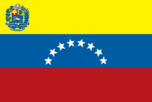
Geography
Agriculture
main crops — cereals, fruits, sugar, coffee, rice
Aid
economic commitments — US, including Ex-Im (FY70-83), $305 million; from other Western (non-US) countries, ODA and OOF (1970-82), $5.8 billion; military— assistance from US (FY70-79), $22 million
Airfields
498 total, 451 usable; 11 with permanent-surface runways; 3 with runways 2,440-3,659 m, 20 with runways 1,2202,439 m Guatemala (continued) Guinea
Area
912,050 km2; more than twice the size of California; 21% forest; 18% pasture; 4% cropland; 57% urban, waste, or other
Branches
- Army, Navy, Air Force
- coup on 3 April 1984 established the 25-member (currently 20 members) Military Committee for National Redressment to determine government policy; the highest ranking CMRN member became President, with other CMRN assuming most Cabinet portfolios; precoup unicameral legislature has been abolished
- executive (President), bicameral legislature (National Congress — Senate, Chamber of Deputies), judiciary
Budget
revised 1983— revenues, $18.6 billion; expenditures, $18.4 billion, capital $110 billion
Capital
- Conakry
- Caracas
Central government budget
(1983 est.) expenditures, $1.03 billion; revenues, $704 million
Civil air
10 major transport aircraft
Coastline
- 346 km People
- 2,800 km People
Communists
- no Communist party, although there are some sympathizers
- 3,000-5,000 members (est.)
Crude steel
1.9 million metric tons produced (1982)
Elections
- none scheduled but CMRN has promised to create a true and viable democracy Political parties and leaders: following 3 April 1984 coup all political activity banned and only party, Democratic Party of Guinea (PDG), dissolved
- every five years by secret ballot; last held December 1983; next national election for President and bicameral legislature to be held December 1988 Political parties and leaders: Social Christian Party (COPEI), Rafael Caldera, Luis Herrera Campins; Democratic Action (AD), Jaime Lusinchi, Carlos Andres Perez; Movement Toward Socialism (MAS), Teodoro Petkoff, Pompeyo Marquez
Electric power
12,700,000 kW capacity (1984); 36.5 billion kWh produced (1984), 2,110kWh per capita
Ethnic divisions
- Fulani, Malinke, Sousou, 15 smaller tribes
- 67% mestizo, 21% white, 10% black, 2% Indian
Exports
$15.7 billion (f.o.b., 1984 prelim.); petroleum (95%), iron ore
Fiscal year
calendar year Communications
Fishing
catch 2 1 3,000 metric tons ( 1 982); exports $1.6 million (1979), imports $19.7 million (1980)
GDP
$66.4 billion (1983), $3,860 per capita (1983); 58.8% private consumption, 13.6% public consumption, 24.1% gross investment (1982); real growth rate - 1.7% (1982)
Government leader
Jaime LUSINCHI, President (since February 1984)
Government leaders
Col. Lansana CONTE, Head of Government (since April 1984)
Highways
26,429 km total; 2,851 km paved, 1 1,438 km gravel, and 12,140 km unimproved
Imports
$7.5 billion (f.o.b., 1984 prelim.)
Inland waterways
260 km navigable year round; additional 730 km navigable during high-water season
Labor force
- 2.4 million (1983); 82% agriculture, 11% industry and commerce, 5.4% services, 1.6% government
- 5.5 million (1984); 27% services; 22% commerce; 16% agriculture; 16% manufacturing; 9% construction; 7% transportation; 3% petroleum, utilities, and other
Land boundaries
- 3,476 km Water
- 4,181 km Water
Language
- French (official); each tribe has own language
- Spanish (official); Indian dialects spoken by about 200,000 Amerindians in the remote interior
Legal system
- based on French civil law system, customary law, and decree; 1958 constitution suspended after military coup on 3 April 1984; legal codes currently being revised; has not accepted compulsory ICJ jurisdiction
- based on Napoleonic code; constitution promulgated 1961; judicial review of legislative acts in Cassation Court only; dual court system, state and federal; legal education at Central University of Venezuela; has not accepted compulsory ICJ jurisdiction
Limits of territorial waters (claimed)
- 12 nm (economic, including fishing, 200 nm)
- 12 nm plus 3 nm contiguous zone for customs and sanitation (economic, including fishing, 200 nm)
Literacy
- 20% in French; 48% in local languages
- 85.6%
Major industries
petroleum, iron-ore mining, construction, food processing, textiles
Major trade partners
imports — 44% US, 7.4% Japan, 4.7% Italy, 4.5% FRO; exports— 25% US, 9.5% Canada (1981)
Member of
Andean Pact, AIOEC, FAO, G-77, IADB, IAEA, IBRD, ICAO, ICO, IDB — Inter-American Development Bank, IFAD, IFC, IHO, ILO, IMF, IMO, INTELSAT, INTERPOL, IPU, IRC, ITU, IWC — International Wheat Council, LAIA, NAMUCAR (Caribbean Multinational Shipping Line), OAS, OPEC, PAHO, SELA, WFTU, UN, UNESCO, UPU, WHO, WMO, WTO Economy
Military budget
proposed for fiscal year ending 31 December 1984, $179.8 million; 14.9% of central government budget CONAKRV North Atlantic Ocean See regional mip VII Land 245,957 km2; slightly smaller than Oregon; 10% forest, 3% crop
Military manpower
males 15-49, 1,979,000; 1,343,000 fit for military service; about 77,000 reach military age (18) annually
Monetary conversion rate
- 1 quetzal=US$l (official; February 1984)
- 4.3 preferential, 7.5 commercial, and 12.5 free market bolivares=US$l (December 1984)
National holiday
- Independence Day, 2 October; Anniversity of Committee for National Redressment, 3 April
- Independence Day, 5 July
Nationality
- noun — Guinean(s); adjective — Guinean
- noun — Venezuelan(s); adjective— Venezuelan
Official name
- Republic of Guinea
- Republic of Venezuela
Organized labor
- virtually 100% of wage labor force loosely affiliated with the National Confederation of Guinean Workers Government
- 32% of labor force* Government
Other political or pressure groups
FEDECAMARAS, a conservative business group
Pipelines
crude oil, 48 km
Political subdivisions
- 8 provinces, divided into 36 prefectures
- 20 states, 1 federal district, 2 federal territories, and 72 island dependencies in the Caribbean
Population
- 5,734,000 (July 1985), average annual growth rate 2.7%
- 17,810,000 (July 1985), average annual growth rate 3%
Ports
2 major (Puerto Ouezal, formerly known as San Jose, and Santo Tomas de Castilla), 3 minor
Railroads
870 km 0.914-meter gauge, single track; 780 km government owned, 90 km privately owned
Religion
- 75% Muslim, 24% indigenous beliefs, 1% Christian
- 96% nominally Roman Catholic, 2% Protestant
Suffrage
- universal over age 18
- universal and compulsory over age 18, though rarely enforced
Telecommunications
fairly modern telecom network centered on Guatemala City; 97,670 telephones (1.6 per 100 popl.); 98 AM, 20 FM, 25 TV stations; connection into Central American microwave net; 1 Atlantic Ocean satellite station Defense Forces
Type
- republic
- republic •
Voting strength
(1983 election) 56.8% AD, 34.5% COPEI, 4.17% MAS, 4.53% others