1984 Edition
CIA World Factbook 1984 (Internet Archive)
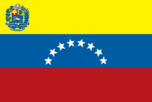
Geography
Agriculture
main crops — cereals, fruits, sugar, coffee, rice
Airfields
266 total, 262 usable; 114 with permanent-surface runways; 6 with runways 2,440-3,659 m, 82 with runways 1,2202,439 m
Branches
- executive (President), bicameral legislature (National Congress — Senate, Chamber of Deputies), judiciary
- Ground Forces, Naval Forces, Air Forces, Armed Forces of Cooperation (National Guard), Marines, Coast Guard
Budget
revised 1983— revenues $18.6 billion; expenditures, $18.4 billion, capital $110 billion
Capital
Caracas
Civil air
62 major transport aircraft
Communists
3,000-5,000 members (est.)
Crudesteel
1.9million metric tons produced (1982)
Elections
every five years by secret ballot; last held December 1983; next national election for President and bicameral legislature to be held December 1988 Political parties and leaders: Social Christian Party (COPEI), Rafael Caldera, Luis Herrera Campins, Democratic Action (AD), Jaime Lusinchi, Carlos Andres Perez, Movement Toward Socialism (MAS),Teodoro Petkoff, Pompeyo Marquez
Electric power
12,680,000 kW capacity (1983); 36.0 billion kWh produced (1983), 2,000 kWh per capita
Exports
$15.0 billion (f.o.b., 1983 prelim.); petroleum (95%), iron ore
Fiscal year
calendar year Communications
Fishing
catch 1 78,000 met ric tons ( 1 980); exports $1.6 million (1979), imports $19.7 million (1980)
GDP
$69.3 billion (in 1982 dollars), $4,716 per capita (1982); 56.5% private consumption, 13.6% public consumption, 24.5% gross investment (1981); real growth rate 0.4% (1982)
Government leader
Jaime LUSINCHI, President
Highways
77,785 km total; 22,780 km paved, 24,720 km gravel, 14,450 km earth roads, and 15,835 km unimproved earth
Imports
$8.0 billion (f.o.b., 1983 prelim.)
Inland waterways
7,100 km; Orinoco River and Lake Maracaibo accept oceangoing vessels
Legal system
based on Napoleonic code; constitution promulgated 1961; judicial review of legislative acts in Cassation Court only; dual court system, state and federal; legal education at Central University of Venezuela; has not accepted compulsory ICJ jurisdiction
Major industries
petroleum, iron-ore mining, construction, food processing, textiles
Major trade partners
imports — 44% US, 7.4% Japan, 4.7% Italy, 4.5% FRG; exports— 25% US, 9.5% Canada (1981)
Member of
Andean Pact, AIOEC, FAO, G-77, IADB, IAEA, IBRD, ICAO, ICO, IDE — Inter-American Development Bank, IFAD, IFC, IHO, ILO, IMF, IMO, INTELSAT, INTERPOL, IPU, IRC, ITU, IWC— International Wheat Council, LAIA, NAMUCAR (Caribbean Multinational Shipping Line — Naviera Multinacional del Caribe), OAS, OPEC, PAHO, SELA, WFTU, UN, UNESCO, UPU, WHO, WMO, WTO Economy
Military budget
proposed for fiscal year ending 31 December 1983, $1,091 million; about 6.2% of central government budget
Military manpower
males 15-49, 4,496,000; 3,415,000 fit for military service; 193,000 reach military age (18) annually
Monetary conversion rate
5.15 boli vares= US$1 (February 1984)
National holiday
Independence Day, 5 July
Official name
Republic of Venezuela
Organized labor
27% of labor force Government
Other political or pressure groups
Fedecamaras, a conservative business group; ProVenezuela (PRO-VEN) a leftist, nationalist economic group
Pipelines
6,370km crudeoil; 480km refined products; 2,480 km natural gas
Political subdivisions
20 states, 1 federal district, 2 federal territories, and 72 island dependencies in the Caribbean
Ports
6 major, 17 minor
Railroads
173 km 1.435-meter standard gauge all single track, government owned
Suffrage
universal and compulsory over age 18, though rarely enforced
Telecommunications
modern expanding telecom system; 2 satellite ground stations; 1,165,000 telephones (8.5 per 100 popl.); 168 AM, 25 FM, and 57 TV stations; 3 submarine coaxial cables; 1 Atlantic Ocean satellite station with 2 antennas Defense Forces
Type
republic
Voting strengh
(1983 election) 56.8% AD, 34.5% COPEI, 4.17% MAS, 4.53 others