1987 Edition
CIA World Factbook 1987 (Internet Archive)
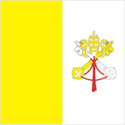
Geography
Boundary disputes
claims Essequibo area of Guyana; maritime dispute with Colombia
Climate
- temperate; mild, rainy winters (September to mid-May) with hot, dry summers (May to September)
- tropical; hot, humid; more moderate in highlands
Coastline
2,800 km
Comparative area
- about one-four hundredth the size of Washington, D. C.
- about twice the size of California
Contiguous zone
15 nm
Continental shelf
200 meters or to depth of exploitation
Environment
- urban
- Angel Falls is world’s highest waterfall
Extended economic zone
200 nm
Land boundaries
4,18] km total
Land boundary
3 km with Italy
Land use
- 0% arable land; 0% permanent crops; 0% meadows and pastures; 0% forest and woodland; 100% other
- 3% arable land; 1% permanent crops; 20% meadows and pastures; 39% forest and woodland; 37% other; includes NEGL% irrigated
Special notes
- landlocked; enclave of Rome, Italy; world’s smallest state
- on major sea and air routes linking North and South America
Terrain
- low hill
- Andes mountains and Maracaibo lowlands in northwest; central plains (Ilanos); Guyana highlands in southeast
Territorial sea
12 nm
Total area
- 0.438 km?; land area: 0.438 km?
- 912,050 km?; land area: 882,050 km?
People and Society
Ethnic divisions
- primarily Italians but also many other nationalities
- 67% mestizo, 21% white, 10% black, 2% Indian
Infant mortality rate
36.2/1,000 (1984)
Labor force
- about 1,500; Vatican City employees divided into three categories— executives, office workers, and salaried employees
- 5.8 million (1985), 56% services, 28% industry, 16% agriculture (1980); 10.5% unemployment (December 1986)
Language
- Italian, Latin, and various other languages
- Spanish (official); Indian dialects spoken by about 200,000 Amerindians in the remote interior
Life expectancy
men 64.0, women 69.0
Literacy
- 100%
- 85.6%
Nationality
noun—Venezuelan(s); adjective—Venezuelan
Organized labor
32% of labor force
Population
- 738 (July 1987), average annual growth rate 0.14%
- 18,291,134 (July 1987), average annual growth rate 2.66%
Religion
- Roman Catholic
- 96% nominally Roman Catholic, 2% Protestant
Government
Administrative divisions
- outside the Vatican, 13 buildings in Rome and Castel Gandolfo (the Pope’s summer residence) enjoy extraterritorial rights
- 20 states, 1 federal district, 2 federal territories
Branches
- the Pope possesses full executive, legislative, and judicial powers; he delegates these powers to the President of the Pontifical Commission, who is subject to pontifical appointment and recall; the administrative structure of the Roman Catholic Church is known as the Roman Curia; its most important temporal components include the Secretariat of State and Council for Public Affairs (which handles Vatican diplomacy) and the Prefecture of Economic Affairs; the College of Cardinals act as chief papal advisers
- executive (President), bicameral legislature (National Congress—Senate, Chamber of Deputies), judiciary
Capital
- Vatican City
- Caracas
Communists
- none known
- 10,000 members (est.)
Elections
- Supreme Pontiff elected for life by College of Cardinals
- every five years by secret ballot; last held December 1983; next national election for President and bicameral legislature scheduled for December 1988 Political parties and leaders: Social Christian Party (COPEI), Eduardo Fernandez (secretary general), Democratic Action (AD), Gonzalo Barrios, Movement Toward Socialism (MAS), Pompeyo Marquez (president), Freddy Mujfioz (secretary general)
Government leader
- JOHN PAUL II, Supreme Pontiff (Karol WOJTYLLA, elected Pope 16 October 1978)
- Jaime LUSINCHI, President (since February 1984)
Legal system
- Canon laws of 1929 serve some functions of a constitution
- based on Napoleonic code; constitution promulgated 1961; judicial review of legislative acts in Cassation Court only; dual court system, state and federal; has not accepted compulsory ICJ jurisdiction
Member
IAEA, INTELSAT, ITU, IWC— International Wheat Council, UPU, WIPO, WTO; permanent observer status at FAO, OAS, UN, and UNESCO
Member of
Andean Pact, AIOEC, FAO, G-77, IADB, IAEA, IBRD, ICAO, ICO, {DB—Inter-American Development Bank, IFAD, IFC, IHO, ILO, IMF, IMO, INTELSAT, INTERPOL, IPU, IRC, ITU, IWC—International Wheat Council, LAIA, OAS, OPEC, PAHO, SELA, WFTU, UN, UNESCO, UPU, WHO, WMO, WTO
National holiday
- 22 October (installation day of Pope John Paul II)
- Independence Day, 5 July
Official name
- State of the Vatican City
- Republic of Venezuela
Other political or pressure groups
- none (exclusive of influence exercised by other church officers in universal Roman Catholic Church)
- FEDECAMARAS, a conservative business group
Suffrage
- limited to cardinals less than 80 years old
- universal and compulsory over age 18, though rarely enforced
Type
- monarchical-sacerdotal state
- republic
Voting strength
(1983 election) 56.8% AD, 34.5% COPEI, 4.17% MAS, 4.53% others
Economy
Agriculture
cereals, fruits, sugar, coffee, rice; an illegal producer of cannabis for the international drug trade
Budget
revenues, $12.2 billion; expenditures, $16.6 billion (1987 est.)
Crude steel
2.8 million metric tons produced (1985), 160 kg per capita
Electric power
- 3,000 kW capacity (1986)—power supplied by Italy
- 17,000,000 kW capacity; 50,240 million kWh produced, 2,820 kWh per capita (1986)
Exports
$12.3 billion (f.0.b.1985) petroleum (84%)
Fishing
catch 301,372 metric tons (1985); exports $31.9 million (1985), imports $30.0 million (1982)
GDP
$57 billion (1986 est.), $3,200 per capita (1986 est.), 58% private consumption, 13% public consumption, 16% gross investment (1986); real growth rate 3% (1986); 11.5% inflation rate (1986)
Imports
$8.2 billion (c.i-f., 1985)
Major industries
petroleum, iron-ore mining, construction, food processing, textiles, steel, aluminum, motor vehicles
Major trade partners
imports—50% US, 6% Italy, 5% Japan, 5% FRG, 4.5% France, 4% Brazil, 3% UK; exports—41% US, 17% Netherlands Antilles, 7% FRG, 5% Canada, 4% Italy (1985)
Monetary conversion rate
the Vatican issues its own coinage, which is interchangeable with the Italian lira; 1,337.0 lira=US$1 (January 1987)
Natural resources
petroleum, natural gas, iron ore, gold, bauxite, other minerals, hydroelectric power
Communications
Highways
none (city streets)
Telecommunications
2 AM and 2 FM stations; 2,000-line automatic telephone exchange