1982 Edition
CIA World Factbook 1982 (Wikisource)
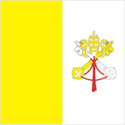
Geography
Area
0.438 km2
Land boundaries
3 km
People and Society
Ethnic divisions
primarily Italians but also many other nationalities
Labor force
approx. 700; Vatican City employees divided into three categories—executives, officeworkers, and salaried employees
Language
Italian, Latin, and various modern languages
Literacy
virtually complete
Organized labor
none
Population
1,000 (July 1980), average annual growth rate 0.0%
Religion
Roman Catholic
Government
Branches
the Pope possesses full executive, legislative, and judicial powers; he delegates these powers to the governor of Vatican City, who is subject to pontifical appointment and recall; high Vatican offices include the Secretariat of State, the College of Cardinals (chief papal advisers), the Roman Curia (which carries on the central administration of the Roman Catholic Church), the Presidence of the Prefecture for the Economy, and the synod of bishops (created in 1965) Government leader: Supreme Pontiff, JOHN PAUL II (Karol WOJTYŁA, elected Pope 16 October 1978)
Capital
Vatican City
Communists
none known
Elections
Supreme Pontiff elected for life by College of Cardinals
Legal system
Canon law; constitutional laws of 1929 serve some of the functions of a constitution
Member
IAEA; ITU, IWC—International Wheat Council, UPU, WTO; permanent observer status at FAO, OAS, UN, and UNESCO
National holiday
30 June
Official name
State of the Vatican City
Other political or pressure groups
none (exclusive of influence exercised by other church officers in universal Roman Catholic Church)
Political subdivisions
Vatican City includes St. Peter's, the Vatican Palace and Museum, and neighboring buildings covering more than 13 acres; 13 buildings in Rome, although outside the boundaries, enjoy extraterritorial rights
Suffrage
limited to cardinals less than 80 in age
Type
monarchical-sacerdotal state
Economy
Electric power
2100 kW (standby) capacity (1981); all power is imported from Italy
Communications
Airfields
none
Civil air
no major transport aircraft
Highways
none (city streets)
Railroads
none
Telecommunications
2 AM stations and 2 FM stations; 2,000-line automatic telephone exchange