1981 Edition
CIA World Factbook 1981 (Internet Archive)
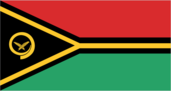
Geography
Aid
Australia (1980-83), $14.4 million
Area
- About 29,785 km2
- About 14,763 km*
- 0.438 km2
Coastline
- about 5,313 km
- about 2,528 km •
Electric power
10,000 kW capacity (1981); 17 million kWh produced (1981), 162 kWh per capita
Exports
$32.2 million (1977); 24% copra, 59% frozen fish, meat
Imports
$40.1 million (1977); 18% food
Land boundaries
3 km
Limits of territorial waters
- 12 nm (fishing 200 nm)
- 12 nm (fishing 200 nm; exclusive economic zone 200 nm)
Monetary conversion rate
1 pound=US$5.12 (official currency, 1979), Australian $0.89=US$1, 75 Colonial Franc Pacifique (CFP)=US$1 (1978/79)
NOTE
This archipelagic nation, independent since 7 July 1978, includes southern Solomon Islands, primarily Guadalcanal, Malaita, San Cristobal, Santa Isabel, Choiseul. Northern Solomon Islands constitute part of Papua New Guinea.
People and Society
Ethnic divisions
- 93.0% Melanesians, 4.0% Polynesians, 1.5% Micronesians, 0.8% Europeans, 0.3% Chinese, 0.4% others
- 90% indigenous Melanesian, 8% French, remainder Vietnamese, Chinese, and various Pacific Islanders
- primarily Italians but also many other nationalities
Labor force
approx. 700; Vatican City employees divided into three categories — executives, officeworkers, and salaried employees
Language
Italian, Latin, and various modern languages
Literacy
- 60%
- probably 10%-20%
- virtually complete
Nationality
- noun — Solomon Islander(s); adjective — Solomon Islander
- noun — Vanuatuan(s); adjective — Vanuatuan
Organized labor
none
Population
- 245,000 (July 1982), average annual growth rate 3.4%
- 123,000 (July 1982), average annual growth rate 2.7%
- 1,000 (July 1980), average annual growth rate 0.0%
Religion
- almost all at least nominally Christian; Roman Catholic, Anglican, and Methodist churches dominant
- most at least nominally Christian
- Roman Catholic
Government
Branches
- executive authority in Governor General; a Legislative Assembly of 38 members
- Parliament of 39 members, elected November
- the Pope possesses full executive, legislative, and judicial powers; he delegates these powers to the governor of Vatican City, w,ho is subject to pontifical appointment and recall; high Vatican offices include the Secretariat of State, the College of Cardinals (chief papal advisers), the Roman Curia (which carries on the central administration of the Roman Catholic Church), the Presidence of the Prefecture for the Economy, and the synod of bishops (created in 1965) VENEZUELA
Capital
- Honiara on the island of Guadalcanal
- PortVila
- Vatican City
Elections
every four yeats, latest August 1980 Political parties and leaders: United Party, Peter Kenilorea; People's Alliance Party, Solomon Mamaloni, National Democratic Party, Bartholemew Ulufa'alu
Government leader
Prime Minister Father Walter LINI Political parties and leaders: National Party (Vanuaaku Pati), chairman Walter Lini
Government leaders
Governor General Baddeley DEVESI, Prime Minister Solomon MAMALONI
Legal system
- a High Court plus Magistrates Courts, also a system of native courts throughout the islands
- unified system being created from former dual French and British systems
- Canon law; constitutional laws of 1929 serve some of the functions of a constitution
Member of
- ADB, GATT (de facto), IBRD, IDA, IFAD, IMF, UN, UPU
- South Pacific Forum, UN
National holiday
30 June
Official name
- Solomon Islands
- Republic of Vanuatu
- State of the Vatican City
Political subdivisions
- 4 administrative districts
- 4 administrative districts
- Vatican City includes St. Peter's, the Vatican Palace and Museum, and neighboring buildings covering more than 13 acres; 13 buildings in Rome, although outside the boundaries, enjoy extraterritorial rights
Suffrage
universal age 21 and over
Type
- independent parliamentary state within Commonwealth
- republic, formerly Anglo-French condominium of New Hebrides, independent 30 July 1980
- monarchical-sacerdotal state
Economy
Agriculture
- largely dominated by coconut production with subsistence crops of yams, taro, bananas; self-sufficient in rice
- export crops of copra, cocoa, coffee, some livestock and fish production; subsistence crops of copra, taro, yams
Aid
economic commitments from Western (non-US) countries, ODA (1979), $13.3 million
Budget
(1977) $24.2 million
Electric power
12,000 kW capacity (1981); 26 million kWh produced (1981), 113 kWh per capita
Exports
$41.0 million (1977); 39% copra, 27% timber, 23% fish
GDP
$71.2 million (1977), $320 per capita
Imports
$32.5 million (1977); 12% energy fuels
Major trade partners
exports — EEC excluding UK 42%, Japan 29%; imports— Australia 34%, UK 14%, Japan 13% (1975)
Monetary conversion rate
1 Australian dollar= US$1.1532 (September 1978)
Communications
Airfields
- 25 total, 23 usable; 1 with permanent-surface runways; 5 with runways 1,220-2,439 m
- 31 total, 29 usable; 2 with -permanent-surf ace runways, 2 runways 1,220-2,439 m
Civil air
- no major transport aircraft
- no major transport aircraft-
Highways
- 834 km total; 241 km sealed or all-weather
- at least 240 km sealed or all-weather roads
Inland waterways
- none
- none
Personnel
no military forces maintained; however, the French and British maintain constabularies of about 100 men each
Ports
- 5 minor
- 2 minor
Railroad
none
Railroads
none
Telecommunications
- 4 AM broadcast, no FM, and no TV stations; 1,726 telephones, no TV sets; one ground satellite station
- 2 AM broadcast stations; 2,400 telephones (2.4 per 100 popl.); 1 ground satellite station under construction DEFENSE FORCES