2024 Edition
CIA World Factbook 2024 (factbook.json @ b8538d78e87c)
Introduction
Background
Thirteen of Britain's American colonies broke with the mother country in 1776 and were recognized as the new nation of the United States of America following the Treaty of Paris in 1783. During the 19th and 20th centuries, 37 new states were added as the nation expanded across the North American continent and acquired a number of overseas possessions. Two of the most traumatic experiences in the nation's history were the Civil War (1861-65), in which a northern Union of states defeated a secessionist Confederacy of 11 southern slave states, and the Great Depression of the 1930s, an economic downturn during which about a quarter of the labor force lost its jobs. Buoyed by victories in World Wars I and II and the end of the Cold War in 1991, the US remains the world's most powerful nation state. Since the end of World War II, the economy has achieved relatively steady growth, low unemployment, and rapid advances in technology.
Geography
Area
- land
- 9,147,593 sq km
- note
- note: includes only the 50 states and District of Columbia, no overseas territories
- total
- 9,833,517 sq km
- water
- 685,924 sq km
Area - comparative
about half the size of Russia; about three-tenths the size of Africa; about half the size of South America (or slightly larger than Brazil); slightly larger than China; more than twice the size of the European Union
Climate
- mostly temperate, but tropical in Hawaii and Florida, arctic in Alaska, semiarid in the great plains west of the Mississippi River, and arid in the Great Basin of the southwest; low winter temperatures in the northwest are ameliorated occasionally in January and February by warm chinook winds from the eastern slopes of the Rocky Mountains
- note
- note: many consider Denali, the highest peak in the US, to be the world’s coldest mountain because of its combination of high elevation and its subarctic location at 63 degrees north latitude; permanent snow and ice cover over 75 percent of the mountain, and enormous glaciers, up to 45 miles long and 3,700 feet thick, spider out from its base in every direction; it is home to some of the world’s coldest and most violent weather, where winds of over 150 miles per hour and temperatures of -93˚F have been recorded.
Coastline
19,924 km
Elevation
- highest point
- Denali 6,190 m (Mount McKinley) (highest point in North America)
- lowest point
- Death Valley (lowest point in North America) -86 m
- mean elevation
- 760 m
- note
- note: Denali is one of the most striking features on the entire planet; at 20,310 feet, it is the crowning peak of the Alaska Range and the highest mountain on North America; it towers three and one-half vertical miles above its base, making it a mile taller from base to summit than Mt. Everest; Denali's base sits at about 2,000 feet above sea level and rises over three and one-half miles to its 20,310 foot summit; Everest begins on a 14,000-foot high plain, then summits at 29,028 feet.note: the peak of Mauna Kea (4,207 m above sea level) on the island of Hawaii rises about 10,200 m above the Pacific Ocean floor; by this measurement, it is the world's tallest mountain - higher than Mount Everest (8,850 m), which is recognized as the tallest mountain above sea level
Geographic coordinates
38 00 N, 97 00 W
Geography - note
note 1: world's third-largest country by size (after Russia and Canada) and by population (after China and India); Denali (Mt. McKinley) is the highest point (6,190 m) in North America and Death Valley the lowest point (-86 m) on the continent note 2: the western coast of the United States and southern coast of Alaska lie along the Ring of Fire, a belt of active volcanoes and earthquake epicenters bordering the Pacific Ocean; up to 90% of the world's earthquakes and some 75% of the world's volcanoes occur within the Ring of Fire note 3: the Aleutian Islands are a chain of volcanic islands that divide the Bering Sea (north) from the main Pacific Ocean (south); they extend about 1,800 km westward from the Alaskan Peninsula; the archipelago consists of 14 larger islands, 55 smaller islands, and hundreds of islets; there are 41 active volcanoes on the islands, which together form a large northern section of the Ring of Firenote 4: Mammoth Cave, in west-central Kentucky, is the world's longest known cave system with more than 650 km (405 miles) of surveyed passageways, which is nearly twice as long as the second-longest cave system, the Sac Actun underwater cave in Mexico -- the world's longest underwater cave system (see "Geography - note" under Mexico)note 5: Kazumura Cave on the island of Hawaii is the world's longest and deepest lava tube cave; it has been surveyed at 66 km (41 mi) long and 1,102 m (3,614 ft) deep note 6: Bracken Cave outside of San Antonio, Texas is the world's largest bat cave; it is the summer home to the largest colony of bats in the world; an estimated 20 million Mexican free-tailed bats roost in the cave from March to October making it the world's largest known concentration of mammalsnote 7: three food crops are generally acknowledged to be native to areas of what is now the United States: cranberries, pecans, and sunflowers
Irrigated land
234,782 sq km (2017)
Land boundaries
- border countries
- Canada 8,891 km (including 2,475 km with Alaska); Mexico 3,111 km
- note
- note: US Naval Base at Guantanamo Bay, Cuba is leased by the US and is part of Cuba; the base boundary is 28.5 km
- total
- 12,002 km
Land use
- agricultural land
- 44.5% (2018 est.)
- agricultural land: arable land
- arable land: 16.8% (2018 est.)
- agricultural land: permanent crops
- permanent crops: 0.3% (2018 est.)
- agricultural land: permanent pasture
- permanent pasture: 27.4% (2018 est.)
- forest
- 33.3% (2018 est.)
- other
- 22.2% (2018 est.)
Location
North America, bordering both the North Atlantic Ocean and the North Pacific Ocean, between Canada and Mexico
Major aquifers
Northern Great Plains Aquifer, Cambrian-Ordovician Aquifer System, Californian Central Valley Aquifer System, Ogallala Aquifer (High Plains), Atlantic and Gulf Coastal Plains Aquifer
Major lakes (area sq km)
- fresh water lake(s)
- Michigan – 57,750 sq km; Superior* – 53,348 sq km; Huron* – 23,597 sq km; Erie* – 12,890 sq km; Ontario* – 9,220 sq km; Lake of the Woods – 4,350 sq km; Iliamna – 2,590 sq km; Okeechobee – 1,810 sq km; Belcharof – 1,190 sq km; Red – 1,170 sq km; Saint Clair – 1,113 sq km; Champlain – 1,100 sq kmnote - Great Lakes* area shown as US waters
- salt water lake(s)
- Great Salt – 4,360 sq km; Pontchartrain – 1,620 sq km; Selawik – 1,400 sq km; Salton Sea – 950 sq km
Major rivers (by length in km)
Missouri - 3,768 km; Mississippi - 3,544 km; Yukon river mouth (shared with Canada [s]) - 3,190 km; Saint Lawrence (shared with Canada) - 3,058 km; Rio Grande river source ( mouth shared with Mexico) - 3,057 km; Colorado river source (shared with Mexico [m]) - 2,333 km; Arkansas - 2,348 km; Columbia river mouth (shared with Canada [s]) - 2,250 km; Red - 2,188 km; Ohio - 2,102 km; Snake - 1,670 kmnote – [s] after country name indicates river source; [m] after country name indicates river mouth
Major watersheds (area sq km)
Atlantic Ocean drainage: (Gulf of Mexico) Mississippi* (3,202,185 sq km); Rio Grande (607,965 sq km); (Gulf of Saint Lawrence) Saint Lawrence* (1,049,636 sq km total, US only 505,000 sq km)Pacific Ocean drainage: Yukon* (847,620 sq km, US only 23,820 sq km); Colorado (703,148 sq km); Columbia* (657,501 sq km, US only 554,501 sq km)note - watersheds shared with Canada shown with *
Map references
North America
Maritime claims
- contiguous zone
- 24 nm
- continental shelf
- not specified
- exclusive economic zone
- 200 nm
- territorial sea
- 12 nm
Natural hazards
tsunamis; volcanoes; earthquake activity around Pacific Basin; hurricanes along the Atlantic and Gulf of Mexico coasts; tornadoes in the Midwest and Southeast; mud slides in California; forest fires in the west; flooding; permafrost in northern Alaska, a major impediment to development volcanism: volcanic activity in the Hawaiian Islands, Western Alaska, the Pacific Northwest, and in the Northern Mariana Islands; both Mauna Loa (4,170 m) in Hawaii and Mount Rainier (4,392 m) in Washington have been deemed Decade Volcanoes by the International Association of Volcanology and Chemistry of the Earth's Interior, worthy of study due to their explosive history and close proximity to human populations; Pavlof (2,519 m) is the most active volcano in Alaska's Aleutian Arc and poses a significant threat to air travel since the area constitutes a major flight path between North America and East Asia; St. Helens (2,549 m), famous for the devastating 1980 eruption, remains active today; numerous other historically active volcanoes exist, mostly concentrated in the Aleutian arc and Hawaii; they include: in Alaska: Aniakchak, Augustine, Chiginagak, Fourpeaked, Iliamna, Katmai, Kupreanof, Martin, Novarupta, Redoubt, Spurr, Wrangell, Trident, Ugashik-Peulik, Ukinrek Maars, Veniaminof; in Hawaii: Haleakala, Kilauea, Loihi; in the Northern Mariana Islands: Anatahan; and in the Pacific Northwest: Mount Baker, Mount Hood; see note 2 under "Geography - note"
Natural resources
- coal, copper, lead, molybdenum, phosphates, rare earth elements, uranium, bauxite, gold, iron, mercury, nickel, potash, silver, tungsten, zinc, petroleum, natural gas, timber, arable land
- note
- note: the US has the world's largest coal reserves with 491 billion short tons accounting for 27% of the world's total
Population distribution
large urban clusters are spread throughout the eastern half of the US (particularly the Great Lakes area, northeast, east, and southeast) and the western tier states; mountainous areas, principally the Rocky Mountains and Appalachian chain, deserts in the southwest, the dense boreal forests in the extreme north, and the central prarie states are less densely populated; Alaska's population is concentrated along its southern coast - with particular emphasis on the city of Anchorage - and Hawaii's is centered on the island of Oahu
Terrain
vast central plain, mountains in west, hills and low mountains in east; rugged mountains and broad river valleys in Alaska; rugged, volcanic topography in Hawaii
People and Society
Age structure
- 0-14 years
- 18.1% (male 31,618,532/female 30,254,223)
- 15-64 years
- 63.4% (male 108,553,822/female 108,182,491)
- 65 years and over
- 18.5% (2024 est.) (male 28,426,426/female 34,927,914)
Alcohol consumption per capita
- beer
- 3.97 liters of pure alcohol (2019 est.)
- other alcohols
- 0 liters of pure alcohol (2019 est.)
- spirits
- 3.29 liters of pure alcohol (2019 est.)
- total
- 8.93 liters of pure alcohol (2019 est.)
- wine
- 1.67 liters of pure alcohol (2019 est.)
Birth rate
12.2 births/1,000 population (2024 est.)
Children under the age of 5 years underweight
0.4% (2017/18)
Contraceptive prevalence rate
73.9% (2017/19)
Current health expenditure
18.8% of GDP (2020)
Currently married women (ages 15-49)
51.9% (2023 est.)
Death rate
8.5 deaths/1,000 population (2024 est.)
Dependency ratios
- elderly dependency ratio
- 25.6
- potential support ratio
- 3.9 (2021 est.)
- total dependency ratio
- 53.7
- youth dependency ratio
- 28
Drinking water source
- improved: rural
- rural: 99.7% of population
- improved: total
- total: 99.9% of population
- improved: urban
- urban: 99.9% of population
- unimproved: rural
- rural: 0.3% of population
- unimproved: total
- total: 0.1% of population (2020 est.)
- unimproved: urban
- urban: 0.1% of population
Education expenditures
6.1% of GDP (2020 est.)
Ethnic groups
- White 61.6%, Black or African American 12.4%, Asian 6%, Indigenous and Alaska native 1.1%, Native Hawaiian and Other Pacific Islander 0.2%, other 8.4%, two or more races 10.2% (2020 est.)
- note
- note: a separate listing for Hispanic is not included because the US Census Bureau considers Hispanic to mean persons of Spanish/Hispanic/Latino origin including those of Mexican, Cuban, Puerto Rican, Dominican Republic, Spanish, and Central or South American origin living in the US who may be of any race or ethnic group (White, Black, Asian, etc.); an estimated 18.7% of the total US population is Hispanic as of 2020
Gross reproduction rate
0.9 (2024 est.)
Hospital bed density
2.9 beds/1,000 population (2017)
Infant mortality rate
- female
- 4.7 deaths/1,000 live births
- male
- 5.4 deaths/1,000 live births
- total
- 5.1 deaths/1,000 live births (2024 est.)
Languages
- English only 78.2%, Spanish 13.4%, Chinese 1.1%, other 7.3% (2017 est.)
- note
- note: data represent the language spoken at home; the US has no official national language, but English has acquired official status in 32 of the 50 states; Hawaiian is an official language in the state of Hawaii, and 20 indigenous languages are official in Alaska
Life expectancy at birth
- female
- 83.1 years
- male
- 78.7 years
- total population
- 80.9 years (2024 est.)
Literacy
- female
- NA
- male
- NA
- total population
- NA
Major urban areas - population
18.937 million New York-Newark, 12.534 million Los Angeles-Long Beach-Santa Ana, 8.937 million Chicago, 6.707 million Houston, 6.574 million Dallas-Fort Worth, 5.490 million WASHINGTON, D.C. (capital) (2023)
Maternal mortality ratio
21 deaths/100,000 live births (2020 est.)
Median age
- female
- 40 years
- male
- 37.8 years
- total
- 38.9 years (2022 est.)
Mother's mean age at first birth
27 years (2019 est.)
Nationality
- adjective
- American
- noun
- American(s)
Net migration rate
3 migrant(s)/1,000 population (2024 est.)
Obesity - adult prevalence rate
36.2% (2016)
Physician density
2.61 physicians/1,000 population (2018)
Population
- female
- 173,364,628 (2024 est.)
- male
- 168,598,780
- total
- 341,963,408
Population distribution
large urban clusters are spread throughout the eastern half of the US (particularly the Great Lakes area, northeast, east, and southeast) and the western tier states; mountainous areas, principally the Rocky Mountains and Appalachian chain, deserts in the southwest, the dense boreal forests in the extreme north, and the central prarie states are less densely populated; Alaska's population is concentrated along its southern coast - with particular emphasis on the city of Anchorage - and Hawaii's is centered on the island of Oahu
Population growth rate
0.67% (2024 est.)
Religions
Protestant 46.5%, Roman Catholic 20.8%, Jewish 1.9%, Church of Jesus Christ 1.6%, other Christian 0.9%, Muslim 0.9%, Jehovah's Witness 0.8%, Buddhist 0.7%, Hindu 0.7%, other 1.8%, unaffiliated 22.8%, don't know/refused 0.6% (2014 est.)
Sanitation facility access
- improved: rural
- rural: 98.9% of population
- improved: total
- total: 99.7% of population
- improved: urban
- urban: 99.8% of population
- unimproved: rural
- rural: 11.1% of population
- unimproved: total
- total: 0.3% of population (2020 est.)
- unimproved: urban
- urban: 0.2% of population
School life expectancy (primary to tertiary education)
- female
- 17 years (2020)
- male
- 16 years
- total
- 16 years
Sex ratio
- 0-14 years
- 1.05 male(s)/female
- 15-64 years
- 1 male(s)/female
- 65 years and over
- 0.81 male(s)/female
- at birth
- 1.05 male(s)/female
- total population
- 0.97 male(s)/female (2024 est.)
Tobacco use
- female
- 17.5% (2020 est.)
- male
- 28.4% (2020 est.)
- total
- 23% (2020 est.)
Total fertility rate
1.84 children born/woman (2024 est.)
Urbanization
- rate of urbanization
- 0.96% annual rate of change (2020-25 est.)
- urban population
- 83.3% of total population (2023)
Government
Administrative divisions
50 states and 1 district*; Alabama, Alaska, Arizona, Arkansas, California, Colorado, Connecticut, Delaware, District of Columbia*, Florida, Georgia, Hawaii, Idaho, Illinois, Indiana, Iowa, Kansas, Kentucky, Louisiana, Maine, Maryland, Massachusetts, Michigan, Minnesota, Mississippi, Missouri, Montana, Nebraska, Nevada, New Hampshire, New Jersey, New Mexico, New York, North Carolina, North Dakota, Ohio, Oklahoma, Oregon, Pennsylvania, Rhode Island, South Carolina, South Dakota, Tennessee, Texas, Utah, Vermont, Virginia, Washington, West Virginia, Wisconsin, Wyoming
Capital
- daylight saving time
- +1hr, begins second Sunday in March; ends first Sunday in November
- etymology
- named after George WASHINGTON (1732-1799), the first president of the United States
- geographic coordinates
- 38 53 N, 77 02 W
- name
- Washington, DC
- time difference
- UTC-5 (during Standard Time)
- time zone note
- the 50 United States cover six time zones
Citizenship
- citizenship by birth
- yes
- citizenship by descent only
- yes
- dual citizenship recognized
- no, but the US government acknowledges such situtations exist; US citizens are not encouraged to seek dual citizenship since it limits protection by the US
- residency requirement for naturalization
- 5 years
Constitution
- amendments
- proposed as a "joint resolution" by Congress, which requires a two-thirds majority vote in both the House of Representatives and the Senate or by a constitutional convention called for by at least two thirds of the state legislatures; passage requires ratification by three fourths of the state legislatures or passage in state-held constitutional conventions as specified by Congress; the US president has no role in the constitutional amendment process; amended many times, last in 1992
- history
- previous 1781 (Articles of Confederation and Perpetual Union); latest drafted July - September 1787, submitted to the Congress of the Confederation 20 September 1787, submitted for states' ratification 28 September 1787, ratification completed by nine of the 13 states 21 June 1788, effective 4 March 1789
Country name
- abbreviation
- US or USA
- conventional long form
- United States of America
- conventional short form
- United States
- etymology
- the name America is derived from that of Amerigo VESPUCCI (1454-1512) - Italian explorer, navigator, and cartographer - using the Latin form of his name, Americus, feminized to America
Dependent areas
- American Samoa, Baker Island, Guam, Howland Island, Jarvis Island, Johnston Atoll, Kingman Reef, Midway Islands, Navassa Island, Northern Mariana Islands, Palmyra Atoll, Puerto Rico, Virgin Islands, Wake Island (14)
- note
- note: from 18 July 1947 until 1 October 1994, the US administered the Trust Territory of the Pacific Islands; it entered into a political relationship with all four political entities: the Northern Mariana Islands is a commonwealth in political union with the US (effective 3 November 1986); the Republic of the Marshall Islands signed a Compact of Free Association with the US (effective 21 October 1986); the Federated States of Micronesia signed a Compact of Free Association with the US (effective 3 November 1986); Palau concluded a Compact of Free Association with the US (effective 1 October 1994)
Executive branch
- cabinet
- Cabinet appointed by the president, approved by the Senate
- chief of state
- President Joseph R. BIDEN, Jr. (since 20 January 2021)
- election results
- 2020: Joseph R. BIDEN, Jr. elected president; electoral vote - Joseph R. BIDEN, Jr. (Democratic Party) 306, Donald J. TRUMP (Republican Party) 232; percent of direct popular vote - Joseph R. BIDEN Jr. 51.3%, Donald J. TRUMP 46.9%, other 1.8%2016: Donald J. TRUMP elected president; electoral vote - Donald J. TRUMP (Republican Party) 304, Hillary D. CLINTON (Democratic Party) 227, other 7; percent of direct popular vote - Hillary D. CLINTON 48.2%, Donald J. TRUMP 46.1%, other 5.7%
- elections/appointments
- president and vice president indirectly elected on the same ballot by the Electoral College of 'electors' chosen from each state; president and vice president serve a 4-year term (eligible for a second term); election last held on 3 November 2020 (next to be held on 5 November 2024)
- head of government
- President Joseph R. BIDEN, Jr. (since 20 January 2021)
- note
- note: the president is both chief of state and head of government
Flag description
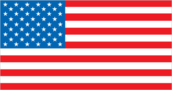
- 13 equal horizontal stripes of red (top and bottom) alternating with white; there is a blue rectangle in the upper hoist-side corner bearing 50 small, white, five-pointed stars arranged in nine offset horizontal rows of six stars (top and bottom) alternating with rows of five stars; the 50 stars represent the 50 states, the 13 stripes represent the 13 original colonies; blue stands for loyalty, devotion, truth, justice, and friendship, red symbolizes courage, zeal, and fervency, while white denotes purity and rectitude of conduct; commonly referred to by its nickname of Old Glory
- note
- note: the design and colors have been the basis for a number of other flags, including Chile, Liberia, Malaysia, and Puerto Rico
Government type
constitutional federal republic
Independence
4 July 1776 (declared independence from Great Britain); 3 September 1783 (recognized by Great Britain)
International law organization participation
withdrew acceptance of compulsory ICJ jurisdiction in 2005; withdrew acceptance of ICCt jurisdiction in 2002
International organization participation
ADB (nonregional member), AfDB (nonregional member), ANZUS, APEC, Arctic Council, ARF, ASEAN (dialogue partner), Australia Group, BIS, BSEC (observer), CBSS (observer), CD, CE (observer), CERN (observer), CICA (observer), CP, EAPC, EAS, EBRD, EITI (implementing country), FAO, FATF, G-5, G-7, G-8, G-10, G-20, IADB, IAEA, IBRD, ICAO, ICC (national committees), ICRM, IDA, IEA, IFAD, IFC, IFRCS, IGAD (partners), IHO, ILO, IMF, IMO, IMSO, Interpol, IOC, IOM, ISO, ITSO, ITU, ITUC (NGOs), MIGA, MINUSTAH, MONUSCO, NAFTA, NATO, NEA, NSG, OAS, OECD, OPCW, OSCE, Pacific Alliance (observer), Paris Club, PCA, PIF (partner), Quad, SAARC (observer), SELEC (observer), SICA (observer), SPC, UN, UNCTAD, UNESCO, UNHCR, UNHRC, UNITAR, UNMIL, UNMISS, UNOOSA, UNRWA, UN Security Council (permanent), UNTSO, UPU, USMCA, Wassenaar Arrangement, WCO, WHO, WIPO, WMO, WTO, ZC
Judicial branch
- highest court(s)
- US Supreme Court (consists of 9 justices - the chief justice and 8 associate justices)
- judge selection and term of office
- president nominates and, with the advice and consent of the Senate, appoints Supreme Court justices; justices serve for life
- note
- note: the US court system consists of the federal court system and the state court systems; although each court system is responsible for hearing certain types of cases, neither is completely independent of the other, and the systems often interact
- subordinate courts
- Courts of Appeal (includes the US Court of Appeal for the Federal District and 12 regional appeals courts); 94 federal district courts in 50 states and territories
Legal system
common law system based on English common law at the federal level; state legal systems based on common law, except Louisiana, where state law is based on Napoleonic civil code; judicial review of legislative acts
Legislative branch
- description
- bicameral Congress consists of:Senate (100 seats; 2 members directly elected in each of the 50 state constituencies by simple majority vote except in Georgia and Louisiana which require an absolute majority vote with a second round if needed; members serve 6-year terms with one-third of membership renewed every 2 years)House of Representatives (435 seats; members directly elected in single-seat constituencies by simple majority vote except in Georgia which requires an absolute majority vote with a second round if needed; members serve 2-year terms)
- election results
- Senate - percent of vote by party - NA; seats by party - Democratic Party 51, Republican Party 49; composition - men 75, women 25, percentage women 25%House of Representatives - percent of vote by party - NA; seats by party - Republican Party 222, Democratic Party 213; composition - men 305, women 126, percentage women 29.2%; total US Congress percentage women 28.4%
- elections
- Senate - last held on 8 November 2022 (next to be held on 5 November 2024)House of Representatives - last held on 8 November 2022 (next to be held on 5 November 2024)
- note
- note: in addition to the regular members of the House of Representatives there are 6 non-voting delegates elected from the District of Columbia and the US territories of American Samoa, Guam, Puerto Rico, the Northern Mariana Islands, and the Virgin Islands; these are single seat constituencies directly elected by simple majority vote to serve a 2-year term (except for the resident commissioner of Puerto Rico who serves a 4-year term); the delegate can vote when serving on a committee and when the House meets as the Committee of the Whole House, but not when legislation is submitted for a “full floor” House vote; election of delegates last held on 8 November 2022 (next to be held on 3 November 2024)
National anthem
- lyrics/music
- Francis Scott KEY/John Stafford SMITH
- name
- "The Star-Spangled Banner"
- note
- note: adopted 1931; during the War of 1812, after witnessing the successful American defense of Fort McHenry in Baltimore following British naval bombardment, Francis Scott KEY wrote the lyrics to what would become the national anthem; the lyrics were set to the tune of "The Anacreontic Song"; only the first verse is sung
National heritage
- selected World Heritage Site locales
- Yellowstone National Park (n); Grand Canyon National Park (n); Cahokia Mounds State Historic Site (c); Independence Hall (c); Statue of Liberty (c); Yosemite National Park (n); Papahānaumokuākea (m); Monumental Earthworks of Poverty Point (c); The 20th-Century Architecture of Frank Lloyd Wright (c); Mesa Verde National Park (c); Mammoth Cave National Park (n); Monticello (c); Olympic National Park (n)
- total World Heritage Sites
- 25 (12 cultural, 12 natural, 1 mixed); note - includes one site in Puerto Rico
National holiday
Independence Day, 4 July (1776)
National symbol(s)
bald eagle; national colors: red, white, blue
Political parties
Democratic PartyGreen PartyLibertarian PartyRepublican Party
Suffrage
18 years of age; universal
Economy
Agricultural products
- maize, soybeans, milk, wheat, sugarcane, sugar beets, chicken, potatoes, beef, pork (2022)
- note
- note: top ten agricultural products based on tonnage
Average household expenditures
- on alcohol and tobacco
- 1.8% of household expenditures (2022 est.)
- on food
- 6.7% of household expenditures (2022 est.)
Budget
- expenditures
- $6.306 trillion (2022 est.)
- note
- note: central government revenues (excluding grants) and expenses converted to US dollars at average official exchange rate for year indicated
- revenues
- $5.038 trillion (2022 est.)
Credit ratings
- Fitch rating
- AAA (1994)
- Moody's rating
- Aaa (1949)
- note
- note: The year refers to the year in which the current credit rating was first obtained.
- Standard & Poors rating
- AA+ (2011)
Current account balance
- Current account balance 2021
- -$831.453 billion (2021 est.)
- Current account balance 2022
- -$971.594 billion (2022 est.)
- Current account balance 2023
- -$818.822 billion (2023 est.)
- note
- note: balance of payments - net trade and primary/secondary income in current dollars
Economic overview
high-income, diversified North American economy; NATO leader; largest importer and second-largest exporter; home to leading financial exchanges; high and growing public debt; rising socioeconomic inequalities; historically low interest rates; hit by COVID-19
Exchange rates
British pounds per US dollar: 0.805 (2023 est.), 0.811 (2022 est.), 0.727 (2021 est.), 0.780 (2020 est.), 0.783 (2019 est.)Canadian dollars per US dollar: 1.35 (2023 est.), 1.302 (2022 est.), 1.254 (2021 est.), 1.341 (2020 est.), 1.327 (2019 est.)Chinese yuan per US dollar: 7.084 (2023 est.), 6.737 (2022 est.), 6.449 (2021 est.), 6.901 (2020 est.), 6.908 (2019 est.)euros per US dollar: 0.925 (2023 est.), 0.950 (2022 est.), 0.845 (2021 est.), 0.876 (2020 est.), 0.893 (2019 est.)Japanese yen per US dollar: 140.49 (2023 est.), 131.50 (2022 est.), 109.75 (2021 est.), 106.78 (2020 est.), 109.01 (2019 est.)note 1: the following countries and territories use the US dollar officially as their legal tender: British Virgin Islands, Ecuador, El Salvador, Marshall Islands, Micronesia, Palau, Timor Leste, Turks and Caicos, and islands of the Caribbean Netherlands (Bonaire, Sint Eustatius, and Saba)note 2: the following countries and territories use the US dollar as official legal tender alongside local currency: Bahamas, Barbados, Belize, Costa Rica, and Panamanote 3: the following countries and territories widely accept the US dollar as a dominant currency but have yet to declare it as legal tender: Bermuda, Burma, Cambodia, Cayman Islands, Honduras, Nicaragua, and Somalia
Exports
- Exports 2021
- $2.567 trillion (2021 est.)
- Exports 2022
- $3.018 trillion (2022 est.)
- Exports 2023
- $3.052 trillion (2023 est.)
- note
- note: balance of payments - exports of goods and services in current dollars
Exports - commodities
- refined petroleum, crude petroleum, natural gas, cars, integrated circuits (2022)
- note
- note: top five export commodities based on value in dollars
Exports - partners
- Canada 16%, Mexico 15%, China 8%, Japan 4%, UK 4% (2022)
- note
- note: top five export partners based on percentage share of exports
GDP - composition, by end use
- exports of goods and services
- 11.6% (2022 est.)
- government consumption
- 13.9% (2022 est.)
- household consumption
- 68% (2022 est.)
- imports of goods and services
- -15.4% (2022 est.)
- investment in fixed capital
- 21.3% (2022 est.)
- investment in inventories
- 0.6% (2022 est.)
- note
- note: figures may not total 100% due to rounding or gaps in data collection
GDP - composition, by sector of origin
- agriculture
- 0.9% (2021 est.)
- industry
- 17.7% (2021 est.)
- note
- note: figures may not total 100% due to non-allocated consumption not captured in sector-reported data
- services
- 76.7% (2021 est.)
GDP (official exchange rate)
- $27.361 trillion (2023 est.)
- note
- note: data in current dollars at official exchange rate
Gini Index coefficient - distribution of family income
- Gini Index coefficient - distribution of family income 2021
- 39.8 (2021 est.)
- note
- note: index (0-100) of income distribution; higher values represent greater inequality
Household income or consumption by percentage share
- highest 10%
- 30.1% (2021 est.)
- lowest 10%
- 2.2% (2021 est.)
- note
- note: % share of income accruing to lowest and highest 10% of population
Imports
- Imports 2021
- $3.409 trillion (2021 est.)
- Imports 2022
- $3.97 trillion (2022 est.)
- Imports 2023
- $3.832 trillion (2023 est.)
- note
- note: balance of payments - imports of goods and services in current dollars
Imports - commodities
- crude petroleum, cars, broadcasting equipment, garments, computers (2022)
- note
- note: top five import commodities based on value in dollars
Imports - partners
- China 18%, Canada 14%, Mexico 14%, Germany 5%, Japan 4% (2022)
- note
- note: top five import partners based on percentage share of imports
Industrial production growth rate
- 3.25% (2021 est.)
- note
- note: annual % change in industrial value added based on constant local currency
Industries
highly diversified, world leading, high-technology innovator, second-largest industrial output in the world; petroleum, steel, motor vehicles, aerospace, telecommunications, chemicals, electronics, food processing, consumer goods, lumber, mining
Inflation rate (consumer prices)
- Inflation rate (consumer prices) 2021
- 4.7% (2021 est.)
- Inflation rate (consumer prices) 2022
- 8% (2022 est.)
- Inflation rate (consumer prices) 2023
- 4.12% (2023 est.)
- note
- note: annual % change based on consumer prices
Labor force
- 170.549 million (2023 est.)
- note
- note: number of people ages 15 or older who are employed or seeking work
Public debt
- note
- note: central government debt as a % of GDP
- Public debt 2022
- 110.39% of GDP (2022 est.)
Real GDP (purchasing power parity)
- note
- note: data in 2021 dollars
- Real GDP (purchasing power parity) 2021
- $23.594 trillion (2021 est.)
- Real GDP (purchasing power parity) 2022
- $24.051 trillion (2022 est.)
- Real GDP (purchasing power parity) 2023
- $24.662 trillion (2023 est.)
Real GDP growth rate
- note
- note: annual GDP % growth based on constant local currency
- Real GDP growth rate 2021
- 5.8% (2021 est.)
- Real GDP growth rate 2022
- 1.94% (2022 est.)
- Real GDP growth rate 2023
- 2.54% (2023 est.)
Real GDP per capita
- note
- note: data in 2021 dollars
- Real GDP per capita 2021
- $71,100 (2021 est.)
- Real GDP per capita 2022
- $72,200 (2022 est.)
- Real GDP per capita 2023
- $73,600 (2023 est.)
Remittances
- note
- note: personal transfers and compensation between resident and non-resident individuals/households/entities
- Remittances 2021
- 0.03% of GDP (2021 est.)
- Remittances 2022
- 0.03% of GDP (2022 est.)
- Remittances 2023
- 0.03% of GDP (2023 est.)
Reserves of foreign exchange and gold
- note
- note: holdings of gold (year-end prices)/foreign exchange/special drawing rights in current dollars
- Reserves of foreign exchange and gold 2021
- $716.152 billion (2021 est.)
- Reserves of foreign exchange and gold 2022
- $706.644 billion (2022 est.)
- Reserves of foreign exchange and gold 2023
- $773.426 billion (2023 est.)
Taxes and other revenues
- 12.18% (of GDP) (2022 est.)
- note
- note: central government tax revenue as a % of GDP
Unemployment rate
- note
- note: % of labor force seeking employment
- Unemployment rate 2021
- 5.35% (2021 est.)
- Unemployment rate 2022
- 3.65% (2022 est.)
- Unemployment rate 2023
- 3.63% (2023 est.)
Youth unemployment rate (ages 15-24)
- female
- 7.1% (2023 est.)
- male
- 8.7% (2023 est.)
- note
- note: % of labor force ages 15-24 seeking employment
- total
- 7.9% (2023 est.)
Energy
Carbon dioxide emissions
- from coal and metallurgical coke
- 938.649 million metric tonnes of CO2 (2022 est.)
- from consumed natural gas
- 1.742 billion metric tonnes of CO2 (2022 est.)
- from petroleum and other liquids
- 2.26 billion metric tonnes of CO2 (2022 est.)
- total emissions
- 4.941 billion metric tonnes of CO2 (2022 est.)
Coal
- consumption
- 476.044 million metric tons (2022 est.)
- exports
- 80.081 million metric tons (2022 est.)
- imports
- 5.788 million metric tons (2022 est.)
- production
- 548.849 million metric tons (2022 est.)
- proven reserves
- 248.941 billion metric tons (2022 est.)
Electricity
- consumption
- 4.128 trillion kWh (2022 est.)
- exports
- 15.758 billion kWh (2022 est.)
- imports
- 56.97 billion kWh (2022 est.)
- installed generating capacity
- 1.201 billion kW (2022 est.)
- transmission/distribution losses
- 204.989 billion kWh (2022 est.)
Electricity access
- electrification - total population
- 100% (2022 est.)
Electricity generation sources
- biomass and waste
- 1.5% of total installed capacity (2022 est.)
- fossil fuels
- 59.5% of total installed capacity (2022 est.)
- geothermal
- 0.4% of total installed capacity (2022 est.)
- hydroelectricity
- 5.8% of total installed capacity (2022 est.)
- nuclear
- 18% of total installed capacity (2022 est.)
- solar
- 4.8% of total installed capacity (2022 est.)
- wind
- 10.1% of total installed capacity (2022 est.)
Energy consumption per capita
- Total energy consumption per capita 2022
- 284.575 million Btu/person (2022 est.)
Natural gas
- consumption
- 914.301 billion cubic meters (2022 est.)
- exports
- 195.497 billion cubic meters (2022 est.)
- imports
- 85.635 billion cubic meters (2022 est.)
- production
- 1.029 trillion cubic meters (2022 est.)
- proven reserves
- 13.402 trillion cubic meters (2021 est.)
Nuclear energy
- Net capacity of operational nuclear reactors
- 96.95GW (2023 est.)
- Number of nuclear reactors permanently shut down
- 41 (2023)
- Number of operational nuclear reactors
- 94 (2023)
- Percent of total electricity production
- 18.5% (2023 est.)
Petroleum
- crude oil estimated reserves
- 38.212 billion barrels (2021 est.)
- refined petroleum consumption
- 20.246 million bbl/day (2023 est.)
- total petroleum production
- 20.879 million bbl/day (2023 est.)
Communications
Broadband - fixed subscriptions
- subscriptions per 100 inhabitants
- 37 (2020 est.)
- total
- 121.176 million (2020 est.)
Broadcast media
4 major terrestrial TV networks with affiliate stations throughout the country, plus cable and satellite networks, independent stations, and a limited public broadcasting sector that is largely supported by private grants; overall, thousands of TV stations broadcasting; multiple national radio networks with many affiliate stations; while most stations are commercial, National Public Radio (NPR) has a network of some 900 member stations; satellite radio available; in total, over 15,000 radio stations operating (2018)
Communications - note
note 1: The Library of Congress, Washington DC, USA, claims to be the largest library in the world with more than 167 million items (as of 2018); its collections are universal, not limited by subject, format, or national boundary, and include materials from all parts of the world and in over 450 languages; collections include: books, newspapers, magazines, sheet music, sound and video recordings, photographic images, artwork, architectural drawings, and copyright datanote 2: Cape Canaveral, Florida, USA, hosts one of four dedicated ground antennas that assist in the operation of the Global Positioning System (GPS) navigation system (the others are on Ascension (Saint Helena, Ascension, and Tistan da Cunha), Diego Garcia (British Indian Ocean Territory), and at Kwajalein (Marshall Islands)
Internet country code
.us
Internet users
- percent of population
- 92% (2021 est.)
- total
- 312.8 million (2021 est.)
Telecommunication systems
- domestic
- fixed-line just over 27 per 100 and mobile-cellular is 110 per 100 (2022)
- general assessment
- the US telecom sector adapted well to the particular demands of the pandemic, which has led to strong growth in the number of mobile, mobile broadband, and fixed broadband subscribers since 2020; the level of growth is expected to taper off from late 2022 as the demand for working and schooling from home subsides; the pandemic also encouraged the Federal government to increase its investment in broadband infrastructure; of particular note was the Infrastructure Investment and Jobs Act of November 2021, which provided $65 billion to a range of programs aimed at delivering broadband to unserved areas, providing fiber-based broadband to upgrade existing service areas, and subsidizing the cost of services to low income households; alongside these fiscal efforts have been the several spectrum auctions undertaken during the last two years, which have greatly assisted the main licensees to improve the reach and quality of their offers based on LTE and 5G; some of this spectrum, auctioned during 2021, was only made available to licensees from February 2022; the widening availability of 5G from the main providers has resulted in a dramatic increase in mobile data traffic; in tandem with the focus on 5G, operators have closed down their GSM and CDMA networks, and have either closed down 3G networks (as AT&T did in January 2022), or plan to in coming months; given the size of the US broadband market, and the growing demand for data on both fixed and mobile networks, there is continuous pressure for operators to invest in fiber networks, and to push connectivity closer to consumers; in recent years the US has seen increased activity from regional players as well as the major telcos and cablecos; although there has been considerable investment in DOCSIS4.0, some of the cablecos are looking to ditch HFC in preference for fiber broadband; the process of migrating from copper (HFC and DSL) to fiber is ongoing, but given the scale of the work involved it will take some years; some operators have investment strategies in place through to 2025, which will see the vast majority of their fixed networks being entirely on fiber; service offerings of up to 2Gb/s are becoming more widely available as the process continues (2024)
- international
- country code - 1; landing points for the Quintillion Subsea Cable Network, TERRA SW, AU-Aleutian, KKFL, AKORN, Alaska United -West, & -East & -Southeast, North Star, Lynn Canal Fiber, KetchCar 1, PC-1, SCCN, Tat TGN-Pacific & -Atlantic, Jupiter, Hawaiki, NCP, FASTER, HKA, JUS, AAG, BtoBE, Currie, Southern Cross NEXT, SxS, PLCN, Utility EAC-Pacific, SEA-US, Paniolo Cable Network, HICS, HIFN, ASH, Telstra Endeavor, Honotua, AURORA, ARCOS, AMX-1, Americas -I & -II, Columbus IIb & -III, Maya-1, MAC, GTMO-1, BICS, CFX-1, GlobeNet, Monet, SAm-1, Bahamas 2, PCCS, BRUSA, Dunant, MAREA, SAE x1, TAT 14, Apollo, Gemini Bermuda, Havfrue/AEC-2, Seabras-1, WALL-LI, NYNJ-1, FLAG Atalantic-1, Yellow, Atlantic Crossing-1, AE Connect -1, sea2shore, Challenger Bermuda-1, and GTT Atlantic submarine cable systems providing international connectivity to Europe, Africa, the Middle East, Asia, Southeast Asia, Australia, New Zealand, Pacific, & Atlantic, and Indian Ocean Islands, Central and South America, Caribbean, Canada and US; satellite earth stations - 61 Intelsat (45 Atlantic Ocean and 16 Pacific Ocean), 5 Intersputnik (Atlantic Ocean region), and 4 Inmarsat (Pacific and Atlantic Ocean regions) (2020)
Telephones - fixed lines
- subscriptions per 100 inhabitants
- 27 (2022 est.)
- total subscriptions
- 91.623 million (2022 est.)
Telephones - mobile cellular
- subscriptions per 100 inhabitants
- 110 (2022 est.)
- total subscriptions
- 372.682 million (2022 est.)
Transportation
Airports
15,873 (2024)
Civil aircraft registration country code prefix
N
Heliports
7,914 (2024)
Merchant marine
- by type
- bulk carrier 4, container ship 60, general cargo 96, oil tanker 68, other 3,305
- note
- note - oceangoing self-propelled, cargo-carrying vessels of 1,000 gross tons and above
- total
- 3,533 (2023)
National air transport system
- annual freight traffic on registered air carriers
- 42,985,300,000 (2018) mt-km
- annual passenger traffic on registered air carriers
- 889.022 million (2018)
- inventory of registered aircraft operated by air carriers
- 7,249
- number of registered air carriers
- 99 (2020)
Pipelines
1,984,321 km natural gas, 240,711 km petroleum products (2013)
Ports
- key ports
- Baltimore, Boston, Brooklyn, Buffalo, Chester, Cleveland, Detroit, Galveston, Houston, Los Angeles, Louisiana Offshore Oil Port (LOOP), Mobile, New Orleans, New York City, Norfolk, Oakland, Philadelphia, Portland, San Francisco, Seattle, Tri-City Port
- large
- 21
- medium
- 38
- ports with oil terminals
- 204
- small
- 132
- total ports
- 666 (2024)
- very small
- 475
Railways
- standard gauge
- 293,564.2 km (2014) 1.435-m gauge
- total
- 293,564.2 km (2014)
Roadways
- paved
- 4,304,715 km (includes 76,334 km of expressways)
- total
- 6,586,610 km
- unpaved
- 2,281,895 km (2012)
Waterways
41,009 km (2012) (19,312 km used for commerce; Saint Lawrence Seaway of 3,769 km, including the Saint Lawrence River of 3,058 km, is shared with Canada)
Military and Security
Military - note
the US military's primary missions are to deter potential enemies, provide for the defense of the US, its Territories, Commonwealths and possessions, and any areas occupied by the US, and to protect US national interests; its responsibilities are worldwide and include providing humanitarian assistance, participating in international military exercises and operations, conducting military diplomacy, and fulfilling the US's alliance and treaty commitments; the US has been a leading member of NATO since the Alliance's formation in 1949; the military has a global presence; the separate services operate jointly under 11 regional- or functionally-based joint service "combatant" commands: Africa Command; Central Command, Cyber Command, European Command, Indo-Pacific Command, Northern Command, Southern Command, Space Command, Special Operations Command, Strategic Command, and Transportation CommandCongress officially created the US military in September 1789; the US Army was established in June 1775 as the Continental Army; after the declaration of independence in July 1776, the Continental Army and the militia in the service of Congress became known collectively as the Army of the United States; when Congress ordered the Continental Army to disband in 1784, it retained a small number of personnel that would form the nucleus of the 1st American Regiment for national service formed later that year; both the US Navy and the US Marines were also established in 1775, but the Navy fell into disuse after the Revolutionary War, and was reestablished by Congress in 1794; the first US military unit devoted exclusively to aviation began operations in 1913 as part of the US Army; the Army Air Corps (AAC) was the US military service dedicated to aerial warfare between 1926 and 1941; the AAC became the US Army Air Forces in 1941 and remained as a combat arm of the Army until the establishment of the US Air Force in 1947 (2024)
Military and security forces
- United States Armed Forces (aka US Military): US Army (USA), US Navy (USN; includes US Marine Corps or USMC), US Air Force (USAF), US Space Force (USSF); US Coast Guard (USCG); National Guard (Army National Guard and Air National Guard) (2024)
- note
- note 1: the US Coast Guard is administered in peacetime by the Department of Homeland Security, but in wartime reports to the Department of the Navynote 2: the Army National Guard and the Air National Guard are reserve components of their services and operate in part under state authority; the US military also maintains reserve forces for each branchnote 3: US law enforcement personnel include those of federal agencies, such as the Department of Homeland Security and Department of Justice, the 50 states, special jurisdictions, local sheriff’s offices, and municipal, county, regional, and tribal police departmentsnote 4: some US states have "state defense forces" (SDFs), which are military units that operate under the sole authority of state governments; SDFs are authorized by state and federal law and are under the command of the governor of each state; most are organized as ground units, but air and naval units also exist
Military and security service personnel strengths
approximately 1.31 million active-duty personnel (446,000 Army; 328,000 Navy; 317,000 Air Force; 9,000 Space Force; 167,000 Marine Corps; 40,000 Coast Guard); 330,000 Army National Guard; 105,000 Air National Guard (2024)
Military deployments
the US has more than 200,000 air, ground, and naval personnel deployed overseas on a permanent or a long-term rotational (typically 3-9 months) basis; key areas of deployment include approximately 5,000 in Africa, approximately 100,000 in Europe, approximately 10-15,000 in Southwest Asia, and more than 80,000 in East Asia (2024)
Military equipment inventories and acquisitions
the US military's inventory is comprised almost entirely of domestically produced weapons systems (some assembled with foreign components) along with a smaller mix of imported equipment from a variety of countries such as Germany and the UK; the US defense industry is capable of designing, developing, maintaining, and producing the full spectrum of weapons systems; the US is the world's leading arms exporter (2024)
Military expenditures
- Military Expenditures 2020
- 3.6% of GDP (2020)
- Military Expenditures 2021
- 3.5% of GDP (2021)
- Military Expenditures 2022
- 3.3% of GDP (2022)
- Military Expenditures 2023
- 3.2% of GDP (2023)
- Military Expenditures 2024
- 3.4% of GDP (2024 est.)
Military service age and obligation
- 18 years of age (17 years of age with parental consent) for voluntary service for men and women; no conscription (currently inactive, but males aged 18-25 must register with Selective Service in case conscription is reinstated in the future); maximum enlistment age 34 (Army), 42 (Air Force/Space Force), 39 (Navy), 28 (Marines), 31 (Coast Guard); 8-year service obligation, including 2-5 years active duty (Army), 2 years active duty (Navy), 4 years active duty (Air Force, Coast Guard, Marines, Space Force) (2024)
- note
- note 1: the US military has been all-volunteer since 1973, but an act of Congress can reinstate the draft in case of a national emergencynote 2: all military occupations and positions open to women; in 2022, women comprised 17.5% of the total US regular military personnelnote 3: non-citizens living permanently and legally in the US may join as enlisted personnel; they must have permission to work in the US, a high school diploma, and speak, read, and write English fluently; minimum age of 17 with parental consent or 18 without; maximum age 29-39, depending on the service; under the US Nationality Act, honorable service in the military may qualify individuals to obtain expedited citizenship; under the Compact of Free Association, citizens of the Federated States of Micronesia, the Republic of Palau, and the Republic of the Marshall Islands may volunteer; under the Jay Treaty, signed in 1794 between Great Britain and the US, and corresponding legislation, Native Americans/First Nations born in Canada are entitled to freely enter the US and join the US military
Transnational Issues
Illicit drugs
world's largest consumer of cocaine (shipped from Colombia through Mexico and the Caribbean), Colombian heroin, and Mexican heroin and marijuana; major consumer of ecstasy and Mexican methamphetamine; minor consumer of high-quality Southeast Asian heroin; illicit producer of cannabis, marijuana, depressants, stimulants, hallucinogens, and methamphetamine; money-laundering center
Refugees and internally displaced persons
- refugees (country of origin)
- the US admitted 25,465 refugees during FY2022, including: 7,810 (Democratic Republic of the Congo), 4,556 (Syria), 2,156 (Burma), 1,669 (Sudan), 1,618 (Afghanistan), 1,610 (Ukraine)
- stateless persons
- 47 (2022)
Space
Space agency/agencies
- National Aeronautics and Space Administration (NASA; established 1958); National Reconnaissance Office (NRO; established in 1961 and responsible for designing, building, launching, and maintaining intelligence satellites); US Space Command (USSPACECOM; established in 2019 and responsible for military operations in outer space, specifically all operations over 100 kilometers or 62 miles above mean sea level) (2024)
- note
- note: USSPACECOM was originally created in 1985 but was deactivated in 2002 and its duties were transferred to US Strategic Command
Space launch site(s)
has 20 commercial, government, and private space ports hosting Federal Aviation Administration-licensed activity spread across 10 states (Alabama, Alaska, California, Colorado, Florida, Georgia, New Mexico, Oklahoma, Texas, and Virginia) (2024)
Space program overview
- has a large and comprehensive space program and is one of the world’s top space powers; builds, launches, and operates space launch vehicles (SLVs)/rockets and the full spectrum of spacecraft, including interplanetary probes, manned craft, reusable rockets, satellites, space stations, and space planes; has an astronaut program and a large corps of astronauts; researching and developing a broad range of other space-related capabilities and technologies, such as advanced telecommunications and optics, navigational aids, propulsion, robotics, solar sails, space-based manufacturing, and robotic satellite repair/refueling; has launched orbital or lander probes to the Sun and all planets in the solar system, as well as to asteroids and beyond the solar system; has international missions and projects with dozens of countries and organizations, including such major partners as Canada, Japan, Russia, and South Korea, as well as the European Space Agency (ESA), the EU, and their individual member states; as of December 2024, more than 50 countries had signed onto the US-led Artemis Accords, whose purpose is to establish principles, guidelines, and best practices to enhance the governance of the civil exploration and use of outer space with the intention of advancing the Artemis Program, an international effort to establish a sustainable and robust presence on the Moon and an onward human mission to Mars; the US commercial space industry is one of the world’s largest and most capable and is active across the entire spectrum of US government space programs; the majority of both NASA and US military space launches are conducted by US commercial companies; the US space economy was valued at over $200 billion in 2021 (2024)
- note
- note: further details about the key activities, programs, and milestones of the country’s space program, as well as government spending estimates on the space sector, appear in the Space Programs reference guide
Terrorism
Terrorist group(s)
- Hizballah; Islamic Revolutionary Guard Corps (IRGC)/Qods Force; Islamic State of Iraq and ash-Sham (ISIS); al-Qa'ida; Lashkar-e Tayyiba (LeT)
- note
- note: details about the history, aims, leadership, organization, areas of operation, tactics, targets, weapons, size, and sources of support of the group(s) appear(s) in the Terrorism reference guide
Environment
Air pollutants
- carbon dioxide emissions
- 5,006.3 megatons (2016 est.)
- methane emissions
- 685.74 megatons (2020 est.)
- particulate matter emissions
- 7.18 micrograms per cubic meter (2019 est.)
Climate
- mostly temperate, but tropical in Hawaii and Florida, arctic in Alaska, semiarid in the great plains west of the Mississippi River, and arid in the Great Basin of the southwest; low winter temperatures in the northwest are ameliorated occasionally in January and February by warm chinook winds from the eastern slopes of the Rocky Mountains
- note
- note: many consider Denali, the highest peak in the US, to be the world’s coldest mountain because of its combination of high elevation and its subarctic location at 63 degrees north latitude; permanent snow and ice cover over 75 percent of the mountain, and enormous glaciers, up to 45 miles long and 3,700 feet thick, spider out from its base in every direction; it is home to some of the world’s coldest and most violent weather, where winds of over 150 miles per hour and temperatures of -93˚F have been recorded.
Environment - current issues
air pollution; large emitter of carbon dioxide from the burning of fossil fuels; water pollution from runoff of pesticides and fertilizers; declining natural freshwater resources in much of the western part of the country require careful management; deforestation; mining; desertification; species conservation; invasive species (the Hawaiian Islands are particularly vulnerable)
Environment - international agreements
- party to
- Air Pollution, Air Pollution-Heavy Metals, Air Pollution-Multi-effect Protocol, Air Pollution-Nitrogen Oxides, Antarctic-Environmental Protection, Antarctic-Marine Living Resources, Antarctic Seals, Antarctic Treaty, Climate Change, Climate Change-Paris Agreement, Desertification, Endangered Species, Environmental Modification, Marine Dumping-London Convention, Marine Life Conservation, Nuclear Test Ban, Ozone Layer Protection, Ship Pollution, Tropical Timber 2006, Wetlands, Whaling
- signed, but not ratified
- Air Pollution-Persistent Organic Pollutants, Air Pollution-Volatile Organic Compounds, Biodiversity, Climate Change-Kyoto Protocol, Comprehensive Nuclear Test Ban, Hazardous Wastes, Marine Dumping-London Protocol
Land use
- agricultural land
- 44.5% (2018 est.)
- agricultural land: arable land
- arable land: 16.8% (2018 est.)
- agricultural land: permanent crops
- permanent crops: 0.3% (2018 est.)
- agricultural land: permanent pasture
- permanent pasture: 27.4% (2018 est.)
- forest
- 33.3% (2018 est.)
- other
- 22.2% (2018 est.)
Major aquifers
Northern Great Plains Aquifer, Cambrian-Ordovician Aquifer System, Californian Central Valley Aquifer System, Ogallala Aquifer (High Plains), Atlantic and Gulf Coastal Plains Aquifer
Major lakes (area sq km)
- fresh water lake(s)
- Michigan – 57,750 sq km; Superior* – 53,348 sq km; Huron* – 23,597 sq km; Erie* – 12,890 sq km; Ontario* – 9,220 sq km; Lake of the Woods – 4,350 sq km; Iliamna – 2,590 sq km; Okeechobee – 1,810 sq km; Belcharof – 1,190 sq km; Red – 1,170 sq km; Saint Clair – 1,113 sq km; Champlain – 1,100 sq kmnote - Great Lakes* area shown as US waters
- salt water lake(s)
- Great Salt – 4,360 sq km; Pontchartrain – 1,620 sq km; Selawik – 1,400 sq km; Salton Sea – 950 sq km
Major rivers (by length in km)
Missouri - 3,768 km; Mississippi - 3,544 km; Yukon river mouth (shared with Canada [s]) - 3,190 km; Saint Lawrence (shared with Canada) - 3,058 km; Rio Grande river source ( mouth shared with Mexico) - 3,057 km; Colorado river source (shared with Mexico [m]) - 2,333 km; Arkansas - 2,348 km; Columbia river mouth (shared with Canada [s]) - 2,250 km; Red - 2,188 km; Ohio - 2,102 km; Snake - 1,670 kmnote – [s] after country name indicates river source; [m] after country name indicates river mouth
Major watersheds (area sq km)
Atlantic Ocean drainage: (Gulf of Mexico) Mississippi* (3,202,185 sq km); Rio Grande (607,965 sq km); (Gulf of Saint Lawrence) Saint Lawrence* (1,049,636 sq km total, US only 505,000 sq km)Pacific Ocean drainage: Yukon* (847,620 sq km, US only 23,820 sq km); Colorado (703,148 sq km); Columbia* (657,501 sq km, US only 554,501 sq km)note - watersheds shared with Canada shown with *
Revenue from coal
0.2% of GDP (2018 est.)
Revenue from forest resources
0.04% of GDP (2018 est.)
Total renewable water resources
3.07 trillion cubic meters (2020 est.)
Total water withdrawal
- agricultural
- 176.2 billion cubic meters (2020 est.)
- industrial
- 209.7 billion cubic meters (2020 est.)
- municipal
- 58.39 billion cubic meters (2020 est.)
Urbanization
- rate of urbanization
- 0.96% annual rate of change (2020-25 est.)
- urban population
- 83.3% of total population (2023)
Waste and recycling
- municipal solid waste generated annually
- 258 million tons (2015 est.)
- municipal solid waste recycled annually
- 89.268 million tons (2014 est.)
- percent of municipal solid waste recycled
- 34.6% (2014 est.)