2012 Edition
CIA World Factbook 2012 Archive (HTML)
Introduction
Background
Britain's American colonies broke with the mother country in 1776 and were recognized as the new nation of the United States of America following the Treaty of Paris in 1783. During the 19th and 20th centuries, 37 new states were added to the original 13 as the nation expanded across the North American continent and acquired a number of overseas possessions. The two most traumatic experiences in the nation's history were the Civil War (1861-65), in which a northern Union of states defeated a secessionist Confederacy of 11 southern slave states, and the Great Depression of the 1930s, an economic downturn during which about a quarter of the labor force lost its jobs. Buoyed by victories in World Wars I and II and the end of the Cold War in 1991, the US remains the world's most powerful nation state. Since the end of World War II, the economy has achieved relatively steady growth, low unemployment and inflation, and rapid advances in technology.
Geography
Area
- 9,826,675 sq km 9,161,966 sq km 664,709 sq km includes only the 50 states and District of Columbia
- total
- 9,826,675 sq km
- water
- 664,709 sq km
Area - comparative
about half the size of Russia; about three-tenths the size of Africa; about half the size of South America (or slightly larger than Brazil); slightly larger than China; more than twice the size of the European Union
Climate
mostly temperate, but tropical in Hawaii and Florida, arctic in Alaska, semiarid in the great plains west of the Mississippi River, and arid in the Great Basin of the southwest; low winter temperatures in the northwest are ameliorated occasionally in January and February by warm chinook winds from the eastern slopes of the Rocky Mountains
Coastline
19,924 km
Elevation extremes
- Death Valley -86 m Mount McKinley 6,194 m the peak of Mauna Kea (4,207 m above sea level) on the island of Hawaii rises about 10,200 m above the Pacific Ocean floor; by this measurement, it is the world's tallest mountain - higher than Mount Everest, which is recognized as the tallest mountain above sea level
- highest point
- Mount McKinley 6,194 m
- lowest point
- Death Valley -86 m
Environment - current issues
air pollution resulting in acid rain in both the US and Canada; the US is the largest single emitter of carbon dioxide from the burning of fossil fuels; water pollution from runoff of pesticides and fertilizers; limited natural freshwater resources in much of the western part of the country require careful management; desertification
Environment - international agreements
- Air Pollution, Air Pollution-Nitrogen Oxides, Antarctic-Environmental Protocol, Antarctic-Marine Living Resources, Antarctic Seals, Antarctic Treaty, Climate Change, Desertification, Endangered Species, Environmental Modification, Marine Dumping, Marine Life Conservation, Ozone Layer Protection, Ship Pollution, Tropical Timber 83, Tropical Timber 94, Wetlands, Whaling Air Pollution-Persistent Organic Pollutants, Air Pollution-Volatile Organic Compounds, Biodiversity, Climate Change-Kyoto Protocol, Hazardous Wastes
- party to
- Air Pollution, Air Pollution-Nitrogen Oxides, Antarctic-Environmental Protocol, Antarctic-Marine Living Resources, Antarctic Seals, Antarctic Treaty, Climate Change, Desertification, Endangered Species, Environmental Modification, Marine Dumping, Marine Life Conservation, Ozone Layer Protection, Ship Pollution, Tropical Timber 83, Tropical Timber 94, Wetlands, Whaling
- signed, but not ratified
- Air Pollution-Persistent Organic Pollutants, Air Pollution-Volatile Organic Compounds, Biodiversity, Climate Change-Kyoto Protocol, Hazardous Wastes
Freshwater withdrawal (domestic/industrial/agricultural)
- 477 cu km/yr (13%/46%/41%) 1,600 cu m/yr (2000)
- per capita
- 1,600 cu m/yr (2000)
- total
- 477 cu km/yr (13%/46%/41%)
Geographic coordinates
38 00 N, 97 00 W
Geography - note
world's third-largest country by size (after Russia and Canada) and by population (after China and India); Mt. McKinley is highest point in North America and Death Valley the lowest point on the continent
Irrigated land
230,000 sq km (2003)
Land boundaries
- 12,034 km Canada 8,893 km (including 2,477 km with Alaska), Mexico 3,141 km US Naval Base at Guantanamo Bay, Cuba is leased by the US and is part of Cuba; the base boundary is 28 km
- border countries
- Canada 8,893 km (including 2,477 km with Alaska), Mexico 3,141 km
- total
- 12,034 km
Land use
- 18.01% 0.21% 81.78% (2005)
- arable land
- 18.01%
- other
- 81.78% (2005)
- permanent crops
- 0.21%
Location
North America, bordering both the North Atlantic Ocean and the North Pacific Ocean, between Canada and Mexico
Map references
North America
Maritime claims
- 12 nm 24 nm 200 nm not specified
- contiguous zone
- 24 nm
- continental shelf
- not specified
- exclusive economic zone
- 200 nm
- territorial sea
- 12 nm
Natural hazards
- tsunamis; volcanoes; earthquake activity around Pacific Basin; hurricanes along the Atlantic and Gulf of Mexico coasts; tornadoes in the Midwest and Southeast; mud slides in California; forest fires in the west; flooding; permafrost in northern Alaska, a major impediment to development volcanic activity in the Hawaiian Islands, Western Alaska, the Pacific Northwest, and in the Northern Mariana Islands; both Mauna Loa (elev. 4,170 m) in Hawaii and Mount Rainier (elev. 4,392 m) in Washington have been deemed "Decade Volcanoes" by the International Association of Volcanology and Chemistry of the Earth's Interior, worthy of study due to their explosive history and close proximity to human populations; Pavlof (elev. 2,519 m) is the most active volcano in Alaska's Aleutian Arc and poses a significant threat to air travel since the area constitutes a major flight path between North America and East Asia; St. Helens (elev. 2,549 m, famous for the devastating 1980 eruption, remains active today; numerous other historically active volcanoes exist, mostly concentrated in the Aleutian arc and Hawaii; they include: in Alaska: Aniakchak, Augustine, Chiginagak, Fourpeaked, Iliamna, Katmai, Kupreanof, Martin, Novarupta, Redoubt, Spurr, Wrangell; in Hawaii: Trident, Ugashik-Peulik, Ukinrek Maars, Veniaminof; in the Northern Mariana Islands: Anatahan; and in the Pacific Northwest: Mount Baker, Mount Hood
- volcanism
- volcanic activity in the Hawaiian Islands, Western Alaska, the Pacific Northwest, and in the Northern Mariana Islands; both Mauna Loa (elev. 4,170 m) in Hawaii and Mount Rainier (elev. 4,392 m) in Washington have been deemed "Decade Volcanoes" by the International Association of Volcanology and Chemistry of the Earth's Interior, worthy of study due to their explosive history and close proximity to human populations; Pavlof (elev. 2,519 m) is the most active volcano in Alaska's Aleutian Arc and poses a significant threat to air travel since the area constitutes a major flight path between North America and East Asia; St. Helens (elev. 2,549 m, famous for the devastating 1980 eruption, remains active today; numerous other historically active volcanoes exist, mostly concentrated in the Aleutian arc and Hawaii; they include: in Alaska: Aniakchak, Augustine, Chiginagak, Fourpeaked, Iliamna, Katmai, Kupreanof, Martin, Novarupta, Redoubt, Spurr, Wrangell; in Hawaii: Trident, Ugashik-Peulik, Ukinrek Maars, Veniaminof; in the Northern Mariana Islands: Anatahan; and in the Pacific Northwest: Mount Baker, Mount Hood
Natural resources
coal, copper, lead, molybdenum, phosphates, rare earth elements, uranium, bauxite, gold, iron, mercury, nickel, potash, silver, tungsten, zinc, petroleum, natural gas, timber the US has the world's largest coal reserves with 491 billion short tons accounting for 27% of the world's total
Terrain
vast central plain, mountains in west, hills and low mountains in east; rugged mountains and broad river valleys in Alaska; rugged, volcanic topography in Hawaii
Total renewable water resources
3,069 cu km (1985)
People and Society
Age structure
- 20% (male 32,050,686/ female 30,719,945) 66.5% (male 104,156,828/ female 104,442,302) 13.5% (male 18,424,785/ female 24,052,919) (2012 est.)
- 0-14 years
- 20% (male 32,050,686/ female 30,719,945)
- 15-64 years
- 66.5% (male 104,156,828/ female 104,442,302)
- 65 years and over
- 13.5% (male 18,424,785/ female 24,052,919) (2012 est.)
Birth rate
13.7 births/1,000 population (2012 est.)
Children under the age of 5 years underweight
1.3% (2002)
Death rate
8.4 deaths/1,000 population (July 2012 est.)
Education expenditures
5.5% of GDP (2007)
Ethnic groups
white 79.96%, black 12.85%, Asian 4.43%, Amerindian and Alaska native 0.97%, native Hawaiian and other Pacific islander 0.18%, two or more races 1.61% (July 2007 estimate) a separate listing for Hispanic is not included because the US Census Bureau considers Hispanic to mean persons of Spanish/Hispanic/Latino origin including those of Mexican, Cuban, Puerto Rican, Dominican Republic, Spanish, and Central or South American origin living in the US who may be of any race or ethnic group (white, black, Asian, etc.); about 15.1% of the total US population is Hispanic
Health expenditures
16.2% of GDP (2009)
HIV/AIDS - adult prevalence rate
0.6% (2009 est.)
HIV/AIDS - deaths
17,000 (2009 est.)
HIV/AIDS - people living with HIV/AIDS
1.2 million (2009 est.)
Hospital bed density
3.1 beds/1,000 population (2008)
Infant mortality rate
- 6 deaths/1,000 live births 6.6 deaths/1,000 live births 5.3 deaths/1,000 live births (2012 est.)
- female
- 5.3 deaths/1,000 live births (2012 est.)
- total
- 6 deaths/1,000 live births
Languages
English 82.1%, Spanish 10.7%, other Indo-European 3.8%, Asian and Pacific island 2.7%, other 0.7% (2000 census) Hawaiian is an official language in the state of Hawaii
Life expectancy at birth
- 78.49 years 76.05 years 81.05 years (2012 est.)
- female
- 81.05 years (2012 est.)
- total population
- 78.49 years
Literacy
- age 15 and over can read and write 99% 99% 99% (2003 est.)
- definition
- age 15 and over can read and write
- female
- 99% (2003 est.)
- male
- 99%
- total population
- 99%
Major cities - population
New York-Newark 19.3 million; Los Angeles-Long Beach-Santa Ana 12.675 million; Chicago 9.134 million; Miami 5.699 million; WASHINGTON, D.C. (capital) 4.421 million (2009)
Maternal mortality rate
21 deaths/100,000 live births (2010)
Median age
- 37.1 years 35.8 years 38.5 years (2012 est.)
- female
- 38.5 years (2012 est.)
- male
- 35.8 years
- total
- 37.1 years
Nationality
- American(s) American
- adjective
- American
- noun
- American(s)
Net migration rate
3.62 migrant(s)/1,000 population (2012 est.)
Obesity - adult prevalence rate
33.9% (2006)
Physicians density
2.672 physicians/1,000 population (2004)
Population
313,847,465 (July 2012 est.)
Population growth rate
0.9% (2012 est.)
Religions
Protestant 51.3%, Roman Catholic 23.9%, Mormon 1.7%, other Christian 1.6%, Jewish 1.7%, Buddhist 0.7%, Muslim 0.6%, other or unspecified 2.5%, unaffiliated 12.1%, none 4% (2007 est.)
Sanitation facility access
- urban: 100% of population rural: 99% of population total: 100% of population urban: 0% of population rural: 1% of population total: 0% of population
- rural
- 1% of population
- total
- 0% of population
- urban
- 0% of population
School life expectancy (primary to tertiary education)
- 16 years 15 years 17 years (2008)
- female
- 17 years (2008)
- male
- 15 years
- total
- 16 years
Sex ratio
- 1.05 male(s)/female 1.04 male(s)/female 1 male(s)/female 0.77 male(s)/female 0.97 male(s)/female (2011 est.)
- 15-64 years
- 1 male(s)/female
- 65 years and over
- 0.77 male(s)/female
- at birth
- 1.05 male(s)/female
- total population
- 0.97 male(s)/female (2011 est.)
- under 15 years
- 1.04 male(s)/female
Total fertility rate
2.06 children born/woman (2012 est.)
Unemployment, youth ages 15-24
- 17.6% 20.1% 14.9% (2009)
- female
- 14.9% (2009)
- total
- 17.6%
Urbanization
- 82% of total population (2010) 1.2% annual rate of change (2010-15 est.)
- rate of urbanization
- 1.2% annual rate of change (2010-15 est.)
- urban population
- 82% of total population (2010)
Government
Administrative divisions
50 states and 1 district*; Alabama, Alaska, Arizona, Arkansas, California, Colorado, Connecticut, Delaware, District of Columbia*, Florida, Georgia, Hawaii, Idaho, Illinois, Indiana, Iowa, Kansas, Kentucky, Louisiana, Maine, Maryland, Massachusetts, Michigan, Minnesota, Mississippi, Missouri, Montana, Nebraska, Nevada, New Hampshire, New Jersey, New Mexico, New York, North Carolina, North Dakota, Ohio, Oklahoma, Oregon, Pennsylvania, Rhode Island, South Carolina, South Dakota, Tennessee, Texas, Utah, Vermont, Virginia, Washington, West Virginia, Wisconsin, Wyoming
Capital
- Washington, DC 38 53 N, 77 02 W UTC-5 (during Standard Time) +1hr, begins second Sunday in March; ends first Sunday in November the 50 United States cover six time zones
- daylight saving time
- +1hr, begins second Sunday in March; ends first Sunday in November
- geographic coordinates
- 38 53 N, 77 02 W
- name
- Washington, DC
- time difference
- UTC-5 (during Standard Time)
Constitution
17 September 1787, effective 4 March 1789
Country name
- United States of America United States US or USA
- abbreviation
- US or USA
- conventional long form
- United States of America
- conventional short form
- United States
Dependent areas
- American Samoa, Baker Island, Guam, Howland Island, Jarvis Island, Johnston Atoll, Kingman Reef, Midway Islands, Navassa Island, Northern Mariana Islands, Palmyra Atoll, Puerto Rico, Virgin Islands, Wake Island from 18 July 1947 until 1 October 1994, the US administered the Trust Territory of the Pacific Islands; it entered into a political relationship with all four political entities: the Northern Mariana Islands is a commonwealth in political union with the US (effective 3 November 1986); the Republic of the Marshall Islands signed a Compact of Free Association with the US (effective 21 October 1986); the Federated States of Micronesia signed a Compact of Free Association with the US (effective 3 November 1986); Palau concluded a Compact of Free Association with the US (effective 1 October 1994)
- from 18 July 1947 until 1 October 1994, the US administered the Trust Territory of the Pacific Islands; it entered into a political relationship with all four political entities
- the Northern Mariana Islands is a commonwealth in political union with the US (effective 3 November 1986); the Republic of the Marshall Islands signed a Compact of Free Association with the US (effective 21 October 1986); the Federated States of Micronesia signed a Compact of Free Association with the US (effective 3 November 1986); Palau concluded a Compact of Free Association with the US (effective 1 October 1994)
Executive branch
- President Barack H. OBAMA (since 20 January 2009); Vice President Joseph R. BIDEN (since 20 January 2009); note - the president is both the chief of state and head of government President Barack H. OBAMA (since 20 January 2009); Vice President Joseph R. BIDEN (since 20 January 2009) Cabinet appointed by the president with Senate approval president and vice president elected on the same ticket by a college of representatives who are elected directly from each state; president and vice president serve four-year terms (eligible for a second term); election last held 6 November 2012 (next to be held on 8 November 2016) Barack H. OBAMA reelected president; percent of popular vote - Barack H. OBAMA 50.6%, Mitt ROMNEY 47.9%, other 1.5%;
- cabinet
- Cabinet appointed by the president with Senate approval
- chief of state
- President Barack H. OBAMA (since 20 January 2009); Vice President Joseph R. BIDEN (since 20 January 2009); note - the president is both the chief of state and head of government
- election results
- Barack H. OBAMA reelected president; percent of popular vote - Barack H. OBAMA 50.6%, Mitt ROMNEY 47.9%, other 1.5%;
- elections
- president and vice president elected on the same ticket by a college of representatives who are elected directly from each state; president and vice president serve four-year terms (eligible for a second term); election last held 6 November 2012 (next to be held on 8 November 2016)
- head of government
- President Barack H. OBAMA (since 20 January 2009); Vice President Joseph R. BIDEN (since 20 January 2009)
Flag description
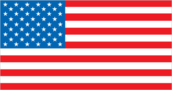
13 equal horizontal stripes of red (top and bottom) alternating with white; there is a blue rectangle in the upper hoist-side corner bearing 50 small, white, five-pointed stars arranged in nine offset horizontal rows of six stars (top and bottom) alternating with rows of five stars; the 50 stars represent the 50 states, the 13 stripes represent the 13 original colonies; the blue stands for loyalty, devotion, truth, justice, and friendship; red symbolizes courage, zeal, and fervency, while white denotes purity and rectitude of conduct; commonly referred to by its nickname of Old Glory the design and colors have been the basis for a number of other flags, including Chile, Liberia, Malaysia, and Puerto Rico
Government type
Constitution-based federal republic; strong democratic tradition
Independence
4 July 1776 (declared); 3 September 1783 (recognized by Great Britain)
International law organization participation
withdrew acceptance of compulsory ICJ jurisdiction in 2005; withdrew acceptance of ICCt jurisdiction in 2002
International organization participation
ADB (nonregional member), AfDB (nonregional member), ANZUS, APEC, Arctic Council, ARF, ASEAN (dialogue partner), Australia Group, BIS, BSEC (observer), CBSS (observer), CD, CE (observer), CERN (observer), CICA (observer), CP, EAPC, EAS, EBRD, EITI (implementing country), FAO, FATF, G-20, G-5, G-7, G-8, G-10, IADB, IAEA, IBRD, ICAO, ICC (national committees), ICRM, IDA, IEA, IFAD, IFC, IFRCS, IGAD (partners), IHO, ILO, IMF, IMO, IMSO, Interpol, IOC, IOM, ISO, ITSO, ITU, ITUC (NGOs), MIGA, MINUSTAH, MONUSCO, NAFTA, NATO, NEA, NSG, OAS, OECD, OPCW, OSCE, Paris Club, PCA, PIF (partner), SAARC (observer), SELEC (observer), SICA (observer), SPC, UN, UNCTAD, UNESCO, UNHCR, UNITAR, UNMIL, UNMISS, UNRWA, UNSC (permanent), UNTSO, UPU, WCO, WHO, WIPO, WMO, WTO, ZC
Judicial branch
Supreme Court (nine justices; nominated by the president and confirmed with the advice and consent of the Senate; appointed to serve for life); United States Courts of Appeal; United States District Courts; State and County Courts
Legal system
common law system based on English common law at the federal level; state legal systems based on common law except Louisiana, which is based on Napoleonic civil code; judicial review of legislative acts
Legislative branch
- bicameral Congress consists of the Senate (100 seats, 2 members elected from each state by popular vote to serve six-year terms; one-third elected every two years) and the House of Representatives (435 seats; members directly elected by popular vote to serve two-year terms) Senate - last held on 2 November 2010 (next to be held in November 2012); House of Representatives - last held on 2 November 2010 (next to be held in November 2012) Senate - percent of vote by party - NA; seats by party - Democratic Party 51, Republican Party 47, independent 2; House of Representatives - percent of vote by party - NA; seats by party - Democratic Party 192, Republican Party 243
- election results
- Senate - percent of vote by party - NA; seats by party - Democratic Party 51, Republican Party 47, independent 2; House of Representatives - percent of vote by party - NA; seats by party - Democratic Party 192, Republican Party 243
- elections
- Senate - last held on 2 November 2010 (next to be held in November 2012); House of Representatives - last held on 2 November 2010 (next to be held in November 2012)
National anthem
- "The Star-Spangled Banner" Francis Scott KEY/John Stafford SMITH adopted 1931; during the War of 1812, after witnessing the successful American defense of Fort McHenry in Baltimore following British naval bombardment, Francis Scott KEY wrote the lyrics to what would become the national anthem; the lyrics were set to the tune of "The Anacreontic Song"; only the first verse is sung
- lyrics/music
- Francis Scott KEY/John Stafford SMITH
- name
- "The Star-Spangled Banner"
National holiday
Independence Day, 4 July (1776)
National symbol(s)
bald eagle
Political parties and leaders
Democratic Party [Debbie Wasserman SCHULTZ]; Green Party; Libertarian Party [Mark HINKLE]; Republican Party [Reince PRIEBUS]
Political pressure groups and leaders
environmentalists; business groups; labor unions; churches; ethnic groups; political action committees or PAC; health groups; education groups; civic groups; youth groups; transportation groups; agricultural groups; veterans groups; women's groups; reform lobbies
Suffrage
18 years of age; universal
Economy
Agriculture - products
wheat, corn, other grains, fruits, vegetables, cotton; beef, pork, poultry, dairy products; fish; forest products
Budget
- $2.465 trillion $3.649 trillion for the US, revenues exclude social contributions of approximately $1.0 trillion; expenditures exclude social benefits of approximately $2.3 trillion (2012 est.)
- expenditures
- $3.649 trillion
- revenues
- $2.465 trillion
Budget surplus (+) or deficit (-)
-7.6% of GDP (2012 est.)
Central bank discount rate
0.5% (31 December 2010) 0.5% (31 December 2009)
Commercial bank prime lending rate
3.2% (31 December 2012 est.) 3.25% (31 December 2011 est.)
Current account balance
-$487.2 billion (2012 est.) -$465.9 billion (2011 est.)
Debt - external
$14.71 trillion (30 June 2011) $13.98 trillion (30 June 2010) approximately 4/5ths of US external debt is denominated in US dollars; foreign lenders have been willing to hold US dollar denominated debt instruments because they view the dollar as the world's reserve currency
Distribution of family income - Gini index
45 (2007) 40.8 (1997)
Economy - overview
The US has the largest and most technologically powerful economy in the world, with a per capita GDP of $49,800. In this market-oriented economy, private individuals and business firms make most of the decisions, and the federal and state governments buy needed goods and services predominantly in the private marketplace. US business firms enjoy greater flexibility than their counterparts in Western Europe and Japan in decisions to expand capital plant, to lay off surplus workers, and to develop new products. At the same time, they face higher barriers to enter their rivals' home markets than foreign firms face entering US markets. US firms are at or near the forefront in technological advances, especially in computers and in medical, aerospace, and military equipment; their advantage has narrowed since the end of World War II. The onrush of technology largely explains the gradual development of a "two-tier labor market" in which those at the bottom lack the education and the professional/technical skills of those at the top and, more and more, fail to get comparable pay raises, health insurance coverage, and other benefits. Since 1975, practically all the gains in household income have gone to the top 20% of households. Since 1996, dividends and capital gains have grown faster than wages or any other category of after-tax income. Imported oil accounts for nearly 55% of US consumption. Crude oil prices doubled between 2001 and 2006, the year home prices peaked; higher gasoline prices ate into consumers' budgets and many individuals fell behind in their mortgage payments. Oil prices climbed another 50% between 2006 and 2008, and bank foreclosures more than doubled in the same period. Besides dampening the housing market, soaring oil prices caused a drop in the value of the dollar and a deterioration in the US merchandise trade deficit, which peaked at $840 billion in 2008. The sub-prime mortgage crisis, falling home prices, investment bank failures, tight credit, and the global economic downturn pushed the United States into a recession by mid-2008. GDP contracted until the third quarter of 2009, making this the deepest and longest downturn since the Great Depression. To help stabilize financial markets, in October 2008 the US Congress established a $700 billion Troubled Asset Relief Program (TARP). The government used some of these funds to purchase equity in US banks and industrial corporations, much of which had been returned to the government by early 2011. In January 2009 the US Congress passed and President Barack OBAMA signed a bill providing an additional $787 billion fiscal stimulus to be used over 10 years - two-thirds on additional spending and one-third on tax cuts - to create jobs and to help the economy recover. In 2010 and 2011, the federal budget deficit reached nearly 9% of GDP. In 2012 the federal government reduced the growth of spending and the deficit shrank to 7.6% of GDP. Wars in Iraq and Afghanistan required major shifts in national resources from civilian to military purposes and contributed to the growth of the budget deficit and public debt. Through 2011, the direct costs of the wars totaled nearly $900 billion, according to US government figures. US revenues from taxes and other sources are lower, as a percentage of GDP, than those of most other countries. In March 2010, President OBAMA signed into law the Patient Protection and Affordable Care Act, a health insurance reform that will extend coverage to an additional 32 million American citizens by 2016, through private health insurance for the general population and Medicaid for the impoverished. Total spending on health care - public plus private - rose from 9.0% of GDP in 1980 to 17.9% in 2010. In July 2010, the president signed the DODD-FRANK Wall Street Reform and Consumer Protection Act, a law designed to promote financial stability by protecting consumers from financial abuses, ending taxpayer bailouts of financial firms, dealing with troubled banks that are "too big to fail," and improving accountability and transparency in the financial system - in particular, by requiring certain financial derivatives to be traded in markets that are subject to government regulation and oversight. Long-term problems include stagnation of wages for lower-income families, inadequate investment in deteriorating infrastructure, rapidly rising medical and pension costs of an aging population, energy shortages, and sizable current account and budget deficits - including significant budget shortages for state governments.
Exchange rates
- 0.6324 (2012 est.), 0.6468 (2010 est.), 0.6494 (2009), 0.5302 (2008), 0.4993 (2007) 1.001 (2012 est.), 1.0302 (2010 est.), 1.1431 (2009), 1.0364 (2008), 1.0724 (2007) 6.311 (2012 est.), 6.7703 (2010 est.), 6.8314 (2009), 6.9385 (2008), 7.61 (2007) 0.7194 (2012 est.), 0.755 (2010 est.), 0.7198 (2009), 0.6827 (2008), 0.7345 (2007) 79.42 (2012 est.), 87.78 (2010), 93.57 (2009), 103.58 (2008), 117.99 (2007)
- British pounds per US dollar
- 0.6324 (2012 est.), 0.6468 (2010 est.), 0.6494 (2009), 0.5302 (2008), 0.4993 (2007)
- Canadian dollars per US dollar
- 1.001 (2012 est.), 1.0302 (2010 est.), 1.1431 (2009), 1.0364 (2008), 1.0724 (2007)
- Chinese yuan per US dollar
- 6.311 (2012 est.), 6.7703 (2010 est.), 6.8314 (2009), 6.9385 (2008), 7.61 (2007)
- euros per US dollar
- 0.7194 (2012 est.), 0.755 (2010 est.), 0.7198 (2009), 0.6827 (2008), 0.7345 (2007)
- Japanese yen per US dollar
- 79.42 (2012 est.), 87.78 (2010), 93.57 (2009), 103.58 (2008), 117.99 (2007)
Exports
$1.612 trillion (2012 est.) $1.497 trillion (2011 est.)
Exports - commodities
agricultural products (soybeans, fruit, corn) 9.2%, industrial supplies (organic chemicals) 26.8%, capital goods (transistors, aircraft, motor vehicle parts, computers, telecommunications equipment) 49.0%, consumer goods (automobiles, medicines) 15.0%
Exports - partners
Canada 19%, Mexico 13.3%, China 7%, Japan 4.5% (2011)
Fiscal year
1 October - 30 September
GDP - composition by sector
- 1.2% 19.1% 79.7% (2012 est.)
- agriculture
- 1.2%
- industry
- 19.1%
- services
- 79.7% (2012 est.)
GDP - per capita (PPP)
$49,800 (2012 est.) $49,100 (2011 est.) $48,600 (2010 est.) data are in 2012 US dollars
GDP - real growth rate
2.3% (2012 est.) 1.8% (2011 est.) 2.4% (2010 est.)
GDP (official exchange rate)
$15.65 trillion (2012 est.)
GDP (purchasing power parity)
$15.67 trillion (2012 est.) $15.32 trillion (2011 est.) $15.05 trillion (2010 est.) data are in 2012 US dollars
Household income or consumption by percentage share
- 2% 30% (2007 est.)
- highest 10%
- 30% (2007 est.)
- lowest 10%
- 2%
Imports
$2.357 trillion (2012 est.) $2.236 trillion (2011 est.)
Imports - commodities
agricultural products 4.9%, industrial supplies 32.9% (crude oil 8.2%), capital goods 30.4% (computers, telecommunications equipment, motor vehicle parts, office machines, electric power machinery), consumer goods 31.8% (automobiles, clothing, medicines, furniture, toys)
Imports - partners
China 18.4%, Canada 14.2%, Mexico 11.7%, Japan 5.8%, Germany 4.4% (2011)
Industrial production growth rate
4.1% (2011 est.)
Inflation rate (consumer prices)
2% (2012 est.) 3.1% (2011 est.)
Investment (gross fixed)
12.9% of GDP (2012 est.)
Labor force
154.9 million includes unemployed (2012 est.)
Labor force - by occupation
- 0.7% 20.3% 37.3% 24.2% 17.6% figures exclude the unemployed (2009)
- farming, forestry, and fishing
- 0.7%
- managerial, professional, and technical
- 37.3%
- manufacturing, extraction, transportation, and crafts
- 20.3%
- other services
- 17.6%
- sales and office
- 24.2%
Market value of publicly traded shares
$15.64 trillion (31 December 2011) $17.14 trillion (31 December 2010) $15.08 trillion (31 December 2009)
Population below poverty line
15.1% (2010 est.)
Public debt
73.6% of GDP (2012 est.) 67.8% of GDP (2011 est.) data cover only what the United States Treasury denotes as "Debt Held by the Public," which includes all debt instruments issued by the Treasury that are owned by non-US Government entities; the data include Treasury debt held by foreign entities; the data exclude debt issued by individual US states, as well as intra-governmental debt; intra-governmental debt consists of Treasury borrowings from surpluses in the trusts for Federal Social Security, Federal Employees, Hospital Insurance (Medicare and Medicaid), Disability and Unemployment, and several other smaller trusts; if data for intra-government debt were added, "Gross Debt" would increase by about one-third of GDP
Reserves of foreign exchange and gold
$148 billion (31 December 2011 est.) $132.4 billion (2010 est.)
Stock of broad money
$12.99 trillion (31 December 2011 est.) $12.07 trillion (31 December 2010 est.)
Stock of direct foreign investment - abroad
$4.768 trillion (31 December 2012 est.) $4.328 trillion (31 December 2011 est.)
Stock of direct foreign investment - at home
$2.824 trillion (31 December 2012 est.) $2.577 trillion (31 December 2011 est.)
Stock of domestic credit
$32.61 trillion (31 December 2009 est.) $31.53 trillion (31 December 2008 est.)
Stock of narrow money
$2.318 trillion (31 December 2012 est.) $2.01 trillion (31 December 2011 est.)
Taxes and other revenues
15.7% of GDP excludes contributions for social security and other programs; if social contributions were added, taxes and other revenues would amount to approximately 22% of GDP (2012 est.)
Unemployment rate
8.2% (2012 est.) 9% (2011 est.)
Energy
Carbon dioxide emissions from consumption of energy
5.61 billion Mt (2010 est.)
Crude oil - exports
43,800 bbl/day (2009 est.)
Crude oil - imports
9.013 million bbl/day (2009 est.)
Crude oil - production
9.023 million bbl/day (2011 est.)
Crude oil - proved reserves
20.68 billion bbl (1 January 2012 est.)
Electricity - consumption
3.889 trillion kWh (2010 est.)
Electricity - exports
19.41 billion kWh (2010 est.)
Electricity - from fossil fuels
75.5% of total installed capacity (2010 est.)
Electricity - from hydroelectric plants
7.7% of total installed capacity (2010 est.)
Electricity - from nuclear fuels
9.9% of total installed capacity (2010 est.)
Electricity - from other renewable sources
4.8% of total installed capacity (2010 est.)
Electricity - imports
45.23 billion kWh (2010 est.)
Electricity - installed generating capacity
1.025 billion kW (2010 est.)
Electricity - production
4.12 trillion kWh (2010 est.)
Natural gas - consumption
689.9 billion cu m (2011 est.)
Natural gas - exports
42.67 billion cu m (2011 est.)
Natural gas - imports
97.86 billion cu m (2011 est.)
Natural gas - production
651.3 billion cu m (2011 est.)
Natural gas - proved reserves
7.716 trillion cu m (1 January 2009 est.)
Refined petroleum products - consumption
18.84 million bbl/day (2011 est.)
Refined petroleum products - exports
1.876 million bbl/day (2009 est.)
Refined petroleum products - imports
1.255 million bbl/day (2009 est.)
Refined petroleum products - production
17.88 million bbl/day (2009 est.)
Communications
Broadcast media
4 major terrestrial TV networks with affiliate stations throughout the country, plus cable and satellite networks, independent stations, and a limited public broadcasting sector that is largely supported by private grants; overall, thousands of TV stations broadcasting; multiple national radio networks with many affiliate stations; while most stations are commercial, National Public Radio (NPR) has a network of some 600 member stations; satellite radio available; overall, nearly 15,000 radio stations operating (2008)
Internet country code
.us
Internet hosts
- 505 million (2012); note - the US Internet total host count includes the following top level domain host addresses: .us, .com, .edu, .gov, .mil, .net, and .org
- 505 million (2012); note - the US Internet total host count includes the following top level domain host addresses
- .us, .com, .edu, .gov, .mil, .net, and .org
Internet users
245 million (2009)
Telephone system
- a large, technologically advanced, multipurpose communications system a large system of fiber-optic cable, microwave radio relay, coaxial cable, and domestic satellites carries every form of telephone traffic; a rapidly growing cellular system carries mobile telephone traffic throughout the country country code - 1; multiple ocean cable systems provide international connectivity; satellite earth stations - 61 Intelsat (45 Atlantic Ocean and 16 Pacific Ocean), 5 Intersputnik (Atlantic Ocean region), and 4 Inmarsat (Pacific and Atlantic Ocean regions) (2000)
- domestic
- a large system of fiber-optic cable, microwave radio relay, coaxial cable, and domestic satellites carries every form of telephone traffic; a rapidly growing cellular system carries mobile telephone traffic throughout the country
- general assessment
- a large, technologically advanced, multipurpose communications system
- international
- country code - 1; multiple ocean cable systems provide international connectivity; satellite earth stations - 61 Intelsat (45 Atlantic Ocean and 16 Pacific Ocean), 5 Intersputnik (Atlantic Ocean region), and 4 Inmarsat (Pacific and Atlantic Ocean regions) (2000)
Telephones - main lines in use
146 million (2011)
Telephones - mobile cellular
290.3 million (2011)
Transportation
Airports
15,079 (2010)
Airports - with paved runways
- 5,194 1,479 2,316 975 (2010)
- 1,524 to 2,437 m
- 1,479
- 2,438 to 3,047 m
- 235
- 914 to 1,523 m
- 2,316
- over 3,047 m
- 189
- total
- 5,194
- under 914 m
- 975 (2010)
Airports - with unpaved runways
- 9,885 1,752 7,971 (2010)
- 1,524 to 2,437 m
- 155
- 2,438 to 3,047 m
- 7
- 914 to 1,523 m
- 1,752
- total
- 9,885
- under 914 m
- 7,971 (2010)
Heliports
126 (2012)
Merchant marine
- barge carrier 6, bulk carrier 55, cargo 51, carrier 2, chemical tanker 30, container 84, passenger 18, passenger/cargo 56, petroleum tanker 35, refrigerated cargo 3, roll on/roll off 27, vehicle carrier 26 85 (Australia 1, Bermuda 5, Denmark 31, France 4, Germany 5, Malaysia 2, Norway 17, Singapore 16, UK 4) 794 (Antigua and Barbuda 7, Australia 2, Bahamas 109, Belgium 1, Bermuda 26, Canada 10, Cayman Islands 57, Comoros 2, Cyprus 5, Georgia 1, Greece 8, Honduras 1, Hong Kong 44, Indonesia 2, Ireland 2, Isle of Man 1, Italy 23, Liberia 53, Malta 34, Marshall Islands 200, Netherlands 16, Norway 10, Panama 90, Portugal 4, Saint Kitts and Nevis 1, Saint Vincent and the Grenadines 18, Singapore 36, South Korea 8, Togo 1, UK 14, Vanuatu 2, unknown 6) (2010)
- foreign-owned
- 85 (Australia 1, Bermuda 5, Denmark 31, France 4, Germany 5, Malaysia 2, Norway 17, Singapore 16, UK 4)
- registered in other countries
- 794 (Antigua and Barbuda 7, Australia 2, Bahamas 109, Belgium 1, Bermuda 26, Canada 10, Cayman Islands 57, Comoros 2, Cyprus 5, Georgia 1, Greece 8, Honduras 1, Hong Kong 44, Indonesia 2, Ireland 2, Isle of Man 1, Italy 23, Liberia 53, Malta 34, Marshall Islands 200, Netherlands 16, Norway 10, Panama 90, Portugal 4, Saint Kitts and Nevis 1, Saint Vincent and the Grenadines 18, Singapore 36, South Korea 8, Togo 1, UK 14, Vanuatu 2, unknown 6) (2010)
- total
- 393
Pipelines
petroleum products 244,620 km; natural gas 548,665 km (2010)
Ports and terminals
- Baton Rouge, Corpus Christi, Hampton Roads, Houston, Long Beach, Los Angeles, New Orleans, New York, Plaquemines, Tampa, Texas City Los Angeles (7,849,985), Long Beach (6,350,125), New York/New Jersey (5,265,058), Savannah (2,616,126), Oakland (2,236,244), Hampton Roads (2,083,278) (2008) Miami (2,032,000), Port Everglades (1,277,000), Port Canaveral (1,189,000), Seattle (430,000), Long Beach (415,000) (2009) LOOP terminal, Haymark terminal
- cargo ports (tonnage)
- Baton Rouge, Corpus Christi, Hampton Roads, Houston, Long Beach, Los Angeles, New Orleans, New York, Plaquemines, Tampa, Texas City
- container ports (TEUs)
- Los Angeles (7,849,985), Long Beach (6,350,125), New York/New Jersey (5,265,058), Savannah (2,616,126), Oakland (2,236,244), Hampton Roads (2,083,278) (2008)
- cruise departure ports (passengers)
- Miami (2,032,000), Port Everglades (1,277,000), Port Canaveral (1,189,000), Seattle (430,000), Long Beach (415,000) (2009)
- oil terminals
- LOOP terminal, Haymark terminal
Railways
- 224,792 km 224,792 km 1.435-m gauge (2007)
- total
- 224,792 km
Roadways
- 6,506,204 km 4,374,784 km (includes 75,238 km of expressways) 2,131,420 km (2008)
- total
- 6,506,204 km
- unpaved
- 2,131,420 km (2008)
Waterways
41,009 km (19,312 km used for commerce; Saint Lawrence Seaway of 3,769 km, including the Saint Lawrence River of 3,058 km, is shared with Canada) (2012)
Military and Security
Manpower available for military service
- 73,270,043 71,941,969 (2010 est.)
- females age 16-49
- 71,941,969 (2010 est.)
- males age 16-49
- 73,270,043
Manpower fit for military service
- 60,620,143 59,401,941 (2010 est.)
- females age 16-49
- 59,401,941 (2010 est.)
- males age 16-49
- 60,620,143
Manpower reaching militarily significant age annually
- 2,161,727 2,055,685 (2010 est.)
- female
- 2,055,685 (2010 est.)
- male
- 2,161,727
Military branches
- United States Armed Forces: US Army, US Navy (includes Marine Corps), US Air Force, US Coast Guard; note - Coast Guard administered in peacetime by the Department of Homeland Security, but in wartime reports to the Department of the Navy (2009)
- United States Armed Forces
- US Army, US Navy (includes Marine Corps), US Air Force, US Coast Guard; note - Coast Guard administered in peacetime by the Department of Homeland Security, but in wartime reports to the Department of the Navy (2009)
Military expenditures
4.06% of GDP (2005 est.)
Military service age and obligation
18 years of age (17 years of age with parental consent) for male and female voluntary service; maximum enlistment age 42 (Army), 27 (Air Force), 34 (Navy), 28 (Marines); service obligation 8 years, including 2-5 years active duty (Army), 2 years active (Navy), 4 years active (Air Force, Marines) (2010)
Transnational Issues
Disputes - international
the US has intensified domestic security measures and is collaborating closely with its neighbors, Canada and Mexico, to monitor and control legal and illegal personnel, transport, and commodities across the international borders; abundant rainfall in recent years along much of the Mexico-US border region has ameliorated periodically strained water-sharing arrangements; 1990 Maritime Boundary Agreement in the Bering Sea still awaits Russian Duma ratification; Canada and the United States dispute how to divide the Beaufort Sea and the status of the Northwest Passage but continue to work cooperatively to survey the Arctic continental shelf; The Bahamas and US have not been able to agree on a maritime boundary; US Naval Base at Guantanamo Bay is leased from Cuba and only mutual agreement or US abandonment of the area can terminate the lease; Haiti claims US-administered Navassa Island; US has made no territorial claim in Antarctica (but has reserved the right to do so) and does not recognize the claims of any other states; Marshall Islands claims Wake Island; Tokelau included American Samoa's Swains Island among the islands listed in its 2006 draft constitution
Illicit drugs
world's largest consumer of cocaine (shipped from Colombia through Mexico and the Caribbean), Colombian heroin, and Mexican heroin and marijuana; major consumer of ecstasy and Mexican methamphetamine; minor consumer of high-quality Southeast Asian heroin; illicit producer of cannabis, marijuana, depressants, stimulants, hallucinogens, and methamphetamine; money-laundering center
Refugees and internally displaced persons
- the US admitted 56,424 refugees during FY2011 including 3,161 (Somalia); 2,032 (Eritrea); 16,972 (Burma); 2,920 (Cuba); 14,999 (Bhutan); 2,032 (Iran); 9,388 (Iraq) (2011)
- refugees (country of origin)
- the US admitted 56,424 refugees during FY2011 including 3,161 (Somalia); 2,032 (Eritrea); 16,972 (Burma); 2,920 (Cuba); 14,999 (Bhutan); 2,032 (Iran); 9,388 (Iraq) (2011)