2011 Edition
CIA World Factbook 2011 Archive (HTML)
Introduction
Background
The United Kingdom has historically played a leading role in developing parliamentary democracy and in advancing literature and science. At its zenith in the 19th century, the British Empire stretched over one-fourth of the earth's surface. The first half of the 20th century saw the UK's strength seriously depleted in two world wars and the Irish republic withdraw from the union. The second half witnessed the dismantling of the Empire and the UK rebuilding itself into a modern and prosperous European nation. As one of five permanent members of the UN Security Council, a founding member of NATO, and of the Commonwealth, the UK pursues a global approach to foreign policy. The UK is also an active member of the EU, although it chose to remain outside the Economic and Monetary Union. The Scottish Parliament, the National Assembly for Wales, and the Northern Ireland Assembly were established in 1999. The latter was suspended until May 2007 due to wrangling over the peace process, but devolution was fully completed in March 2010.
Geography
Area
- 243,610 sq km 241,930 sq km 1,680 sq km includes Rockall and Shetland Islands
- total
- 243,610 sq km
- water
- 1,680 sq km
Area - comparative
slightly smaller than Oregon
Climate
temperate; moderated by prevailing southwest winds over the North Atlantic Current; more than one-half of the days are overcast
Coastline
12,429 km
Elevation extremes
- The Fens -4 m Ben Nevis 1,343 m
- highest point
- Ben Nevis 1,343 m
- lowest point
- The Fens -4 m
Environment - current issues
continues to reduce greenhouse gas emissions (has met Kyoto Protocol target of a 12.5% reduction from 1990 levels and intends to meet the legally binding target and move toward a domestic goal of a 20% cut in emissions by 2010); by 2005 the government reduced the amount of industrial and commercial waste disposed of in landfill sites to 85% of 1998 levels and recycled or composted at least 25% of household waste, increasing to 33% by 2015
Environment - international agreements
- Air Pollution, Air Pollution-Nitrogen Oxides, Air Pollution-Persistent Organic Pollutants, Air Pollution-Sulfur 94, Air Pollution-Volatile Organic Compounds, Antarctic-Environmental Protocol, Antarctic-Marine Living Resources, Antarctic Seals, Antarctic Treaty, Biodiversity, Climate Change, Climate Change-Kyoto Protocol, Desertification, Endangered Species, Environmental Modification, Hazardous Wastes, Law of the Sea, Marine Dumping, Marine Life Conservation, Ozone Layer Protection, Ship Pollution, Tropical Timber 83, Tropical Timber 94, Wetlands, Whaling none of the selected agreements
- party to
- Air Pollution, Air Pollution-Nitrogen Oxides, Air Pollution-Persistent Organic Pollutants, Air Pollution-Sulfur 94, Air Pollution-Volatile Organic Compounds, Antarctic-Environmental Protocol, Antarctic-Marine Living Resources, Antarctic Seals, Antarctic Treaty, Biodiversity, Climate Change, Climate Change-Kyoto Protocol, Desertification, Endangered Species, Environmental Modification, Hazardous Wastes, Law of the Sea, Marine Dumping, Marine Life Conservation, Ozone Layer Protection, Ship Pollution, Tropical Timber 83, Tropical Timber 94, Wetlands, Whaling
- signed, but not ratified
- none of the selected agreements
Freshwater withdrawal (domestic/industrial/agricultural)
- 11.75 cu km/yr (22%/75%/3%) 197 cu m/yr (1994)
- per capita
- 197 cu m/yr (1994)
- total
- 11.75 cu km/yr (22%/75%/3%)
Geographic coordinates
54 00 N, 2 00 W
Geography - note
lies near vital North Atlantic sea lanes; only 35 km from France and linked by tunnel under the English Channel; because of heavily indented coastline, no location is more than 125 km from tidal waters
Irrigated land
1,950 sq km (2008)
Land boundaries
- 360 km Ireland 360 km
- border countries
- Ireland 360 km
- total
- 360 km
Land use
- 23.23% 0.2% 76.57% (2005)
- arable land
- 23.23%
- other
- 76.57% (2005)
- permanent crops
- 0.2%
Location
Western Europe, islands - including the northern one-sixth of the island of Ireland - between the North Atlantic Ocean and the North Sea; northwest of France
Map references
Europe
Maritime claims
- 12 nm 200 nm as defined in continental shelf orders or in accordance with agreed upon boundaries
- continental shelf
- as defined in continental shelf orders or in accordance with agreed upon boundaries
- exclusive fishing zone
- 200 nm
- territorial sea
- 12 nm
Natural hazards
winter windstorms; floods
Natural resources
coal, petroleum, natural gas, iron ore, lead, zinc, gold, tin, limestone, salt, clay, chalk, gypsum, potash, silica sand, slate, arable land
Terrain
mostly rugged hills and low mountains; level to rolling plains in east and southeast
Total renewable water resources
160.6 cu km (2005)
People and Society
Age structure
- 17.3% (male 5,575,119/female 5,301,301) 66.2% (male 20,979,401/female 20,500,913) 16.5% (male 4,564,375/female 5,777,253) (2011 est.)
- 0-14 years
- 17.3% (male 5,575,119/female 5,301,301)
- 15-64 years
- 66.2% (male 20,979,401/female 20,500,913)
- 65 years and over
- 16.5% (male 4,564,375/female 5,777,253) (2011 est.)
Birth rate
12.29 births/1,000 population (2011 est.)
Death rate
9.33 deaths/1,000 population (July 2011 est.)
Drinking water source
- urban: 100% of population rural: 100% of population total: 100% of population (2008)
- rural
- 100% of population
- total
- 100% of population (2008)
- urban
- 100% of population
Education expenditures
5.5% of GDP (2007)
Ethnic groups
white (of which English 83.6%, Scottish 8.6%, Welsh 4.9%, Northern Irish 2.9%) 92.1%, black 2%, Indian 1.8%, Pakistani 1.3%, mixed 1.2%, other 1.6% (2001 census)
Health expenditures
9.3% of GDP (2009)
HIV/AIDS - adult prevalence rate
0.2% (2009 est.)
HIV/AIDS - deaths
fewer than 1,000 (2009 est.)
HIV/AIDS - people living with HIV/AIDS
85,000 (2009 est.)
Hospital bed density
3.38 beds/1,000 population (2008)
Infant mortality rate
- 4.62 deaths/1,000 live births 5.07 deaths/1,000 live births 4.15 deaths/1,000 live births (2011 est.)
- female
- 4.15 deaths/1,000 live births (2011 est.)
- total
- 4.62 deaths/1,000 live births
Languages
- English the following are recognized regional languages: Scots (about 30% of the population of Scotland), Scottish Gaelic (about 60,000 in Scotland), Welsh (about 20% of the population of Wales), Irish (about 10% of the population of Northern Ireland), Cornish (some 2,000 to 3,000 in Cornwall)
- the following are recognized regional languages
- Scots (about 30% of the population of Scotland), Scottish Gaelic (about 60,000 in Scotland), Welsh (about 20% of the population of Wales), Irish (about 10% of the population of Northern Ireland), Cornish (some 2,000 to 3,000 in Cornwall)
Life expectancy at birth
- 80.05 years 77.95 years 82.25 years (2011 est.)
- female
- 82.25 years (2011 est.)
- total population
- 80.05 years
Literacy
- age 15 and over has completed five or more years of schooling 99% 99% 99% (2003 est.)
- definition
- age 15 and over has completed five or more years of schooling
- female
- 99% (2003 est.)
- male
- 99%
- total population
- 99%
Major cities - population
LONDON (capital) 8.615 million; Birmingham 2.296 million; Manchester 2.247 million; West Yorkshire 1.541 million; Glasgow 1.166 million (2009)
Maternal mortality rate
12 deaths/100,000 live births (2008)
Median age
- 40 years 38.8 years 41.1 years (2011 est.)
- female
- 41.1 years (2011 est.)
- male
- 38.8 years
- total
- 40 years
Nationality
- Briton(s), British (collective plural) British
- adjective
- British
- noun
- Briton(s), British (collective plural)
Net migration rate
2.6 migrant(s)/1,000 population (2011 est.)
Obesity - adult prevalence rate
22.7% (2002)
Physicians density
2.739 physicians/1,000 population (2009)
Population
62,698,362 (July 2011 est.)
Population growth rate
0.557% (2011 est.)
Religions
Christian (Anglican, Roman Catholic, Presbyterian, Methodist) 71.6%, Muslim 2.7%, Hindu 1%, other 1.6%, unspecified or none 23.1% (2001 census)
Sanitation facility access
- urban: 100% of population rural: 100% of population total: 100% of population (2008)
- rural
- 100% of population
- total
- 100% of population (2008)
- urban
- 100% of population
School life expectancy (primary to tertiary education)
- 16 years 16 years 17 years (2008)
- female
- 17 years (2008)
- male
- 16 years
- total
- 16 years
Sex ratio
- 1.052 male(s)/female 1.05 male(s)/female 1.03 male(s)/female 0.76 male(s)/female 0.98 male(s)/female (2011 est.)
- 15-64 years
- 1.03 male(s)/female
- 65 years and over
- 0.76 male(s)/female
- at birth
- 1.052 male(s)/female
- total population
- 0.98 male(s)/female (2011 est.)
- under 15 years
- 1.05 male(s)/female
Total fertility rate
1.91 children born/woman (2011 est.)
Unemployment, youth ages 15-24
- 18.9% 21.7% 15.6% (2009)
- female
- 15.6% (2009)
- total
- 18.9%
Urbanization
- 80% of total population (2010) 0.7% annual rate of change (2010-15 est.)
- rate of urbanization
- 0.7% annual rate of change (2010-15 est.)
- urban population
- 80% of total population (2010)
Government
Administrative divisions
- 27 two-tier counties, 32 London boroughs and 1 City of London or Greater London, 36 metropolitan districts, 56 unitary authorities (including 4 single-tier counties*) Buckinghamshire, Cambridgeshire, Cumbria, Derbyshire, Devon, Dorset, East Sussex, Essex, Gloucestershire, Hampshire, Hertfordshire, Kent, Lancashire, Leicestershire, Lincolnshire, Norfolk, North Yorkshire, Northamptonshire, Nottinghamshire, Oxfordshire, Somerset, Staffordshire, Suffolk, Surrey, Warwickshire, West Sussex, Worcestershire Barking and Dagenham, Barnet, Bexley, Brent, Bromley, Camden, Croydon, Ealing, Enfield, Greenwich, Hackney, Hammersmith and Fulham, Haringey, Harrow, Havering, Hillingdon, Hounslow, Islington, Kensington and Chelsea, Kingston upon Thames, Lambeth, Lewisham, City of London, Merton, Newham, Redbridge, Richmond upon Thames, Southwark, Sutton, Tower Hamlets, Waltham Forest, Wandsworth, Westminster Barnsley, Birmingham, Bolton, Bradford, Bury, Calderdale, Coventry, Doncaster, Dudley, Gateshead, Kirklees, Knowlsey, Leeds, Liverpool, Manchester, Newcastle upon Tyne, North Tyneside, Oldham, Rochdale, Rotherham, Salford, Sandwell, Sefton, Sheffield, Solihull, South Tyneside, St. Helens, Stockport, Sunderland, Tameside, Trafford, Wakefield, Walsall, Wigan, Wirral, Wolverhampton Bath and North East Somerset, Blackburn with Darwen, Bedford, Blackpool, Bournemouth, Bracknell Forest, Brighton and Hove, City of Bristol, Central Bedfordshire, Cheshire East, Cheshire West and Chester, Cornwall, Darlington, Derby, Durham County*, East Riding of Yorkshire, Halton, Hartlepool, Herefordshire*, Isle of Wight*, Isles of Scilly*, City of Kingston upon Hull, Leicester, Luton, Medway, Middlesbrough, Milton Keynes, North East Lincolnshire, North Lincolnshire, North Somerset, Northumberland*, Nottingham, Peterborough, Plymouth, Poole, Portsmouth, Reading, Redcar and Cleveland, Rutland, Shropshire, Slough, South Gloucestershire, Southampton, Southend-on-Sea, Stockton-on-Tees, Stoke-on-Trent, Swindon, Telford and Wrekin, Thurrock, Torbay, Warrington, West Berkshire, Wiltshire, Windsor and Maidenhead, Wokingham, York 26 district council areas Antrim, Ards, Armagh, Ballymena, Ballymoney, Banbridge, Belfast, Carrickfergus, Castlereagh, Coleraine, Cookstown, Craigavon, Derry, Down, Dungannon, Fermanagh, Larne, Limavady, Lisburn, Magherafelt, Moyle, Newry and Mourne, Newtownabbey, North Down, Omagh, Strabane 32 council areas Aberdeen City, Aberdeenshire, Angus, Argyll and Bute, Clackmannanshire, Dumfries and Galloway, Dundee City, East Ayrshire, East Dunbartonshire, East Lothian, East Renfrewshire, City of Edinburgh, Eilean Siar (Western Isles), Falkirk, Fife, Glasgow City, Highland, Inverclyde, Midlothian, Moray, North Ayrshire, North Lanarkshire, Orkney Islands, Perth and Kinross, Renfrewshire, Shetland Islands, South Ayrshire, South Lanarkshire, Stirling, The Scottish Borders, West Dunbartonshire, West Lothian 22 unitary authorities Blaenau Gwent; Bridgend; Caerphilly; Cardiff; Carmarthenshire; Ceredigion; Conwy; Denbighshire; Flintshire; Gwynedd; Isle of Anglesey; Merthyr Tydfil; Monmouthshire; Neath Port Talbot; Newport; Pembrokeshire; Powys; Rhondda Cynon Taff; Swansea; The Vale of Glamorgan; Torfaen; Wrexham
- council areas
- Aberdeen City, Aberdeenshire, Angus, Argyll and Bute, Clackmannanshire, Dumfries and Galloway, Dundee City, East Ayrshire, East Dunbartonshire, East Lothian, East Renfrewshire, City of Edinburgh, Eilean Siar (Western Isles), Falkirk, Fife, Glasgow City, Highland, Inverclyde, Midlothian, Moray, North Ayrshire, North Lanarkshire, Orkney Islands, Perth and Kinross, Renfrewshire, Shetland Islands, South Ayrshire, South Lanarkshire, Stirling, The Scottish Borders, West Dunbartonshire, West Lothian
- district council areas
- Antrim, Ards, Armagh, Ballymena, Ballymoney, Banbridge, Belfast, Carrickfergus, Castlereagh, Coleraine, Cookstown, Craigavon, Derry, Down, Dungannon, Fermanagh, Larne, Limavady, Lisburn, Magherafelt, Moyle, Newry and Mourne, Newtownabbey, North Down, Omagh, Strabane
- England
- 27 two-tier counties, 32 London boroughs and 1 City of London or Greater London, 36 metropolitan districts, 56 unitary authorities (including 4 single-tier counties*)
- London boroughs and City of London or Greater London
- Barking and Dagenham, Barnet, Bexley, Brent, Bromley, Camden, Croydon, Ealing, Enfield, Greenwich, Hackney, Hammersmith and Fulham, Haringey, Harrow, Havering, Hillingdon, Hounslow, Islington, Kensington and Chelsea, Kingston upon Thames, Lambeth, Lewisham, City of London, Merton, Newham, Redbridge, Richmond upon Thames, Southwark, Sutton, Tower Hamlets, Waltham Forest, Wandsworth, Westminster
- metropolitan districts
- Barnsley, Birmingham, Bolton, Bradford, Bury, Calderdale, Coventry, Doncaster, Dudley, Gateshead, Kirklees, Knowlsey, Leeds, Liverpool, Manchester, Newcastle upon Tyne, North Tyneside, Oldham, Rochdale, Rotherham, Salford, Sandwell, Sefton, Sheffield, Solihull, South Tyneside, St. Helens, Stockport, Sunderland, Tameside, Trafford, Wakefield, Walsall, Wigan, Wirral, Wolverhampton
- Northern Ireland
- 26 district council areas
- Scotland
- 32 council areas
- two-tier counties
- Buckinghamshire, Cambridgeshire, Cumbria, Derbyshire, Devon, Dorset, East Sussex, Essex, Gloucestershire, Hampshire, Hertfordshire, Kent, Lancashire, Leicestershire, Lincolnshire, Norfolk, North Yorkshire, Northamptonshire, Nottinghamshire, Oxfordshire, Somerset, Staffordshire, Suffolk, Surrey, Warwickshire, West Sussex, Worcestershire
- unitary authorities
- Blaenau Gwent; Bridgend; Caerphilly; Cardiff; Carmarthenshire; Ceredigion; Conwy; Denbighshire; Flintshire; Gwynedd; Isle of Anglesey; Merthyr Tydfil; Monmouthshire; Neath Port Talbot; Newport; Pembrokeshire; Powys; Rhondda Cynon Taff; Swansea; The Vale of Glamorgan; Torfaen; Wrexham
- Wales
- 22 unitary authorities
Capital
- London 51 30 N, 0 10 W UTC 0 (5 hours ahead of Washington, DC during Standard Time) +1hr, begins last Sunday in March; ends last Sunday in October applies to the United Kingdom proper, not to its overseas dependencies or territories
- daylight saving time
- +1hr, begins last Sunday in March; ends last Sunday in October
- geographic coordinates
- 51 30 N, 0 10 W
- name
- London
- time difference
- UTC 0 (5 hours ahead of Washington, DC during Standard Time)
Constitution
unwritten; partly statutes, partly common law and practice
Country name
- United Kingdom of Great Britain and Northern Ireland; note - Great Britain includes England, Scotland, and Wales United Kingdom UK
- abbreviation
- UK
- conventional long form
- United Kingdom of Great Britain and Northern Ireland; note - Great Britain includes England, Scotland, and Wales
- conventional short form
- United Kingdom
Dependent areas
Anguilla, Bermuda, British Indian Ocean Territory, British Virgin Islands, Cayman Islands, Falkland Islands, Gibraltar, Montserrat, Pitcairn Islands, Saint Helena, Ascension, and Tristan da Cunha, South Georgia and the South Sandwich Islands, Turks and Caicos Islands
Diplomatic representation from the US
- Ambassador Louis B. SUSMAN 24 Grosvenor Square, London, W1A 1AE note - a new embassy is scheduled to open by the end of 2017 in the Nine Elms area of Wandsworth (architect Kiernan TIMBERLAKE) PSC 801, Box 40, FPO AE 09498-4040 [44] (0) 20 7499-9000 [44] (0) 20 7629-9124 Belfast, Edinburgh
- chief of mission
- Ambassador Louis B. SUSMAN
- consulate(s) general
- Belfast, Edinburgh
- embassy
- 24 Grosvenor Square, London, W1A 1AE note - a new embassy is scheduled to open by the end of 2017 in the Nine Elms area of Wandsworth (architect Kiernan TIMBERLAKE)
- FAX
- [44] (0) 20 7629-9124
- mailing address
- PSC 801, Box 40, FPO AE 09498-4040
- telephone
- [44] (0) 20 7499-9000
Diplomatic representation in the US
- Ambassador Sir Nigel E. SHEINWALD 3100 Massachusetts Avenue NW, Washington, DC 20008 [1] (202) 588-6500 [1] (202) 588-7870 Atlanta, Boston, Chicago, Houston, Los Angeles, Miami, New York, San Francisco Dallas, Denver, Orlando
- chancery
- 3100 Massachusetts Avenue NW, Washington, DC 20008
- chief of mission
- Ambassador Sir Nigel E. SHEINWALD
- consulate(s)
- Dallas, Denver, Orlando
- consulate(s) general
- Atlanta, Boston, Chicago, Houston, Los Angeles, Miami, New York, San Francisco
- FAX
- [1] (202) 588-7870
- telephone
- [1] (202) 588-6500
Executive branch
- Queen ELIZABETH II (since 6 February 1952); Heir Apparent Prince CHARLES (son of the queen, born 14 November 1948) Prime Minister David CAMERON (since 11 May 2010) Cabinet of Ministers appointed by the prime minister the monarchy is hereditary; following legislative elections, the leader of the majority party or the leader of the majority coalition usually the prime minister
- cabinet
- Cabinet of Ministers appointed by the prime minister
- chief of state
- Queen ELIZABETH II (since 6 February 1952); Heir Apparent Prince CHARLES (son of the queen, born 14 November 1948)
- elections
- the monarchy is hereditary; following legislative elections, the leader of the majority party or the leader of the majority coalition usually the prime minister
- head of government
- Prime Minister David CAMERON (since 11 May 2010)
Flag description
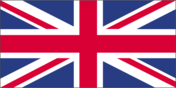
blue field with the red cross of Saint George (patron saint of England) edged in white superimposed on the diagonal red cross of Saint Patrick (patron saint of Ireland), which is superimposed on the diagonal white cross of Saint Andrew (patron saint of Scotland); properly known as the Union Flag, but commonly called the Union Jack; the design and colors (especially the Blue Ensign) have been the basis for a number of other flags including other Commonwealth countries and their constituent states or provinces, and British overseas territories
Government type
constitutional monarchy and Commonwealth realm
Independence
- 12 April 1927 (Royal and Parliamentary Titles Act establishes current name of the United Kingdom of Great Britain and Northern Ireland); notable earlier dates: 927 (minor English kingdoms united); 3 March 1284 (enactment of the Statute of Rhuddlan uniting England and Wales); 1536 (Act of Union formally incorporates England and Wales); 1 May 1707 (Acts of Union formally unite England and Scotland as Great Britain); 1 January 1801 (Acts of Union formally unite Great Britain and Ireland as the United Kingdom of Great Britain and Ireland); 6 December 1921 (Anglo-Irish Treaty formalizes partition of Ireland; six counties remain part of the United Kingdom as Northern Ireland)
- 12 April 1927 (Royal and Parliamentary Titles Act establishes current name of the United Kingdom of Great Britain and Northern Ireland); notable earlier dates
- 927 (minor English kingdoms united); 3 March 1284 (enactment of the Statute of Rhuddlan uniting England and Wales); 1536 (Act of Union formally incorporates England and Wales); 1 May 1707 (Acts of Union formally unite England and Scotland as Great Britain); 1 January 1801 (Acts of Union formally unite Great Britain and Ireland as the United Kingdom of Great Britain and Ireland); 6 December 1921 (Anglo-Irish Treaty formalizes partition of Ireland; six counties remain part of the United Kingdom as Northern Ireland)
International law organization participation
accepts compulsory ICJ jurisdiction with reservations; accepts ICCt jurisdiction
International organization participation
ADB (nonregional member), AfDB (nonregional member), Arctic Council (observer), Australia Group, BIS, C, CBSS (observer), CDB, CE, CERN, EAPC, EBRD, EIB, ESA, EU, FAO, FATF, G-20, G-5, G-7, G-8, G-10, IADB, IAEA, IBRD, ICAO, ICC, ICRM, IDA, IEA, IFAD, IFC, IFRCS, IGAD (partners), IHO, ILO, IMF, IMO, IMSO, Interpol, IOC, IOM, IPU, ISO, ITSO, ITU, ITUC, MIGA, MONUSCO, NATO, NEA, NSG, OAS (observer), OECD, OPCW, OSCE, Paris Club, PCA, PIF (partner), SECI (observer), UN, UN Security Council, UNCTAD, UNESCO, UNFICYP, UNHCR, UNIDO, UNISFA, UNMISS, UNRWA, UPU, WCO, WHO, WIPO, WMO, WTO, ZC
Judicial branch
Supreme Court of the UK (established in October 2009 taking over appellate jurisdiction formerly vested in the House of Lords); Senior Courts of England and Wales (comprising the Court of Appeal, the High Court of Justice, and the Crown Courts); Court of Judicature (Northern Ireland); Scotland's Court of Session and High Court of the Justiciary
Legal system
common law system; has nonbinding judicial review of Acts of Parliament under the Human Rights Act of 1998
Legislative branch
- bicameral Parliament consists of House of Lords (741 seats; consisting of approximately 625 life peers, 91 hereditary peers, and 25 clergy - as of 15 December 2010) and House of Commons (650 seats since 2010 elections; members elected by popular vote to serve five-year terms unless the House is dissolved earlier) House of Lords - no elections (note - in 1999, as provided by the House of Lords Act, elections were held in the House of Lords to determine the 92 hereditary peers who would remain there; elections are held only as vacancies in the hereditary peerage arise); House of Commons - last held on 6 May 2010 (next to be held by June 2015) House of Commons - percent of vote by party - Conservative 36.1%, Labor 29%, Liberal Democrats 23%, other 11.9%; seats by party - Conservative 305, Labor 258, Liberal Democrat 57, other 30 in 1998 elections were held for a Northern Ireland Assembly (because of unresolved disputes among existing parties, the transfer of power from London to Northern Ireland came only at the end of 1999 and has been suspended four times, the latest occurring in October 2002 and lasting until 8 May 2007); in 1999, the UK held the first elections for a Scottish Parliament and a Welsh Assembly
- election results
- House of Commons - percent of vote by party - Conservative 36.1%, Labor 29%, Liberal Democrats 23%, other 11.9%; seats by party - Conservative 305, Labor 258, Liberal Democrat 57, other 30
- elections
- House of Lords - no elections (note - in 1999, as provided by the House of Lords Act, elections were held in the House of Lords to determine the 92 hereditary peers who would remain there; elections are held only as vacancies in the hereditary peerage arise); House of Commons - last held on 6 May 2010 (next to be held by June 2015)
National anthem
- "God Save the Queen" unknown in use since 1745; by tradition, the song serves as both the national and royal anthem of the United Kingdom; it is known as either "God Save the Queen" or "God Save the King," depending on the gender of the reigning monarch; it also serves as the royal anthem of many Commonwealth nations
- lyrics/music
- unknown
- name
- "God Save the Queen"
National holiday
the UK does not celebrate one particular national holiday
National symbol(s)
lion (Britain in general); lion (England); lion, unicorn (Scotland); dragon (Wales); harp (Northern Ireland)
Political parties and leaders
Conservative [David CAMERON]; Democratic Unionist Party or DUP (Northern Ireland) [Peter ROBINSON]; Labor Party [Ed MILIBAND]; Liberal Democrats (Lib Dems) [Nick CLEGG]; Party of Wales (Plaid Cymru) [Ieuan Wyn JONES]; Scottish National Party or SNP [Alex SALMOND]; Sinn Fein (Northern Ireland) [Gerry ADAMS]; Social Democratic and Labor Party or SDLP (Northern Ireland) [Margaret RICHIE]; Ulster Unionist Party (Northern Ireland) [Tom ELLIOTT]
Political pressure groups and leaders
Campaign for Nuclear Disarmament; Confederation of British Industry; National Farmers' Union; Trades Union Congress
Suffrage
18 years of age; universal
Economy
Agriculture - products
cereals, oilseed, potatoes, vegetables; cattle, sheep, poultry; fish
Budget
- $908 billion $1.14 trillion (2010 est.)
- expenditures
- $1.14 trillion (2010 est.)
- revenues
- $908 billion
Budget surplus (+) or deficit (-)
-10.3% of GDP (2010 est.)
Central bank discount rate
7.75% (31 December 2010 est.) 0.5% (31 December 2009 est.)
Commercial bank prime lending rate
3.962% (31 December 2010 est.) 4.048% (31 December 2009 est.)
Current account balance
-$56.19 billion (2010 est.) -$37.05 billion (2009 est.)
Debt - external
$9.836 trillion (30 June 2011) $8.981 trillion (30 June 2010)
Distribution of family income - Gini index
34 (2005) 36.8 (1999)
Economy - overview
The UK, a leading trading power and financial center, is the third largest economy in Europe after Germany and France. Over the past two decades, the government has greatly reduced public ownership and contained the growth of social welfare programs. Agriculture is intensive, highly mechanized, and efficient by European standards, producing about 60% of food needs with less than 2% of the labor force. The UK has large coal, natural gas, and oil resources, but its oil and natural gas reserves are declining and the UK became a net importer of energy in 2005. Services, particularly banking, insurance, and business services, account by far for the largest proportion of GDP while industry continues to decline in importance. After emerging from recession in 1992, Britain's economy enjoyed the longest period of expansion on record during which time growth outpaced most of Western Europe. In 2008, however, the global financial crisis hit the economy particularly hard, due to the importance of its financial sector. Sharply declining home prices, high consumer debt, and the global economic slowdown compounded Britain's economic problems, pushing the economy into recession in the latter half of 2008 and prompting the then BROWN government to implement a number of measures to stimulate the economy and stabilize the financial markets; these include nationalizing parts of the banking system, cutting taxes, suspending public sector borrowing rules, and moving forward public spending on capital projects. Facing burgeoning public deficits and debt levels, the CAMERON government in 2010 initiated a five-year austerity program, which aims to lower London's budget deficit from over 10% of GDP in 2010 to nearly 1% by 2015. The Bank of England periodically coordinates interest rate moves with the European Central Bank, but Britain remains outside the European Economic and Monetary Union (EMU).
Electricity - consumption
344.7 billion kWh (2008 est.)
Electricity - exports
3.748 billion kWh (2009 est.)
Electricity - imports
2.861 billion kWh (2009 est.)
Electricity - production
346 billion kWh (2009 est.)
Exchange rates
British pounds (GBP) per US dollar - 0.6388 (2010) 0.6175 (2009) 0.5302 (2008) 0.4993 (2007) 0.5418 (2006)
Exports
$410.2 billion (2010 est.) $356.4 billion (2009 est.)
Exports - commodities
manufactured goods, fuels, chemicals; food, beverages, tobacco
Exports - partners
US 11.4%, Germany 11.2%, Netherlands 8.5%, France 7.7%, Ireland 6.8%, Belgium 5.4% (2010)
GDP - composition by sector
- 0.7% 21.7% 77.6% (2010 est.)
- agriculture
- 0.7%
- industry
- 21.7%
- services
- 77.6% (2010 est.)
GDP - per capita (PPP)
$34,800 (2010 est.) $34,600 (2009 est.) $36,600 (2008 est.) data are in 2010 US dollars
GDP - real growth rate
1.3% (2010 est.) -4.9% (2009 est.) -0.1% (2008 est.)
GDP (official exchange rate)
$2.247 trillion (2010 est.)
GDP (purchasing power parity)
$2.173 trillion (2010 est.) $2.146 trillion (2009 est.) $2.256 trillion (2008 est.) data are in 2010 US dollars
Household income or consumption by percentage share
- 2.1% 28.5% (1999)
- highest 10%
- 28.5% (1999)
- lowest 10%
- 2.1%
Imports
$563.2 billion (2010 est.) $484.9 billion (2009 est.)
Imports - commodities
manufactured goods, machinery, fuels; foodstuffs
Imports - partners
Germany 13.1%, China 9.1%, Netherlands 7.5%, France 6.1%, US 5.8%, Norway 5.5%, Belgium 4.9% (2010)
Industrial production growth rate
2.1% (2010 est.)
Industries
machine tools, electric power equipment, automation equipment, railroad equipment, shipbuilding, aircraft, motor vehicles and parts, electronics and communications equipment, metals, chemicals, coal, petroleum, paper and paper products, food processing, textiles, clothing, other consumer goods
Inflation rate (consumer prices)
3.3% (2010 est.) 2.2% (2009 est.)
Investment (gross fixed)
14.7% of GDP (2010 est.)
Labor force
31.52 million (2010 est.)
Labor force - by occupation
- 1.4% 18.2% 80.4% (2006 est.)
- agriculture
- 1.4%
- industry
- 18.2%
- services
- 80.4% (2006 est.)
Market value of publicly traded shares
$3.107 trillion (31 December 2010) $2.796 trillion (31 December 2009) $1.852 trillion (31 December 2008)
Natural gas - consumption
94.28 billion cu m (2010 est.)
Natural gas - exports
15.65 billion cu m (2010 est.)
Natural gas - imports
53.63 billion cu m (2010 est.)
Natural gas - production
56.3 billion cu m (2010 est.)
Natural gas - proved reserves
256 billion cu m (1 January 2011 est.)
Oil - consumption
1.622 million bbl/day (2010 est.)
Oil - exports
1.311 million bbl/day (2009 est.)
Oil - imports
1.45 million bbl/day (2009 est.)
Oil - production
1.393 million bbl/day (2010 est.)
Oil - proved reserves
2.858 billion bbl (1 January 2011 est.)
Population below poverty line
14% (2006 est.)
Public debt
76.1% of GDP (2010 est.) 68.2% of GDP (2009 est.)
Reserves of foreign exchange and gold
$82.41 billion (31 December 2010 est.) $66.72 billion (31 December 2009 est.)
Stock of broad money
$3.362 trillion (31 December 2010 est.) $3.301 trillion (31 December 2009 est.)
Stock of direct foreign investment - abroad
$1.675 trillion (31 December 2010 est.) $1.674 trillion (31 December 2009 est.)
Stock of direct foreign investment - at home
$1.076 trillion (31 December 2010 est.) $1.056 trillion (31 December 2009 est.)
Stock of domestic credit
$5.151 trillion (31 December 2009) $4.436 trillion (31 December 2008)
Stock of narrow money
$88.88 billion (31 December 2010 est.) $87.71 billion (31 December 2009 est.)
Taxes and other revenues
40.4% of GDP (2010 est.)
Unemployment rate
7.8% (2010 est.) 7.6% (2009 est.)
Communications
Broadcast media
public service broadcaster BBC is the largest broadcasting corporation in the world; BBC operates multiple TV networks with regional and local TV service; a mixed system of public and commercial TV broadcasters along with satellite and cable systems provide access to hundreds of TV stations throughout the world; BBC operates multiple national, regional, and local radio networks with multiple transmission sites; a large number of commercial radio stations as well as satellite radio services are available (2008)
Internet country code
.uk
Internet hosts
7.03 million (2010)
Internet users
51.444 million (2009)
Telephone system
- technologically advanced domestic and international system equal mix of buried cables, microwave radio relay, and fiber-optic systems country code - 44; numerous submarine cables provide links throughout Europe, Asia, Australia, the Middle East, and US; satellite earth stations - 10 Intelsat (7 Atlantic Ocean and 3 Indian Ocean), 1 Inmarsat (Atlantic Ocean region), and 1 Eutelsat; at least 8 large international switching centers
- domestic
- equal mix of buried cables, microwave radio relay, and fiber-optic systems
- general assessment
- technologically advanced domestic and international system
- international
- country code - 44; numerous submarine cables provide links throughout Europe, Asia, Australia, the Middle East, and US; satellite earth stations - 10 Intelsat (7 Atlantic Ocean and 3 Indian Ocean), 1 Inmarsat (Atlantic Ocean region), and 1 Eutelsat; at least 8 large international switching centers
Telephones - main lines in use
33.32 million (2010)
Telephones - mobile cellular
80.799 million (2010)
Transportation
Airports
505 (2010)
Airports - with paved runways
- 64 (2010)
- 1,524 to 2,437 m
- 124
- 2,438 to 3,047 m
- 32
- 914 to 1,523 m
- 77
- over 3,047 m
- 9
- total
- 306
- under 914 m
- 64 (2010)
Airports - with unpaved runways
- 173 (2010)
- 1,524 to 2,437 m
- 3
- 914 to 1,523 m
- 22
- over 3,047 m
- 1
- total
- 199
- under 914 m
- 173 (2010)
Heliports
11 (2010)
Merchant marine
- bulk carrier 30, cargo 70, carrier 3, chemical tanker 71, container 190, liquefied gas 10, passenger 7, passenger/cargo 67, petroleum tanker 20, refrigerated cargo 6, roll on/roll off 29, vehicle carrier 24 271 (Australia 1, Bermuda 9, China 15, Denmark 40, France 32, Germany 78, Greece 1, Hong Kong, Italy 4, Japan 4, Netherlands 1, Norway 32, NZ 1, South Africa 5, Spain 7, Sweden 21, Taiwan 1, Turkey 1, UAE 7, United States 11) this country allows large numbers of ships owned by foreign entities to be registered in its national shipping registry and to fly its flag; these ships operate under the laws of the flag state 275 (Algeria 12, Antigua and Barbuda 2, Argentina 2, Australia 5, Bahamas 24, Barbados 7, Belgium 2, Belize 4, Bermuda 11, Cambodia 3, Cape Verde 2, Cayman Islands 2, Comoros 1, Cook Islands 2, Cyprus 7, Georgia 4, Gibraltar 4, Greece 27, Honduras 1, Hong Kong 27, Italy 2, Liberia 44, Libya 1, Luxembourg 5, Malta 16, Marshall Islands 9, Moldova 6, Nigeria 2, Panama 44, Saint Kitts and Nevis 2, Saint Vincent and the Grenadines 7, Sierra Leone 1, Singapore 6, Thailand 6, Togo 3, Tonga 1, US 4, unknown 1) (2010)
- foreign-owned
- 271 (Australia 1, Bermuda 9, China 15, Denmark 40, France 32, Germany 78, Greece 1, Hong Kong, Italy 4, Japan 4, Netherlands 1, Norway 32, NZ 1, South Africa 5, Spain 7, Sweden 21, Taiwan 1, Turkey 1, UAE 7, United States 11)
- registered in other countries
- 275 (Algeria 12, Antigua and Barbuda 2, Argentina 2, Australia 5, Bahamas 24, Barbados 7, Belgium 2, Belize 4, Bermuda 11, Cambodia 3, Cape Verde 2, Cayman Islands 2, Comoros 1, Cook Islands 2, Cyprus 7, Georgia 4, Gibraltar 4, Greece 27, Honduras 1, Hong Kong 27, Italy 2, Liberia 44, Libya 1, Luxembourg 5, Malta 16, Marshall Islands 9, Moldova 6, Nigeria 2, Panama 44, Saint Kitts and Nevis 2, Saint Vincent and the Grenadines 7, Sierra Leone 1, Singapore 6, Thailand 6, Togo 3, Tonga 1, US 4, unknown 1) (2010)
- total
- 527
Pipelines
condensate 8 km; gas 14,071 km; liquid petroleum gas 59 km; oil 595 km; refined products 4,907 km (2010)
Ports and terminals
- Dover, Felixstowe, Immingham, Liverpool, London, Southampton, Teesport (England); Forth Ports (Scotland); Milford Haven (Wales) Fawley Marine terminal, Liverpool Bay terminal (England); Braefoot Bay terminal, Finnart oil terminal, Hound Point terminal (Scotland)
- oil terminals
- Fawley Marine terminal, Liverpool Bay terminal (England); Braefoot Bay terminal, Finnart oil terminal, Hound Point terminal (Scotland)
Railways
- 16,454 km 303 km 1.600-m gauge (in Northern Ireland) 16,151 km 1.435-m gauge (5,248 km electrified) (2010)
- standard gauge
- 16,151 km 1.435-m gauge (5,248 km electrified) (2010)
- total
- 16,454 km
Roadways
- 394,428 km 394,428 km (includes 3,519 km of expressways) (2009)
- total
- 394,428 km
Waterways
3,200 km (620 km used for commerce) (2009)
Military and Security
Manpower available for military service
- 14,856,917 14,307,316 (2010 est.)
- females age 16-49
- 14,307,316 (2010 est.)
- males age 16-49
- 14,856,917
Manpower fit for military service
- 12,255,452 11,779,679 (2010 est.)
- females age 16-49
- 11,779,679 (2010 est.)
- males age 16-49
- 12,255,452
Manpower reaching militarily significant age annually
- 383,989 365,491 (2010 est.)
- female
- 365,491 (2010 est.)
- male
- 383,989
Military branches
Army, Royal Navy (includes Royal Marines), Royal Air Force (2010)
Military expenditures
2.4% of GDP (2005 est.)
Military service age and obligation
16-33 years of age (officers 17-28) for voluntary military service (with parental consent under 18); women serve in military services, but are excluded from ground combat positions and some naval postings; as of October 2009, women comprised 12.1% of officers and 9% of enlisted personnel in the regular forces; must be citizen of the UK, Commonwealth, or Republic of Ireland; reservists serve a minimum of 3 years, to age 45 or 55; 16 years of age for voluntary military service by Nepalese citizens in the Brigade of Gurkhas; 16-34 years of age for voluntary military service by Papua New Guinean citizens (2009)
Transnational Issues
Disputes - international
in 2002, Gibraltar residents voted overwhelmingly by referendum to reject any "shared sovereignty" arrangement between the UK and Spain; the Government of Gibraltar insists on equal participation in talks between the two countries; Spain disapproves of UK plans to grant Gibraltar greater autonomy; Mauritius and Seychelles claim the Chagos Archipelago (British Indian Ocean Territory); in 2001, the former inhabitants of the archipelago, evicted 1967 - 1973, were granted U.K. citizenship and the right of return, followed by Orders in Council in 2004 that banned rehabitation, a High Court ruling reversing the ban, a Court of Appeal refusal to hear the case, and a Law Lords' decision in 2008 denying the right of return; in addition, the United Kingdom created the world's largest marine protection area around the Chagos islands prohibiting the extraction of any natural resources therein; UK rejects sovereignty talks requested by Argentina, which still claims the Falkland Islands (Islas Malvinas) and South Georgia and the South Sandwich Islands; territorial claim in Antarctica (British Antarctic Territory) overlaps Argentine claim and partially overlaps Chilean claim; Iceland, the UK, and Ireland dispute Denmark's claim that the Faroe Islands' continental shelf extends beyond 200 nm
Illicit drugs
producer of limited amounts of synthetic drugs and synthetic precursor chemicals; major consumer of Southwest Asian heroin, Latin American cocaine, and synthetic drugs; money-laundering center