1990 Edition
CIA World Factbook 1990 (Project Gutenberg)
Geography
Climate
temperate; moderated by prevailing southwest winds over the North Atlantic Current; more than half of the days are overcast
Coastline
12,429 km
Comparative area
slightly smaller than Oregon
Continental shelf
200 meters or to depth of exploitation or in accordance with agreed upon boundaries;
Disputes
maritime boundary with Ireland; Northern Ireland question with Ireland; Gibraltar question with Spain; Argentina claims Falkland Islands (Islas Malvinas); Argentina claims South Georgia and the South Sandwich Islands; Mauritius claims island of Diego Garcia in British Indian Ocean Territory; Hong Kong is scheduled to become a Special Administrative Region of China in 1997; Rockall continental shelf dispute involving Denmark, Iceland, and Ireland (Ireland and the UK have signed a boundary agreement in the Rockall area); territorial claim in Antarctica (British Antarctic Territory)
Environment
pollution control measures improving air, water quality; because of heavily indented coastline, no location is more than 125 km from tidal waters
Exclusive fishing zone
200 nm;
Land boundary
Ireland 360 km
Land use
29% arable land; NEGL% permanent crops; 48% meadows and pastures; 9% forest and woodland; 14% other; includes 1% irrigated
Natural resources
coal, crude oil, natural gas, tin, limestone, iron ore, salt, clay, chalk, gypsum, lead, silica
Note
lies near vital North Atlantic sea lanes; only 35 km from France
Terrain
mostly rugged hills and low mountains; level to rolling plains in east and southeast
Territorial sea
12 nm
Total area
244,820 km2; land area: 241,590 km2; includes Rockall and Shetland Islands
People and Society
Birth rate
14 births/1,000 population (1990)
Death rate
11 deaths/1,000 population (1990)
Ethnic divisions
81.5% English, 9.6% Scottish, 2.4% Irish, 1.9% Welsh, 1.8% Ulster, 2.8% West Indian, Indian, Pakistani, and other
Infant mortality rate
7 deaths/1,000 live births (1990)
Labor force
28,120,000; 53.3% services, 23.6% manufacturing and construction, 10.8% self-employed, 6.8% government, 1.0% agriculture (1988)
Language
English, Welsh (about 26% of population of Wales), Scottish form of Gaelic (about 60,000 in Scotland)
Life expectancy at birth
73 years male, 79 years female (1990)
Literacy
99%
Nationality
noun--Briton(s), British (collective pl.); adjective--British
Net migration rate
0 migrants/1,000 population (1990)
Organized labor
37% of labor force (1987)
Population
57,365,665 (July 1990), growth rate 0.3% (1990)
Religion
27.0 million Anglican, 5.3 million Roman Catholic, 2.0 million Presbyterian, 760,000 Methodist, 410,000 Jewish
Total fertility rate
1.8 children born/woman (1990)
Government
Administrative divisions
47 counties, 7 metropolitan counties, 26 districts, 9 regions, and 3 islands areas England--39 counties, 7 metropolitan counties*; Avon, Bedford, Berkshire, Buckingham, Cambridge, Cheshire, Cleveland, Cornwall, Cumbria, Derby, Devon, Dorset, Durham, East Sussex, Essex, Gloucester, Greater London*, Greater Manchester*, Hampshire, Hereford and Worcester, Hertford, Humberside, Isle of Wight, Kent, Lancashire, Leicester, Lincoln, Merseyside*, Norfolk, Northampton, Northumberland, North Yorkshire, Nottingham, Oxford, Shropshire, Somerset, South Yorkshire*, Stafford, Suffolk, Surrey, Tyne and Wear*, Warwick, West Midlands*, West Sussex, West Yorkshire*, Wiltshire Northern Ireland--26 districts; Antrim, Ards, Armagh, Ballymena, Ballymoney, Banbridge, Belfast, Carrickfergus, Castlereagh, Coleraine, Cookstown, Craigavon, Down, Dungannon, Fermanagh, Larne, Limavady, Lisburn, Londonderry, Magherafelt, Moyle, Newry and Mourne, Newtownabbey, North Down, Omagh, Strabane Scotland--9 regions, 3 islands areas*; Borders, Central, Dumfries and Galloway, Fife, Grampian, Highland, Lothian, Orkney*, Shetland*, Strathclyde, Tayside, Western Isles* Wales--8 counties; Clwyd, Dyfed, Gwent, Gwynedd, Mid Glamorgan, Powys, South Glamorgan, West Glamorgan
Capital
London
Communists
15,961
Constitution
unwritten; partly statutes, partly common law and practice
Dependent areas
Anguilla, Bermuda, British Indian Ocean Territory, British Virgin Islands, Cayman Islands, Falkland Islands, Gibraltar, Guernsey, Hong Kong (scheduled to become a Special Administrative Region of China in 1997), Jersey, Isle of Man, Montserrat, Pitcairn Islands, St. Helena, South Georgia and the South Sandwich Islands, Turks and Caicos Islands
Diplomatic representation
Ambassador Sir Antony ACLAND; Chancery at 3100 Massachusetts Avenue NW, Washington DC 20008; telephone (202) 462-1340; there are British Consulates General in Atlanta, Boston, Chicago, Cleveland, Houston, Los Angeles, New York, and San Francisco, and Consulates in Dallas, Miami, and Seattle; US--Ambassador Henry E. CATTO; Embassy at 24/31 Grosvenor Square, London, W.1A1AE, (mailing address is Box 40, FPO New York 09509); telephone [44] (01) 499-9000; there are US Consulates General in Belfast and Edinburgh
Elections
House of Commons--last held 11 June 1987 (next to be held by June 1992); results--Conservative 43%, Labour 32%, Social and Liberal Democratic Party 23%, others 2%; seats--(650 total) Conservative 376, Labour 228, Social and Liberal Democratic Party 18, Ulster (Official) Unionist (Northern Ireland) 9, Social Democratic Party 4, Scottish National Party 4, Plaid Cymru (Welsh Nationalist) 3, Ulster Democratic Unionist (Northern Ireland) 3, Social Democratic and Labour (Northern Ireland) 3, Ulster Popular Unionist (Northern Ireland) 1, Sinn Fein (Northern Ireland) 1
Executive branch
monarch, prime minister, Cabinet
Flag
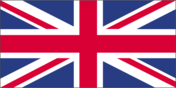
blue with the red cross of St. George (patron saint of England) edged in white superimposed on the diagonal red cross of St. Patrick (patron saint of Ireland) which is superimposed on the diagonal white cross of St. Andrew (patron saint of Scotland); known as the Union Flag or Union Jack; the design and colors (especially the Blue Ensign) have been the basis for a number of other flags including dependencies, Commonwealth countries, and others
Independence
1 January 1801, United Kingdom established
Judicial branch
House of Lords
Leaders
Chief of State--Queen ELIZABETH II (since 6 February 1952); Heir Apparent Prince CHARLES (son of the Queen, born 14 November 1948); Head of Government--Prime Minister Margaret THATCHER (since 4 May 1979); Deputy Prime Minister Geoffrey HOWE (since 24 July 1989)
Legal system
common law tradition with early Roman and modern continental influences; no judicial review of Acts of Parliament; accepts compulsory ICJ jurisdiction, with reservations
Legislative branch
bicameral Parliament consists of an upper house or House of Lords and a lower house or House of Commons
Long-form name
United Kingdom of Great Britain and Northern Ireland; abbreviated UK
Member of
ADB, CCC, Colombo Plan, Council of Europe, DAC, EC, ESCAP, ESA, FAO, GATT, IAEA, IBRD, ICAC, ICAO, ICES, ICO, IDA, IDB--Inter-American Development Bank, IEA, IFAD, IFC, IHO, ILO, ILZSG, IMF, IMO, INTELSAT, INTERPOL, IOOC, IPU, IRC, ISO, ITC, ITU, IWC--International Whaling Commission, IWC--International Wheat Council, NATO, OECD, UN, UPU, WEU, WHO, WIPO, WMO, WSG
National holiday
Celebration of the Birthday of the Queen (second Saturday in June), 10 June 1989
Other political or pressure groups
Trades Union Congress, Confederation of British Industry, National Farmers' Union, Campaign for Nuclear Disarmament
Political parties and leaders
Conservative, Margaret Thatcher; Labour, Neil Kinnock; Social Democratic, David Owen (disbanded 3 June 1990); Social and Liberal Democratic Party, Jeremy (Paddy) Ashdown; Communist, Nina Temple; Scottish National, Gordon Wilson; Plaid Cymru, Dafydd Thomas; Ulster Unionist, James Molyneaux; Democratic Unionist, Ian Paisley; Social Democratic and Labour, John Hume; Provisional Sinn Fein, Gerry Adams; Alliance/Northern Ireland
Suffrage
universal at age 18
Type
constitutional monarchy
Economy
Agriculture
accounts for only 1.5% of GNP and 1% of labor force; highly mechanized and efficient farms; wide variety of crops and livestock products produced; about 60% self-sufficient in food and feed needs; fish catch of 665,000 metric tons (1987)
Aid
donor--ODA and OOF commitments (1970-87), $18.9 billion
Budget
revenues $348.7 billion; expenditures $327.8 billion, including capital expenditures of $42.0 billion (FY89)
Currency
British pound or pound sterling (plural--pounds); 1 British pound (L) = 100 pence
Electricity
98,000,000 kW capacity; 361,990 million kWh produced, 6,350 kWh per capita (1989)
Exchange rates
British pounds (L) per US$1--0.6055 (January 1990), 0.6099 (1989) 0.5614 (1988), 0.6102 (1987), 0.6817 (1986), 0.7714 (1985)
Exports
$151.0 billion (f.o.b., 1989); commodities--manufactured goods, machinery, fuels, chemicals, semifinished goods, transport equipment; partners--EC 50.4% (FRG 11.7%, France 10.2%, Netherlands 6.8%), US 13.0%, Communist countries 2.3%
External debt
$15.7 billion (1988)
Fiscal year
1 April-31 March
GDP
$818.0 billion, per capita $14,300; real growth rate 2.3%
Imports
$189.2 billion (c.i.f., 1989); commodities--manufactured goods, machinery, semifinished goods, foodstuffs, consumer goods; partners--EC 52.5% (FRG 16.6%, France 8.8%, Netherlands 7.8%), US 10.2%, Communist countries 2.1%
Industrial production
growth rate 0.9% (1989)
Industries
machinery and transportation equipment, metals, food processing, paper and paper products, textiles, chemicals, clothing, other consumer goods, motor vehicles, aircraft, shipbuilding, petroleum, coal
Inflation rate (consumer prices)
7.8% (1989)
Overview
The UK is one of the world's great trading powers and financial centers, and its economy ranks among the four largest in Europe. The economy is essentially capitalistic with a generous admixture of social welfare programs and government ownership. Over the last decade the Thatcher government has halted the expansion of welfare measures and has promoted extensive reprivatization of the government economic sector. Agriculture is intensive, highly mechanized, and efficient by European standards, producing about 60% of food needs with only 1% of the labor force. Industry is a mixture of public and private enterprises, employing about 24% of the work force and generating 22% of GDP. The UK is an energy-rich nation with large coal, natural gas, and oil reserves; primary energy production accounts for 12% of GDP, one of the highest shares of any industrial nation. Following the recession of 1979-81, the economy has enjoyed the longest period of continuous economic growth it has had during the last 30 years. During the period 1982-89 real GDP grew by about 25%, while the inflation rate of 14% was nearly halved. Between 1986 and 1989 unemployment fell from 11% to about 6%. As a major trading nation, the UK will continue to be greatly affected by: world boom or recession; swings in the international oil market; productivity trends in domestic industry; and the terms on which the economic integration of Europe proceeds.
Unemployment rate
6.4% (1989)
Communications
Airports
522 total, 379 usable; 245 with permanent-surface runways; 1 with runways over 3,659 m; 37 with runways 2,440-3,659 m; 132 with runways 1,220-2,439 m
Civil air
618 major transport aircraft
Highways
UK, 362,982 km total; Great Britain, 339,483 km paved (including 2,573 km limited-access divided highway); Northern Ireland, 23,499 km (22,907 paved, 592 km gravel)
Inland waterways
2,291 total; British Waterways Board, 606 km; Port Authorities, 706 km; other, 979 km
Merchant marine
285 ships (1,000 GRT or over) totaling 6,174,142GRT/9,024,090 DWT; includes 7 passenger, 22 short-sea passenger, 44 cargo, 44 container, 21 roll-on/roll-off cargo, 9 refrigerated cargo, 1 vehicle carrier, 1 railcar carrier, 78 petroleum, oils, and lubricants (POL) tanker, 4 chemical tanker, 5 liquefied gas, 2 combination ore/oil, 1 specialized tanker, 45 bulk, 1 combination bulk
Pipelines
933 km crude oil, almost all insignificant; 2,993 km refined products; 12,800 km natural gas
Ports
London, Liverpool, Felixstowe, Tees and Hartlepool, Dover, Sullom Voe, Southampton
Railroads
Great Britain--16,629 km total; British Railways (BR) operates 16,629 km 1.435-meter standard gauge (4,205 km electrified and 12,591 km double or multiple track); several additional small standard-gauge and narrow-gauge lines are privately owned and operated; Northern Ireland Railways (NIR) operates 332 km 1.600-meter gauge, 190 km double track
Telecommunications
modern, efficient domestic and international system; 30,200,000 telephones; excellent countrywide broadcast systems; stations--223 AM, 165 (396 relays) FM, 205 (3,210 relays) TV; 38 coaxial submarine cables; communication satellite earth stations operating in INTELSAT (7 Atlantic Ocean and 3 Indian Ocean), MARISAT, and EUTELSAT systems
Military and Security
Branches
Royal Navy (includes Royal Marines), Army, Royal Air Force
Defense expenditures
4.3% of GDP, or $35 billion (1989 est.)
Military manpower
males 15-49, 14,462,993; 12,180,580 fit for military service; no conscription