1988 Edition
CIA World Factbook 1988 (Internet Archive)
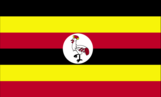
Geography
Boundary disputes
Qatar; no defined boundary with Saudi Arabia; no defined boundary with most of Oman, Administrative Line in far north; claims three islands occupied by Iran in Strait of Hormuz
Climate
- tropical; generally rainy with two dry seasons (December to February, June to August); semiarid in northeast
- hot, dry desert; cooler in eastern mountains
Coastline
1,448 km
Comparative area
- slightly smaller than Oregon
- about the size of Maine
Continental shelf
defined by bilateral boundaries or equidistant line
Environment
- straddles Equator; deforestation; overgrazing; soil erosion
- frequent dust and sand storms; lack of natural fresh water resources being overcome by desalination plants; desertification
Ethnic divisions
- 99% African, 1% European, Asian, Arab
- 19% Emirian, 23% other Arab, 50% South Asian (fluctuating), 8% other expatriates (includes Westerners and East Asians); fewer than 20% of the population are UAE citizens (1982)
Extended economic zone
200 nm
Infant mortality rate
- 92/1,000 (1985)
- 44/1,000 (1983)
Labor force
- estimated 4.5 million; about 250,000 in paid labor; remainder in subsistence activities
- 580,000 (1985 est); 85% industry and commerce, 5% agriculture, 5% services, 5% government; 80% of labor force is foreign
Land boundaries
- 2,680 km total
- 1,094 km total
Land use
- 23% arable land; 9% permanent crops; 25% meadows and pastures; 30% forest and woodland; 13% other; includes NEGL% irrigated
- NEGL% arable land; NEGL% permanent crops; 2% meadows and pastures; NEGL% forest and woodland; 98% other; includes NEGL% irrigated
Language
- English (official); Luganda and Swahili widely used; other Bantu and Nilotic languages
- Arabic (official); Farsi and English widely spoken in major cities; Hindi, Urdu
Life expectancy
- men 48, women 50
- men 68, women 73
Literacy
- 52%
- 68%
Nationality
- noun — Ugandan(s); adjective— Ugandan
- noun — Emirian(s), adjective — Emirian
Organized labor
125,000 union members
Population
- 15,908,896 (July 1987), average annual growth rate 3.70%
- 1,846,373 (July 1987), average annual growth rate 7.47%
Religion
- 33% Roman Catholic, 33% Protestant, 16% Muslim, rest indigenous beliefs
- 96% Muslim (16% Shi'a); 4% Christian, Hindu, and other
Special notes
- landlocked
- strategic location along southern approaches to Strait of Hormuz, a vital transit point for world crude oil
Terrain
- mostly plateau with rim of mountains
- flat, barren coastal plain merging into rolling sand dunes of vast desert wasteland; mountains in east
Territorial sea
3 nm
Total area
- 236,040 km2; land area: 199,710 km2
- 83,600 km2; land area: 83,600 km2
Government
Administrative divisions
10 provinces and 34 districts
Branches
- present government, which assumed power in January 1986, consists of a National Resistance Council headed by the President; the constitution has been suspended and the unicameral legislature (National Assembly) has been dissolved
- executive — Supreme Council of Rulers (seven members), from which a President and Vice President are elected; Prime Minister and Council of Ministers; unicameral legislature — Federal National Council; judicial — Union Supreme Court
Capital
- Kampala
- Abu Dhabi
Communists
possibly a few sympathizers
Elections
none scheduled
Government leader
Yoweri Kaguta MUSEVENI, Head of State and Chairman of the National Resistance Council (since January 1986)
Government leaders
Shaykh Zayid bin Sultan Al NUHAYYAN of Abu Dhabi, President (since December 1971); Shaykh Rashid ibn Sa'id Al MAKTUM of Dubayy, Vice President (since 1971) and Prime Minister (since April 1979)
Legal system
- government plans to restore system based on English common law and customary law and reinstitute a normal judicial system; accepts compulsory ICJ jurisdiction, with reservations
- secular codes are being introduced by the UAE Government and in several member shaykhdoms; Islamic law remains influential
Member of
AfDB, Commonwealth, FAO, G-77, GATT, IAEA, IBRD, ICAC, ICAO, ICO, IDA, IDB— Islamic Development Bank, IFAD, IFC, ILO, IMF, INTELSAT, INTERPOL, ISO, ITU, NAM, OAU, QIC, UN, UNESCO, UPU, WHO, WIPO, WMO, WTO
Member states
Abu Dhabi, 'Ajman, Dubayy, Al Fujayrah, Ra's al Khaymah, Ash ShSriqah, Umm al Qaywayn
National holiday
- Independence Day, 9 October
- 2 December
Official name
- Republic of Uganda
- United Arab Emirates
Political parties
Uganda Patriotic Movement (UPM), Ugandan People's Congress (UPC), Democratic Party (DP), Conservative Party (CP); all are proscribed from conducting public political activities Other political parties or pressure groups: Uganda National Liberation Army (UNLA), Uganda Freedom Movement (UFM), Federal Democratic Movement of Uganda (FEDEMU), Uganda National Rescue Front (UNRF), Uganda People's Democratic Movement (UPDM)
Suffrage
universal adult
Type
- republic
- federation; constitution signed December 1971, which delegated specified powers to the UAE central government and reserved other powers to member shaykhdoms
Economy
Agriculture
cash crops — coffee (150,000 metric tons produced (1984/85 est.), cotton, tobacco, tea, sugar, fish, livestock
Budget
in percent of GDP — tax revenues 11.6%, grants 1.6%, expenditures, 15.5% (FY85/86)
Electric power
164,000 kW capacity; 287 million kWh produced, 18 kWh per capita (1986)
Exports
$352 million (f.o.b., 1985/86 est.); coffee (over 90%), cotton, tea
Fiscal year
1 July-30 June
GDP
$5.9 billion; $220 per capita (1983 est.)
Imports
$325 million (c.i.f., 1985/86 est.); petroleum products, machinery, cotton piece goods, metals, transport equipment, food
Major industries
agricultural processing (coffee, plywood, beer)
Major trade partners
exports — 27% US, 14% UK, 9% Spain; imports— 39% Kenya, 17% UK, 7% Japan (1985)
Monetary conversion rate
400 Uganda shillings=US$l (December 1986)
Natural resources
copper, cobalt, limestone
Communications
Airfields
39 total, 34 usable; 5 with permanent-surface runways; 1 with runways over 3,659 m, 3 with runways 2,440-3,659 m, 11 with runways 1,220-2,439 m Uganda (continued) United Arab Emirates
Branches
National Resistance Army (NRA)
Civil air
4 major transport aircraft
Highways
30,500 km total; 3,500 km paved; 7,000 km crushed stone, gravel, and laterite; remainder earth roads and tracks
Inland waterways
Lake Victoria, Lake Albert, Lake Kyoga, Lake George, Lake Edward; Victoria Nile, Albert Nile; principal inland water ports are at Jinja and Port Bell, both on Lake Victoria
Military manpower
males 15-49, about 3,393,000; about 1,831,000 fit for military service Persian Gulf R.-. „ Kh^-hl Umm al QaywayiV'^ V. pAjminj *»1 Fujayrah Boundary representation is See refional map VI
Railroads
1,300 km, 1.000-meter gauge single track
Telecommunications
fair system with radio-relay and radio communications stations in use; 61,600 telephones (0.5 per 100 popl.); 9 AM, no FM, 9 TV stations; 1 Atlantic Ocean INTELSAT station Defense Forces