1985 Edition
CIA World Factbook 1985 (Internet Archive)
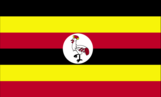
Geography
Agriculture
- limited; coconut palms, copra
- main cash crop — coffee (180,600 metric tons produced in 1983/84, est.); other cash crops — cotton, tobacco, tea, sugar, fish, livestock
Aid
economic commitments — Western (non-US) countries, ODA (1970-79), $22 million
Airfields
- 1 usable with runways 1,2202,439 m
- 38 total, 34 usable; 5 with permanent-surface runways; 1 with runways over 3,659 m, 3 with runways 2,440-3,659 m, 12 with runways 1,220-2,439 m
Branches
- executive — Prime Minister and Cabinet; unicameral legislature — 12-member House of Parliament judicial — High Court, 8 island courts with limited jurisdication
- government that assumed power in December 1980 consists of three branches — an executive headed by a President, a unicameral legislature (National Assembly), and a judiciary; in practice President has most power
- Uganda National Liberation Army (including army and air force), paramilitary Police Special Force
Budget
- (1983 est.) revenues, $2.59 million; expenditures, $3.6 million
- revenues, $473 million (FY82/83); grants, $5 million, current expenditures, $434 million; development expenditures, $85 million; other, $157 million
Capital
- Funafuti
- Kampala
Civil air
- no major transport aircraft
- 5 major transport aircraft
Communists
possibly a few sympathizers
Elections
- last general election September 1981, next September 1985
- general election (held December 1980) elected present National Assembly; winning party then named President
Electric power
- 2,600 kW capacity (1984); 3 million kWh produced (1984), 375 kWh per capita
- 200,000 kW capacity (1984); 525 million kWh produced (1984), 35 kWh per capita
Ethnic divisions
99% African, 1% European, Asian, Arab
Exports
- copra— $26,789 (1981)
- $380 million (f.o.b., 1983/84 est.); coffee (98%), cotton, tea
Fiscal year
1 July-30 June Communications
GDP
$4.8 billion in 1982 (est); real growth rate 5.0% (1983/84 est.)
GNP
$4 million (1980 est), $570 per capita
Government leader
Dr. (Apollo) Milton OBOTE, President (since December 1980)
Government leaders
Dr. Tomasi PUAPUA, Prime Minister (since September 1981); Sir Eiatau Penitala TEO, Governor General (since October 1978)
Highways
- 8 km gravel
- 27,540 km total; 2,504 km paved; 5,036 km crushed stone, gravel, and laterite; remainder earth roads and tracks
Imports
- $2.8 million (1981); food and mineral fuels
- $509 million (c.i.f., 1983/84 est.); petroleum products, machinery, cotton piece goods, metals, transport equipment, food
Inland waterways
- none
- Lake Victoria, Lake Albert, Lake Kyoga, Lake George, Lake Edward; Kagera River, Victoria Nile
Labor force
estimated 4.5 million; about 250,000 in paid labor; remainder in subsistence activities
Land boundaries
2,680 km People
Language
- Tuvaluan, English
- English (official); Luganda and Swahili widely used; other Bantu and Nilotic languages
Legal system
provisional government plans to restore system based on English common law and customary law to reinstitute a normal judicial system; legal education at Makerere University, Kampala; accepts compulsory ICJ jurisdiction, with reservations
Literacy
- less than 50% Government
- 52%
Major industries
agricultural processing (textiles, sugar, coffee, plywood, beer), cement, copper smelting, corrugated iron sheet, shoes, fertilizer
Major trade partners
- UK, Australia
- exports — 41% US, 10% UK, 8% France; imports— 32% Kenya, 18% UK, 11%FRG(1982)
Member of
- GATT (de facto), SPC, UPU Economy
- Af DB, Commonwealth, FAO, G-77, GATT, IAEA, IBRD, ICAC, ICAO, ICO, IDA, IDB— Islamic Development Bank, IFAD, IFC, ILO, IMF, INTELSAT, INTERPOL, ISO, ITU, NAM, OAU, QIC, UN, UNESCO, UPU, WHO, WIPO, WMO, WTO Economy
Military manpower
males 15-49, about 3,223,000; about 1,735,000 fit for military
Monetary conversion rate
- 1.0778 Australian dollars=US$l (February 1984) Communications
- 495.0 Uganda shillings=US$l (31 October 1984)
National holiday
Independence Day, 9 October
Nationality
noun — Ugandan(s); adjective — Ugandan
Official name
- Tuvalu
- Republic of Uganda
Organized labor
125,000 union members Government
Political parties
- none
- Ugandan People's Congress (UPC), Democratic Party (DP)
Political subdivisions
10 provinces and 34 districts
Population
14,733,000 (July 1985), average annual growth rate 3.2%
Ports
2 minor (Funafuti) and Nukufetau
Railroads
- none
- 1,216 km, 1.000-meter gauge single track
Religion
33% Roman Catholic, 33% Protestant, 16% Muslim, rest indigenous beliefs
Suffrage
universal adult
Telecommunications
- 1 AM station; about 300 radio telephones (0.5 per 100 popl.); 4,000 radio sets Land 235,885 km2; slightly smaller than Oregon; 45% forest, wood, and grass; 21% inland water and swamp, including territorial waters of Lake Victoria; about 21% cultivated; 13% national park, forest, and game reserve
- fair system with radio-relay and communications stations in use; 61,600 telephones (0.5 per 100 popl.); 9 AM, no FM, 9 TV stations; 1 Atlantic Ocean INTELSAT station Defense Forces
Type
- independent state with special membership" in the Commonwealth, recognizing Elizabeth II as head of state
- republic
Voting strength
(December 1980 election) National Assembly UPC, 74; DP, 51; other, 1