1983 Edition
CIA World Factbook 1983 (Internet Archive)
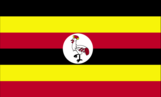
Geography
Agriculture
main cash crop — coffee (165,000 metric tons produced in 1982-83, proj.); other cash crops — cotton, tobacco, tea, sugar, fish, livestock
Airfields
39 total, 33 usable; 5 with permanent-surface runways; 1 with runways over 3,659 m, 3 with runways 2,440-3,659 m, 12 with runways 1,220-2,439 m Uganda (continued) United Arab Emirates
Area
235,885 km2; 45% forest, wood, and grass; 21% inland water and swamp, including territorial waters of Lake Victoria; about 21% cultivated; 13% national park, forest, and game reserve
Branches
- government that assumed power in December 1980 consists of three branches — an executive headed by a President, a unicameral legislature (National Assembly), and a judiciary; in practice President has most power
- Uganda National Liberation Army (including army and air force)
- executive — Supreme Council of Rulers (seven members), from which a President and Vice President are elected; Prime Minister and Council of Ministers; unicameral legislature — Federal National Council; judicial — Union Supreme Court
Budget
revenues $290 million (FY81/82); current expenditures and debt payments $423 million, development expenditures $88 million (1982 est.)
Capital
- Kampala
- Abu Dhabi
Civil air
5 major transport aircraft
Coastline
1,448 km People
Communists
possibly a few sympathizers
Elections
- general election (held December 1980) elected present National Assembly; winning party then named President
- none
Electric power
260,000 kW capacity (1983); 950 million kWh produced (1983), 70 kWh per capita
Ethnic divisions
- 99% African, 1% European, Asian, Arab
- Emirian 19%, other Arab 23%, South Asian 50% (fluctuating), other expatriates (includes Westerners and East Asians) 8%; fewer than 20% of the population are UAE citizens (1982)
Exports
$325 million (f.o.b., 1982/83); coffee, cotton, tea
Fiscal year
1 July-30 June Communications
GDP
$4.8 billion in 1982 (est.)
Government leader
Dr. (Apollo) Milton OBOTE, President
Government leaders
Shaykh Zayid bin Sultan Al NUHAYYAN of Abu Dhabi, President; Shaykh Rashid ibn Sa'id Al MAKTUM of Dubai, Vice President and Prime Minister
Highways
26,763 km total; 1,934 km paved; 4,829 km crushed stone, gravel, and laterite; remainder earth roads and tracks
Imports
$345 million (f.o.b., 1982/83 est.); petroleum products, machinery, cotton piece goods, metals, transport equipment, food
Inland waterways
Lake Victoria, Lake Albert, Lake Kyoga, Lake George, and Lake Edward; Kagera River and Victoria Nile
Labor force
- estimated 4.5 million; about 250,000 in paid labor; remainder in subsistence activities
- 541,000 (1980 est.); 85% industry and commerce, 5% agriculture, 5% services, 5% government; 80% of labor force is foreign Government
Land boundaries
- 2,680 km People
- 1,094 km (does not include boundaries between adjacent UAE states) Water
Language
- English (official); Luganda and Swahili widely used; other Bantu and Nilotic languages
- Arabic (official); Farsi and English widely spoken in major cities; Hindi, Urdu
Legal system
- provisional government plans to restore system based on English common law and customary law to reinstitute a normal judicial system; legal education at Makerere University, Kampala; accepts compulsory ICJ jurisdiction, with reservations
- secular codes are being introduced by the UAE Government and in several member shaykhdoms; Islamic law remains influential
Limits of territorial waters (claimed)
3 nm for all states except Sharjah (12 nm); fishing 200 nm; exclusive economic zone 200 nm
Literacy
- 52%
- 56.3% est.
Major industries
agricultural processing (textiles, sugar, coffee, plywood, beer), cement, copper smelting, corrugated iron sheet, shoes, fertilizer
Major trade partners
Kenya, US, UK
Member of
- Af DB, Commonwealth, FAO, G-77, GATT, IAEA, IBRD, ICAC, ICAO, ICO, IDA, IDB— Islamic Development Bank, IFAD, IFC, ILO, IMF, INTELSAT, INTERPOL, ISO, ITU, NAM, OAU, QIC, UN, UNESCO, UPU, WHO, WIPO, WMO, WTO Economy
- Arab League, FAO, G-77, GATT (de facto), GCC, IAEA, IBRD, ICAO, IDA, IDB — Islamic Development Bank, IFAD, IFC, ILO, IMF, IMO, INTELSAT, INTERPOL, ITU, NAM, OAPEC, QIC, OPEC, UN, UNESCO, UPU, WHO, WIPO, WTO
Member states
Abu Dhabi, Ajman, Dubai, al Fujayrah, Ra's al-Khaymah, Sharjah, Umm al-Qaywayn
Military manpower
males 15-49, about 3,123,000; about 1,681,000 fit for military SAUDI ARABIA Land 82,880 km2; almost all desert, waste, or urban
Monetary conversion rate
244. 1 Uganda shillings=US$l (February 1984)
National holiday
- Independence Day, 9 October
- 2 December
Nationality
- noun — Ugandan(s); adjective — Ugandan
- Noun — Emirian(s), adjective — Emirian
Official name
- Republic of Uganda
- United Arab Emirates (composed of former Trucial States)
Organized labor
125,000 union members Government
Political or pressure groups
none; a few small clandestine groups are active
Political parties
Ugandan People's Congress (UPC), Democratic Party (DP), Uganda Patriotic Movement (UPM)
Political subdivisions
10 provinces and 34 districts
Population
- 14,819,000 (July 1984), average annual growth rate 3.2%
- 1,523,000 (July 1984), average annual growth rate 10.3%
Railroads
1,216 km, 1.000-meter gauge single track
Religion
- 33% Roman Catholic, 33% Protestant, 16% Muslim, rest indigenous beliefs
- Muslim 96%; Christian, Hindu, and other 4%
Suffrage
- universal adult
- none
Telecommunications
fair system with radio-relay and communications stations in use; 46,400 telephones (0.3 per 100 popl.); 9 AM, no FM, 9 TV stations; 1 Atlantic Ocean INTELSAT station Defense Forces
Type
- republic
- federation; constitution signed December 1971, which delegated specified powers to the United Arab Emirates central government and reserved other powers to member shaykhdoms
Voting strength
(December 1980 election) National Assembly— UPC, 74; DP, 51; UPM, 1