1982 Edition
CIA World Factbook 1982 (Wikisource)
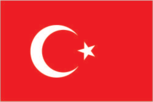
Geography
Area
766,640 km2; 35% cropland, 25% meadows and pastures, 23% forested, 17% other
Coastline
7,200 km
Land boundaries
2,574 km WATER
Limits of territorial waters (claimed)
6 nm except in Black Sea where it is 12 nm (fishing 12 nm)
People and Society
Ethnic divisions
85% Turkish, 12% Kurd, 3% other
Labor force
17.14 million; 58% agriculture, 13% industry, 29% service; surplus of unskilled labor (1980)
Language
Turkish, Kurdish, Arabic
Literacy
62%
Nationality
noun—Turk(s); adjective—Turkish
Organized labor
10-15% of labor force
Population
48,105,000 (July 1982), average annual growth rate 2.2%
Religion
99% Muslim (mostly Sunni), 1% other (mostly Christian and Jewish)
Government
Capital
Ankara
Communists
strength and support negligible
Elections
Republican People's Party won a plurality in June 1977; the Justice Party formed a minority government in October 1979; inability to elect a permanent president in 1980 contributed in part to the military decision to take over the government Political parties and leaders: the military government disbanded all political parties after it took over on 12 September 1980 and has detained some political leaders; the commanders might allow political activity after the proposed constitution is submitted to a referendum and approved by the citizens; Justice Party (JP), Suleyman Demirel; Republican People's Party (RPP), Bulent Ecevit; National Salvation Party (NSP), Necmettin Erbakan; Democratic Party (DP), Faruk Sukan; Republican Reliance Party (RRP), Turhan Feyzioglu; Nationalist Action Party (NAP), Alpaslan Turkes; Communist Party illegal
Government leaders
Head of State, Gen. Kenan EVREN (Chairman, National Security Council); Prime Minister Adm. Bulend ULUSU
Legal system
derived from various continental legal systems; constitution adopted 1961, but is now being revised by an assembly selected by the military government that took over on 12 September 1980; legal education at Universities of Ankara and Istanbul; accepts compulsory ICJ jurisdiction, with reservations
Member of
ASSIMER, Council of Europe, EC (associate member), ECOSOC, FAO, GATT, IAEA, IBRD, ICAC, ICAO, IDA, IEA, IFAD, IFC, IHO, ILO, IMCO, IMF, IOOC, IPU, ISCON, ITC, ITU, NATO, OECD, Regional Cooperation for Development, UN, UNESCO, UPU, WHO, WIPO, WMO, WSG, WTO
National holiday
Republic Day, 29 October Branches: the 12 September military takeover resulted in the dissolution of Parliament and Prime Minister Demirel's government; the generals substituted a five-man National Security Council to serve as the executive branch and appointed a civilian Cabinet headed by retired Adm. Bulend Ulusu to run the country until a new constitution is promulgated and civilian rule restored; the Constituent Assembly established in October 1981 now serves as the legislative branch of government; highest court for ordinary criminal and civil cases is Court of Cassation, which hears appeals directly from criminal, commercial, basic, and peace courts
Official name
Republic of Turkey
Other political or pressure groups
military forced resignation of Demirel government in March 1971 and directly intervened in the political process in September 1980; an active radical left and right contributed to violence that took more than 3,000 lives in 1978-80; left-right violence brought the country to virtual civil war and prompted the military to intervene in September 1980
Political subdivisions
67 provinces
Suffrage
universal over age 21
Type
republic
Economy
Agriculture
main products—cotton, tobacco, cereals, sugar beets, fruits, nuts, and livestock products; self-sufficient in food in average years
Budget
(FY80) revenues $12.4 billion, expenditures $14.2 billion, deficit $1.8 billion
Crude steel
1.7 million tons produced (1980), 27 kg per capita
Electric power
6,389,200 kW capacity (1980); 23.330 billion kWh produced (1980), 506 kWh per capita
Exports
$2,910 million (f.o.b., 1980); cotton, tobacco, fruits, nuts, metals, livestock products, textiles and clothing
Fiscal year
1 March-28 February
GNP
$58.7 billion (1980), $1,300 per capita; -1.1% real growth 1980, 6% average annual real growth 1970-79
Imports
$7,667 million (c.i.f., 1980); crude oil, machinery, transport equipment, metals, mineral fuels, fertilizers, chemicals
Major industries
textiles, food processing, mining (coal, chromite, copper, boron minerals), steel, petroleum
Major trade partners
(1980) exports—20.8% West Germany, 7.5% Italy, 6.1% USSR, 5.6% France, 4.6% Iraq; imports—15.0% Iraq, 10.9% West Germany, 5.8% US, 4.8% France, 4.5% Switzerland
Monetary conversion rate
76.04 Turkish liras=US$1 (1980)
Communications
Airfields
121 total, 99 usable; 60 with permanent-surface runways; 3 with runways over 3,660 m, 26 with runways 2,440-3,659 m, 23 with runways 1,220-2,439 m
Civil air
23 major transport aircraft, including 3 leased in and 1 leased out
Highways
59,615 km total; 26,915 km bituminous; 23,000 km gravel or crushed stone; 2,200 km improved earth; 7,500 km unimproved earth
Inland waterways
approx. 1,600 km
Pipelines
1,288 km crude oil; 2,145 km refined products
Ports
10 major, 35 minor
Railroads
8,138 km standard gauge (1.435 m); 204 km double track; 104 km electrified
Military and Security
Military manpower
males 15-49, 11,717,000; 6,932,000 fit for military service; about 494,000 reach military age (20) annually