2017 Edition
CIA World Factbook 2017 Archive (HTML)
Introduction
Background
Rivalry between French and Italian interests in Tunisia culminated in a French invasion in 1881 and the creation of a protectorate. Agitation for independence in the decades following World War I was finally successful in convincing the French to recognize Tunisia as an independent state in 1956. The country's first president, Habib BOURGUIBA, established a strict one-party state. He dominated the country for 31 years, repressing Islamic fundamentalism and establishing rights for women unmatched by any other Arab nation. In November 1987, BOURGUIBA was removed from office and replaced by Zine el Abidine BEN ALI in a bloodless coup. Street protests that began in Tunis in December 2010 over high unemployment, corruption, widespread poverty, and high food prices escalated in January 2011, culminating in rioting that led to hundreds of deaths. On 14 January 2011, the same day BEN ALI dismissed the government, he fled the country, and by late January 2011, a "national unity government" was formed. Elections for the new Constituent Assembly were held in late October 2011, and in December, it elected human rights activist Moncef MARZOUKI as interim president. The Assembly began drafting a new constitution in February 2012 and, after several iterations and a months-long political crisis that stalled the transition, ratified the document in January 2014. Parliamentary and presidential elections for a permanent government were held at the end of 2014. Beji CAID ESSEBSI was elected as the first president under the country's new constitution. In 2016, the new unity government continued to seek to balance political cohesion with economic and social pressures.
Geography
Area
- 163,610 sq km 155,360 sq km 8,250 sq km
- land
- 155,360 sq km
- total
- 163,610 sq km
- water
- 8,250 sq km
Area - comparative
slightly larger than Georgia
Climate
temperate in north with mild, rainy winters and hot, dry summers; desert in south
Coastline
1,148 km
Elevation
- 246 m lowest point: Shatt al Gharsah -17 m highest point: Jebel ech Chambi 1,544 m
- elevation extremes
- lowest point: Shatt al Gharsah -17 m
- highest point
- Jebel ech Chambi 1,544 m
- mean elevation
- 246 m
Environment - current issues
toxic and hazardous waste disposal is ineffective and poses health risks; water pollution from raw sewage; limited natural freshwater resources; deforestation; overgrazing; soil erosion; desertification
Environment - international agreements
- Biodiversity, Climate Change, Climate Change-Kyoto Protocol, Desertification, Endangered Species, Environmental Modification, Hazardous Wastes, Law of the Sea, Marine Dumping, Ozone Layer Protection, Ship Pollution, Wetlands Marine Life Conservation
- party to
- Biodiversity, Climate Change, Climate Change-Kyoto Protocol, Desertification, Endangered Species, Environmental Modification, Hazardous Wastes, Law of the Sea, Marine Dumping, Ozone Layer Protection, Ship Pollution, Wetlands
- signed, but not ratified
- Marine Life Conservation
Geographic coordinates
34 00 N, 9 00 E
Geography - note
strategic location in central Mediterranean; Malta and Tunisia are discussing the commercial exploitation of the continental shelf between their countries, particularly for oil exploration
Irrigated land
4,590 sq km (2012)
Land boundaries
- 1,495 km Algeria 1,034 km, Libya 461 km
- border countries (2)
- Algeria 1,034 km, Libya 461 km
- total
- 1,495 km
Land use
- 64.8% arable land 18.3%; permanent crops 15.4%; permanent pasture 31.1% 6.6% 28.6% (2011 est.)
- agricultural land
- 64.8%
- forest
- 6.6%
- other
- 28.6% (2011 est.)
Location
Northern Africa, bordering the Mediterranean Sea, between Algeria and Libya
Map references
Africa
Maritime claims
- 12 nm 24 nm 12 nm
- contiguous zone
- 24 nm
- exclusive economic zone
- 12 nm
- territorial sea
- 12 nm
Natural hazards
flooding; earthquakes; droughts
Natural resources
petroleum, phosphates, iron ore, lead, zinc, salt
Population - distribution
the overwhelming majority of the population is located in the northern half of the country; the south remains largely underpopulated
Terrain
mountains in north; hot, dry central plain; semiarid south merges into the Sahara
People and Society
Age structure
- 25.15% (male 1,482,303/female 1,385,407) 13.99% (male 805,376/female 790,119) 43.38% (male 2,410,724/female 2,536,015) 9.54% (male 543,865/female 543,642) 7.95% (male 429,681/female 476,668) (2017 est.)
- 0-14 years
- 25.15% (male 1,482,303/female 1,385,407)
- 15-24 years
- 13.99% (male 805,376/female 790,119)
- 25-54 years
- 43.38% (male 2,410,724/female 2,536,015)
- 55-64 years
- 9.54% (male 543,865/female 543,642)
- 65 years and over
- 7.95% (male 429,681/female 476,668) (2017 est.)
Birth rate
18.2 births/1,000 population (2017 est.)
Children under the age of 5 years underweight
2.3% (2012)
Contraceptive prevalence rate
62.5% (2011/12)
Death rate
6.3 deaths/1,000 population (2017 est.)
Demographic profile
The Tunisian Government took steps in the 1960s to decrease population growth and gender inequality in order to improve socioeconomic development. Through its introduction of a national family planning program (the first in Africa) and by raising the legal age of marriage, Tunisia rapidly reduced its total fertility rate from about 7 children per woman in 1960 to 2 today. Unlike many of its North African and Middle Eastern neighbors, Tunisia will soon be shifting from being a youth-bulge country to having a transitional age structure, characterized by lower fertility and mortality rates, a slower population growth rate, a rising median age, and a longer average life expectancy. Currently, the sizable young working-age population is straining Tunisia’s labor market and education and health care systems. Persistent high unemployment among Tunisia’s growing workforce, particularly its increasing number of university graduates and women, was a key factor in the uprisings that led to the overthrow of the BEN ALI regime in 2011. In the near term, Tunisia’s large number of jobless young, working-age adults; deficiencies in primary and secondary education; and the ongoing lack of job creation and skills mismatches could contribute to future unrest. In the longer term, a sustained low fertility rate will shrink future youth cohorts and alleviate demographic pressure on Tunisia’s labor market, but employment and education hurdles will still need to be addressed. Tunisia has a history of labor emigration. In the 1960s, workers migrated to European countries to escape poor economic conditions and to fill Europe’s need for low-skilled labor in construction and manufacturing. The Tunisian Government signed bilateral labor agreements with France, Germany, Belgium, Hungary, and the Netherlands, with the expectation that Tunisian workers would eventually return home. At the same time, growing numbers of Tunisians headed to Libya, often illegally, to work in the expanding oil industry. In the mid-1970s, with European countries beginning to restrict immigration and Tunisian-Libyan tensions brewing, Tunisian economic migrants turned toward the Gulf countries. After mass expulsions from Libya in 1983, Tunisian migrants increasingly sought family reunification in Europe or moved illegally to southern Europe, while Tunisia itself developed into a transit point for sub-Saharan migrants heading to Europe. Following the ousting of BEN ALI in 2011, the illegal migration of unemployed Tunisian youths to Italy and onward to France soared into the tens of thousands. Thousands more Tunisian and foreign workers escaping civil war in Libya flooded into Tunisia and joined the exodus. A readmission agreement signed by Italy and Tunisia in April 2011 helped stem the outflow, leaving Tunisia and international organizations to repatriate, resettle, or accommodate some 1 million Libyans and third-country nationals.
Dependency ratios
- 45.6 34.5 11.1 9 (2015 est.)
- elderly dependency ratio
- 11.1
- potential support ratio
- 9 (2015 est.)
- total dependency ratio
- 45.6
- youth dependency ratio
- 34.5
Drinking water source
- urban: 100% of population rural: 93.2% of population total: 97.7% of population urban: 0% of population rural: 6.8% of population total: 2.3% of population (2015 est.)
- rural
- 6.8% of population
- total
- 2.3% of population (2015 est.)
- urban
- 0% of population
Education expenditures
6.3% of GDP (2012)
Ethnic groups
Arab 98%, European 1%, Jewish and other 1%
Health expenditures
7% of GDP (2014)
HIV/AIDS - people living with HIV/AIDS
2,900 (2016 est.)
Hospital bed density
2.1 beds/1,000 population (2012)
Infant mortality rate
- 12.1 deaths/1,000 live births 13.3 deaths/1,000 live births 10.8 deaths/1,000 live births (2017 est.)
- female
- 10.8 deaths/1,000 live births (2017 est.)
- male
- 13.3 deaths/1,000 live births
- total
- 12.1 deaths/1,000 live births
Languages
- Arabic (official, one of the languages of commerce), French (commerce), Berber (Tamazight) despite having no official status, French plays a major role in the country and is spoken by about two-thirds of the population
- note
- despite having no official status, French plays a major role in the country and is spoken by about two-thirds of the population
Life expectancy at birth
- 75.7 years 74.1 years 77.4 years (2017 est.)
- female
- 77.4 years (2017 est.)
- male
- 74.1 years
- total population
- 75.7 years
Literacy
- age 15 and over can read and write 81.8% 89.6% 74.2% (2015 est.)
- definition
- age 15 and over can read and write
- female
- 74.2% (2015 est.)
- male
- 89.6%
- total population
- 81.8%
Major urban areas - population
TUNIS (capital) 1.993 million (2015)
Maternal mortality rate
62 deaths/100,000 live births (2015 est.)
Median age
- 31.6 years 31 years 32.2 years (2017 est.)
- female
- 32.2 years (2017 est.)
- male
- 31 years
- total
- 31.6 years
Nationality
- Tunisian(s) Tunisian
- adjective
- Tunisian
- noun
- Tunisian(s)
Net migration rate
-1.7 migrant(s)/1,000 population (2017 est.)
Obesity - adult prevalence rate
26.9% (2016)
Physicians density
1.65 physicians/1,000 population (2014)
Population
11,403,800 (July 2017 est.)
Population distribution
the overwhelming majority of the population is located in the northern half of the country; the south remains largely underpopulated
Population growth rate
1.01% (2017 est.)
Religions
Muslim (official; Sunni) 99.1%, other (includes Christian, Jewish, Shia Muslim, and Baha'i) 1%
Sanitation facility access
- urban: 97.4% of population rural: 79.8% of population total: 91.6% of population urban: 2.6% of population rural: 20.2% of population total: 8.4% of population (2015 est.)
- rural
- 20.2% of population
- total
- 8.4% of population (2015 est.)
- urban
- 2.6% of population
School life expectancy (primary to tertiary education)
- 15 years NA NA (2015)
- female
- NA (2015)
- male
- NA
- total
- 15 years
Sex ratio
- 1.07 male(s)/female 1.06 male(s)/female 1.01 male(s)/female 0.94 male(s)/female 1.03 male(s)/female 0.97 male(s)/female 0.99 male(s)/female (2016 est.)
- 0-14 years
- 1.06 male(s)/female
- 15-24 years
- 1.01 male(s)/female
- 25-54 years
- 0.94 male(s)/female
- 55-64 years
- 1.03 male(s)/female
- 65 years and over
- 0.97 male(s)/female
- at birth
- 1.07 male(s)/female
- total population
- 0.99 male(s)/female (2016 est.)
Total fertility rate
2.23 children born/woman (2017 est.)
Unemployment, youth ages 15-24
- 37.6% 35.7% 41.8% (2012 est.)
- female
- 41.8% (2012 est.)
- male
- 35.7%
- total
- 37.6%
Urbanization
- 67.3% of total population (2017) 1.28% annual rate of change (2015-20 est.)
- rate of urbanization
- 1.28% annual rate of change (2015-20 est.)
- urban population
- 67.3% of total population (2017)
Government
Administrative divisions
24 governorates (wilayat, singular - wilayah); Beja (Bajah), Ben Arous (Bin 'Arus), Bizerte (Banzart), Gabes (Qabis), Gafsa (Qafsah), Jendouba (Jundubah), Kairouan (Al Qayrawan), Kasserine (Al Qasrayn), Kebili (Qibili), Kef (Al Kaf), L'Ariana (Aryanah), Mahdia (Al Mahdiyah), Manouba (Manubah), Medenine (Madanin), Monastir (Al Munastir), Nabeul (Nabul), Sfax (Safaqis), Sidi Bouzid (Sidi Bu Zayd), Siliana (Silyanah), Sousse (Susah), Tataouine (Tatawin), Tozeur (Tawzar), Tunis, Zaghouan (Zaghwan)
Capital
- Tunis 36 48 N, 10 11 E UTC+1 (6 hours ahead of Washington, DC, during Standard Time)
- geographic coordinates
- 36 48 N, 10 11 E
- name
- Tunis
- time difference
- UTC+1 (6 hours ahead of Washington, DC, during Standard Time)
Citizenship
- no at least one parent must be a citizen of Tunisia yes 5 years
- citizenship by birth
- no
- citizenship by descent only
- at least one parent must be a citizen of Tunisia
- dual citizenship recognized
- yes
- residency requirement for naturalization
- 5 years
Constitution
- several previous; latest approved by Constituent Assembly 26 January 2014, signed by the president, prime minister, and Constituent Assembly speaker 27 January 2014 proposed by the president of the republic or by one-third of members of the Assembly of the Representatives of the People; following review by the Constitutional Court, approval to proceed requires an absolute majority vote by the Assembly and final passage requires a two-thirds majority vote by the Assembly; the president can opt to submit an amendment to a referendum, which requires an absolute majority of votes cast for passage (2017)
- amendments
- proposed by the president of the republic or by one-third of members of the Assembly of the Representatives of the People; following review by the Constitutional Court, approval to proceed requires an absolute majority vote by the Assembly and final passage requires a two-thirds majority vote by the Assembly; the president can opt to submit an amendment to a referendum, which requires an absolute majority of votes cast for passage (2017)
- history
- several previous; latest approved by Constituent Assembly 26 January 2014, signed by the president, prime minister, and Constituent Assembly speaker 27 January 2014
Country name
- Republic of Tunisia Tunisia Al Jumhuriyah at Tunisiyah Tunis the country name derives from the capital city of Tunis
- conventional long form
- Republic of Tunisia
- conventional short form
- Tunisia
- etymology
- the country name derives from the capital city of Tunis
- local long form
- Al Jumhuriyah at Tunisiyah
- local short form
- Tunis
Diplomatic representation from the US
- Ambassador Daniel H. RUBINSTEIN (since 26 October 2015) Zone Nord-Est des Berges du Lac Nord de Tunis 1053 Zone Nord-Est des Berges du Lac Nord de Tunis 1053 [216] 71 107-000 [216] 71 963-263
- chief of mission
- Ambassador Daniel H. RUBINSTEIN (since 26 October 2015)
- embassy
- Zone Nord-Est des Berges du Lac Nord de Tunis 1053
- FAX
- [216] 71 963-263
- mailing address
- Zone Nord-Est des Berges du Lac Nord de Tunis 1053
- telephone
- [216] 71 107-000
Diplomatic representation in the US
- Ambassador Faycal GOUIA (since 18 May 2015) 1515 Massachusetts Avenue NW, Washington, DC 20005 [1] (202) 862-1850 [1] (202) 862-1858
- chancery
- 1515 Massachusetts Avenue NW, Washington, DC 20005
- chief of mission
- Ambassador Faycal GOUIA (since 18 May 2015)
- FAX
- [1] (202) 862-1858
- telephone
- [1] (202) 862-1850
Executive branch
- President Beji CAID ESSEBSI (since 31 December 2014) Prime Minister Youssef CHAHED (since 27 August 2016) selected by the prime minister and approved by the Assembly of the Representatives of the People president directly elected by absolute majority popular vote in 2 rounds if needed for a 5-year term (eligible for a second term); election last held on 23 November and 21 December 2014 (next to be held in 2019); following legislative elections, the prime minister is selected by the majority party or majority coalition and appointed by the president Beji CAID ESSEBSI elected president; percent of vote in runoff - Beji CAID ESSEBSI (Call for Tunisia) 55.7%, Moncef MARZOUKI (CPR) 44.3%
- cabinet
- selected by the prime minister and approved by the Assembly of the Representatives of the People
- chief of state
- President Beji CAID ESSEBSI (since 31 December 2014)
- election results
- Beji CAID ESSEBSI elected president; percent of vote in runoff - Beji CAID ESSEBSI (Call for Tunisia) 55.7%, Moncef MARZOUKI (CPR) 44.3%
- elections/appointments
- president directly elected by absolute majority popular vote in 2 rounds if needed for a 5-year term (eligible for a second term); election last held on 23 November and 21 December 2014 (next to be held in 2019); following legislative elections, the prime minister is selected by the majority party or majority coalition and appointed by the president
- head of government
- Prime Minister Youssef CHAHED (since 27 August 2016)
Flag description
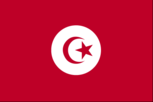
- red with a white disk in the center bearing a red crescent nearly encircling a red five-pointed star; resembles the Ottoman flag (red banner with white crescent and star) and recalls Tunisia's history as part of the Ottoman Empire; red represents the blood shed by martyrs in the struggle against oppression, white stands for peace; the crescent and star are traditional symbols of Islam the flag is based on that of Turkey, itself a successor state to the Ottoman Empire
- note
- the flag is based on that of Turkey, itself a successor state to the Ottoman Empire
Government type
parliamentary republic
Independence
20 March 1956 (from France)
International law organization participation
has not submitted an ICJ jurisdiction declaration; accepts ICCt jurisdiction
International organization participation
ABEDA, AfDB, AFESD, AMF, AMU, AU, BSEC (observer), CAEU, CD, EBRD, FAO, G-11, G-77, IAEA, IBRD, ICAO, ICC (national committees), ICCt, ICRM, IDA, IDB, IFAD, IFC, IFRCS, IHO, ILO, IMF, IMO, IMSO, Interpol, IOC, IOM, IPU, ISO, ITSO, ITU, ITUC (NGOs), LAS, MIGA, MONUSCO, NAM, OAS (observer), OIC, OIF, OPCW, OSCE (partner), UN, UNCTAD, UNESCO, UNHCR, UNIDO, UNOCI, UNWTO, UPU, WCO, WFTU (NGOs), WHO, WIPO, WMO, WTO
Judicial branch
- Court of Cassation or Cour de Cassation (organized into 1 civil and 3 criminal chambers); Constitutional Court (consists of 12 members) the new Tunisian constitution of January 2014 called for the creation of a constitutional court by the end of 2015; the court will consist of 12 members - 4 each appointed by the president, the Supreme Judicial Council or SJC (an independent 4-part body consisting mainly of elected judges and the remainder legal specialists), and the Chamber of the People's Deputies (parliament); members will serve 9-year terms with one-third of the membership renewed every 3 years; in late 2015, the International Commission of Jurists called on Tunisia's parliament to revise the draft on the Constitutional Court to ensure compliance with international standards; as of spring 2017 the court had not been appointed Supreme Court judges nominated by the SJC; judge tenure based on terms of appointment; Constitutional Court members appointed 3 each by the president of the republic, the Chamber of the People's Deputies, and the SJC; members serve 9-year terms with one-third of the membership renewed every 3 years Courts of Appeal; administrative courts; Court of Audit; Housing Court; courts of first instance; lower district courts; military courts
- highest court(s)
- Court of Cassation or Cour de Cassation (organized into 1 civil and 3 criminal chambers); Constitutional Court (consists of 12 members)
- judge selection and term of office
- Supreme Court judges nominated by the SJC; judge tenure based on terms of appointment; Constitutional Court members appointed 3 each by the president of the republic, the Chamber of the People's Deputies, and the SJC; members serve 9-year terms with one-third of the membership renewed every 3 years
- note
- the new Tunisian constitution of January 2014 called for the creation of a constitutional court by the end of 2015; the court will consist of 12 members - 4 each appointed by the president, the Supreme Judicial Council or SJC (an independent 4-part body consisting mainly of elected judges and the remainder legal specialists), and the Chamber of the People's Deputies (parliament); members will serve 9-year terms with one-third of the membership renewed every 3 years; in late 2015, the International Commission of Jurists called on Tunisia's parliament to revise the draft on the Constitutional Court to ensure compliance with international standards; as of spring 2017 the court had not been appointed
- subordinate courts
- Courts of Appeal; administrative courts; Court of Audit; Housing Court; courts of first instance; lower district courts; military courts
Legal system
mixed legal system of civil law, based on the French civil code, and Islamic law; some judicial review of legislative acts in the Supreme Court in joint session
Legislative branch
- unicameral Assembly of the Representatives of the People or Nuwwab ash-Sha'b (Assemblee des representants du peuple) (217 seats; members directly elected in multi-seat constituencies by proportional representation vote; members serve 5-year terms) initial election held on 26 October 2014 (next to be held in 2019) percent of vote by party - Call for Tunisia 37.6%, Ennahdha 27.8%, UPL 4.1%, Popular Front 3.6%, Afek Tounes 3.0%, CPR 2.1%, other 21.8%; seats by party - Call to Tunisia 86, Nahda 69, UPL 16, Popular Front 15, Afek Tounes 8, CPR 4, other 17, independent 2
- description
- unicameral Assembly of the Representatives of the People or Nuwwab ash-Sha'b (Assemblee des representants du peuple) (217 seats; members directly elected in multi-seat constituencies by proportional representation vote; members serve 5-year terms)
- election results
- percent of vote by party - Call for Tunisia 37.6%, Ennahdha 27.8%, UPL 4.1%, Popular Front 3.6%, Afek Tounes 3.0%, CPR 2.1%, other 21.8%; seats by party - Call to Tunisia 86, Nahda 69, UPL 16, Popular Front 15, Afek Tounes 8, CPR 4, other 17, independent 2
- elections
- initial election held on 26 October 2014 (next to be held in 2019)
National anthem
- "Humat Al Hima" (Defenders of the Homeland) Mustafa Sadik AL-RAFII and Aboul-Qacem ECHEBBI/Mohamad Abdel WAHAB adopted 1957, replaced 1958, restored 1987; Mohamad Abdel WAHAB also composed the music for the anthem of the United Arab Emirates
- lyrics/music
- Mustafa Sadik AL-RAFII and Aboul-Qacem ECHEBBI/Mohamad Abdel WAHAB
- name
- "Humat Al Hima" (Defenders of the Homeland)
- note
- adopted 1957, replaced 1958, restored 1987; Mohamad Abdel WAHAB also composed the music for the anthem of the United Arab Emirates
National holiday
Independence Day, 20 March (1956); Revolution and Youth Day, 14 January (2011)
National symbol(s)
- encircled red star and crescent; national colors: red, white
- encircled red star and crescent; national colors
- red, white
Political parties and leaders
Afek Tounes [Yassine BRAHIM] Al Badil Al-Tounisi (The Tunisian Alternative) [Mehdi JOMAA] Call for Tunisia (Nidaa Tounes) [Hafedh CAID ESSEBSI] Congress for the Republic or CPR [Imed DAIMI] Current of Love [Hachemi HAMDI] (formerly the Popular Petition party) Democratic Alliance Party [Mohamed HAMDI] Democratic Current [Mohamed ABBOU] Democratic Patriots' Unified Party [Zied LAKHDHAR] Free Patriotic Union or UPL (Union patriotique libre) [Slim RIAHI] Green Tunisia Party [Abdelkader ZITOUNI] Machrou Tounes (Tunisia Project) [Mohsen MARZOUK] Movement of Socialist Democrats or MDS [Ahmed KHASKHOUSSI] Nahda Movement (The Renaissance) [Rachid GHANNOUCHI] National Destourian Initiative or El Moubadra [Kamel MORJANE] Party of the Democratic Arab Vanguard [Ahmed JEDDICK, Kheireddine SOUABNI] People's Movement [Zouheir MAGHZAOUI] Popular Front (coalition includes Democratic Patriots' Unified Party, Workers' Party, Green Tunisia, Tunisian Ba'ath Movement, and Party of the Democratic Arab Vanguard) Republican Party [Maya JRIBI] Tunisian Ba'ath Movement [OMAR Othman BELHADJ] Workers' Party [Hamma HAMMAMI]
Political pressure groups and leaders
Tunisian Association of Women Democrats or ATFD Tunisian League for Human Rights or LTDH [Jamel MSALLEM] Tunisian General Labor Union or UGTT [Noureddine TABOUBI] Tunisian Women's Association for Research and Development or AFTURD
Suffrage
18 years of age; universal except for active government security forces (including the police and the military), people with mental disabilities, people who have served more than three months in prison (criminal cases only), and people given a suspended sentence of more than six months
Economy
Agriculture - products
olives, olive oil, grain, tomatoes, citrus fruit, sugar beets, dates, almonds; beef, dairy products
Budget
- $9.891 billion $12.15 billion (2016 est.)
- expenditures
- $12.15 billion (2016 est.)
- revenues
- $9.891 billion
Budget surplus (+) or deficit (-)
-5.4% of GDP (2016 est.)
Central bank discount rate
5.75% (31 December 2010)
Commercial bank prime lending rate
7.31% (31 December 2016 est.) 6.76% (31 December 2013 est.)
Current account balance
$-3.776 billion (2016 est.) $-3.85 billion (2015 est.)
Debt - external
$28.93 billion (31 December 2016 est.) $27.36 billion (31 December 2015 est.)
Distribution of family income - Gini index
40 (2005 est.) 41.7 (1995 est.)
Economy - overview
Tunisia's diverse, market-oriented economy has long been cited as a success story in Africa and the Middle East, but it faces an array of challenges following the 2011 Arab Spring revolution, including slow economic growth and high unemployment. Following an ill-fated experiment with socialist economic policies in the 1960s, Tunisia embarked on a successful strategy focused on bolstering exports, foreign investment, and tourism, all of which have become central to the country's economy. Key exports now include textiles and apparel, food products, petroleum products, chemicals, and phosphates, with about 80% of exports bound for Tunisia's main economic partner, the EU. Tunisia's liberal strategy, coupled with investments in education and infrastructure, fueled decades of 4-5% annual GDP growth and improved living standards. Former President Zine el Abidine BEN ALI (1987-2011) continued these policies, but as his reign wore on cronyism and corruption stymied economic performance, and unemployment rose among the country's growing ranks of university graduates. These grievances contributed to the January 2011 overthrow of BEN ALI, sending Tunisia's economy into a tailspin as tourism and investment declined sharply. Tunisia’s government remains under pressure to boost economic growth quickly to mitigate chronic socio-economic challenges, especially high levels of youth unemployment, which has persisted since the revolution in 2011. Successive terrorist attacks against the tourism sector and worker strikes in the phosphate sector, which combined account for nearly 15% of GDP, slowed growth to less than 1% of GDP in 2015 and 1.5% in 2016. Tunis is seeking increased foreign investment and working with labor unions to limit labor disruption.
Exchange rates
Tunisian dinars (TND) per US dollar - 2.148 (2016 est.) 2.148 (2015 est.) 1.9617 (2014 est.) 1.6976 (2013 est.) 1.56 (2012 est.)
Exports
$13.57 billion (2016 est.) $14.16 billion (2015 est.)
Exports - commodities
clothing, semi-finished goods and textiles, agricultural products, mechanical goods, phosphates and chemicals, hydrocarbons, electrical equipment
Exports - partners
France 30.1%, Italy 19.3%, Germany 10.7%, Spain 5.2%, Libya 4.3% (2016)
Fiscal year
calendar year
GDP - composition, by end use
- 71.1% 20.1% 18.6% 0.7% 40.1% -50.6% (2016 est.)
- exports of goods and services
- 40.1%
- government consumption
- 20.1%
- household consumption
- 71.1%
- imports of goods and services
- -50.6% (2016 est.)
- investment in fixed capital
- 18.6%
- investment in inventories
- 0.7%
GDP - composition, by sector of origin
- 9.9% 26.2% 63.3% (2016 est.)
- agriculture
- 9.9%
- industry
- 26.2%
- services
- 63.3% (2016 est.)
GDP - per capita (PPP)
- $11,600 (2016 est.) $11,600 (2015 est.) $11,600 (2014 est.) data are in 2016 dollars
- note
- data are in 2016 dollars
GDP - real growth rate
1% (2016 est.) 1.1% (2015 est.) 2.3% (2014 est.)
GDP (official exchange rate)
$42.07 billion (2016 est.)
GDP (purchasing power parity)
- $130.5 billion (2016 est.) $127.6 billion (2015 est.) $124.9 billion (2014 est.) data are in 2016 dollars
- note
- data are in 2016 dollars
Gross national saving
13.5% of GDP (2016 est.) 12.5% of GDP (2015 est.) 14% of GDP (2014 est.)
Household income or consumption by percentage share
- 2.6% 27% (2010 est.)
- highest 10%
- 27% (2010 est.)
- lowest 10%
- 2.6%
Imports
$18.37 billion (2016 est.) $19.1 billion (2015 est.)
Imports - commodities
textiles, machinery and equipment, hydrocarbons, chemicals, foodstuffs
Imports - partners
France 18%, Italy 14.8%, China 8%, Germany 7.3%, Spain 4.3%, Algeria 4.1% (2016)
Industrial production growth rate
-0.6% (2016 est.)
Industries
petroleum, mining (particularly phosphate, iron ore), tourism, textiles, footwear, agribusiness, beverages
Inflation rate (consumer prices)
3.7% (2016 est.) 4.9% (2015 est.)
Labor force
4.022 million (2016 est.)
Labor force - by occupation
- 14.8% 33.2% 51.7% (2014 est.)
- agriculture
- 14.8%
- industry
- 33.2%
- services
- 51.7% (2014 est.)
Market value of publicly traded shares
$8.887 billion (31 December 2012 est.) $9.662 billion (31 December 2011 est.) $10.68 billion (31 December 2010 est.)
Population below poverty line
15.5% (2010 est.)
Public debt
62.4% of GDP (2016 est.) 54.4% of GDP (2015 est.)
Reserves of foreign exchange and gold
$5.941 billion (31 December 2016 est.) $7.4 billion (31 December 2015 est.)
Stock of broad money
$26.73 billion (31 December 2016 est.) $28.48 billion (31 December 2015 est.)
Stock of direct foreign investment - abroad
$285 million (31 December 2016 est.) $285 million (31 December 2015 est.)
Stock of direct foreign investment - at home
$37.34 billion (31 December 2016 est.) $36.45 billion (31 December 2015 est.)
Stock of domestic credit
$34.18 billion (31 December 2016 est.) $35.73 billion (31 December 2015 est.)
Stock of narrow money
$11.86 billion (31 December 2016 est.) $12.61 billion (31 December 2015 est.)
Taxes and other revenues
23.6% of GDP (2016 est.)
Unemployment rate
14% (2016 est.) 15.2% (2015 est.)
Energy
Carbon dioxide emissions from consumption of energy
21 million Mt (2013 est.)
Crude oil - exports
46,370 bbl/day (2014 est.)
Crude oil - imports
23,600 bbl/day (2014 est.)
Crude oil - production
48,670 bbl/day (2016 est.)
Crude oil - proved reserves
425 million bbl (1 January 2017 es)
Electricity - consumption
15.12 billion kWh (2015 est.)
Electricity - exports
500 million kWh (2015 est.)
Electricity - from fossil fuels
93.4% of total installed capacity (2015 est.)
Electricity - from hydroelectric plants
1.3% of total installed capacity (2015 est.)
Electricity - from nuclear fuels
0% of total installed capacity (2015 est.)
Electricity - from other renewable sources
5.6% of total installed capacity (2015 est.)
Electricity - imports
403 million kWh (2015 est.)
Electricity - installed generating capacity
5.028 million kW (2015 est.)
Electricity - production
18.39 billion kWh (2015 est.)
Electricity access
- 100% (2016)
- electrification - total population
- 100% (2016)
Natural gas - consumption
7.67 billion cu m (2015 est.)
Natural gas - exports
0 cu m (2013 est.)
Natural gas - imports
2.97 billion cu m (2015 est.)
Natural gas - production
1.575 billion cu m (2015 est.)
Natural gas - proved reserves
65.13 billion cu m (1 January 2017 es)
Refined petroleum products - consumption
98,000 bbl/day (2015 est.)
Refined petroleum products - exports
16,710 bbl/day (2014 est.)
Refined petroleum products - imports
72,610 bbl/day (2014 est.)
Refined petroleum products - production
34,760 bbl/day (2014 est.)
Communications
Broadcast media
broadcast media is mainly government-controlled; the state-run Tunisian Radio and Television Establishment (ERTT) operates 2 national TV networks, several national radio networks, and a number of regional radio stations; 1 TV and 3 radio stations are privately owned and report domestic news stories directly from the official Tunisian news agency; the state retains control of broadcast facilities and transmitters through L'Office National de la Telediffusion; Tunisians also have access to Egyptian, pan-Arab, and European satellite TV channels (2007)
Internet country code
.tn
Internet users
- 5,665,242 50.9% (July 2016 est.)
- percent of population
- 50.9% (July 2016 est.)
- total
- 5,665,242
Telephone system
- above the African average and continuing to be upgraded; key centers are Sfax, Sousse, Bizerte, and Tunis; telephone network is completely digitized; Internet access available throughout the country in an effort to jumpstart expansion of the fixed-line network, the government awarded a concession to build and operate a VSAT network with international connectivity; rural areas are served by wireless local loops; competition between several mobile-cellular service providers has resulted in lower activation and usage charges and a strong surge in subscribership; overall fixed-line and mobile-cellular teledensity has reached about 135 telephones per 100 persons country code - 216; a landing point for the SEA-ME-WE-4 submarine cable system that provides links to Europe, Middle East, and Asia; satellite earth stations - 1 Intelsat (Atlantic Ocean) and 1 Arabsat; coaxial cable and microwave radio relay to Algeria and Libya; participant in Medarabtel; 2 international gateway digital switches (2016)
- domestic
- in an effort to jumpstart expansion of the fixed-line network, the government awarded a concession to build and operate a VSAT network with international connectivity; rural areas are served by wireless local loops; competition between several mobile-cellular service providers has resulted in lower activation and usage charges and a strong surge in subscribership; overall fixed-line and mobile-cellular teledensity has reached about 135 telephones per 100 persons
- general assessment
- above the African average and continuing to be upgraded; key centers are Sfax, Sousse, Bizerte, and Tunis; telephone network is completely digitized; Internet access available throughout the country
- international
- country code - 216; a landing point for the SEA-ME-WE-4 submarine cable system that provides links to Europe, Middle East, and Asia; satellite earth stations - 1 Intelsat (Atlantic Ocean) and 1 Arabsat; coaxial cable and microwave radio relay to Algeria and Libya; participant in Medarabtel; 2 international gateway digital switches (2016)
Telephones - fixed lines
- 974,975 9 (July 2016 est.)
- subscriptions per 100 inhabitants
- 9 (July 2016 est.)
- total subscriptions
- 974,975
Telephones - mobile cellular
- 14,282,078 128 (July 2016 est.)
- subscriptions per 100 inhabitants
- 128 (July 2016 est.)
- total
- 14,282,078
Transportation
Airports
29 (2013)
Airports - with paved runways
- 3 (2013)
- 1,524 to 2,437 m
- 2
- 2,438 to 3,047 m
- 6
- 914 to 1,523 m
- 3 (2013)
- over 3,047 m
- 4
- total
- 15
Airports - with unpaved runways
- 8 (2013)
- 1,524 to 2,437 m
- 1
- 914 to 1,523 m
- 5
- total
- 14
- under 914 m
- 8 (2013)
Civil aircraft registration country code prefix
TS (2016)
Merchant marine
- bulk carrier 1, cargo 2, passenger/cargo 4, roll on/roll off 2 (2010)
- by type
- bulk carrier 1, cargo 2, passenger/cargo 4, roll on/roll off 2 (2010)
- total
- 9
National air transport system
- 3,496,190 10,354,241 mt-km (2015)
- annual freight traffic on registered air carriers
- 10,354,241 mt-km (2015)
- annual passenger traffic on registered air carriers
- 3,496,190
- inventory of registered aircraft operated by air carriers
- 41
- number of registered air carriers
- 3
Pipelines
condensate 68 km; gas 3,111 km; oil 1,381 km; refined products 453 km (2013)
Ports and terminals
- Bizerte, Gabes, Rades, Sfax, Skhira
- major seaport(s)
- Bizerte, Gabes, Rades, Sfax, Skhira
Railways
- 2,173 km (1,991 in use) 471 km 1.435-m gauge 8 km 1.435-1.000-m gauge 1,694 km 1.000-m gauge (65 km electrified) (2014)
- dual gauge
- 8 km 1.435-1.000-m gauge
- narrow gauge
- 1,694 km 1.000-m gauge (65 km electrified) (2014)
- standard gauge
- 471 km 1.435-m gauge
- total
- 2,173 km (1,991 in use)
Roadways
- 19,418 km 14,756 km (includes 357 km of expressways) 4,662 km (2010)
- paved
- 14,756 km (includes 357 km of expressways)
- total
- 19,418 km
- unpaved
- 4,662 km (2010)
Military and Security
Military branches
- Tunisian Armed Forces (Forces Armees Tunisiens, FAT): Tunisian Army (includes Tunisian Air Defense Force), Tunisian Navy, Republic of Tunisia Air Force (Al-Quwwat al-Jawwiya al-Jamahiriyah At'Tunisia) (2012)
- Tunisian Armed Forces (Forces Armees Tunisiens, FAT)
- Tunisian Army (includes Tunisian Air Defense Force), Tunisian Navy, Republic of Tunisia Air Force (Al-Quwwat al-Jawwiya al-Jamahiriyah At'Tunisia) (2012)
Military expenditures
2.32% of GDP (2016) 2.27% of GDP (2015) 1.91% of GDP (2014) 1.64% of GDP (2013) 1.51% of GDP (2012)
Military service age and obligation
20-23 years of age for compulsory service, 1-year service obligation; 18-23 years of age for voluntary service; Tunisian nationality required (2012)
Transnational Issues
Disputes - international
none
Trafficking in persons
- Tunisia is a source, destination, and possible transit country for men, women, and children subjected to forced labor and sex trafficking; Tunisia’s increased number of street children, rural children working to support their families, and migrants who have fled unrest in neighboring countries are vulnerable to human trafficking; organized gangs force street children to serve as thieves, beggars, and drug transporters; Tunisian women have been forced into prostitution domestically and elsewhere in the region under false promises of legitimate work; East and West African women may be subjected to forced labor as domestic workers Tier 2 Watch List – Tunisia does not fully comply with the minimum standards for the elimination of trafficking; however, it is making significant efforts to do so; in 2014, Tunisia was granted a waiver from an otherwise required downgrade to Tier 3 because its government has a written plan that, if implemented would constitute making significant efforts to bring itself into compliance with the minimum standards for the elimination of trafficking; in early 2015, the government drafted a national anti-trafficking action plan outlining proposals to raise awareness and enact draft anti-trafficking legislation; authorities did not provide data on the prosecution and conviction of offenders but reportedly identified 24 victims, as opposed to none in 2013, and operated facilities specifically dedicated to trafficking victims, regardless of nationality and gender; the government did not fully implement its national victim referral mechanism; some unidentified victims were not protected from punishment for unlawful acts directly resulting from being trafficked (2015)
- current situation
- Tunisia is a source, destination, and possible transit country for men, women, and children subjected to forced labor and sex trafficking; Tunisia’s increased number of street children, rural children working to support their families, and migrants who have fled unrest in neighboring countries are vulnerable to human trafficking; organized gangs force street children to serve as thieves, beggars, and drug transporters; Tunisian women have been forced into prostitution domestically and elsewhere in the region under false promises of legitimate work; East and West African women may be subjected to forced labor as domestic workers
- tier rating
- Tier 2 Watch List – Tunisia does not fully comply with the minimum standards for the elimination of trafficking; however, it is making significant efforts to do so; in 2014, Tunisia was granted a waiver from an otherwise required downgrade to Tier 3 because its government has a written plan that, if implemented would constitute making significant efforts to bring itself into compliance with the minimum standards for the elimination of trafficking; in early 2015, the government drafted a national anti-trafficking action plan outlining proposals to raise awareness and enact draft anti-trafficking legislation; authorities did not provide data on the prosecution and conviction of offenders but reportedly identified 24 victims, as opposed to none in 2013, and operated facilities specifically dedicated to trafficking victims, regardless of nationality and gender; the government did not fully implement its national victim referral mechanism; some unidentified victims were not protected from punishment for unlawful acts directly resulting from being trafficked (2015)