1986 Edition
CIA World Factbook 1986 (Internet Archive)
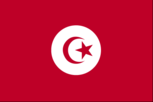
Geography
Agriculture
main crops — cereals (barley and wheat), olives, grapes, citrus fruits, and vegetables
Area
200km Buone us.h AIQ.jr.vi. \ Medaerranean Sea See regional m«p VII Land 163,610 km2; about the size of Missouri; 43% desert, waste, or urban; 28% arable and tree crop; 23% range and esparto grass; 6% forest
Branches
executive dominant; unicameral legislative (National Assembly) largely advisory; judicial, patterned on French and Koranic systems
Capital
Tunis
Coastline
1,143 km (includes offshore islands) People
Communists
a small number of nominal Communists, mostly students
Electionss
national election held every five years; last election held 1 November 1981 Political parties and leaders: Destourian Socialist Party is official ruling party; two small parties — Movement of Social Democrats and Movement of Popular Unity — legalized in 1983; Communist Party legalized in 1981
Electric power
1,070,300 kW capacity (1985); 3.75 billion kWh produced (1985), 510 kWh per capita
Ethnic divisions
98% Arab, 1% European, less than 1% Jewish
Exports
$1.8 billion (f.o.b., 1985); 40% crude petroleum, 21% textiles, 21% phosphates and chemicals, 18% other
GNP
$9.3 billion (1985 est), $1,280 per capita (1985); 57% private consumption, 16% government consumption, 29% gross fixed capital formation; average annual real growth (1980-83), 4%
Government leaders
Habib BOURGUIBA, President (Prime Minister in 1956; President since 1957; President for Life since November 1974); Mohamed MZALI, Prime Minister (since April 1980)
Imports
$2.9 billion (f.o.b., 1985)
Infant mortality rate
83/1,000(1983)
Labor force
1.9 million, 32% agriculture; 15%-25% unemployed; shortage of skilled labor
Land boundaries
1,408 km Water
Language
Arabic (official); Arabic and French (commerce)
Legal system
based on French civil law system and Islamic law; constitution patterned on Turkish and US constitutions adopted 1959; some judicial review of legislative acts in the Supreme Court in joint session; legal education at Institute of Higher Studies and Superior School of Law of the University of Tunis
Life expectancy
men 60, women 63
Limits of territorial waters (claimed)
12 nm
Literacy
about 62%
Major sectors
agriculture; industry — mining (phosphate), energy (petroleum, natural gas), manufacturing (food processing and textiles), services (transport, telecommunications, tourism, government)
Major trade partners
France, Italy, FRG, Greece Tourism and foreign worker remittances: $825 million (1985)
Member of
Af DB, Arab League, AIOEC, FAO, G-77, GATT (de facto), IAEA, IBRD, ICAO, IDA, IDE— Islamic Development Bank, IFAD, IFC, ILO, International Lead and Zinc Study Group, IMF, IMO, INTELSAT, INTERPOL, IOOC, ITU, IWC— International Wheat Council, NAM, OAPEC, OAU, QIC, Regional Cooperation for Development, UN, UNESCO, UPU, WHO, WIPO, WMO, WTO Economy
National holiday
Independence Day, 1 June
Nationality
noun — Tunisian(s); adjective — Tunisian
Natural resources
oil, phosphates, iron, ore, lead, zinc
Official name
Republic of Tunisia
Organized labor
about 360,000 members claimed, roughly 20% of labor force; General Union of Tunisian Workers (UGTT), quasi-independent of Destourian Socialist Party Government
Political subdivisions
18governorat.es (provinces)
Population
7,424,000 (July 1986), average annual growth rate 2.3%
Religion
98% Muslim, 1% Christian, less than 1 % Jewish
Suffrage
universal over age 21
Type
republic
Voting strength
(1981 election) over 95% Destourian Socialist Party; 3.2% Social Democrats, under 1% Movement of Popular Unity, under 1% Communist Party