1991 Edition
CIA World Factbook 1991 (Project Gutenberg)
Geography
Climate
tropical; rainy season (June to December)
Coastline
362 km
Comparative area
slightly smaller than Delaware
Environment
outside usual path of hurricanes and other tropical storms
Land boundaries
none
Land use
arable land 14%; permanent crops 17%; meadows and pastures 2%; forest and woodland 44%; other 23%; includes irrigated 4%
Maritime claims
Continental shelf: outer edge of continental margin or 200 nm; Exclusive economic zone: 200 nm; Territorial sea: 12 nm
Natural resources
crude oil, natural gas, asphalt
Note
located 11 km from Venezuela
Terrain
mostly plains with some hills and low mountains
Total area
5,130 km2; land area: 5,130 km2
People and Society
Birth rate
21 births/1,000 population (1991)
Death rate
6 deaths/1,000 population (1991)
Ethnic divisions
black 43%, East Indian 40%, mixed 14%, white 1%, Chinese 1%, other 1%
Infant mortality rate
18 deaths/1,000 live births (1991)
Labor force
463,900; construction and utilities 18.1%; manufacturing, mining, and quarrying 14.8%; agriculture 10.9%; other 56.2% (1985 est.)
Language
English (official), Hindi, French, Spanish
Life expectancy at birth
68 years male, 73 years female (1991)
Literacy
95% (male 97%, female 93%) age 15 and over can read and write (1980)
Nationality
noun--Trinidadian(s), Tobagonian(s); adjective--Trinidadian, Tobagonian
Net migration rate
- 4 migrants/1,000 population (1991)
Organized labor
22% of labor force (1988)
Population
1,285,297 (July 1991), growth rate 1.1% (1991)
Religion
Roman Catholic 32.2%, Hindu 24.3%, Anglican 14.4%, other Protestant 14%, Muslim 6%, none or unknown 9.1%
Total fertility rate
2.4 children born/woman (1991)
Government
Administrative divisions
8 counties, 3 municipalities*, and 1 ward**; Arima*, Caroni, Mayaro, Nariva, Port-of-Spain*, Saint Andrew, Saint David, Saint George, Saint Patrick, San Fernando*, Tobago**, Victoria
Capital
Port-of-Spain
Communists
Communist Party of Trinidad and Tobago; Trinidad and Tobago Peace Council, James MILLETTE
Constitution
31 August 1976
Diplomatic representation
Ambassador Angus Albert KHAN; Chancery at 1708 Massachusetts Avenue NW, Washington DC 20036; telephone (202) 467-6490; Trinidad and Tobago has a Consulate General in New York; US--Ambassador Charles A. GARGANO; Embassy at 15 Queen's Park West, Port-of-Spain (mailing address is P. O. Box 752, Port-of-Spain); telephone (809) 622-6372 through 6376, 6176
Elections
House of Representatives--last held 15 December 1986 (next to be held by December 1991); results--NAR 66%, PNM 32%, other 2%; seats--(36 total) NAR 33, PNM 3; note--in 1989 six members were expelled from the NAR and formed the UNC, while retaining their parliamentary seats; as a result seats held are NAR 27, UNC 6, PNM 3
Executive branch
president, prime minister, Cabinet
Flag
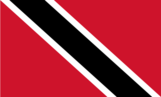
red with a white-edged black diagonal band from the upper hoist side
Independence
31 August 1962 (from UK)
Judicial branch
Court of Appeal, Supreme Court
Leaders
Chief of State--President Noor Mohammed HASSANALI (since 18 March 1987); Head of Government--Prime Minister Arthur Napoleon Raymond ROBINSON (since 18 December 1986)
Legal system
based on English common law; judicial review of legislative acts in the Supreme Court; has not accepted compulsory ICJ jurisdiction
Legislative branch
bicameral Parliament consists of an upper house or Senate and a lower house or House of Representatives
Long-form name
Republic of Trinidad and Tobago
Member of
ACP, C, CARICOM, CCC, CDB, ECLAC, FAO, G-24, G-77, GATT, IADB, IBRD, ICAO, ICFTU, IDA, IFAD, IFC, ILO, IMF, IMO, INTELSAT, INTERPOL, IOC, ISO, ITU, LAES, LORCS, NAM, OAS, OPANAL, UN, UNCTAD, UNESCO, UNIDO, UPU, WFTU, WHO, WIPO, WMO
National holiday
Independence Day, 31 August (1962)
Other political pressure groups
National Joint Action Committee (NJAC), radical antigovernment black-identity organization; Trinidad and Tobago Peace Council, leftist organization affiliated with the World Peace Council; Trinidad and Tobago Chamber of Industry and Commerce; Trinidad and Tobago Labor Congress, moderate labor federation; Council of Progressive Trade Unions, radical labor federation
Political parties and leaders
National Alliance for Reconstruction (NAR), A. N. R. ROBINSON; People's National Movement (PNM), Patrick MANNING; United National Congress (UNC), Basdeo PANDAY; Movement for Social Transformation (MOTION), David ABDULLAH
Suffrage
universal at age 18
Type
parliamentary democracy
Economy
Agriculture
highly subsidized sector; major crops--cocoa and sugarcane; sugarcane acreage is being shifted into rice, citrus, coffee, vegetables; poultry sector most important source of animal protein; must import large share of food needs
Budget
revenues $1.5 billion; expenditures $1.7 billion, including capital expenditures of $NA (1991 est.)
Currency
Trinidad and Tobago dollar (plural--dollars); 1 Trinidad and Tobago dollar (TT$) = 100 cents
Economic aid
US commitments, including Ex-Im (FY70-89), $373 million; Western (non-US) countries, ODA and OOF bilateral commitments (1970-88), $443 million
Electricity
1,176,000 kW capacity; 3,468 million kWh produced, 2,730 kWh per capita (1990)
Exchange rates
Trinidad and Tobago dollars (TT$) per US$1--4.2500 (January 1991), 4.2500 (1990), 4.2500 (1989), 3.8438 (1988), 3.6000 (1987), 3.6000 (1986), 2.4500 (1985)
Exports
$1.7 billion (f.o.b., 1990 est.); commodities--includes reexports--petroleum and petroleum products 82%, steel products 9%, fertilizer, sugar, cocoa, coffee, citrus (1988); partners--US 53%, CARICOM 16%, EC 10%, Latin America 3% (1989)
External debt
$2.5 billion (1989)
Fiscal year
calendar year
GDP
$4.05 billion, per capita $3,363; real growth rate - 3.7% (1989)
Imports
$1.3 billion (c.i.f., 1990 est.); commodities--raw materials and intermediate goods 47%, capital goods 26%, consumer goods 26% (1988); partners--US 51%, Latin America 10%, UK 8%, Canada 5%, CARICOM 6% (1989)
Industrial production
growth rate 5.2%, excluding oil refining (1986); accounts for 30% of GDP, including petroleum
Industries
petroleum, chemicals, tourism, food processing, cement, beverage, cotton textiles
Inflation rate (consumer prices)
11.4% (1989)
Overview
Trinidad and Tobago's petroleum-based economy began to emerge from a lengthy depression in 1990. The economy fell sharply through most of the 1980s, largely because of the decline in oil prices. This sector accounts for 80% of export earnings and more than 25% of GDP. The government, in response to the oil revenue loss, pursued a series of austerity measures that pushed the unemployment rate as high as 22% in 1988. The economy showed signs of recovery in 1990, however, helped along by rising oil prices. Agriculture employs only about 11% of the labor force and produces about 3% of GDP. Since this sector is small, it has been unable to absorb the large numbers of the unemployed. The government currently seeks to diversify its export base.
Unemployment rate
20% (1990)
Communications
Airports
6 total, 5 usable; 3 with permanent-surface runways; none with runways over 3,659 m; 2 with runways 2,440-3,659 m; 2 with runways 1,220-2,439 m
Civil air
14 major transport aircraft
Highways
8,000 km total; 4,000 km paved, 1,000 km improved earth, 3,000 km unimproved earth
Pipelines
1,032 km crude oil; 19 km refined products; 904 km natural gas
Ports
Port-of-Spain, Point Lisas, Pointe-a-Pierre
Railroads
minimal agricultural system near San Fernando
Telecommunications
excellent international service via tropospheric scatter links to Barbados and Guyana; good local service; 109,000 telephones; stations--2 AM, 4 FM, 5 TV; 1 Atlantic Ocean INTELSAT earth station
Military and Security
Branches
Trinidad and Tobago Defense Force (Army), Coast Guard, Air Wing, Trinidad and Tobago Police Service
Defense expenditures
$59 million, 1.6% of GDP (1989 est.) _%_
Manpower availability
males 15-49, 339,260; 245,086 fit for military service