1982 Edition
CIA World Factbook 1982 (Wikisource)
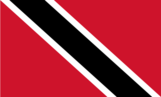
Geography
Area
5,128 km2; 41.9% in farms (25.7% cropped or fallow, 1.5% pasture, 10.6% forests, and 4.1% unused or built on), 58.1% outside of farms, including grassland, forest, built-up area, and wasteland WATER
Coastline
362 km
Limits of territorial waters (claimed)
12 nm
People and Society
Ethnic divisions
43% Negro, 40% East Indian, 14% mixed, 1% white, 2% other
Labor force
393,800 (July 1975), 13.5% agriculture, 20.0% mining, quarrying, and manufacturing, 17.4% commerce; 15.7% construction and utilities; 7.5% transportation and communications; 23.0% services, 2.9% other
Language
English
Literacy
95%
Nationality
noun—Trinidadian(s), Tobagonian(s); adjective—Trinidadian, Tobagonian
Organized labor
30% of labor force
Population
1,203,000 (July 1982), average annual growth rate 1.5%
Religion
26.8% Protestant, 31.2% Roman Catholic, 23.0% Hindu, 6.0% Muslim, 13.0% unknown
Government
Branches
legislative branch consists of 36-member elected House of Representatives and 31-member appointed Senate; executive is Cabinet led by the Prime Minister; judiciary is headed by the Chief Justice and includes a Court of Appeal, High Court, and lower courts
Capital
Port-of-Spain
Communists
not significant
Elections
elections to be held at intervals of not more than five years; last election held 9 November 1981 Political parties and leaders: People's National Movement (PNM), George Chambers; United Labor Front (ULF), Basdeo Panday; Organization for National Reconstruction (ONR), Karl Hudson-Phillips; Democratic Action Congress (DAC), Arthur Napoleon Raymond Robinson; Tapia House Movement, Lloyd Best Voting strength (1981 election): 55% of registered voters cast ballots; PNM captured 26 seats in House of Representatives, ULF 8, and DAC the 2 Tobago seats
Government leaders
Prime Minister George CHAMBERS, President Ellis CLARKE
Member of
CARICOM, Commonwealth, FAO, G-77, GATT, IADB, IBRD, International Coffee Agreement, ICAO, ICO, IDA, IDB, IFC, ILO, IMCO, IMF, ISO, ITU, IWC—International Wheat Council, NAM, OAS, SELA, UN, UNESCO, UPU, WHO, WMO, WTO
National holiday
31 August
Official name
Republic of Trinidad and Tobago
Other political pressure groups
National Joint Action Committee (NJAC), radical anti government Black-identity organization; Trinidad and Tobago Peace Council, leftist organization affiliated with the World Peace Council; Trinidad and Tobago Chamber of Industry and Commerce; Trinidad and Tobago Labor Congress, moderate labor federation; Council of Progressive Trade Unions, radical labor federation
Political subdivisions
8 counties (29 wards, Tobago is 30th) Legal system: based on English common law; constitution came into effect 1976; judicial review of legislative acts in the Supreme Court; has not accepted compulsory ICJ jurisdiction
Suffrage
universal over age 18
Type
independent state since August 1962; in August 1976 country officially became a republic severing legal ties to British crown
Economy
Agriculture
main crops—sugarcane, cocoa, coffee, rice, citrus, bananas; largely dependent upon imports of food
Aid
economic—bilateral commitments including Ex-Im (FY70-80), US, $295.2 million; (1970-79) other Western countries, ODA and OOF, $100 million
Budget
(1978) central government revenues $1.3 billion, expenditures $1.2 billion (current $618 million, capital $560 million)
Electric power
555,000 kW capacity (1981); 2.0 billion kWh produced (1981), 1,697 kWh per capita
Exports
$4.0 billion (f.o.b., 1980 prelim.); petroleum and petroleum products, ammonia, fertilizer
Fiscal year
calendar year
Fishing
catch 4,823 metric tons (1978); exports $1.1 million (1975), imports $4.5 million (1975)
GDP
$6,708 million (1980 prov.), $5,719 per capita; 42% private consumption, 17% government consumption, 28% investment, 13% foreign; growth rate (1980), 10%
Imports
$3.1 billion (c.i.f., 1980); crude petroleum (31%), machinery, fabricated metals, transportation equipment, manufactured goods, food, chemicals
Major industries
petroleum, tourism, food processing, cement
Major trade partners
imports—US 27%, UK 10%, Japan 7%, crude oil for refineries supplied almost exclusively from Saudi Arabia and Indonesia; exports—US 58%, CARICOM 8%
Monetary conversion rate
tied to US dollar in 1976; 2.40 Trinidad and Tobago dollars=US$1
Communications
Airfields
8 total, 6 usable; 3 with permanent-surface runways; 1 with runways 2,440-3,659 m, 3 with runways 1,220-2,439 m
Civil air
19 major transport aircraft
Highways
7,900 km total; 3,600 km paved, 1,100 km improved earth, 3,200 km unimproved earth
Pipelines
1,032 km crude oil and refined products; 832 km natural gas
Ports
3 major (Port of Spain, Chaguaramas Bay, Point Tembladora), 6 minor
Railroads
none
Telecommunications
excellent international service via tropospheric scatter links to Barbados and Guyana; good local service; 1 Atlantic Ocean satellite station; 75,000 telephones (7.0 per 100 popl.); 2 AM, 2 FM, and 3 TV stations
Military and Security
Military budget
proposed for fiscal year ending 31 December 1979, $105.0 million; 4.8% of central government budget
Military manpower
males 15-49, 331,000; 235,000 fit for military service
Supply
mostly from UK