1986 Edition
CIA World Factbook 1986 (Internet Archive)
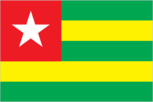
Geography
Airfields
131 total, 104 usable; 57 with permanent-surface runways; 1 with runways over 3,659 m, 13 with runways 2,440-3,659 m, 27 with runways 1,2202,439 m
Branches
- Royal Thai Army, Royal Thai Navy (includes Royal Thai Marine Corps), Royal Thai Air Force
- strong executive President; unicameral legislature (National Assembly); separate judiciary, including State Security Court, established in 1970; a new constitution was endorsed by referendum in 1979 that provided for an elective presidential system and a 67-member National Assembly
Capital
Lome
Civil air
30 (plus 2 leased) major transport aircraft
Coastline
56 km People
Elections
to be held every seven years; last held in December 1979; General Eyadema, the sole candidate, was elected by almost 100% of votes cast
Ethnic divisions
37 tribes; largest and most important are Ewe, Mina, and Kabye; under 1% European and Syrian-Lebanese
Fiscal year
1 October-30 September Communications
Government leader
Gen. Gnassingbe EYADEMA, President (since 1967)
Highways
44,534 km total; 28,016 km paved, 5,132 km earth surface, 11,386 km under development
Infant mortality rate
112/1,000(1983)
Inland waterways
3,999 km principal waterways; 3,701 km with navigable depths of 0.9 m or more throughout the year; numerous minor waterways navigable by shallowdraft native craft
Labor force
78% agriculture, 22% industry; about 88,600 wage earners, evenly divided between public and private sectors
Land boundaries
1 ,646 km Water
Language
French, both official and language of commerce; major African languages are Ewe and Mina in the south and Dagomba and Kabye in the north
Legal system
French-based court system with a court of appeals
Life expectancy
47
Limits of territorial waters (claimed)
30 nm (200 nm exclusive economic zone)
Literacy
18%
Member of
Af DB, CEAO (observer), EAMA, ECA, ECOWAS, ENTENTE, FAO, G-77, GATT, IBRD, ICAO, ICO, IDA, IFAD, IFC, ILO, IMF, IMO, INTERPOL, ITU, NAM, OAU, OCAM, UN, UNESCO, UPU, WHO, WIPO, WMO, WTO
Military budget
for fiscal year ending 30 September 1986, $1.5 million (est); 18.9% of central government budget Src rffional map VII J.OMEJ Bight of Benin Land 56,980 km2; slightly larger than West Virginia; nearly 50% arable, under 15% cultivated
Military manpower
males 15-49, 13,536,000; 8,307,000 fit for military service; about 631,000 reach military age (18) annually
National holiday
Independence Day, 27 April
Nationality
noun — Togolese (sing, and pi.); adjective — Togolese
Official name
Republic of Togo
Organized labor
one national union, the National Federation of Togolese Workers Government
Pipelines
natural gas, 350 km; refined products, 67 km
Political party
single party formed by President Eyadema in September 1969, Rally of the Togolese People (RPT); structure and staffing of party closely controlled by government Communists; no Communist Party; possibly some sympathizers
Political subdivisions
21 prefectures
Population
3,118,000 (July 1986), average annual growth rate 3.1%
Ports
2 major, 16 minor
Railroads
3,940 km 1.000-meter gauge, 99 km double track
Religion
about 70% indigenous beliefs, 20% Christian, 10% Muslim
Suffrage
universal adult
Telecommunications
service to general public adequate; bulk of service to government activities provided by multichannel cable and radio-relay network; satellite ground station; domestic satellite system being developed; 496,558 telephones (1.1 per 100 popl.); approx. 150 AM, 20 FM, 10 TV transmitters in government-controlled networks Defense Forces
Type
republic; one-party presidential regime with a centralized national administration