2023 Edition
CIA World Factbook 2023 (factbook.json @ 0d4fa4984ecb)
Introduction
Background
Two unified Thai kingdoms emerged in the mid-13th century. The Sukhothai, located in the south-central plains, gained its independence from the Khmer Empire to the east. By the late 13th century, Sukhothai’s territory extended into present-day Burma and Laos. Sukhothai lasted until the mid-15th century. The Thai Lan Na Kingdom was established in the north with its capital at Chang Mai. Lan Na was conquered by the Burmese in the 16th century. The Ayutthaya Kingdom (14th-18th centuries) succeeded the Sukhothai and would become known as the Siamese Kingdom. During the Ayutthaya period, the Thai/Siamese peoples consolidated their hold on what is present-day central and north-central Thailand. Following a military defeat at the hands of the Burmese in 1767, the Siamese Kingdom rose to new heights under the military ruler TAKSIN, who defeated the Burmese occupiers and expanded the kingdom’s territory into modern-day northern Thailand (formerly the Lan Na Kingdom), Cambodia, Laos, and the Malay Peninsula. The kingdom fought off additional Burmese invasions and raids in the late 1700s and early 1800s. In the mid-1800s, Western pressure led to Siam signing trade treaties that reduced the country’s sovereignty and independence. In the 1890s and 1900s, the British and French forced the kingdom to cede Cambodian, Laotian, and Malay territories that had been under Siamese control. A bloodless revolution in 1932 led to the establishment of a constitutional monarchy. After the Japanese invaded Thailand in 1941, the government split into a pro-Japan faction and a pro-Allied faction backed by the king. Thailand became a US treaty ally in 1954 after sending troops to Korea and later fighting alongside the US in Vietnam. Thailand since 2005 has experienced several rounds of political turmoil including a military coup in 2006 that ousted then Prime Minister THAKSIN Chinnawat, followed by large-scale street protests by competing political factions in 2008, 2009, and 2010. THAKSIN's youngest sister, YINGLAK Chinnawat, in 2011 led the Puea Thai Party to an electoral win and assumed control of the government. In early May 2014, after months of large-scale anti-government protests in Bangkok beginning in November 2013, YINGLAK was removed from office by the Constitutional Court and in late May 2014 the Royal Thai Army, led by Gen. PRAYUT Chan-ocha, staged a coup against the caretaker government. The military-affiliated National Council for Peace and Order (NCPO), led by PRAYUT as the appointed minister, ruled the country for more than four years, during which time the NCPO drafted a new constitution guaranteeing military sway over Thai politics in future elections by allowing the military to appoint the entire 250-member Senate and requiring a joint meeting of the House and Senate to select the prime minister, effectively giving the military a veto over the choice for the top executive. King PHUMIPHON Adunyadet passed away in October 2016 after 70 years on the throne; his only son, WACHIRALONGKON (aka King RAMA X), formally ascended the throne in December 2019. He signed the new constitution in April 2017. A long-delayed election in March 2019, disputed and widely viewed as skewed in favor of the party aligned with the military, allowed PRAYUT to continue his premiership. The country experienced large-scale anti-government protests in 2020. Following the 2023 elections, Srettha THRAVISIN replaced PRAYUT as prime minister when PRAYUT's supporting royalist-military parties were defeated by a coalition of populist and progressive parties.
Geography
Area
- land
- 510,890 sq km
- total
- 513,120 sq km
- water
- 2,230 sq km
Area - comparative
about three times the size of Florida; slightly more than twice the size of Wyoming
Climate
tropical; rainy, warm, cloudy southwest monsoon (mid-May to September); dry, cool northeast monsoon (November to mid-March); southern isthmus always hot and humid
Coastline
3,219 km
Elevation
- highest point
- Doi Inthanon 2,565 m
- lowest point
- Gulf of Thailand 0 m
- mean elevation
- 287 m
Geographic coordinates
15 00 N, 100 00 E
Geography - note
controls only land route from Asia to Malaysia and Singapore; ideas for the construction of a canal across the Kra Isthmus that would create a bypass to the Strait of Malacca and shorten shipping times around Asia continue to be discussed
Irrigated land
64,150 sq km (2012)
Land boundaries
- border countries
- Burma 2,416 km; Cambodia 817 km; Laos 1,845 km; Malaysia 595 km
- total
- 5,673 km
Land use
- agricultural land
- 41.2% (2018 est.)
- agricultural land: arable land
- arable land: 30.8% (2018 est.)
- agricultural land: permanent crops
- permanent crops: 8.8% (2018 est.)
- agricultural land: permanent pasture
- permanent pasture: 1.6% (2018 est.)
- forest
- 37.2% (2018 est.)
- other
- 21.6% (2018 est.)
Location
Southeastern Asia, bordering the Andaman Sea and the Gulf of Thailand, southeast of Burma
Major lakes (area sq km)
- salt water lake(s)
- Thalesap Songkhla - 1,290 sq km
Major rivers (by length in km)
Mae Nam Khong (Mekong) (shared with China [s], Burma, Laos, Cambodia, and Vietnam [m]) - 4,350 km; Salween (shared with China [s] and Burma [m]) - 3,060 km; Mun - 1,162 kmnote – [s] after country name indicates river source; [m] after country name indicates river mouth
Major watersheds (area sq km)
Indian Ocean drainage: Salween (271,914 sq km)Pacific Ocean drainage: Mekong (805,604 sq km)
Map references
Southeast Asia
Maritime claims
- continental shelf
- 200-m depth or to the depth of exploitation
- exclusive economic zone
- 200 nm
- territorial sea
- 12 nm
Natural hazards
land subsidence in Bangkok area resulting from the depletion of the water table; droughts
Natural resources
tin, rubber, natural gas, tungsten, tantalum, timber, lead, fish, gypsum, lignite, fluorite, arable land
Population distribution
highest population density is found in and around Bangkok; significant population clusters found througout large parts of the country, particularly north and northeast of Bangkok and in the extreme southern region of the country
Terrain
central plain; Khorat Plateau in the east; mountains elsewhere
People and Society
Age structure
- 0-14 years
- 16% (male 5,720,842/female 5,443,981)
- 15-64 years
- 69.53% (male 23,797,302/female 24,734,505)
- 65 years and over
- 14.47% (2023 est.) (male 4,500,808/female 5,597,559)
Alcohol consumption per capita
- beer
- 1.85 liters of pure alcohol (2019 est.)
- other alcohols
- 0 liters of pure alcohol (2019 est.)
- spirits
- 4.78 liters of pure alcohol (2019 est.)
- total
- 6.86 liters of pure alcohol (2019 est.)
- wine
- 0.23 liters of pure alcohol (2019 est.)
Birth rate
10 births/1,000 population (2023 est.)
Child marriage
- men married by age 18
- 9.8% (2019 est.)
- women married by age 15
- 3%
- women married by age 18
- 20.2%
Children under the age of 5 years underweight
7.7% (2019)
Contraceptive prevalence rate
73% (2019)
Current health expenditure
4.4% of GDP (2020)
Currently married women (ages 15-49)
60.8% (2023 est.)
Death rate
7.9 deaths/1,000 population (2023 est.)
Demographic profile
Thailand has experienced a substantial fertility decline since the 1960s largely due to the nationwide success of its voluntary family planning program. In just one generation, the total fertility rate (TFR) shrank from 6.5 children per woman in the 1960s to below the replacement level of 2.1 in the late 1980s. Reduced fertility occurred among all segments of the Thai population, despite disparities between urban and rural areas in terms of income, education, and access to public services. The country’s “reproductive revolution” gained momentum in the 1970s as a result of the government’s launch of an official population policy to reduce population growth, the introduction of new forms of birth control, and the assistance of foreign non-government organizations. Contraceptive use rapidly increased as new ways were developed to deliver family planning services to Thailand’s then overwhelmingly rural population. The contraceptive prevalence rate increased from just 14% in 1970 to 58% in 1981 and has remained about 80% since 2000. Thailand’s receptiveness to family planning reflects the predominant faith, Theravada Buddhism, which emphasizes individualism, personal responsibility, and independent decision-making. Thai women have more independence and a higher status than women in many other developing countries and are not usually pressured by their husbands or other family members about family planning decisions. Thailand’s relatively egalitarian society also does not have the son preference found in a number of other Asian countries; most Thai ideally want one child of each sex. Because of its low fertility rate, increasing life expectancy, and growing elderly population, Thailand has become an aging society that will face growing labor shortages. The proportion of the population under 15 years of age has shrunk dramatically, the proportion of working-age individuals has peaked and is starting to decrease, and the proportion of elderly is growing rapidly. In the short-term, Thailand will have to improve educational quality to increase the productivity of its workforce and to compete globally in skills-based industries. An increasing reliance on migrant workers will be necessary to mitigate labor shortfalls. Thailand is a destination, transit, and source country for migrants. It has 3-4 million migrant workers as of 2017, mainly providing low-skilled labor in the construction, agriculture, manufacturing, services, and fishing and seafood processing sectors. Migrant workers from other Southeast Asian countries with lower wages – primarily Burma and, to a lesser extent, Laos and Cambodia – have been coming to Thailand for decades to work in labor-intensive industries. Many are undocumented and are vulnerable to human trafficking for forced labor, especially in the fisheries industry, or sexual exploitation. A July 2017 migrant worker law stiffening fines on undocumented workers and their employers, prompted tens of thousands of migrants to go home. Fearing a labor shortage, the Thai Government has postponed implementation of the law until January 2018 and is rapidly registering workers. Thailand has also hosted ethnic minority refugees from Burma for more than 30 years; as of 2016, approximately 105,000 mainly Karen refugees from Burma were living in nine camps along the Thailand-Burma border. Thailand has a significant amount of internal migration, most often from rural areas to urban centers, where there are more job opportunities. Low- and semi-skilled Thais also go abroad to work, mainly in Asia and a smaller number in the Middle East and Africa, primarily to more economically developed countries where they can earn higher wages.
Dependency ratios
- elderly dependency ratio
- 18.4
- potential support ratio
- 4.8 (2021 est.)
- total dependency ratio
- 43.5
- youth dependency ratio
- 22.7
Drinking water source
- improved: rural
- rural: 100% of population
- improved: total
- total: 100% of population
- improved: urban
- urban: 100% of population
- unimproved: rural
- rural: 0% of population
- unimproved: total
- total: 0% of population (2020 est.)
- unimproved: urban
- urban: 0% of population
Education expenditures
3.2% of GDP (2020 est.)
Ethnic groups
- Thai 97.5%, Burmese 1.3%, other 1.1%, unspecified <0.1% (2015 est.)
- note
- note: data represent population by nationality
Gross reproduction rate
0.75 (2023 est.)
Infant mortality rate
- female
- 5.7 deaths/1,000 live births
- male
- 7 deaths/1,000 live births
- total
- 6.4 deaths/1,000 live births (2023 est.)
Languages
- Languages
- Thai (official) only 90.7%, Thai and other languages 6.4%, only other languages 2.9% (includes Malay, Burmese); note - data represent population by language(s) spoken at home; English is a secondary language of the elite (2010 est.)
- major-language sample(s)
- สารานุกรมโลก - แหล่งข้อมูลพื้นฐานที่สำคัญ (Thai)The World Factbook, the indispensable source for basic information.
Life expectancy at birth
- female
- 81.1 years
- male
- 74.9 years
- total population
- 77.9 years (2023 est.)
Literacy
- definition
- age 15 and over can read and write
- female
- 92.8% (2021)
- male
- 95.5%
- total population
- 94.1%
Major infectious diseases
- degree of risk
- high (2023)
- food or waterborne diseases
- bacterial diarrhea
- vectorborne diseases
- dengue fever, Japanese encephalitis, and malaria
Major urban areas - population
11.070 million BANGKOK (capital), 1.454 Chon Buri, 1.359 million Samut Prakan, 1.213 million Chiang Mai, 1.005 million Songkla, 1.001 million Nothaburi (2023)
Maternal mortality ratio
29 deaths/100,000 live births (2020 est.)
Median age
- female
- 42.2 years
- male
- 39.8 years
- total
- 41 years (2023 est.)
Mother's mean age at first birth
23.3 years (2009 est.)
Nationality
- adjective
- Thai
- noun
- Thai (singular and plural)
Net migration rate
-0.2 migrant(s)/1,000 population (2023 est.)
Obesity - adult prevalence rate
10% (2016)
Physicians density
0.95 physicians/1,000 population (2020)
Population
69,794,997 (2023 est.)
Population distribution
highest population density is found in and around Bangkok; significant population clusters found througout large parts of the country, particularly north and northeast of Bangkok and in the extreme southern region of the country
Population growth rate
0.2% (2023 est.)
Religions
Buddhist 92.5%, Muslim 5.4%, Christian 1.2%, other 0.9% (includes animist, Confucian, Hindu, Jewish, Sikh, and Taoist) (2021 est.)
Sanitation facility access
- improved: rural
- rural: 100% of population
- improved: total
- total: 100% of population
- improved: urban
- urban: 99.9% of population
- unimproved: rural
- rural: 0% of population
- unimproved: total
- total: 0% of population (2020 est.)
- unimproved: urban
- urban: 0.1% of population
School life expectancy (primary to tertiary education)
- female
- 16 years (2016)
- male
- 15 years
- total
- 15 years
Sex ratio
- 0-14 years
- 1.05 male(s)/female
- 15-64 years
- 0.96 male(s)/female
- 65 years and over
- 0.8 male(s)/female
- at birth
- 1.05 male(s)/female
- total population
- 0.95 male(s)/female (2023 est.)
Tobacco use
- female
- 2.9% (2020 est.)
- male
- 41.3% (2020 est.)
- total
- 22.1% (2020 est.)
Total fertility rate
1.54 children born/woman (2023 est.)
Urbanization
- rate of urbanization
- 1.43% annual rate of change (2020-25 est.)
- urban population
- 53.6% of total population (2023)
Government
Administrative divisions
76 provinces (changwat, singular and plural) and 1 municipality* (maha nakhon); Amnat Charoen, Ang Thong, Bueng Kan, Buri Ram, Chachoengsao, Chai Nat, Chaiyaphum, Chanthaburi, Chiang Mai, Chiang Rai, Chon Buri, Chumphon, Kalasin, Kamphaeng Phet, Kanchanaburi, Khon Kaen, Krabi, Krung Thep* (Bangkok), Lampang, Lamphun, Loei, Lop Buri, Mae Hong Son, Maha Sarakham, Mukdahan, Nakhon Nayok, Nakhon Pathom, Nakhon Phanom, Nakhon Ratchasima, Nakhon Sawan, Nakhon Si Thammarat, Nan, Narathiwat, Nong Bua Lamphu, Nong Khai, Nonthaburi, Pathum Thani, Pattani, Phangnga, Phatthalung, Phayao, Phetchabun, Phetchaburi, Phichit, Phitsanulok, Phra Nakhon Si Ayutthaya, Phrae, Phuket, Prachin Buri, Prachuap Khiri Khan, Ranong, Ratchaburi, Rayong, Roi Et, Sa Kaeo, Sakon Nakhon, Samut Prakan, Samut Sakhon, Samut Songkhram, Saraburi, Satun, Sing Buri, Si Sa Ket, Songkhla, Sukhothai, Suphan Buri, Surat Thani, Surin, Tak, Trang, Trat, Ubon Ratchathani, Udon Thani, Uthai Thani, Uttaradit, Yala, Yasothon
Capital
- etymology
- Bangkok was likely originally a colloquial name, but one that was widely adopted by foreign visitors; the name may derive from bang ko, where bang is the Thai word for "village on a stream" and ko means "island," both referencing the area's landscape, which was carved by rivers and canals; alternatively, the name may come from bang makok, where makok is the name of the Java plum, a plant bearing olive-like fruit; this possibility is supported by the former name of Wat Arun, a historic temple in the area, that used to be called Wat Makok; Krung Thep Maha Nakhon, the city's Thai name, means "City of Angels, Great City" or simply "Great City of Angels" and is a shortening of the full ceremonial name: Krungthepmahanakhon Amonrattanakosin Mahintharayutthaya Mahadilokphop Noppharatratchathaniburirom Udomratchaniwetmahasathan Amonphimanawatansathit Sakkathattiyawitsanukamprasit; translated the meaning is: "City of angels, great city of immortals, magnificent city of the nine gems, seat of the king, city of royal palaces, home of gods incarnate, erected by Vishvakarman at Indra's behest"; it holds the world's record as the longest place name (169 letters); Krung Thep is used colloquially
- geographic coordinates
- 13 45 N, 100 31 E
- name
- Bangkok
- time difference
- UTC+7 (12 hours ahead of Washington, DC, during Standard Time)
Citizenship
- citizenship by birth
- no
- citizenship by descent only
- at least one parent must be a citizen of Thailand
- dual citizenship recognized
- no
- residency requirement for naturalization
- 5 years
Constitution
- amendments
- amendments require a majority vote in a joint session of the House and Senate and further require at least one fifth of opposition House members and one third of the Senate vote in favor; a national referendum is additionally required for certain amendments; all amendments require signature by the king; Thailand's 2017 constitution was amended in November 2021 to increase the number of constituency members of parliament (MPs) from 350 to 400, reduce the number of party-list MPs from 150 to 100, and change the election to a two-ballot system
- history
- many previous; latest drafted and presented 29 March 2016, approved by referendum 7 August 2016, signed into law by the king on 6 April 2017
Country name
- conventional long form
- Kingdom of Thailand
- conventional short form
- Thailand
- etymology
- Land of the Tai [People]"; the meaning of "tai" is uncertain, but may originally have meant "human beings," "people," or "free people''
- former
- Siam
- local long form
- Ratcha Anachak Thai
- local short form
- Prathet Thai
Diplomatic representation from the US
- chief of mission
- Ambassador Robert F. GODEC (since 7 October 2022)
- consulate(s) general
- Chiang Mai
- email address and website
- acsbkk@state.govhttps://th.usembassy.gov/
- embassy
- 95 Wireless Road, Bangkok 10330
- FAX
- [66] 2-205-4103
- mailing address
- 7200 Bangkok Place, Washington DC 20521-7200
- telephone
- [66] 2-205-4000
Diplomatic representation in the US
- chancery
- 1024 Wisconsin Avenue NW, Suite 401, Washington, DC 20007
- chief of mission
- Ambassador Tanee SANGRAT (since 12 December 2022)
- consulate(s) general
- Chicago, Los Angeles, New York
- email address and website
- thai.wsn@thaiembdc.orghttps://thaiembdc.org
- FAX
- [1] (202) 944-3611
- telephone
- [1] (202) 944-3600
Executive branch
- cabinet
- Council of Ministers nominated by the prime minister, appointed by the king; a Privy Council advises the king
- chief of state
- King WACHIRALONGKON, also spelled Vajiralongkorn (since 1 December 2016)
- elections/appointments
- the monarchy is hereditary; prime minister candidate approved by the House of Representatives and Senate and appointed by the king; starting in 2024, approval of prime minister needed only by the House of Representatives
- head of government
- Prime Minister SETTHA Thawisin (since 5 September 2023)
Flag description
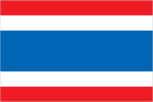
- five horizontal bands of red (top), white, blue (double width), white, and red; the red color symbolizes the nation and the blood of life, white represents religion and the purity of Buddhism, and blue stands for the monarchy
- note
- note: similar to the flag of Costa Rica but with the blue and red colors reversed
Government type
constitutional monarchy
Independence
1238 (traditional founding date; never colonized)
International law organization participation
has not submitted an ICJ jurisdiction declaration; non-party state to the ICCt
International organization participation
ADB, APEC, ARF, ASEAN, BIMSTEC, BIS, CD, CICA, CP, EAS, FAO, G-77, IAEA, IBRD, ICAO, ICC (national committees), ICRM, IDA, IFAD, IFC, IFRCS, IHO, ILO, IMF, IMO, IMSO, Interpol, IOC, IOM, IPU, ISO, ITSO, ITU, ITUC (NGOs), MIGA, NAM, OAS (observer), OIC (observer), OIF (observer), OPCW, OSCE (partner), PCA, PIF (partner), UN, UNAMID, UNCTAD, UNESCO, UNHCR, UNIDO, UNMOGIP, UNOOSA, UNOCI, UNWTO, UPU, WCO, WFTU (NGOs), WHO, WIPO, WMO, WTO
Judicial branch
- highest court(s)
- Supreme Court of Justice (consists of the court president, 6 vice presidents, 60-70 judges, and organized into 10 divisions); Constitutional Court (consists of the court president and 8 judges); Supreme Administrative Court (number of judges determined by Judicial Commission of the Administrative Courts)
- judge selection and term of office
- Supreme Court judges selected by the Judicial Commission of the Courts of Justice and approved by the monarch; judge term determined by the monarch; Constitutional Court justices - 3 judges drawn from the Supreme Court, 2 judges drawn from the Administrative Court, and 4 judge candidates selected by the Selective Committee for Judges of the Constitutional Court, and confirmed by the Senate; judges appointed by the monarch serve single 9-year terms; Supreme Administrative Court judges selected by the Judicial Commission of the Administrative Courts and appointed by the monarch; judges serve for life
- subordinate courts
- courts of first instance and appeals courts within both the judicial and administrative systems; military courts
Legal system
civil law system with common law influences
Legislative branch
- description
- bicameral National Assembly or Ratthasapha consists of:Senate or Wuthisapha (currently 250 seats; members appointed by the National Council for Peace and Order to serve 5-year terms; the Senate appointed in 2024 will consist of 200 members elected from various groups of professionals for a 5-year term)House of Representatives or Saphaphuthan Ratsadon (500 seats; 400 members directly elected in single-seat constituencies by simple majority vote and 100 members elected in a single nationwide constituency by party-list proportional representation vote; members serve 4-year terms)
- election results
- Senate - percent of vote by party - NA; seats by party - NA; composition (248 members as of mid-2022) - men 222, women 26, percent of women 10.5%House of Representatives - percent of vote by party in 2023 election - MFP 36.2%, PTP 27.7%, UTN 11.9%, PJT 2.9%, DP 2.3%, PPRP 1.4%, PCC 1.5%, other 16%; seats by party - MFP 152, PTP 141, PJT 70, PPRP 41, UTN 36, DP 24, PCC 9, CTP 10, Thai Sang Thai 6, other 11House of Representatives - percent of vote by party in 2019 election- PPRP 23.7%, PTP 22.2%, FFP* 17.8%, DP 11.1%, PJT 10.5%, TLP 2.3%, CTP 2.2%, NEP 1.4%, PCC 1.4%, ACT 1.2%, PCP 1.2%, other 5.1%; seats by party - PTP 136, PPRP 116, FFP 81, DP 53, PJT 51, CTP 10, TLP 10, PCC 7, PCP 5, NEP 6, ACT 5, other 20; composition (489 members as of mid-2022) - men 412, women 77, percent of women 15.8%; note(s) - total National Assembly percent of women 14%
- elections
- Senate - last selections held on 14 May 2019 (next to be held in 2024)House of Representatives - last held on 14 May 2023 (next to be held in May 2027)
National anthem
- lyrics/music
- Luang SARANUPRAPAN/Phra JENDURIYANG
- name
- "Phleng Chat Thai" (National Anthem of Thailand)
- note
- note: music adopted 1932, lyrics adopted 1939; by law, people are required to stand for the national anthem at 0800 and 1800 every day; the anthem is played in schools, offices, theaters, and on television and radio during this time; "Phleng Sanlasoen Phra Barami" (A Salute to the Monarch) serves as the royal anthem and is played in the presence of the royal family and during certain state ceremonies
National heritage
- selected World Heritage Site locales
- Historic City of Ayutthaya (c); Historic Sukhothai and Associated Historic Towns (c); Thungyai-Huai Kha Khaeng Wildlife Sanctuaries (n); Ban Chiang Archaeological Site (c); Dong Phayayen-Khao Yai Forest Complex (n); Kaeng Krachan Forest Complex (n)
- total World Heritage Sites
- 6 (3 cultural, 3 natural)
National holiday
Birthday of King WACHIRALONGKON, 28 July (1952)
National symbol(s)
garuda (mythical half-man, half-bird figure), elephant; national colors: red, white, blue
Political parties and leaders
Action Coalition Party or ACP [ANEK Laothammathast]Bhumjaithai Party (aka Phumchai Thai Party or PJT; aka Thai Pride Party) or BJT [ANUTIN Chanwirakun]Chat Phatthana Kla arty (National Development Party) [KON Chatikawanit]Chat Thai Phatthana Party (Thai Nation Development Party) or CTP [VARAWUT Silpa-archa]New Economics Party or NEP [MANUN Siwaphiromrat]Move Forward Party or MFP [CHAITHAWAT Tulathon] Palang Pracharat Party (People's State Power Party) or PPRP [PRAWIT Wongsuwan] Prachachat Party or PCC [WAN Muhamad NOOR Matha]Prachathipat Party (Democrat Party) or DP [CHALERMCHAI Sri-on] Puea Chat Party (For Nation Party) or PCP [SARUNWUT Sarunket]Puea Thai Party (For Thais Party) or PTP [Chusak SIRINIL]Puea Tham Party (For Dharma Party) [NALINI Thawisin]Seri Ruam Thai Party (Thai Liberal Party or TLP) [SERIPHISUT Temiyawet]Thai Civilized Party or TCL [MONGKOLKIT Suksintharanon]Thai Local Power Party or TLP [CHATCHAWAI Kong-udom]Thai People Power Party or TLPT [NIKHOM Bunwiset]Thai Sang Thai Party [SUDARAT Keyuraphan]United Thai Nation (Ruam Thai Sang Chat) or UTN [PHIRAPHAN Saliratthawiphak]
Suffrage
18 years of age; universal and compulsory
Economy
Agricultural products
sugar cane, cassava, rice, oil palm fruit, rubber, maize, tropical fruit, poultry, pineapples, mangoes/guavas
Average household expenditures
- on alcohol and tobacco
- 3.4% of household expenditures (2018 est.)
- on food
- 24.3% of household expenditures (2018 est.)
Budget
- expenditures
- $128.581 billion (2020 est.)
- revenues
- $104.689 billion (2020 est.)
Budget surplus (+) or deficit (-)
-3.5% (of GDP) (2017 est.)
Credit ratings
- Fitch rating
- BBB+ (2013)
- Moody's rating
- Baa1 (2003)
- note
- note: The year refers to the year in which the current credit rating was first obtained.
- Standard & Poors rating
- BBB+ (2004)
Current account balance
- Current account balance 2019
- $38.256 billion (2019 est.)
- Current account balance 2020
- $21.058 billion (2020 est.)
- Current account balance 2021
- -$10.345 billion (2021 est.)
Debt - external
- Debt - external 2018
- $158.964 billion (2018 est.)
- Debt - external 2019
- $167.89 billion (2019 est.)
Economic overview
upper middle-income Southeast Asian economy; substantial infrastructure; major electronics, food, and automobile parts exporter; globally used currency; extremely low unemployment; ongoing Thailand 4.0 economic development
Exchange rates
- Currency
- baht per US dollar -
- Exchange rates 2017
- 33.94 (2017 est.)
- Exchange rates 2018
- 32.31 (2018 est.)
- Exchange rates 2019
- 31.048 (2019 est.)
- Exchange rates 2020
- 31.294 (2020 est.)
- Exchange rates 2021
- 31.977 (2021 est.)
Exports
- Exports 2019
- $323.878 billion (2019 est.) note: data are in current year dollars
- Exports 2020
- $257.981 billion (2020 est.) note: data are in current year dollars
- Exports 2021
- $296.002 billion (2021 est.) note: data are in current year dollars
Exports - commodities
office machinery/parts, cars and vehicle parts, integrated circuits, delivery trucks, refined petroleum, rubber (2021)
Exports - partners
United States 16%, China 13%, Japan 9%, Vietnam 4%, Australia 4% (2021)
Fiscal year
1 October - 30 September
GDP - composition, by end use
- exports of goods and services
- 68.2% (2017 est.)
- government consumption
- 16.4% (2017 est.)
- household consumption
- 48.8% (2017 est.)
- imports of goods and services
- -54.6% (2017 est.)
- investment in fixed capital
- 23.2% (2017 est.)
- investment in inventories
- -0.4% (2017 est.)
GDP - composition, by sector of origin
- agriculture
- 8.2% (2017 est.)
- industry
- 36.2% (2017 est.)
- services
- 55.6% (2017 est.)
GDP (official exchange rate)
$543.798 billion (2019 est.)
Gini Index coefficient - distribution of family income
- Gini Index coefficient - distribution of family income 2020
- 35 (2020 est.)
Household income or consumption by percentage share
- highest 10%
- 31.5% (2009 est.)
- lowest 10%
- 2.8%
Imports
- Imports 2019
- $272.831 billion (2019 est.) note: data are in current year dollars
- Imports 2020
- $232.039 billion (2020 est.) note: data are in current year dollars
- Imports 2021
- $295.78 billion (2021 est.) note: data are in current year dollars
Imports - commodities
crude petroleum, integrated circuits, gold, natural gas, vehicle parts, broadcasting equipment (2021)
Imports - partners
China 28%, Japan 12%, Malaysia 5%, United States 5%, United Arab Emirates 4% (2021)
Industrial production growth rate
3.34% (2021 est.)
Industries
tourism, textiles and garments, agricultural processing, beverages, tobacco, cement, light manufacturing such as jewelry and electric appliances, computers and parts, integrated circuits, furniture, plastics, automobiles and automotive parts, agricultural machinery, air conditioning and refrigeration, ceramics, aluminum, chemical, environmental management, glass, granite and marble, leather, machinery and metal work, petrochemical, petroleum refining, pharmaceuticals, printing, pulp and paper, rubber, sugar, rice, fishing, cassava, world's second-largest tungsten producer and third-largest tin producer
Inflation rate (consumer prices)
- Inflation rate (consumer prices) 2019
- 0.71% (2019 est.)
- Inflation rate (consumer prices) 2020
- -0.85% (2020 est.)
- Inflation rate (consumer prices) 2021
- 1.23% (2021 est.)
Labor force
40.213 million (2021 est.)
Population below poverty line
9.9% (2018 est.)
Public debt
- note
- note: data cover general government debt and include debt instruments issued (or owned) by government entities other than the treasury; the data include treasury debt held by foreign entities; the data include debt issued by subnational entities, as well as intragovernmental debt; intragovernmental debt consists of treasury borrowings from surpluses in the social funds, such as for retirement, medical care, and unemployment; debt instruments for the social funds are sold at public auctions
- Public debt 2018
- 39.25% of GDP (2018 est.)
- Public debt 2019
- 40.13% of GDP (2019 est.)
- Public debt 2020
- 50.4% of GDP (2020 est.)
Real GDP (purchasing power parity)
- note
- note: data are in 2017 dollars
- Real GDP (purchasing power parity) 2019
- $1.284 trillion (2019 est.)
- Real GDP (purchasing power parity) 2020
- $1.204 trillion (2020 est.)
- Real GDP (purchasing power parity) 2021
- $1.223 trillion (2021 est.)
Real GDP growth rate
- Real GDP growth rate 2019
- 2.15% (2019 est.)
- Real GDP growth rate 2020
- -6.2% (2020 est.)
- Real GDP growth rate 2021
- 1.53% (2021 est.)
Real GDP per capita
- note
- note: data are in 2017 dollars
- Real GDP per capita 2019
- $18,000 (2019 est.)
- Real GDP per capita 2020
- $16,800 (2020 est.)
- Real GDP per capita 2021
- $17,100 (2021 est.)
Reserves of foreign exchange and gold
- Reserves of foreign exchange and gold 31 December 2019
- $224.356 billion (31 December 2019 est.)
- Reserves of foreign exchange and gold 31 December 2020
- $258.104 billion (31 December 2020 est.)
- Reserves of foreign exchange and gold 31 December 2021
- $246.025 billion (31 December 2021 est.)
Taxes and other revenues
14.48% (of GDP) (2020 est.)
Unemployment rate
- Unemployment rate 2019
- 0.72% (2019 est.)
- Unemployment rate 2020
- 1.1% (2020 est.)
- Unemployment rate 2021
- 1.42% (2021 est.)
Youth unemployment rate (ages 15-24)
- female
- 8.1%
- male
- 6.2%
- total
- 7% (2021 est.)
Energy
Carbon dioxide emissions
- from coal and metallurgical coke
- 58.78 million metric tonnes of CO2 (2019 est.)
- from consumed natural gas
- 100.321 million metric tonnes of CO2 (2019 est.)
- from petroleum and other liquids
- 146.172 million metric tonnes of CO2 (2019 est.)
- total emissions
- 305.273 million metric tonnes of CO2 (2019 est.)
Coal
- consumption
- 35.761 million metric tons (2020 est.)
- exports
- 63,000 metric tons (2020 est.)
- imports
- 23.899 million metric tons (2020 est.)
- production
- 13.251 million metric tons (2020 est.)
- proven reserves
- 1.063 billion metric tons (2019 est.)
Electricity
- consumption
- 190,569,262,000 kWh (2019 est.)
- exports
- 2,617,583,000 kWh (2020 est.)
- imports
- 29,550,571,000 kWh (2020 est.)
- installed generating capacity
- 53.13 million kW (2020 est.)
- transmission/distribution losses
- 13.286 billion kWh (2019 est.)
Electricity access
- electrification - total population
- 100% (2021)
Electricity generation sources
- biomass and waste
- 9.6% of total installed capacity (2020 est.)
- fossil fuels
- 83.3% of total installed capacity (2020 est.)
- geothermal
- 0% of total installed capacity (2020 est.)
- hydroelectricity
- 2.6% of total installed capacity (2020 est.)
- nuclear
- 0% of total installed capacity (2020 est.)
- solar
- 2.8% of total installed capacity (2020 est.)
- tide and wave
- 0% of total installed capacity (2020 est.)
- wind
- 1.7% of total installed capacity (2020 est.)
Energy consumption per capita
- Total energy consumption per capita 2019
- 76.714 million Btu/person (2019 est.)
Natural gas
- consumption
- 54,802,466,000 cubic meters (2019 est.)
- exports
- 0 cubic meters (2021 est.)
- imports
- 14,944,842,000 cubic meters (2019 est.)
- production
- 38,420,517,000 cubic meters (2019 est.)
- proven reserves
- 138.243 billion cubic meters (2021 est.)
Petroleum
- crude oil and lease condensate exports
- 28,600 bbl/day (2018 est.)
- crude oil and lease condensate imports
- 979,800 bbl/day (2018 est.)
- crude oil estimated reserves
- 252.8 million barrels (2021 est.)
- refined petroleum consumption
- 1,284,800 bbl/day (2019 est.)
- total petroleum production
- 438,200 bbl/day (2021 est.)
Refined petroleum products - exports
278,300 bbl/day (2015 est.)
Refined petroleum products - imports
134,200 bbl/day (2015 est.)
Refined petroleum products - production
1.328 million bbl/day (2015 est.)
Communications
Broadband - fixed subscriptions
- subscriptions per 100 inhabitants
- 16 (2020 est.)
- total
- 11,478,265 (2020 est.)
Broadcast media
26 digital TV stations in Bangkok broadcast nationally, 6 terrestrial TV stations in Bangkok broadcast nationally via relay stations - 2 of the stations are owned by the military, the other 4 are government-owned or controlled, leased to private enterprise, and all are required to broadcast government-produced news programs twice a day; multi-channel satellite and cable TV subscription services are available; radio frequencies have been allotted for more than 500 government and commercial radio stations; many small community radio stations operate with low-power transmitters (2017)
Internet country code
.th
Internet users
- percent of population
- 85% (2021 est.)
- total
- 61.2 million (2021 est.)
Telecommunication systems
- domestic
- fixed-line is 7 per 100 and mobile-cellular is 170 per 100 (2021)
- general assessment
- Thailand’s telecom sector is relatively mature and hosts a mix of public and private sector players; the mobile market is highly developed and has experienced strong growth over the last seven years; the market returned to growth in 2021 after it contracted in 2020 driven by the Covid-19 pandemic, and a steep decline in inbound tourism; it remains highly saturated, owing to overall maturity and the popularity of multiple SIM card use, which has resulted in a particularly high penetration rate; in general, the sector retains considerable potential given the impetus of 5G, the recent spectrum auctions, and continued network deployments by the country’s network operators; further auctions of spectrum in the 700MHz band (being repurposed from digital TV broadcasting), and in the 3.6GHz range will further improve network capacity; in the wire line segment, the decline in fixed-line penetration is expected to continue as subscribers migrate to mobile networks for voice and data services; the emphasis among operators has been to bolster their fiber footprints in key high-value areas; the transition to fiber from DSL and cable has also been facilitated by changes to the regulatory structure that have removed some barriers to investment; this is supporting the cannibalization of older copper-based DSL lines by fiber; the returns from this investment remain a long-term prospect as consumers still favor entry-level packages; there is also strong interest from the government, as well as private vendors, in establishing Thailand as a data center hub to serve the region; the size, capacity and spread of existing data centers in the Greater Mekong Subregion (GMS) outside of Thailand is small; Thailand retains some advantages to attract investment, including improved fiber connectivity and international bandwidth; increasing submarine capacity, such as the SJC2 cable to come online later in 2023, will considerably improve Thailand’s potential as a regional hub (2022)
- international
- country code - 66; landing points for the AAE-1, FEA, SeaMeWe-3,-4, APG, SJC2, TIS, MCT and AAG submarine cable systems providing links throughout Asia, Australia, Africa, Middle East, Europe, and US; satellite earth stations - 2 Intelsat (1 Indian Ocean, 1 Pacific Ocean) (2019)
Telephones - fixed lines
- subscriptions per 100 inhabitants
- 7 (2021 est.)
- total subscriptions
- 4.6 million (2021 est.)
Telephones - mobile cellular
- subscriptions per 100 inhabitants
- 170 (2021 est.)
- total subscriptions
- 120 million (2021 est.)
Transportation
Airports
101 (2021)
Airports - with paved runways
- 63
- note
- note: paved runways have a concrete or asphalt surface but not all have facilities for refueling, maintenance, or air traffic control; the length of a runway required for aircraft to safely operate depends on a number of factors including the type of aircraft, the takeoff weight (including passengers, cargo, and fuel), engine types, flap settings, landing speed, elevation of the airport, and average maximum daily air temperature; paved runways can reach a length of 5,000 m (16,000 ft.), but the “typical” length of a commercial airline runway is between 2,500-4,000 m (8,000-13,000 ft.)
Airports - with unpaved runways
- 38
- note
- note: unpaved runways have a surface composition such as grass or packed earth and are most suited to the operation of light aircraft; unpaved runways are usually short, often less than 1,000 m (3,280 ft.) in length; airports with unpaved runways often lack facilities for refueling, maintenance, or air traffic control
Civil aircraft registration country code prefix
HS
Heliports
7 (2021)
Merchant marine
- by type
- bulk carrier 26, container ship 28, general cargo 91, oil tanker 246, other 438
- total
- 829 (2022)
National air transport system
- annual freight traffic on registered air carriers
- 2,666,260,000 (2018) mt-km
- annual passenger traffic on registered air carriers
- 76,053,042 (2018)
- inventory of registered aircraft operated by air carriers
- 283
- number of registered air carriers
- 15 (2020)
Pipelines
2 km condensate, 5,900 km gas, 85 km liquid petroleum gas, 1 km oil, 1,097 km refined products (2013)
Ports and terminals
- container port(s) (TEUs)
- Laem Chabang (8,335,384) (2021)
- LNG terminal(s) (import)
- Map Ta Phut
- major seaport(s)
- Bangkok, Laem Chabang, Map Ta Phut, Prachuap Port, Si Racha
Railways
- narrow gauge
- 4,043 km (2017) 1.000-m gauge
- standard gauge
- 84 km (2017) 1.435-m gauge (84 km electrified)
- total
- 4,127 km (2017)
Roadways
- total
- 180,053 km (2006) (includes 450 km of expressways)
Waterways
4,000 km (2011) (3,701 km navigable by boats with drafts up to 0.9 m)
Military and Security
Military - note
the RTARF’s missions include defending the country’s territory and sovereignty, protecting the monarchy, ensuring internal security, and responding to natural disasters; it also plays a large role in domestic politics and has attempted more than 20 coups since the fall of absolute monarchy in 1932, the most recent being in 2014; the Army, formed in 1874, is the dominant service and has 15 combat divisions spread across 4 military regions; ten of the divisions are infantry, while the others are armored/mechanized cavalry, special forces, and artillery; established in 1906, the Navy’s principal warships include a light aircraft/helicopter carrier, a landing platform dock (LPD) amphibious assault ship, and nearly 20 frigates, corvettes, and offshore patrol vessels; it also has a marine infantry division; the Air Force, established in 1913, is one of the oldest in Southeast Asia and has around 100 combat aircraftsince 2004, the military has fought against separatist insurgents in the southern provinces of Pattani, Yala, and Narathiwat, as well as parts of Songkhla; the insurgency is rooted in ethnic Malay nationalist resistance to Thai rule that followed the extension of Siamese sovereignty over the Patani Sultanate in the 18th century; the insurgency consists of several armed groups, the largest of which is the Barisan Revolusi Nasional-Koordinasi (BRN-C): since 2020, Thai officials have been negotiating with BRN, and has parallel talks with an umbrella organization, MARA Pattani, that claims to represent the insurgency groups; since 2004, violence associated with the insurgency has claimed more than 7,300 lives (as of 2023); the Thai Government has had as many as 100,000 military and paramilitary forces deployed in the south to combat the insurgencyThailand has Major Non-NATO Ally (MNNA) status with the US, a designation under US law that provides foreign partners with certain benefits in the areas of defense trade and security cooperation; the Thai and US militaries host the annual "Cobra Gold" multinational military exercises in Thailand; the exercise is one of the largest multinational exercises in the Pacific region (2023)
Military and security forces
- Royal Thai Armed Forces (Kongthap Thai, RTARF): Royal Thai Army (Kongthap Bok Thai, RTA), Royal Thai Navy (Kongthap Ruea Thai, RTN; includes Royal Thai Marine Corps), Royal Thai Air Force (Kongthap Akaat Thai, RTAF)Office of the Prime Minister: Royal Thai Police (2023)
- note
- note 1: the Thai Internal Security Operations Command (ISOC) oversees counter-insurgency operations, as well as countering terrorism, narcotics and weapons trafficking, and other internal security duties; it is primarily run by the Armynote 2: official paramilitary forces in Thailand include the Thai Rangers (Thahan Phran or "Hunter Soldiers") under the Army; the Paramilitary Marines under the Navy; the Border Patrol Police (BPP) under the Royal Thai Police; the Volunteer Defense Corps (VDC or O So) and National Defense Volunteers (NDV), both under the Ministry of Interior; there are also several government-backed volunteer militias created to provide village security against insurgents in the deep south or to assist the ISOC
Military and security service personnel strengths
estimated 350,000 active-duty personnel (250,000 Army; 70,000 Navy; 30,000 Air Force); approximately 230,000 Royal Thai Police (2023)
Military deployments
275 South Sudan (UNMISS) (2023)
Military equipment inventories and acquisitions
the RTARF has a diverse array of foreign-supplied weapons systems, including a considerable amount of older US equipment; over the past decade, Thailand has received arms from nearly 20 countries, with China, South Korea, Ukraine, and the US being among the leading suppliers; in recent years, Thailand has been making efforts to increase its domestic defense production capabilities in such areas as armored vehicles, unmanned aerial systems, and other military technologies (2023)
Military expenditures
- Military Expenditures 2018
- 1.3% of GDP (2018)
- Military Expenditures 2019
- 1.3% of GDP (2019)
- Military Expenditures 2020
- 1.4% of GDP (2020)
- Military Expenditures 2021
- 1.3% of GDP (2021)
- Military Expenditures 2022
- 1.3% of GDP (2022 est.)
Military service age and obligation
- 18 years of age for voluntary military service for men and women; 21 years of age for compulsory military service for men; men register at 18 years of age; volunteer service obligation may be as short as 6 or 12 months, depending on educational qualifications; conscript service obligation also varies by educational qualifications, but is typically 24 months (2023)
- note
- note 1: serving in the armed forces is a national duty of all Thai citizens; conscription was introduced in 1905; it includes women, however, only men over the age of 21 who have not gone through reserve training are conscripted; conscripts are chosen by lottery (on draft day, eligible draftees can request volunteer service, or they may choose to stay for the conscription lottery); approximately 75-100,000 men are drafted for military service each year and conscripts reportedly comprise as much as 50% of the armed forcesnote 2: as of 2020, women comprised about 8% of active-duty military personnel
Transnational Issues
Disputes - international
Thailand-Burma: in 2016, Thailand expressed its interest in investing in Burma’s Hatgyi Dam project on the Salween River near the Thai-Burma border; the dam has the potential to supply electricity and water during the drought season; approximately 100,000 mostly Karen refugees fleeing civil strife, political upheaval, and economic stagnation in Burma live in nine remote camps in Thailand near the border Thailand-Cambodia: Cambodia and Thailand dispute sections of their border; in 2011, Thailand and Cambodia resorted to arms in the dispute over the location of the boundary on the precipice surmounted by Preah Vihear temple ruins, awarded to Cambodia by ICJ decision in 1962 and part of a planned UN World Heritage site; in 2013, the International Court of Justice ruled that the land with the temple was Cambodian territory but that a nearby hill belonged to Thailand Thailand-Laos: talks continue on completion of demarcation with Laos but disputes remain over several islands in the Mekong River Thailand-Malaysia: separatist violence in Thailand's predominantly Malay-Muslim southern provinces prompt border closures and controls with Malaysia to stem insurgent activities; disputed areas are the Bukit Jeli area at the headwaters of the Golok River and the continental shelf boundary in the Gulf of Thailand
Illicit drugs
not a cultivator or producer of significant quantities of opiates, methamphetamine, or other illicit drugs; not a significant source or transit country for drugs entering the United States; drugs smuggled through Thailand heading for Indo-Pacific region markets; large influx of methamphetamine and heroin from neighboring Burma to other markets, but also consumed domestically, most of which transits through Thailand to other markets, but is also consumed domestically; a major source of precursor or essential chemicals used in the production of illicit narcotics
Refugees and internally displaced persons
- IDPs
- 41,000 (2022)
- note
- note: Thai nationality was granted to more than 23,000 stateless persons between 2012 and 2016 and more than 18,000 between 2018 and 2021; in 2016, the Government of Thailand approved changes to its citizenship laws that could make 80,000 stateless persons eligible for citizenship, as part of its effort to achieve zero statelessness by 2024 (2021)
- refugees (country of origin)
- 91,339 (Burma) (refugees and asylum seekers) (2023)
- stateless persons
- 566,900 (2022) (estimate represents stateless persons registered with the Thai Government; actual number may be as high as 3.5 million); note - about half of Thailand's northern hill tribe people do not have citizenship and make up the bulk of Thailand's stateless population; most lack documentation showing they or one of their parents were born in Thailand; children born to Burmese refugees are not eligible for Burmese or Thai citizenship and are stateless; most Chao Lay, maritime nomadic peoples, who travel from island to island in the Andaman Sea west of Thailand are also stateless; stateless Rohingya refugees from Burma are considered illegal migrants by Thai authorities and are detained in inhumane conditions or expelled; stateless persons are denied access to voting, property, education, employment, healthcare, and driving
Space
Space agency/agencies
Geo-Informatics and Space Technology Development Agency (GISTDA, under the Ministry of Science and Technology; created in 2000 from the Thailand Remote Sensing Center that was established in 1979); National Space Policy Committee (NSPC; advisory body to the prime minister) (2023)
Space launch site(s)
none, although as of 2023 the Thai Government was reviewing a proposal to build a spaceport (2023)
Space program overview
- has an ambitious and growing space program focused on the acquisition and operation of satellites, as well as the development of related technologies; operates communications and remote sensing (RS) satellites; manufactures scientific/research/testing cube satellites and developing the capabilities to produce RS satellites (has historically built satellites with foreign assistance); cooperates with a range of foreign space agencies and industries, including those of other ASEAN countries, China, France, India, the Netherlands, Pakistan, Russia, South Korea, and the US; founding member of the China-led Asia-Pacific Space Cooperation Organization (APSCO); has a growing space industry, including Southeast Asia’s first dedicated satellite manufacturing facility, which opened in 2021 (2023)
- note
- note: further details about the key activities, programs, and milestones of the country’s space program, as well as government spending estimates on the space sector, appear in Appendix S
Environment
Air pollutants
- carbon dioxide emissions
- 283.76 megatons (2016 est.)
- methane emissions
- 86.98 megatons (2020 est.)
- particulate matter emissions
- 24.64 micrograms per cubic meter (2019 est.)
Climate
tropical; rainy, warm, cloudy southwest monsoon (mid-May to September); dry, cool northeast monsoon (November to mid-March); southern isthmus always hot and humid
Environment - current issues
air pollution from vehicle emissions; water pollution from organic and factory wastes; water scarcity; deforestation; soil erosion; wildlife populations threatened by illegal hunting; hazardous waste disposal
Environment - international agreements
- party to
- Biodiversity, Climate Change, Climate Change-Kyoto Protocol, Climate Change-Paris Agreement, Comprehensive Nuclear Test Ban, Desertification, Endangered Species, Hazardous Wastes, Law of the Sea, Marine Life Conservation, Nuclear Test Ban, Ozone Layer Protection, Ship Pollution, Tropical Timber 2006, Wetlands
- signed, but not ratified
- none of the selected agreements
Land use
- agricultural land
- 41.2% (2018 est.)
- agricultural land: arable land
- arable land: 30.8% (2018 est.)
- agricultural land: permanent crops
- permanent crops: 8.8% (2018 est.)
- agricultural land: permanent pasture
- permanent pasture: 1.6% (2018 est.)
- forest
- 37.2% (2018 est.)
- other
- 21.6% (2018 est.)
Major lakes (area sq km)
- salt water lake(s)
- Thalesap Songkhla - 1,290 sq km
Major rivers (by length in km)
Mae Nam Khong (Mekong) (shared with China [s], Burma, Laos, Cambodia, and Vietnam [m]) - 4,350 km; Salween (shared with China [s] and Burma [m]) - 3,060 km; Mun - 1,162 kmnote – [s] after country name indicates river source; [m] after country name indicates river mouth
Major watersheds (area sq km)
Indian Ocean drainage: Salween (271,914 sq km)Pacific Ocean drainage: Mekong (805,604 sq km)
Revenue from coal
0.03% of GDP (2018 est.)
Revenue from forest resources
0.34% of GDP (2018 est.)
Total renewable water resources
438.61 billion cubic meters (2020 est.)
Total water withdrawal
- agricultural
- 51.79 billion cubic meters (2020 est.)
- industrial
- 2.78 billion cubic meters (2020 est.)
- municipal
- 2.74 billion cubic meters (2020 est.)
Urbanization
- rate of urbanization
- 1.43% annual rate of change (2020-25 est.)
- urban population
- 53.6% of total population (2023)
Waste and recycling
- municipal solid waste generated annually
- 26,853,366 tons (2015 est.)
- municipal solid waste recycled annually
- 5,128,993 tons (2012 est.)
- percent of municipal solid waste recycled
- 19.1% (2012 est.)