2016 Edition
CIA World Factbook 2016 Archive (HTML)
Introduction
Background
A unified Thai kingdom was established in the mid-14th century. Known as Siam until 1939, Thailand is the only Southeast Asian country never to have been colonized by a European power. A bloodless revolution in 1932 led to the establishment of a constitutional monarchy. In alliance with Japan during World War II, Thailand became a US treaty ally in 1954 after sending troops to Korea and later fighting alongside the US in Vietnam. Thailand since 2005 has experienced several rounds of political turmoil including a military coup in 2006 that ousted then Prime Minister THAKSIN Chinnawat, followed by large-scale street protests by competing political factions in 2008, 2009, and 2010. THAKSIN's youngest sister, YINGLAK Chinnawat, in 2011 led the Puea Thai Party to an electoral win and assumed control of the government. A blanket amnesty bill for individuals involved in street protests, altered at the last minute to include all political crimes - including all convictions against THAKSIN - triggered months of large-scale anti-government protests in Bangkok beginning in November 2013. In early May 2014 YINGLAK was removed from office by the Constitutional Court and in late May 2014 the Royal Thai Army staged a coup against the caretaker government. The head of the Royal Thai Army, Gen. PRAYUT Chan-ocha, was appointed prime minister in August 2014. The interim military government created several interim institutions to promote reform and draft a new constitution. Elections are tentatively set for mid-2017. Thailand has also experienced violence associated with the ethno-nationalist insurgency in its southern Malay-Muslim majority provinces. Since January 2004, thousands have been killed and wounded in the insurgency.
Geography
Area
- 513,120 sq km 510,890 sq km 2,230 sq km
- land
- 510,890 sq km
- total
- 513,120 sq km
- water
- 2,230 sq km
Area - comparative
about three times the size of Florida; slightly more than twice the size of Wyoming
Climate
tropical; rainy, warm, cloudy southwest monsoon (mid-May to September); dry, cool northeast monsoon (November to mid-March); southern isthmus always hot and humid
Coastline
3,219 km
Elevation
- 287 m lowest point: Gulf of Thailand 0 m highest point: Doi Inthanon 2,576 m
- elevation extremes
- lowest point: Gulf of Thailand 0 m
- highest point
- Doi Inthanon 2,576 m
- mean elevation
- 287 m
Environment - current issues
air pollution from vehicle emissions; water pollution from organic and factory wastes; deforestation; soil erosion; wildlife populations threatened by illegal hunting
Environment - international agreements
- Biodiversity, Climate Change, Climate Change-Kyoto Protocol, Desertification, Endangered Species, Hazardous Wastes, Marine Life Conservation, Ozone Layer Protection, Tropical Timber 83, Tropical Timber 94, Wetlands Law of the Sea
- party to
- Biodiversity, Climate Change, Climate Change-Kyoto Protocol, Desertification, Endangered Species, Hazardous Wastes, Marine Life Conservation, Ozone Layer Protection, Tropical Timber 83, Tropical Timber 94, Wetlands
- signed, but not ratified
- Law of the Sea
Geographic coordinates
15 00 N, 100 00 E
Geography - note
controls only land route from Asia to Malaysia and Singapore
Irrigated land
64,150 sq km (2012)
Land boundaries
- 5,673 km Burma 2,416 km, Cambodia 817 km, Laos 1,845 km, Malaysia 595 km
- border countries (4)
- Burma 2,416 km, Cambodia 817 km, Laos 1,845 km, Malaysia 595 km
- total
- 5,673 km
Land use
- 41.2% arable land 30.8%; permanent crops 8.8%; permanent pasture 1.6% 37.2% 21.6% (2011 est.)
- agricultural land
- 41.2%
- forest
- 37.2%
- other
- 21.6% (2011 est.)
Location
Southeastern Asia, bordering the Andaman Sea and the Gulf of Thailand, southeast of Burma
Map references
Southeast Asia
Maritime claims
- 12 nm 200 nm 200-m depth or to the depth of exploitation
- continental shelf
- 200-m depth or to the depth of exploitation
- exclusive economic zone
- 200 nm
- territorial sea
- 12 nm
Natural hazards
land subsidence in Bangkok area resulting from the depletion of the water table; droughts
Natural resources
tin, rubber, natural gas, tungsten, tantalum, timber, lead, fish, gypsum, lignite, fluorite, arable land
Terrain
central plain; Khorat Plateau in the east; mountains elsewhere
People and Society
Age structure
- 17.18% (male 6,000,434/female 5,714,464) 14.47% (male 5,030,930/female 4,839,931) 46.5% (male 15,678,250/female 16,038,155) 11.64% (male 3,728,028/female 4,208,624) 10.21% (male 3,047,938/female 3,914,070) (2016 est.)
- 0-14 years
- 17.18% (male 6,000,434/female 5,714,464)
- 15-24 years
- 14.47% (male 5,030,930/female 4,839,931)
- 25-54 years
- 46.5% (male 15,678,250/female 16,038,155)
- 55-64 years
- 11.64% (male 3,728,028/female 4,208,624)
- 65 years and over
- 10.21% (male 3,047,938/female 3,914,070) (2016 est.)
Birth rate
11.1 births/1,000 population (2016 est.)
Child labor - children ages 5-14
- 818,399 8% (2006 est.)
- percentage
- 8% (2006 est.)
- total number
- 818,399
Children under the age of 5 years underweight
9.2% (2012)
Contraceptive prevalence rate
79.3% (2012)
Death rate
7.9 deaths/1,000 population (2016 est.)
Dependency ratios
- 39.2% 24.7% 14.6% 6.9% (2015 est.)
- elderly dependency ratio
- 14.6%
- potential support ratio
- 6.9% (2015 est.)
- total dependency ratio
- 39.2%
- youth dependency ratio
- 24.7%
Drinking water source
- urban: 97.6% of population rural: 98% of population total: 97.8% of population urban: 2.4% of population rural: 2% of population total: 2.2% of population (2015 est.)
- rural
- 2% of population
- total
- 2.2% of population (2015 est.)
- urban
- 2.4% of population
Education expenditures
4.1% of GDP (2013)
Ethnic groups
Thai 95.9%, Burmese 2%, other 1.3%, unspecified 0.9% (2010 est.)
Health expenditures
6.5% of GDP (2014)
HIV/AIDS - adult prevalence rate
1.12% (2015 est.)
HIV/AIDS - deaths
14,200 (2015 est.)
HIV/AIDS - people living with HIV/AIDS
438,100 (2015 est.)
Hospital bed density
2.1 beds/1,000 population (2010)
Infant mortality rate
- 9.4 deaths/1,000 live births 10.4 deaths/1,000 live births 8.4 deaths/1,000 live births (2016 est.)
- female
- 8.4 deaths/1,000 live births (2016 est.)
- male
- 10.4 deaths/1,000 live births
- total
- 9.4 deaths/1,000 live births
Languages
- Thai (official) 90.7%, Burmese 1.3%, other 8% English is a secondary language of the elite (2010 est.)
- note
- English is a secondary language of the elite (2010 est.)
Life expectancy at birth
- 74.7 years 71.5 years 78 years (2016 est.)
- female
- 78 years (2016 est.)
- male
- 71.5 years
- total population
- 74.7 years
Literacy
- age 15 and over can read and write 96.7% 96.6% 96.7% (2015 est.)
- definition
- age 15 and over can read and write
- female
- 96.7% (2015 est.)
- male
- 96.6%
- total population
- 96.7%
Major infectious diseases
- very high bacterial diarrhea dengue fever, Japanese encephalitis, and malaria (2016)
- degree of risk
- very high
- food or waterborne diseases
- bacterial diarrhea
- vectorborne diseases
- dengue fever, Japanese encephalitis, and malaria (2016)
Major urban areas - population
BANGKOK (capital) 9.27 million; Samut Prakan 1.814 million (2015)
Maternal mortality rate
20 deaths/100,000 live births (2015 est.)
Median age
- 37.2 years 36.2 years 38.2 years (2016 est.)
- female
- 38.2 years (2016 est.)
- male
- 36.2 years
- total
- 37.2 years
Mother's mean age at first birth
23.3 (2009 est.)
Nationality
- Thai (singular and plural) Thai
- adjective
- Thai
- noun
- Thai (singular and plural)
Net migration rate
0 migrant(s)/1,000 population (2016 est.)
Obesity - adult prevalence rate
9.2% (2014)
Physicians density
0.39 physicians/1,000 population (2010)
Population
- 68,200,824 estimates for this country explicitly take into account the effects of excess mortality due to AIDS; this can result in lower life expectancy, higher infant mortality, higher death rates, lower population growth rates, and changes in the distribution of population by age and sex than would otherwise be expected (July 2016 est.)
- note
- estimates for this country explicitly take into account the effects of excess mortality due to AIDS; this can result in lower life expectancy, higher infant mortality, higher death rates, lower population growth rates, and changes in the distribution of population by age and sex than would otherwise be expected (July 2016 est.)
Population growth rate
0.32% (2016 est.)
Religions
Buddhist (official) 93.6%, Muslim 4.9%, Christian 1.2%, other 0.2%, none 0.1% (2010 est.)
Sanitation facility access
- urban: 89.9% of population rural: 96.1% of population total: 93% of population urban: 10.1% of population rural: 3.9% of population total: 7% of population (2015 est.)
- rural
- 3.9% of population
- total
- 7% of population (2015 est.)
- urban
- 10.1% of population
School life expectancy (primary to tertiary education)
- 14 years 13 years 14 years (2013)
- female
- 14 years (2013)
- male
- 13 years
- total
- 14 years
Sex ratio
- 1.05 male(s)/female 1.05 male(s)/female 1.04 male(s)/female 0.98 male(s)/female 0.89 male(s)/female 0.78 male(s)/female 0.97 male(s)/female (2016 est.)
- 0-14 years
- 1.05 male(s)/female
- 15-24 years
- 1.04 male(s)/female
- 25-54 years
- 0.98 male(s)/female
- 55-64 years
- 0.89 male(s)/female
- 65 years and over
- 0.78 male(s)/female
- at birth
- 1.05 male(s)/female
- total population
- 0.97 male(s)/female (2016 est.)
Total fertility rate
1.51 children born/woman (2016 est.)
Unemployment, youth ages 15-24
- 3.4% 2.8% 4.4% (2013 est.)
- female
- 4.4% (2013 est.)
- male
- 2.8%
- total
- 3.4%
Urbanization
- 50.4% of total population (2015) 2.97% annual rate of change (2010-15 est.)
- rate of urbanization
- 2.97% annual rate of change (2010-15 est.)
- urban population
- 50.4% of total population (2015)
Government
Administrative divisions
76 provinces (changwat, singular and plural) and 1 municipality* (maha nakhon); Amnat Charoen, Ang Thong, Bueng Kan, Buriram, Chachoengsao, Chai Nat, Chaiyaphum, Chanthaburi, Chiang Mai, Chiang Rai, Chon Buri, Chumphon, Kalasin, Kamphaeng Phet, Kanchanaburi, Khon Kaen, Krabi, Krung Thep* (Bangkok), Lampang, Lamphun, Loei, Lop Buri, Mae Hong Son, Maha Sarakham, Mukdahan, Nakhon Nayok, Nakhon Pathom, Nakhon Phanom, Nakhon Ratchasima, Nakhon Sawan, Nakhon Si Thammarat, Nan, Narathiwat, Nong Bua Lamphu, Nong Khai, Nonthaburi, Pathum Thani, Pattani, Phangnga, Phatthalung, Phayao, Phetchabun, Phetchaburi, Phichit, Phitsanulok, Phra Nakhon Si Ayutthaya, Phrae, Phuket, Prachin Buri, Prachuap Khiri Khan, Ranong, Ratchaburi, Rayong, Roi Et, Sa Kaeo, Sakon Nakhon, Samut Prakan, Samut Sakhon, Samut Songkhram, Sara Buri, Satun, Sing Buri, Sisaket, Songkhla, Sukhothai, Suphan Buri, Surat Thani, Surin, Tak, Trang, Trat, Ubon Ratchathani, Udon Thani, Uthai Thani, Uttaradit, Yala, Yasothon
Capital
- Bangkok 13 45 N, 100 31 E UTC+7 (12 hours ahead of Washington, DC, during Standard Time)
- geographic coordinates
- 13 45 N, 100 31 E
- name
- Bangkok
- time difference
- UTC+7 (12 hours ahead of Washington, DC, during Standard Time)
Citizenship
- no at least one parent must be a citizen of Thailand no 5 years
- citizenship by birth
- no
- citizenship by descent only
- at least one parent must be a citizen of Thailand
- dual citizenship recognized
- no
- residency requirement for naturalization
- 5 years
Constitution
many previous; interim constitution - replacing the 2007 permanent constitution - signed by the king 22 July 2014; first draft of new constitution completed 17 April 2015, rejected by drafting committee 6 September 2015; final draft completed by new drafting committee 29 March 2016, passed by referendum 7 August 2016 (2016)
Country name
- Kingdom of Thailand Thailand Ratcha Anachak Thai Prathet Thai Siam "Land of the Tai [People]"; the meaning of "tai" is uncertain, but may originally have meant "human beings" or "people"
- conventional long form
- Kingdom of Thailand
- conventional short form
- Thailand
- etymology
- "Land of the Tai [People]"; the meaning of "tai" is uncertain, but may originally have meant "human beings" or "people"
- former
- Siam
- local long form
- Ratcha Anachak Thai
- local short form
- Prathet Thai
Diplomatic representation from the US
- Ambassador Glyn T. DAVIES (since 27 November 2015) 120-122 Wireless Road, Bangkok 10330 APO AP 96546 [66] (2) 205-4000 [66] (2) 254-2990, 205-4131 Chiang Mai
- chief of mission
- Ambassador Glyn T. DAVIES (since 27 November 2015)
- consulate(s) general
- Chiang Mai
- embassy
- 120-122 Wireless Road, Bangkok 10330
- FAX
- [66] (2) 254-2990, 205-4131
- mailing address
- APO AP 96546
- telephone
- [66] (2) 205-4000
Diplomatic representation in the US
- Ambassador PHISAN Manawaphat (since 23 February 2015) 1024 Wisconsin Avenue NW, Suite 401, Washington, DC 20007 [1] (202) 944-3600 [1] (202) 944-3611 Chicago, Los Angeles, New York
- chancery
- 1024 Wisconsin Avenue NW, Suite 401, Washington, DC 20007
- chief of mission
- Ambassador PHISAN Manawaphat (since 23 February 2015)
- consulate(s) general
- Chicago, Los Angeles, New York
- FAX
- [1] (202) 944-3611
- telephone
- [1] (202) 944-3600
Executive branch
- Privy Council President PREM Tinsulanonda serves as Regent (since 13 October 2016); note - King PHUMIPHON Adunyadet, also spelled BHUMIBOL Adulyadej (since 9 June 1946) died 13 October 2016 Interim Prime Minister Gen. PRAYUT Chan-ocha (since 25 August 2014) Deputy Prime Ministers PRAWIT Wongsuwan, Gen. (since 31 August 2014), THANASAK Patimaprakon, Gen. (since 31 August 2014), WISSANU Kruea-ngam (since 31 August 2014), SOMKHIT Chatusiphitak (since 20 August 2015), PRACHIN Chantong (since 20 August 2015), NARONG Phiphatthanasai (since 20 August 2015) Council of Ministers nominated by the prime minister, appointed by the king; a Privy Council advises the king the monarchy is hereditary; prime minister appointed by the monarch with a resolution of the National Legislative Assembly (as stated in the 2014 interim constitution) Prime Minister YINGLAK Chinnawat, also spelled YINGLUCK Shinawatra, was removed from office on 7 May 2014 after the Constitutional Court ruled she illegally transferred a government official; Thai army declared martial law on 20 May 2014 followed by a coup on 22 May 2014
- cabinet
- Council of Ministers nominated by the prime minister, appointed by the king; a Privy Council advises the king
- chief of state
- Privy Council President PREM Tinsulanonda serves as Regent (since 13 October 2016); note - King PHUMIPHON Adunyadet, also spelled BHUMIBOL Adulyadej (since 9 June 1946) died 13 October 2016
- elections/appointments
- the monarchy is hereditary; prime minister appointed by the monarch with a resolution of the National Legislative Assembly (as stated in the 2014 interim constitution)
- head of government
- Interim Prime Minister Gen. PRAYUT Chan-ocha (since 25 August 2014) Deputy Prime Ministers PRAWIT Wongsuwan, Gen. (since 31 August 2014), THANASAK Patimaprakon, Gen. (since 31 August 2014), WISSANU Kruea-ngam (since 31 August 2014), SOMKHIT Chatusiphitak (since 20 August 2015), PRACHIN Chantong (since 20 August 2015), NARONG Phiphatthanasai (since 20 August 2015)
- note
- Prime Minister YINGLAK Chinnawat, also spelled YINGLUCK Shinawatra, was removed from office on 7 May 2014 after the Constitutional Court ruled she illegally transferred a government official; Thai army declared martial law on 20 May 2014 followed by a coup on 22 May 2014
Flag description
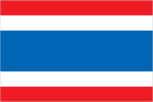
- five horizontal bands of red (top), white, blue (double width), white, and red; the red color symbolizes the nation and the blood of life; white represents religion and the purity of Buddhism; blue stands for the monarchy similar to the flag of Costa Rica but with the blue and red colors reversed
- note
- similar to the flag of Costa Rica but with the blue and red colors reversed
Government type
constitutional monarchy; note - interim military-run government since May 2014
Independence
1238 (traditional founding date; never colonized)
International law organization participation
has not submitted an ICJ jurisdiction declaration; non-party state to the ICCt
International organization participation
ADB, APEC, ARF, ASEAN, BIMSTEC, BIS, CD, CICA, CP, EAS, FAO, G-77, IAEA, IBRD, ICAO, ICC (national committees), ICRM, IDA, IFAD, IFC, IFRCS, IHO, ILO, IMF, IMO, IMSO, Interpol, IOC, IOM, IPU, ISO, ITSO, ITU, ITUC (NGOs), MIGA, NAM, OAS (observer), OIC (observer), OIF (observer), OPCW, OSCE (partner), PCA, PIF (partner), UN, UNAMID, UNCTAD, UNESCO, UNHCR, UNIDO, UNMOGIP, UNOCI, UNWTO, UPU, WCO, WFTU (NGOs), WHO, WIPO, WMO, WTO
Judicial branch
- Supreme Court of Justice (consists of court president, 6 vice-presidents, and 60-70 judges, and organized into 10 divisions); Constitutional Court (consists of court president and 8 judges); Supreme Administrative Court (number of judges determined by Judicial Commission of the Administrative Courts) Supreme Court judges selected by the Judicial Commission of the Courts of Justice and approved by the monarch; judge term determined by the monarch; Constitutional Court justices - 3 judges drawn from the Supreme Court, 2 judges drawn from the Administrative Court, and 4 judge candidates selected by the Selective Committee for Judges of the Constitutional Court and confirmed by the Senate; judges appointed by the monarch to serve single 9-year terms; Supreme Administrative Court judges selected by the Judicial Commission of the Administrative Courts and appointed by the monarch; judges appointed for life courts of first instance and appeals courts within both the judicial and administrative systems; military courts
- highest court(s)
- Supreme Court of Justice (consists of court president, 6 vice-presidents, and 60-70 judges, and organized into 10 divisions); Constitutional Court (consists of court president and 8 judges); Supreme Administrative Court (number of judges determined by Judicial Commission of the Administrative Courts)
- judge selection and term of office
- Supreme Court judges selected by the Judicial Commission of the Courts of Justice and approved by the monarch; judge term determined by the monarch; Constitutional Court justices - 3 judges drawn from the Supreme Court, 2 judges drawn from the Administrative Court, and 4 judge candidates selected by the Selective Committee for Judges of the Constitutional Court and confirmed by the Senate; judges appointed by the monarch to serve single 9-year terms; Supreme Administrative Court judges selected by the Judicial Commission of the Administrative Courts and appointed by the monarch; judges appointed for life
- subordinate courts
- courts of first instance and appeals courts within both the judicial and administrative systems; military courts
Legal system
civil law system with common law influences
Legislative branch
- in transition; following the May 2014 military coup, a National Legislative Assembly or Sapha Nitibanyat of no more than 220 members replaced the bicameral National Assembly; elections for a permanent legislative body are currently unscheduled and may not occur until mid-2017 Senate - last held on 30 March 2014; House of Representatives - last held on 2 February 2014, but later declared invalid by the Constitutional Court Senate - percent of vote by party - NA; seats by party - NA; House of Representatives - percent of vote by party - NA; seats by party - NA
- description
- in transition; following the May 2014 military coup, a National Legislative Assembly or Sapha Nitibanyat of no more than 220 members replaced the bicameral National Assembly; elections for a permanent legislative body are currently unscheduled and may not occur until mid-2017
- election results
- Senate - percent of vote by party - NA; seats by party - NA; House of Representatives - percent of vote by party - NA; seats by party - NA
- elections
- Senate - last held on 30 March 2014; House of Representatives - last held on 2 February 2014, but later declared invalid by the Constitutional Court
National anthem
- "Phleng Chat Thai" (National Anthem of Thailand) Luang SARANUPRAPAN/Phra JENDURIYANG music adopted 1932, lyrics adopted 1939; by law, people are required to stand for the national anthem at 0800 and 1800 every day; the anthem is played in schools, offices, theaters, and on television and radio during this time; "Phleng Sansasoen Phra Barami" (A Salute to the Monarch) serves as the royal anthem and is played in the presence of the royal family and during certain state ceremonies
- lyrics/music
- Luang SARANUPRAPAN/Phra JENDURIYANG
- name
- "Phleng Chat Thai" (National Anthem of Thailand)
- note
- music adopted 1932, lyrics adopted 1939; by law, people are required to stand for the national anthem at 0800 and 1800 every day; the anthem is played in schools, offices, theaters, and on television and radio during this time; "Phleng Sansasoen Phra Barami" (A Salute to the Monarch) serves as the royal anthem and is played in the presence of the royal family and during certain state ceremonies
National holiday
Birthday of King PHUMIPHON (BHUMIBOL), 5 December (1927)
National symbol(s)
- garuda (mythical half-man, half-bird figure), elephant; national colors: red, white, blue
- garuda (mythical half-man, half-bird figure), elephant; national colors
- red, white, blue
Political parties and leaders
Chat Pattana Party or CPN (National Development Party) [WANNARAT Channukun] Chat Thai Phattana Party or CTP (Thai Nation Development Party) [THEERA Wongsamut] Mahachon Party or Mass Party [APHIRAT Sirinawin] Matubhum Party (Motherland Party) [Gen. SONTHI Bunyaratkalin] Phalang Chon Party (People Chonburi Power Party) [SONTHAYA Khunpluem] Phumjai (Bhumjai) Thai Party or PJT (Thai Pride) [ANUTHIN Chanvirakun] Prachathipat Party or DP (Democrat Party) [ABHISIT Wechachiwa, also spelled ABHISIT Vejjajiva] Prachathipathai Mai Party (New Democracy Party) [SURATIN Phichan] Puea Thai Party (For Thais Party) or PTP [acting leader VIROT Paoin] Rak Prathet Thai Party (Love Thailand Party) [CHUWIT Kamonwisit] Rak Santi Party (Peace Conservation Party) [Pol. Lt. Gen. THAWIN Surachetphong]
Political pressure groups and leaders
Multicolor Group People's Alliance for Democracy or PAD People's Democratic Reform Committee or PDRC Student and People Network for Thailand's Reform or STR United Front for Democracy Against Dictatorship or UDD
Suffrage
18 years of age; universal and compulsory
Economy
Agriculture - products
rice, cassava (manioc, tapioca), rubber, corn, sugarcane, coconuts, palm oil, pineapple, livestock, fish products
Budget
- $73.65 billion $81.16 billion (2015 est.)
- expenditures
- $81.16 billion (2015 est.)
- revenues
- $73.65 billion
Budget surplus (+) or deficit (-)
-1.9% of GDP (2015 est.)
Central bank discount rate
2% (31 December 2014) 2.25% (31 December 2013)
Commercial bank prime lending rate
6.56% (31 December 2015 est.) 6.77% (31 December 2014 est.)
Current account balance
$34.82 billion (2015 est.) $15.42 billion (2014 est.)
Debt - external
$134.7 billion (31 December 2015 est.) $135.8 billion (31 December 2014 est.)
Distribution of family income - Gini index
48.4 (2011) 49 (2009)
Economy - overview
With a well-developed infrastructure, a free-enterprise economy, and generally pro-investment policies, Thailand historically has had a strong economy, but it experienced slow growth in 2013-15 as a result of domestic political turmoil and sluggish global demand, which curbed Thailand’s traditionally strong exports - mostly electronics, agricultural commodities, automobiles and parts, and processed foods. Following the May 2014 coup d'etat, tourism decreased 6-7% but is beginning to recover. The Thai baht depreciated more than 8% during 2015. Thailand faces labor shortages, and has attracted an estimated 2-4 million migrant workers from neighboring countries. The Thai Government in 2013 implemented a nationwide 300 baht (roughly $10) per day minimum wage policy and deployed new tax reforms designed to lower rates on middle-income earners. The household debt to GDP ratio is over 80%.
Exchange rates
baht per US dollar - 34.248 (2015 est.) 32.48 (2014 est.) 32.48 (2013 est.) 31.08 (2012 est.) 30.492 (2011 est.)
Exports
$212.1 billion (2015 est.) $224.8 billion (2014 est.)
Exports - commodities
automobiles and parts, computer and parts, jewelry and precious stones, polymers of ethylene in primary forms, refine fuels, electronic integrated circuits, chemical products, rice, fish products, rubber products, sugar, cassava, poultry, machinery and parts, iron and steel and their products
Exports - partners
US 11.2%, China 11.1%, Japan 9.4%, Hong Kong 5.5%, Malaysia 4.8%, Australia 4.6%, Vietnam 4.2%, Singapore 4.1% (2015)
Fiscal year
1 October - 30 September
GDP - composition, by end use
- 51.5% 17.2% 24.9% -5% 69% -57.7% (2015 est.)
- exports of goods and services
- 69%
- government consumption
- 17.2%
- household consumption
- 51.5%
- imports of goods and services
- -57.7% (2015 est.)
- investment in fixed capital
- 24.9%
- investment in inventories
- -5%
GDP - composition, by sector of origin
- 9.1% 35.7% 55.1% (2015 est.)
- agriculture
- 9.1%
- industry
- 35.7%
- services
- 55.1% (2015 est.)
GDP - per capita (PPP)
- $16,100 (2015 est.) $15,700 (2014 est.) $15,700 (2013 est.) data are in 2015 US dollars
- note
- data are in 2015 US dollars
GDP - real growth rate
2.8% (2015 est.) 0.8% (2014 est.) 2.7% (2013 est.)
GDP (official exchange rate)
$395.3 billion (2015 est.)
GDP (purchasing power parity)
- $1.108 trillion (2015 est.) $1.078 trillion (2014 est.) $1.069 trillion (2013 est.) data are in 2015 US dollars
- note
- data are in 2015 US dollars
Gross national saving
32.1% of GDP (2015 est.) 27.9% of GDP (2014 est.) 26.3% of GDP (2013 est.)
Household income or consumption by percentage share
- 2.8% 31.5% (2009 est.)
- highest 10%
- 31.5% (2009 est.)
- lowest 10%
- 2.8%
Imports
$177.5 billion (2015 est.) $200.2 billion (2014 est.)
Imports - commodities
machinery and parts, crude oil, electrical machinery and parts, chemicals, iron & steel and product, electronic integrated circuit, automobile’s parts, jewelry including silver bars and gold, computers and parts, electrical household appliances, soybean, soybean meal, wheat, cotton, dairy products
Imports - partners
China 20.3%, Japan 15.4%, US 6.9%, Malaysia 5.9%, UAE 4% (2015)
Industrial production growth rate
2.2% (2015 est.)
Industries
tourism, textiles and garments, agricultural processing, beverages, tobacco, cement, light manufacturing such as jewelry and electric appliances, computers and parts, integrated circuits, furniture, plastics, automobiles and automotive parts, agricultural machinery, air conditioning and refrigeration, ceramics, aluminum, chemical, environmental management, glass, granite and marble, leather, machinery and metal work, petrochemical, petroleum refining, pharmaceuticals, printing, pulp and paper, rubber, sugar, rice, fishing, cassava, world's second-largest tungsten producer and third-largest tin producer
Inflation rate (consumer prices)
-0.9% (2015 est.) 1.9% (2014 est.)
Labor force
38.55 million (2015 est.)
Labor force - by occupation
- 32.2% 16.7% 51.1% (2014 est.)
- agriculture
- 32.2%
- industry
- 16.7%
- services
- 51.1% (2014 est.)
Market value of publicly traded shares
$313.8 billion (31 December 2015 est.) $383.2 billion (31 December 2014 est.) $245 billion (31 December 2013 est.)
Population below poverty line
12.6% (2012 est.)
Public debt
- 46% of GDP (2015 est.) 42.8% of GDP (2014 est.) data cover general government debt, and includes debt instruments issued (or owned) by government entities other than the treasury; the data include treasury debt held by foreign entities; the data include debt issued by subnational entities, as well as intra-governmental debt; intra-governmental debt consists of treasury borrowings from surpluses in the social funds, such as for retirement, medical care, and unemployment; debt instruments for the social funds are sold at public auctions
- note
- data cover general government debt, and includes debt instruments issued (or owned) by government entities other than the treasury; the data include treasury debt held by foreign entities; the data include debt issued by subnational entities, as well as intra-governmental debt; intra-governmental debt consists of treasury borrowings from surpluses in the social funds, such as for retirement, medical care, and unemployment; debt instruments for the social funds are sold at public auctions
Reserves of foreign exchange and gold
$156.5 billion (31 December 2015 est.) $157.1 billion (31 December 2014 est.)
Stock of broad money
$517.4 billion (31 December 2014 est.) $524.8 billion (31 December 2013 est.)
Stock of direct foreign investment - abroad
$78.68 billion (31 December 2015 est.) $73.46 billion (31 December 2014 est.)
Stock of direct foreign investment - at home
$186.1 billion (31 December 2015 est.) $207.9 billion (31 December 2014 est.)
Stock of domestic credit
$486.6 billion (31 December 2015 est.) $509 billion (31 December 2014 est.)
Stock of narrow money
$49.27 billion (31 December 2015 est.) $51.04 billion (31 December 2014 est.)
Taxes and other revenues
18.6% of GDP (2015 est.)
Unemployment rate
0.9% (2015 est.) 0.8% (2014 est.)
Energy
Carbon dioxide emissions from consumption of energy
301 million Mt (2013 est.)
Crude oil - exports
30,010 bbl/day (2013 est.)
Crude oil - imports
897,800 bbl/day (2013 est.)
Crude oil - production
248,200 bbl/day (2015 est.)
Crude oil - proved reserves
400 million bbl (1 January 2016 es)
Electricity - consumption
164 billion kWh (2014 est.)
Electricity - exports
1.6 billion kWh (2014 est.)
Electricity - from fossil fuels
90.2% of total installed capacity (2012 est.)
Electricity - from hydroelectric plants
6.5% of total installed capacity (2012 est.)
Electricity - from nuclear fuels
0% of total installed capacity (2012 est.)
Electricity - from other renewable sources
3.3% of total installed capacity (2012 est.)
Electricity - imports
12 billion kWh (2014 est.)
Electricity - installed generating capacity
40 million kW (2014 est.)
Electricity - production
164 billion kWh (2014 est.)
Electricity access
- 700,000 99% 99.7% 98.3% (2013)
- electrification - rural areas
- 98.3% (2013)
- electrification - total population
- 99%
- electrification - urban areas
- 99.7%
- population without electricity
- 700,000
Natural gas - consumption
53.75 billion cu m (2014 est.)
Natural gas - exports
0 cu m (2013 est.)
Natural gas - imports
11.6 billion cu m (2014 est.)
Natural gas - production
42.15 billion cu m (2014 est.)
Natural gas - proved reserves
219.5 billion cu m (1 January 2016 es)
Refined petroleum products - consumption
1.231 million bbl/day (2014 est.)
Refined petroleum products - exports
241,800 bbl/day (2013 est.)
Refined petroleum products - imports
75,400 bbl/day (2013 est.)
Refined petroleum products - production
1.273 million bbl/day (2013 est.)
Communications
Broadcast media
6 terrestrial TV stations in Bangkok broadcast nationally via relay stations - 2 of the networks are owned by the military, the other 4 are government-owned or controlled, leased to private enterprise, and all are required to broadcast government-produced news programs twice a day; multi-channel satellite and cable TV subscription services are available; radio frequencies have been allotted for more than 500 government and commercial radio stations; many small community radio stations operate with low-power transmitters (2008)
Internet country code
.th
Internet users
- 26.726 million 39.3% (July 2015 est.)
- percent of population
- 39.3% (July 2015 est.)
- total
- 26.726 million
Telephone system
- high quality system, especially in urban areas like Bangkok fixed-line system provided by both a government-owned and commercial provider; wireless service expanding rapidly country code - 66; connected to major submarine cable systems providing links throughout Asia, Australia, Middle East, Europe, and US; satellite earth stations - 2 Intelsat (1 Indian Ocean, 1 Pacific Ocean) (2015)
- domestic
- fixed-line system provided by both a government-owned and commercial provider; wireless service expanding rapidly
- general assessment
- high quality system, especially in urban areas like Bangkok
- international
- country code - 66; connected to major submarine cable systems providing links throughout Asia, Australia, Middle East, Europe, and US; satellite earth stations - 2 Intelsat (1 Indian Ocean, 1 Pacific Ocean) (2015)
Telephones - fixed lines
- 5.309 million 8 (July 2015 est.)
- subscriptions per 100 inhabitants
- 8 (July 2015 est.)
- total subscriptions
- 5.309 million
Telephones - mobile cellular
- 84.797 million 125 (July 2015 est.)
- subscriptions per 100 inhabitants
- 125 (July 2015 est.)
- total
- 84.797 million
Transportation
Airports
101 (2013)
Airports - with paved runways
- 6 (2013)
- 1,524 to 2,437 m
- 23
- 2,438 to 3,047 m
- 12
- 914 to 1,523 m
- 14
- over 3,047 m
- 8
- total
- 63
- under 914 m
- 6 (2013)
Airports - with unpaved runways
- 26 (2013)
- 1,524 to 2,437 m
- 1
- 2,438 to 3,047 m
- 1
- 914 to 1,523 m
- 10
- total
- 38
- under 914 m
- 26 (2013)
Civil aircraft registration country code prefix
HS (2016)
Heliports
7 (2013)
Merchant marine
- bulk carrier 31, cargo 99, chemical tanker 28, container 18, liquefied gas 36, passenger 1, passenger/cargo 10, petroleum tanker 114, refrigerated cargo 24, roll on/roll off 1, vehicle carrier 1 13 (China 1, Hong Kong 1, Malaysia 3, Singapore 1, Taiwan 1, UK 6) 46 (Bahamas 4, Belize 1, Honduras 2, Panama 6, Singapore 33) (2010)
- by type
- bulk carrier 31, cargo 99, chemical tanker 28, container 18, liquefied gas 36, passenger 1, passenger/cargo 10, petroleum tanker 114, refrigerated cargo 24, roll on/roll off 1, vehicle carrier 1
- foreign-owned
- 13 (China 1, Hong Kong 1, Malaysia 3, Singapore 1, Taiwan 1, UK 6)
- registered in other countries
- 46 (Bahamas 4, Belize 1, Honduras 2, Panama 6, Singapore 33) (2010)
- total
- 363
National air transport system
- 54,259,629 2,134,149,001 mt-km (2015)
- annual freight traffic on registered air carriers
- 2,134,149,001 mt-km (2015)
- annual passenger traffic on registered air carriers
- 54,259,629
- inventory of registered aircraft operated by air carriers
- 276
- number of registered air carriers
- 19
Pipelines
condensate 2 km; gas 5,900 km; liquid petroleum gas 85 km; oil 1 km; refined products 1,097 km (2013)
Ports and terminals
- Bangkok, Laem Chabang, Map Ta Phut, Prachuap Port, Si Racha Bangkok (1,305,229), Laem Chabang (5,731,063) Map Ta Phut
- container port(s) TEUs)
- Bangkok (1,305,229), Laem Chabang (5,731,063)
- LNG terminal(s) (import)
- Map Ta Phut
- major seaport(s)
- Bangkok, Laem Chabang, Map Ta Phut, Prachuap Port, Si Racha
Railways
- 4,070.8 km 28.8 km 1.435-m gauge (28.8 km electrified) 4,042 km 1.000-m gauge (2014)
- narrow gauge
- 4,042 km 1.000-m gauge (2014)
- standard gauge
- 28.8 km 1.435-m gauge (28.8 km electrified)
- total
- 4,070.8 km
Roadways
- 180,053 km (includes 450 km of expressways) (2006)
- total
- 180,053 km (includes 450 km of expressways) (2006)
Waterways
4,000 km (3,701 km navigable by boats with drafts up to 0.9 m) (2011)
Military and Security
Military branches
Royal Thai Army (Kongthap Bok Thai, RTA), Royal Thai Navy (Kongthap Ruea Thai, RTN, includes Royal Thai Marine Corps), Royal Thai Air Force (Kongthap Agard Thai, RTAF) (2013)
Military expenditures
1.5% of GDP (2013) 1.47% of GDP (2012) 1.6% of GDP (2011) 1.47% of GDP (2010)
Military service age and obligation
21 years of age for compulsory military service; 18 years of age for voluntary military service; males register at 18 years of age; 2-year conscript service obligation (2012)
Transnational Issues
Disputes - international
separatist violence in Thailand's predominantly Malay-Muslim southern provinces prompt border closures and controls with Malaysia to stem insurgent activities; Southeast Asian states have enhanced border surveillance to check the spread of avian flu; talks continue on completion of demarcation with Laos but disputes remain over several islands in the Mekong River; despite continuing border committee talks, Thailand must deal with Karen and other ethnic rebels, refugees, and illegal cross-border activities; Cambodia and Thailand dispute sections of boundary; in 2011 Thailand and Cambodia resorted to arms in the dispute over the location of the boundary on the precipice surmounted by Preah Vihear temple ruins, awarded to Cambodia by ICJ decision in 1962 and part of a planned UN World Heritage site; Thailand is studying the feasibility of jointly constructing the Hatgyi Dam on the Salween river near the border with Burma; in 2004, international environmentalist pressure prompted China to halt construction of 13 dams on the Salween River that flows through China, Burma, and Thailand; 140,000 mostly Karen refugees fleeing civil strife, political upheaval and economic stagnation in Burma live in remote camps in Thailand near the border
Illicit drugs
a minor producer of opium, heroin, and marijuana; transit point for illicit heroin en route to the international drug market from Burma and Laos; eradication efforts have reduced the area of cannabis cultivation and shifted some production to neighboring countries; opium poppy cultivation has been reduced by eradication efforts; also a drug money-laundering center; minor role in methamphetamine production for regional consumption; major consumer of methamphetamine since the 1990s despite a series of government crackdowns
Refugees and internally displaced persons
- 106,349 (Burma) (2015) 35,000 (resurgence in ethno-nationalist violence in south of country since 2004) (2015) 443,862 (2015); note - about half of Thailand's northern hill tribe people do not have citizenship and make up the bulk of Thailand's stateless population; most lack documentation showing they or one of their parents were born in Thailand; children born to Burmese refugees are not eligible for Burmese or Thai citizenship and are stateless; most Chao Lay, maritime nomadic peoples, who travel from island to island in the Andaman Sea west of Thailand are also stateless; stateless Rohingya refugees from Burma are considered illegal migrants by Thai authorities and are detained in inhumane conditions or expelled; stateless persons are denied access to voting, property, education, employment, healthcare, and driving Thai nationality was granted to more than 18,000 stateless persons in the last 3 years (2015)
- IDPs
- 35,000 (resurgence in ethno-nationalist violence in south of country since 2004) (2015)
- note
- Thai nationality was granted to more than 18,000 stateless persons in the last 3 years (2015)
- refugees (country of origin)
- 106,349 (Burma) (2015)
- stateless persons
- 443,862 (2015); note - about half of Thailand's northern hill tribe people do not have citizenship and make up the bulk of Thailand's stateless population; most lack documentation showing they or one of their parents were born in Thailand; children born to Burmese refugees are not eligible for Burmese or Thai citizenship and are stateless; most Chao Lay, maritime nomadic peoples, who travel from island to island in the Andaman Sea west of Thailand are also stateless; stateless Rohingya refugees from Burma are considered illegal migrants by Thai authorities and are detained in inhumane conditions or expelled; stateless persons are denied access to voting, property, education, employment, healthcare, and driving
Trafficking in persons
- Thailand is a source, transit, and destination country for men, women, and children subjected to forced labor and sex trafficking; victims from Burma, Cambodia, Laos, China, Vietnam, Uzbekistan, and India, migrate to Thailand in search of jobs but are forced, coerced, or defrauded into labor in commercial fishing, fishing-related industries, factories, domestic work, street begging, or the sex trade; some Thai, Burmese, Cambodian, and Indonesian men forced to work on fishing boats are kept at sea for years; sex trafficking of adults and children from Thailand, Laos, Vietnam, and Burma remains a significant problem; Thailand is a transit country for victims from China, Vietnam, Bangladesh, and Burma subjected to sex trafficking and forced labor in Malaysia, Indonesia, Singapore, Russia, South Korea, the US, and countries in Western Europe; Thai victims are also trafficked in North America, Europe, Africa, Asia, and the Middle East Tier 2 Watch List - Thailand does not fully comply with the minimum standards for the elimination of trafficking, and is not making significant efforts to do so; in 2014, authorities investigated, prosecuted, and convicted fewer traffickers and identified fewer victims; some cases of official complicity were investigated and prosecuted, but trafficking-related corruption continues to hinder progress in combatting trafficking; authorities’ efforts to screen for victims among vulnerable populations remained inadequate due to a poor understanding of trafficking indicators, a failure to recognize non-physical forms of coercion, and a shortage of language interpreters; the government passed new labor laws increasing the minimum age in the fishing industry to 18 years old, guaranteeing the minimum wage, and requiring work contracts, but weak law enforcement and poor coordination among regulatory agencies enabled exploitive labor practices to continue; the government increased efforts to raise public awareness to the dangers of human trafficking and to deny entry to foreign sex tourists (2015)
- current situation
- Thailand is a source, transit, and destination country for men, women, and children subjected to forced labor and sex trafficking; victims from Burma, Cambodia, Laos, China, Vietnam, Uzbekistan, and India, migrate to Thailand in search of jobs but are forced, coerced, or defrauded into labor in commercial fishing, fishing-related industries, factories, domestic work, street begging, or the sex trade; some Thai, Burmese, Cambodian, and Indonesian men forced to work on fishing boats are kept at sea for years; sex trafficking of adults and children from Thailand, Laos, Vietnam, and Burma remains a significant problem; Thailand is a transit country for victims from China, Vietnam, Bangladesh, and Burma subjected to sex trafficking and forced labor in Malaysia, Indonesia, Singapore, Russia, South Korea, the US, and countries in Western Europe; Thai victims are also trafficked in North America, Europe, Africa, Asia, and the Middle East
- tier rating
- Tier 2 Watch List - Thailand does not fully comply with the minimum standards for the elimination of trafficking, and is not making significant efforts to do so; in 2014, authorities investigated, prosecuted, and convicted fewer traffickers and identified fewer victims; some cases of official complicity were investigated and prosecuted, but trafficking-related corruption continues to hinder progress in combatting trafficking; authorities’ efforts to screen for victims among vulnerable populations remained inadequate due to a poor understanding of trafficking indicators, a failure to recognize non-physical forms of coercion, and a shortage of language interpreters; the government passed new labor laws increasing the minimum age in the fishing industry to 18 years old, guaranteeing the minimum wage, and requiring work contracts, but weak law enforcement and poor coordination among regulatory agencies enabled exploitive labor practices to continue; the government increased efforts to raise public awareness to the dangers of human trafficking and to deny entry to foreign sex tourists (2015)