1989 Edition
CIA World Factbook 1989 (Internet Archive)
Geography
Agriculture
accounts for over 40% of GDP; topography and climatic conditions limit cultivated crops to only 5% of land area; cash crops — coffee, sisal, tea, cotton, pyrethrum (insecticide made from chrysanthemums), cashews, tobacco, cloves (Zanzibar); food crops — corn, wheat, cassava, bananas, fruits, and vegetables; small numbers of cattle, sheep, and goats; not self-sufficient in food grain production
Aid
US commitments, including Ex-Im (FY70-88), $387 million; Western (nonUS) countries, ODA and OOF bilateral commitments (1970-87), $8.5 billion; OPEC bilateral aid (1979-89), $44 million; Communist countries (1970-88), $607 million
Budget
revenues $568 million; expenditures $835 million, including capital expenditures of $230 million (FY89)
Climate
- tropical; rainy, monsoon season (May to October); dry season (December to March); little seasonal temperature variation
- tropical; rainy, warm, cloudy southwest monsoon (mid-May to September); dry, cool northeast monsoon (November to mid-March); southern isthmus always hot and humid
- tropical; hot, humid in south; semiarid in north
- tropical in south; monsoonal in north with hot, rainy season (midMay to mid-September) and warm, dry season (mid-October to midMarch)
Coastline
- 443 km
- 3,219 km
- 56 km
- 3,444 km (excluding islands)
Comparative area
- slightly smaller than Oklahoma
- slightly more than twice the size of Wyoming
- slightly smaller than West Virginia
- slightly larger than New Mexico
Contiguous zone
- 24 nm
- 24 nm
Continental shelf
- 200 nm
- not specific
- edge of continental margin or 200 nm
Currency
Tanzanian shilling (plural — shillings); 1 Tanzanian shilling (TSh) = 100 cents
Disputes
- offshore islands and three sections of the boundary with Vietnam are in dispute; maritime boundary with Vietnam not defined; occupied by Vietnam on 25 December 1978
- boundary dispute with Laos
- offshore islands and three sections of the boundary with Cambodia are in dispute; occupied Cambodia on 25 December 1978; sporadic border clashes with China; involved in a complex dispute over the Spratly Islands with China, Malaysia, Philippines, and Taiwan; maritime boundary dispute with China in the Gulf of Tonkin; Paracel Islands occupied by China but claimed by Vietnam and Taiwan
Electricity
401,000 kW capacity; 895 million kWh produced, 35 kWh per capita (1989)
Environment
- a land of paddies and forests dominated by Mekong River and Tonle Sap
- air and water pollution; land subsidence in Bangkok area
- hot, dry harmattan wind can reduce visibility in north during winter; recent droughts affecting agriculture; deforestation
- occasional typhoons (May to January) with extensive flooding
Exchange rates
Tanzanian shillings (TSh) per US$1— 192.901 (January 1990), 143.377 (1989), 99.292 (1988), 64.260 (1987), 32.698 (1986), 17.472 (1985)
Exports
$394 million (f.o.b., FY89); commodities— coffee, cotton, sisal, cashew nuts, meat, tobacco, tea, diamonds, coconut products, pyrethrum, cloves (Zanzibar); partners— FRG, UK, US, Netherlands, Japan
Extended economic zone
- 200 nm
- 200 nm
- 200 nm
- 200 nm
External debt
$4.5 billion (December 1989 est.)
Fiscal year
1 July-30 June
GDP
$5.92 billion, per capita $235; real growth rate 4.5% (1989 est.)
Imports
$1.3 billion (c.i.f., FY89); commodities— manufactured goods, machinery and transportation equipment, cotton piece goods, crude oil, foodstuffs; partners—FRG, UK, US, Iran, Japan, Italy
Industrial production
growth rate 6% (1988 est.)
Industries
- based on exploitation of natural resources, particularly marine life, minerals, oil and gas production, fishing, sand and gravel aggregates, placer deposits
- primarily agricultural processing (sugar, beer, cigarettes, sisal twine), diamond mine, oil refinery, shoes, cement, textiles, wood products, fertilizer
Inflation rate (consumer prices)
29% (1989)
Land boundaries
- 2,572 km total; Laos 541 km, Thailand 803 km, Vietnam 1,228 km
- 4,863 km total; Burma 1,800 km, Cambodia 803 km, Laos 1,754 km, Malaysia 506 km
- 1,647 km total; Benin 644 km, Burkina 126 km, Ghana 877 km
- 3,818 km total; Cambodia 982 km, China 1,281 km, Laos 1,555 km
Land use
- 16% arable land; 1% permanent crops; 3% meadows and pastures; 76% forest and woodland; 4% other; includes 1% irrigated
- 34% arable land; 4% permanent crops; 1% meadows and pastures; 30% forest and woodland; 31% other; includes 7% irrigated
- 25% arable land; 1% permanent crops; 4% meadows and pastures; 28% forest and woodland; 42% other; includes NEGL% irrigated
- 22% arable land; 2% permanent crops; 1% meadows and pastures; 40% forest and woodland; 35% other; includes 5% irrigated
Natural resources
- timber, gemstones, some iron ore, manganese, phosphates, hydropower potential
- tin, rubber, natural gas, tungsten, tantalum, timber, lead, fish, gypsum, lignite, fluorite
- phosphates, limestone, marble
- phosphates, coal, manganese, bauxite, chromate, offshore oil deposits, forests
Note
- buffer between Thailand and Vietnam
- controls only land route from Asia to Malaysia and Singapore
Terrain
- mostly low, flat plains; mountains in southwest and north
- central plain; eastern plateau (Khorat); mountains elsewhere
- gently rolling savanna in north; central hills; southern plateau; low coastal plain with extensive lagoons and marshes
- low, flat delta in south and north; central highlands; hilly, mountainous in far north and northwest
Territorial sea
- 1 2 nm
- 1 2 nm
- 30 nm
- 1 2 nm
Total area
- 181,040 km2; land area: 176,520km2
- 514,000 km2; land area: 511,770km2
- 56,790 km2; land area: 54,390 km2
- 329,560 km2; land area: 325,360
Unemployment rate
NY,
People and Society
Birth rate
- 39 births/ 1,000 population (1990)
- 20 births/ 1,000 population (1990)
- 50 births/ 1,000 population (1990)
Death rate
- 1 6 deaths/ 1 ,000 population (1990)
- 7 deaths/ 1,000 population (1990)
- 14 deaths/ 1,000 population (1990)
Ethnic divisions
- 90% Khmer (Cambodian), 5% Chinese, 5% other minorities
- 75% Thai, 14% Chinese, 11% other
- 37 tribes; largest and most important are Ewe, Mina, and Kabye; under 1% European and SyrianLebanese
Infant mortality rate
- 128 deaths/ 1,000 live births (1990)
- 34 deaths/ 1 ,000 live births (1990) Thailand (continued)
- 112 deaths/ 1,000 live births (1990)
Labor force
- 2.5-3.0 million; 80% agriculture (1988 est.)
- 26,000,000; 73% agriculture, 1 1% industry and commerce, 10% services, 6% government (1984)
- NA; 78% agriculture, 22% industry; about 88,600 wage earners, evenly divided between public and private sectors; 50% of population of working age (1985)
Language
- Khmer (official), French
- Thai; English is the secondary language of the elite; ethnic and regional dialects
- French, both official and language of commerce; major African languages are Ewe and Mina in the south and Dagomba and Kabye in the north
Life expectancy at birth
- 47 years male, 50 years female (1990)
- 64 years male, 70 years female (1990)
- 53 years male, 57 years female (1990)
Literacy
- 48%
- 82%
- 40.7%
Nationality
- noun — Cambodian(s); adjective— Cambodian
- noun — Thai (sing, and pi.); adjective — Thai
- noun — Togolese (sing, and pi.); adjective — Togolese Togo (continued)
Net migration rate
- 0 migrants/ 1 ,000 population (1990)
- 0 migrants/ 1 ,000 population (1990)
- 0 migrants/ 1 ,000 population (1990)
Organized labor
- Kampuchea Federation of Trade Unions (FSC); under government control
- 300,000 union members (1986)
- one national union, the National Federation of Togolese Workers
Population
- 6,991,107 (July 1990), growth rate 2.2% (1990)
- 55,1 15,683 (July 1990), growth rate 1.3% (1990)
- 3,674,355 (July 1990), growth rate 3.7% (1990)
Religion
- 95% Theravada Buddhism, 5% other
- 95.5% Buddhist, 4% Muslim, 0.5% other
- about 70% indigenous beliefs, 20% Christian, 10% Muslim
Total fertility rate
- 4.5 children born/ woman (1990)
- 2.1 children born/ woman (1990)
- 7.2 children born/ woman (1990)
Government
Administrative divisions
- 1 8 provinces (khet, singular and plural) and 1 autonomous municipality* (rottatheanei, singular and plural); Batdambang, Kampdng Cham, Kampdng Chhnang, Kampdng Spoe. Kampong Thum, Kampot, Randal, Kaoh K6ng, Kracheh, Monddl Kiri, Phnum Penh*, Pouthfsat, PreSh Vihear, Prey Veng, Rotanokiri, SiSmreab-Otdar Meanchey, Stoeng Treng, Svay Rieng, Takev; note — there may be a new province of Banteay Meanchey and SifimreabOtdar Meanchey may have been divided into two provinces named Siemreab and Otdar Meanchey
- 73 provinces (changwat, singular and plural); Ang Thong, Buriram, Chachoengsao, Chai Nat, Chaiyaphum, Chanthaburi, Chiang Mai, Chiang Rai, Chon Buri, Chumphon, Kalasin. Kamphaeng Phet, Kanchanaburi, Khon Kaen, Krabi, Krung Thep Mahanakhon, Lampang, Lamphun, Loei, Lop Buri, Mae Hong Son, Maha Sarakham, Nakhon Nayok, Nakhon Fathom, Nakhon Phanom, Nakhon Ratchasima, Nakhon Sawan, Nakhon Si Thammarat, Nan, Narathiwat, Nong Khai, Nonthaburi, Pathum Thani, Pattani, Phangnga, Phatthalung, Phayao, Phetchabun, Phetchaburi, Phichit, Phitsanulok, Phra Nakhon Si Ayutthaya, Phrae, Phuket, Prachin Buri, Prachuap Khiri Khan, Ranong, Ratchaburi, Rayong, Roi Et, Sakon Nakhon, Samut Prakan, Samut Sakhon, Samut Songkhram, Sara Buri, Satun, Sing Buri, Sisaket, Songkhla, Sukhothai, Suphan Buri, Surat Thani, Surin, Tak, Trang, Trat, Ubon Ratchathani, Udon Thani, Uthai Thani, Uttaradit, Yala, Yasothon
- 21 circumscriptions (circonscriptions, singular — circonscription); Amlame (Amou), Aneho (Lacs), Atakpame (Ogou), Badou (Wawa), Bafilo (Assoli), Bassar (Bassari), Dapaong (Tone), Kante (Reran), Klouto (Kioto), Kpagouda (Binah), Lama-Kara (Kozah), Lome (Golfe), Mango (Oti), Niamtougou (Doufelgou), Notse (Haho), Sotouboua, Tabligbo (Yoto), Tchamba, Tchaoudjo, Tsevie (Zio), Vogan (Vo); note — the 21 units may now be called prefectures (prefectures, singular — prefecture) and reported name changes for individual units are included in parenthesis
Capital
- Phnom Penh
- Bangkok
- Lome
Communists
- illegal Communist party has 500 to 1 ,000 members (est.); armed Communist insurgents throughout Thailand total 300 to 500 (est.)
- no Communist party
Constitution
- 27 June 1981
- 22 December 1978
- 30 December 1979, effective 13 January 1980
Diplomatic representation
- Ambassador VITTHYA VEJJAJIVA; Embassy at 2300 Kalorama Road NW, Washington DC 20008; telephone (202) 483-7200; there are Thai Consulates General in Chicago, Los Angeles, and New York; US — Ambassador Daniel O'DONAHUE; Embassy at 95 Wireless Road, Bangkok (mailing address is APO San Francisco 96346); telephone [66] (2) 252-5040; there is a US Consulate General in Chiang Mai and Consulates in Songkhla and Udorn
- Ambassador Ellom-Kodjo SCHUPPIUS; Chancery at 2208 Massachusetts Avenue NW, Washington DC 20008; telephone (202) 2344212 or 4213; US— Ambassador Rush W. TAYLOR, Jr.; Embassy at Rue Pelletier Caventou and Rue Vauban, Lome (mailing address is B. P. 852, Lome); telephone [228] 21-29-91 through 94 and 2136-09
Diploniatic representation
none
Elections
- CGDK— none; PRK — National Assembly — last held 1 May 1981; in February 1986 the Assembly voted to extend its term for five years (next to be held by March 1 990); results— KPRP is the only party; seats — (123 total) KPRP 123
- House of Representatives — last held 24 July 1988 (next to be held within 90 days of July 1992); results— TNP 27%, SAP 15%, DP 13%, TCP 9%, others 36%; seats— (357 total) TNP 96, Solidarity 62, SAP 54, DP 48, TCP 31, People's Party (Ratsadon) 21, People's Party (Prachachon) 17, Force of Truth Party (Phalang Dharma) 14, United Democracy Party 5, Mass Party 5, others 4
- President — last held 21 December 1986 (next to be held December 1993); results — Gen. Eyadema was reelected without opposition; National Assembly— last held 4 March 1990 (next to be held March 1995); results— RPT is the only party; seats — (77 total) RPT 77
Executive branch
- CGDK — president, prime minister; PRK — chairman of the Council of State, Council of State, chairman of the Council of Ministers, Council of Ministers
- monarch, prime minister, three deputy prime ministers, Council of Ministers (cabinet), Privy Council
- president. Council of Ministers (cabinet)
Flag
- CGDK — red with the yellow silhouette of a stylized three-towered temple representing Angkor Wat in the center; Non-Communists — three horizontal bands of blue, red (double width), and blue with a white stylized temple representing Angkor Wat centered on the red band; PRK — red with the yellow silhouette of a stylized five-towered temple representing Angkor Wat in the center
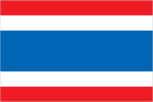
- five horizontal bands of red (top), white, blue (double width), white, and red
- five equal horizontal bands of green (top and bottom) alternating with yellow; there is a white five-pointed star on a red square in the upper hoist-side corner; uses the popular pan-African colors of Ethiopia
Independence
- 9 November 1953 (from France)
- 1 238 (traditional founding date); never colonized
- 27 April 1960 (from UN trusteeship under French administration, formerly French Togo)
Judicial branch
- CGDK— none; PRK— Supreme People's Court
- Supreme Court (Sam Dika)
- Court of Appeal (Cour d'Appel), Supreme Court (Cour Supreme)
Leaders
- Chief of State— CGDK— President Prince NORODOM SIHANOUK (since NA July 1982); PRK— Chairman of the Council of State HENG SAMR1N (since 27 June 1981); Head of Government — CGDK — Prime Minister SON SANN (since NA July 1982); PRK— Chairman of the Council of Ministers HUN SEN (since 14 January 1985) Political parties and leaders: CGDK— three resistance groups including Democratic Kampuchea (DK, also known as the Khmer Rouge) under Khieu Samphan, Khmer People's National Liberation Front (KPNLF) under Son Sann, and National United Front for an Independent, Neutral, Peaceful, and Cooperative Cambodia (FUNCINPEC) under Prince Norodom Sihanouk; PRK — Kampuchean People's Revolutionary Party (KPRP) led by Heng Samrin
- Chief of State— King BHUMIBOL ADULYADEJ (since 9 June 1946); Heir Apparent Crown Prince VAJIRALONGKORN (born 28 July 1952); Head of Government Prime Minister Maj. Gen. CHATCHAI CHUNHAWAN (since 9 August 1988); Deputy Prime Minister CHUAN LIKPHAI Political parties and leaders: Democrat Party (DP), Social Action Party (SAP), Thai Nation Party (TNP), People's Party (Ratsadon), People's Party (Prachachon), Thai Citizens Party (TCP), United Democracy Party, Solidarity Party, Thai People's Party, Mass Party, Force of Truth Party (Phalang Dharma)
- Chief of State and Head of Government — President Gen. Gnassingbe EYADEMA (since 14 April 1967) Political parties and leaders: only party — Rally of the Togolese People (RPT), President Eyadema
Legal system
- based on civil law system, with influences of common law; has not accepted compulsory ICJ jurisdiction
- French-based court system
Legislative branch
- CGDK— none; PRK— unicameral National Assembly
- bicameral National Assembly (Ratha Satha) consists of an upper house or Senate (Woothi Satha) and a lower house or House of Representatives (Satha Poothan)
- unicameral National Assembly (Assembles Nationale)
Long-form name
- none
- Kingdom of Thailand
- Republic of Togo
Member of
- ADB, Colombo Plan, ESCAP, FAO, G-77, GATT (de facto), IAEA, IBRD, ICAO, IDA, ILO, IMF, I MO, INTERPOL, IRC, ITU, Mekong Committee (inactive), NAM, UN, UNESCO, UPU, WFTU, WHO, WMO, WTO for CGDK; none for PRK
- ADB, ANRPC, ASEAN, ASPAC, Association of Tin Producing Countries, CCC, Colombo Plan, GATT, ESCAP, FAO, G-77, IAEA, IBRD, ICAO, IDA, IFAD, IFC, IHO, ILO, IMF, IMO, INRO, INTELSAT, INTERPOL, IPU, IRC, ITC, ITU, UN, UNESCO, UPU, WHO, WMO, WTO
- ACP, AfDB, CEAO (observer), EAMA, ECA, ECOWAS, ENTENTE, FAO, G-77, GATT, IBRD, ICAO, ICO, IDA, IFAD, IFC, ILO, IMF, IMO, INTELSAT, INTERPOL, ITU, NAM, OAU, OCAM, UN, UNESCO, UPU, WHO, WIPO, WMO, WTO
National holiday
- Birthday of His Majesty the King, 5 December (1927)
- Liberation Day (anniversary of coup), 13 January (1967)
National holidays
CGDK — Independence Day, 17 April (1975); PRK— Liberation Day, 7 January (1979)
Suffrage
- universal at age 18
- universal at age 21
- universal adult at age NA
Type
- disputed between the Coalition Government of Democratic Kampuchea (CGDK) led by Prince NORODOM SIHANOUK and the People's Republic of Kampuchea (PRK) led by HENG SAMRIN
- constitutional monarchy
- republic; one-party presidential regime
Economy
Agriculture
- accounts for 16% of GNP and 73% of labor force; leading producer and exporter of rice and cassava (tapioca); other crops — rubber, corn, sugarcane, coconuts, soybeans; except for wheat, selfsufficient in food; fish catch of 2.2 million tons (1 987)
- cash crops — coffee, cocoa, cotton; food crops — yams, cassava, corn, beans, rice, millet, sorghum, fish
Aid
- US commitments, including Ex-Im (FY70-88), $828 million; Western (nonUS) countries, ODA and OOF bilateral commitments (1970-87), $7.0 billion; OPEC bilateral aid (1979-89), $19 million
- US commitments, including Ex-Im (FY70-88), $121 million; Western (nonUS) countries, ODA and OOF bilateral commitments (1970-87), $1.6 billion; OPEC bilateral aid (1979-89), $35 million; Communist countries (1970-88), $46 million
Budget
- revenues $12.1 billion; expenditures $9.7 billion, including capital expenditures of NA (FY89)
- revenues $354 million; expenditures $399 million, including capital expenditures of $102 million (1988 est.)
Currency
- baht (plural — baht); 1 baht (B) = 100 satang
- Communaute Financiere Africaine franc (plural — francs); 1 CFA franc (CFAF) = 100 centimes
Electricity
- 7,100,000 kW capacity; 28,000 million kWh produced, 500 kWh per capita (1989)
- 1 17,000 kW capacity; 155 million kWh produced, 45 kWh per capita (1989)
Exchange rates
- baht (B) per US$1— 25.726 (January 1990), 25.699 (1989), 25.294 (1988), 25.723 (1987), 26.299 (1986), 27.159(1985)
- Communaute Financiere Africaine francs (CFAF) per US$1 — 287.99 (January 1990), 319.01 (1989), 297.85 (1988), 300.54 (1987), 346.30 (1986), 449.26 (1985) Fiscal yean calendar year
Exports
- $19.9 billion (f.o.b., 1989); commodities— textiles 12%, fishery products 12%, rice 8%, tapioca 8%, jewelry 6%, manufactured gas, corn, tin; partners — US 18%, Japan 14%, Singapore 9%, Netherlands, Malaysia, Hong Kong, China (1988)
- $344 million (f.o.b., 1988); commodities— phosphates, cocoa, coffee, cotton, manufactures, palm kernels; partners—EC 70%, Africa 9%, US 2%, other 19% (1985)
External debt
- $18.5 billion (December 1989 est.)
- $1.3 billion (December 1988)
Fiscal year
1 October30 September
GDP
$1.35 billion, per capita $405; real growth rate 4.1% (1988 est.)
GNP
$64.5 billion, per capita $1,160; real growth rate 10.8% (1989 est.)
Illicit drugs
a minor producer, major illicit trafficker of heroin, particularly from Burma and Laos, and cannabis for the international drug market; eradication efforts have reduced the area of cannabis Togo cultivation and shifted some production to neighboring countries; opium poppy cultivation has been affected by eradication efforts, but unusually good weather boosted output in 1989
Imports
- $25.1 billion (c.i.f., 1989); commodities— machinery and parts 23%, petroleum products 13%, chemicals 11%, iron and steel, electrical appliances; partners— Japan 26%, US 14%, Singapore 7%, FRG, Malaysia, UK (1987)
- $369 million (f.o.b., 1988); commodities— food, fuels, durable consumer goods, other intermediate goods, capital goods; partners— EC 69%, Africa 10%, Japan 7%, US 4%, other 10% (1985)
Industrial production
- growth rate 12.5% (1989)
- growth rate 4.9% (1987 est.)
Industries
- tourism is the largest source of foreign exchange; textiles and garments, agricultural processing, beverages, tobacco, cement, other light manufacturing, such as jewelry; electric appliances and components, integrated circuits, furniture, plastics; world's second-largest tungsten producer and third-largest tin producer
- phosphate mining, agricultural processing, cement, handicrafts, textiles, beverages
Inflation rate (consumer prices)
- 5.4% (1989)
- 2.5% (1987 est.)
Overview
- Cambodia is a desperately poor country whose economic development has been stymied by deadly political infighting. The economy is based on agriculture and related industries. Over the past decade Cambodia has been slowly recovering from its near destruction by war and political upheaval. It still remains, however, one of the world's poorest countries, with an estimated per capita GDP of about $130. The food situation is precarious; during the 1980s famine has been averted only through international relief. In 1986 the production level of rice, the staple food crop, was able to meet only 80% of domestic needs. The biggest success of the nation's recovery program
- Thailand, one of the more advanced developing countries in Asia, enjoyed its second straight exceptionally prosperous year in 1989. Real output again rose about 1 1%. The increasingly sophisticated manufacturing sector benefited from export-oriented investment, and agriculture grew by 4.0% because of improved weather. The trade deficit of $5.2 billion was more than offset by earnings from tourism ($3.9 billion), remittances, and net capital inflows. The government has followed a fairly sound fiscal and monetary policy, aided by increased tax receipts from the fast-moving economy. In 1 989 the government approved new projects — roads, ports, electric power, communications — needed to refurbish the now overtaxed infrastructure. Although growth in 1990-91 must necessarily fall below the 1988-89 pace, Thailand's immediate economic outlook is good, assuming the continuation of prudent government policies in the context of a private-sectororiented development strategy.
- Togo is one of the least developed countries in the world with a per capita GDP of about $400. The economy is heavily dependent on subsistence agriculture, which accounts for about 35% of GDP and provides employment for 80% of the labor force. Primary agricultural exports are cocoa, coffee, and cotton, which together account for about 30% of total export earnings. Togo is self-sufficient in basic foodstuffs when harvests are normal. In the industrial sector phosphate mining is by far the most important activity, with phosphate exports accounting for about 40% of total foreign exchange earnings.
Unemployment rate
- 6% (1989 est.)
- 2.0% (1987)
Communications
Airports
- 103 total, 92 usable; 13 with permanent-surface runways; none with runways over 3,659 m; 3 with runways 2,440-3,659 m; 44 with runways 1,2202,439 m
- 127 total, 103 usable; 56 with permanent-surface runways; 1 with runways over 3,659 m; 13 with runways 2,440-3,659 m; 26 with runways 1,2202,439 m
- 9 total, 9 usable; 2 with permanent-surface runways; none with runways over 3,659 m; 2 with runways 2,440-3,659 m none with runways 1,2202,439 m
Branches
- Tanzanian People's Defense Force includes Army, Navy, and Air Force; paramilitary Police Field Force Unit; Militia
- Royal Thai Army, Royal Thai Navy (includes Royal Thai Marine Corps), Royal Thai Air Force; paramilitary forces include Border Patrol Police, Thahan Phran (irregular soldiers), Village Defense Forces
- Army, Navy, Air Force, paramilitary Gendarmerie
Civil air
- 6 major transport aircraft
- 41 (plus 2 leased) major transport aircraft
Defense expenditures
- 3.3% of GDP (1985) 400 km Andaman S" I 'SuratThani Phuket V? Srr regional map IX
- 2.9% of GNP, or $1.9 billion (1989 est.) Sfr regional map VII Kpalime J.OMEJ Bight of Benin
- 3.3% of GDP (1987)
Highways
- total 81,900 km, 3,600 km paved; 5,600 km gravel or crushed stone; remainder improved and unimproved earth
- 44,534 km total; 28,016 km paved, 5,132 km earth surface, 1 1,386 km under development
- 6,462 km total; 1 ,762 km paved; 4,700 km unimproved roads
Inland waterways
- Lake Tanganyika, Lake Victoria, Lake Nyasa
- 3,999 km principal waterways; 3,701 km with navigable depths of 0.9 m or more throughout the year; numerous minor waterways navigable by shallow-draft native craft
- none
Merchant marine
- 7 ships (1,000 CRT or over) totaling 29,174 GRT/39,186 DWT; includes 2 passenger-cargo, 3 cargo, 1 roll-on/roll-off cargo, 1 petroleum, oils, and lubricants (POL) tanker
- 122 ships (1,000 CRT or over) totaling 483,688 GRT/730,750 DWT; includes 2 short-sea passenger, 70 cargo, 8 container, 27 petroleum, oils, and lubricants (POL) tanker, 8 liquefied gas, 1 chemical tanker, 3 bulk, 1 refrigerated cargo, 1 roll-on/roll-off, 1 combination bulk
- 7 ships (1,000 CRT or over) totaling 41,809 GRT/72,289 DWT; includes 4 roll-on/roll-off cargo, 3 multifunction large-load carrier Civil air 3 major transport aircraft
Military manpower
- males 1 5-49, 5,351,192; 3,087,501 fit for military service
- males 15-49, 15,617,486; 9,543,119 fit for military service; 610,410 reach military age (18) annually
- males 15-49, 767,949; 403,546 fit for military service; no conscription
Pipelines
- 982 km crude oil
- natural gas, 350 km; refined products, 67 km
Ports
- Bombay (India), Calcutta (India), Madras (India), Colombo (Sri Lanka), Durban (South Africa), Fremantle (Australia), Jakarta (Indonesia), Melbourne (Australia), Richard's Bay (South Africa)
- Dar es Salaam, Mtwara, Tanga, and Zanzibar are ocean ports; Mwanza on Lake Victoria and Kigoma on Lake Tanganyika are inland ports
- Bangkok, Pattani, Phuket, Sattahip, Si Racha
- Lome, Kpeme (phosphate port)
Railroads
- 3,555 km total; 960 km 1.067meter gauge; 2,595 km 1 .000-meter gauge, 6.4 km double track, 962 km Tazara Railroad 1.067-meter gauge; 1 15 km 1 .000-meter gauge planned by end of decade
- 3,940 km 1 .000-meter gauge, 99 km double track
- 515 km 1.000-meter gauge, single track
Telecommunications
- no submarine cables Indonesia North Pacific Ocean Java
- fair system of open wire, radio relay, and troposcatter; 103,800 telephones; stations— 12 AM, 4 FM, 2 TV; 1 Indian Ocean INTELSAT earth station Defense Forces
- service to general public adequate; bulk of service to government activities provided by multichannel cable and radio relay network; 739,500 telephones (1987); stations — over 200 AM, 100 FM, and 1 1 TV in government-controlled networks; satellite earth stations — 1 Indian Ocean INTELSAT and 1 Pacific Ocean INTELSAT; domestic satellite system being developed Defense Forces
- fair system based on network of open-wire lines supplemented by radio relay routes; 12,000 telephones; stations— 2 AM, no FM, 3 (2 relays) TV; satellite earth stations — 1 Atlantic Ocean INTELSAT and 1 SYMPHONIE Defense Forces