2023 Edition
CIA World Factbook 2023 (factbook.json @ 0d4fa4984ecb)
Introduction
Background
Tanzania contains some of Africa’s most iconic national parks and famous paleoanthropological sites, and its diverse cultural heritage reflects the multiple ethnolinguistic groups that live in the country. Its long history of integration into trade networks spanning the Indian Ocean and the African interior led to the development of Swahili as a common language in much of east Africa and the introduction of Islam into the region. A number of independent coastal and island trading posts in what is now Tanzania came under Portuguese control after 1498 when they began to take control of much of the coast and Indian Ocean trade. By 1700, the Sultanate of Oman had become the dominant power in the region after ousting the Portuguese who were also facing a series of local uprisings. During the following hundred years, Zanzibar - an archipelago off the coast of Tanzania - became a hub of Indian Ocean trade, with Arab and Indian traders establishing and consolidating trade routes with communities in mainland Tanzania that contributed to the expansion of the slave trade. Zanzibar briefly become the capital of the Sultanate of Oman before it split into separate Omani and Zanzibar Sultanates in 1856. Beginning in the mid-1800s, European explorers, traders, and Christian missionaries became more active in the region. The Germans eventually established control over mainland Tanzania - which they called Tanganyika - and the British established control over Zanzibar. Tanganyika later came under British administration after the German defeat in World War I. Tanganyika gained independence from Great Britain in 1961, and Zanzibar followed in 1963 as a constitutional monarchy. In Tanganyika, Julius NYERERE, a charismatic and idealistic socialist, established a one-party political system that centralized power and encouraged national self-reliance and rural development. In 1964, a popular uprising overthrew the Sultan in Zanzibar and either killed or expelled many of the Arabs and Indians who had dominated the isles for more than 200 years. Later that year, Tanganyika and Zanzibar combined to form the United Republic of Tanzania, but Zanzibar retained considerable autonomy. Their two ruling parties combined to form the Chama Cha Mapinduzi (CCM) party in 1977, which has won every presidential election to date. NYERERE handed over power to Ali Hassan MWINYI in 1985 and remained CCM chair until 1990. Tanzania held its first multi-party elections in 1995, but CCM candidates have continued to dominate politics. Political opposition in Zanzibar has led to four contentious elections since 1995, in which the ruling party claimed victory despite international observers' claims of voting irregularities. In 2001, 35 people in Zanzibar died when soldiers fired on protestors following the 2000 election. John MAGUFULI won the 2015 presidential election, and the CCM won a two-thirds majority in Parliament. He was reelected in 2020 and the CCM increased its majority in an election that was also critiqued by observers. MAGUFULI died in March 2021 while in office and was constitutionally succeeded by his vice president, Samia Suluhu HASSAN.
Geography
Area
- land
- 885,800 sq km
- note
- note: includes the islands of Mafia, Pemba, and Zanzibar
- total
- 947,300 sq km
- water
- 61,500 sq km
Area - comparative
more than six times the size of Georgia; slightly larger than twice the size of California
Climate
varies from tropical along coast to temperate in highlands
Coastline
1,424 km
Elevation
- highest point
- Kilimanjaro (highest point in Africa) 5,895 m
- lowest point
- Indian Ocean 0 m
- mean elevation
- 1,018 m
Geographic coordinates
6 00 S, 35 00 E
Geography - note
Kilimanjaro is the highest point in Africa and one of only three mountain ranges on the continent that has glaciers (the others are Mount Kenya [in Kenya] and the Ruwenzori Mountains [on the Uganda-Democratic Republic of the Congo border]); Tanzania is bordered by three of the largest lakes on the continent: Lake Victoria (the world's second-largest freshwater lake) in the north, Lake Tanganyika (the world's second deepest) in the west, and Lake Nyasa (Lake Malawi) in the southwest
Irrigated land
1,840 sq km (2012)
Land boundaries
- border countries
- Burundi 589 km; Democratic Republic of the Congo 479 km; Kenya 775 km; Malawi 512 km; Mozambique 840 km; Rwanda 222 km; Uganda 391 km; Zambia 353 km
- total
- 4,161 km
Land use
- agricultural land
- 43.7% (2018 est.)
- agricultural land: arable land
- arable land: 14.3% (2018 est.)
- agricultural land: permanent crops
- permanent crops: 2.3% (2018 est.)
- agricultural land: permanent pasture
- permanent pasture: 27.1% (2018 est.)
- forest
- 37.3% (2018 est.)
- other
- 19% (2018 est.)
Location
Eastern Africa, bordering the Indian Ocean, between Kenya and Mozambique
Major lakes (area sq km)
- fresh water lake(s)
- Lake Victoria (shared with Uganda and Kenya) - 62,940 sq km; Lake Tanganyika (shared with Democratic Republic of Congo, Burundi, and Zambia) - 32,000 sq km; Lake Malawi (shared with Mozambique and Malawi) - 22,490
- salt water lake(s)
- Lake Rukwa - 5,760 sq km
Major rivers (by length in km)
Nile (shared with Rwanda [s], Uganda, South Sudan, Sudan, and Egypt [m]) - 6,650 kmnote – [s] after country name indicates river source; [m] after country name indicates river mouth
Major watersheds (area sq km)
Atlantic Ocean drainage: Congo (3,730,881 sq km), (Mediterranean Sea) Nile (3,254,853 sq km)Indian Ocean drainage: Zambezi (1,332,412 sq km)
Map references
Africa
Maritime claims
- exclusive economic zone
- 200 nm
- territorial sea
- 12 nm
Natural hazards
flooding on the central plateau during the rainy season; droughtvolcanism: limited volcanic activity; Ol Doinyo Lengai (2,962 m) has emitted lava in recent years; other historically active volcanoes include Kieyo and Meru
Natural resources
hydropower, tin, phosphates, iron ore, coal, diamonds, gemstones (including tanzanite, found only in Tanzania), gold, natural gas, nickel
Population distribution
the largest and most populous East African country; population distribution is extremely uneven, but greater population clusters occur in the northern half of country and along the east coast as shown in this population distribution map
Terrain
plains along coast; central plateau; highlands in north, south
People and Society
Age structure
- 0-14 years
- 41.5% (male 13,765,789/female 13,475,555)
- 15-64 years
- 55.15% (male 18,076,988/female 18,123,677)
- 65 years and over
- 3.35% (2023 est.) (male 933,786/female 1,266,887)
Alcohol consumption per capita
- beer
- 0.74 liters of pure alcohol (2019 est.)
- other alcohols
- 6.6 liters of pure alcohol (2019 est.)
- spirits
- 0.38 liters of pure alcohol (2019 est.)
- total
- 7.81 liters of pure alcohol (2019 est.)
- wine
- 0.09 liters of pure alcohol (2019 est.)
Birth rate
32.9 births/1,000 population (2023 est.)
Child marriage
- men married by age 18
- 3.9% (2016 est.)
- women married by age 15
- 5.2%
- women married by age 18
- 30.5%
Children under the age of 5 years underweight
12.1% (2022)
Contraceptive prevalence rate
38.4% (2015/16)
Current health expenditure
3.8% of GDP (2020)
Currently married women (ages 15-49)
59.5% (2023 est.)
Death rate
5 deaths/1,000 population (2023 est.)
Demographic profile
Tanzania has the largest population in East Africa and the lowest population density; more than a third of the population is urban. Tanzania’s youthful population – over 60% of the population is under 25 as of 2020 – is growing rapidly because of the high total fertility rate of 4.4 children per woman, as of 2022. Progress in reducing the birth rate has stalled, sustaining the country’s nearly 3% annual growth rate. The maternal mortality rate has improved since 2000, yet it remains very high because of early and frequent pregnancies, inadequate maternal health services, and a lack of skilled birth attendants – problems that are worse among poor and rural women. Tanzania has made strides in reducing under-5 and infant mortality rates, but a recent drop in immunization threatens to undermine gains in child health. Malaria is a leading killer of children under 5, while HIV is the main source of adult mortality. For Tanzania, most migration is internal, rural to urban movement, while some temporary labor migration from towns to plantations takes place seasonally for harvests. Tanzania was Africa’s largest refugee-hosting country for decades, hosting hundreds of thousands of refugees from the Great Lakes region, primarily Burundi, over the last fifty years. However, the assisted repatriation and naturalization of tens of thousands of Burundian refugees between 2002 and 2014 dramatically reduced the refugee population. Tanzania is increasingly a transit country for illegal migrants from the Horn of Africa and the Great Lakes region who are heading to southern Africa for security reasons and/or economic opportunities. Some of these migrants choose to settle in Tanzania.
Dependency ratios
- elderly dependency ratio
- 5.9
- potential support ratio
- 20.4 (2021 est.)
- total dependency ratio
- 87.7
- youth dependency ratio
- 81.9
Drinking water source
- improved: rural
- rural: 59.4% of population
- improved: total
- total: 72% of population
- improved: urban
- urban: 95.1% of population
- unimproved: rural
- rural: 40.6% of population
- unimproved: total
- total: 28% of population (2020 est.)
- unimproved: urban
- urban: 4.9% of population
Education expenditures
3.3% of GDP (2021 est.)
Ethnic groups
mainland - African 99% (of which 95% are Bantu consisting of more than 130 tribes), other 1% (consisting of Asian, European, and Arab); Zanzibar - Arab, African, mixed Arab and African
Gross reproduction rate
2.13 (2023 est.)
Hospital bed density
0.7 beds/1,000 population
Infant mortality rate
- female
- 27.4 deaths/1,000 live births
- male
- 33 deaths/1,000 live births
- total
- 30.3 deaths/1,000 live births (2023 est.)
Languages
- Languages
- Kiswahili or Swahili (official), Kiunguja (name for Swahili in Zanzibar), English (official, primary language of commerce, administration, and higher education), Arabic (widely spoken in Zanzibar), many local languages; note - Kiswahili (Swahili) is the mother tongue of the Bantu people living in Zanzibar and nearby coastal Tanzania; although Kiswahili is Bantu in structure and origin, its vocabulary draws on a variety of sources including Arabic and English; it has become the lingua franca of central and eastern Africa; the first language of most people is one of the local languages
- major-language sample(s)
- The World Factbook, Chanzo cha Lazima Kuhusu Habari ya Msingi. (Kiswahili)The World Factbook, the indispensable source for basic information.
Life expectancy at birth
- female
- 72.3 years
- male
- 68.7 years
- total population
- 70.5 years (2023 est.)
Literacy
- definition
- age 15 and over can read and write Kiswahili (Swahili), English, or Arabic
- female
- 78.2% (2021)
- male
- 85.5%
- total population
- 81.8%
Major infectious diseases
- animal contact diseases
- rabies
- degree of risk
- very high (2023)
- food or waterborne diseases
- bacterial diarrhea, hepatitis A, and typhoid fever
- vectorborne diseases
- malaria, dengue fever, and Rift Valley fever
- water contact diseases
- schistosomiasis
Major urban areas - population
262,000 Dodoma (legislative capital) (2018), 7.776 million DAR ES SALAAM (administrative capital), 1.311 million Mwanza, 800,000 Zanzibar (2023)
Maternal mortality ratio
238 deaths/100,000 live births (2020 est.)
Median age
- female
- 19.2 years
- male
- 18.7 years
- total
- 18.9 years (2023 est.)
Mother's mean age at first birth
- 19.8 years (2015/16 est.)
- note
- note: data represents median age at first birth among women 20-49
Nationality
- adjective
- Tanzanian
- noun
- Tanzanian(s)
Net migration rate
-0.4 migrant(s)/1,000 population (2023 est.)
Obesity - adult prevalence rate
8.4% (2016)
Physicians density
0.05 physicians/1,000 population (2018)
Population
65,642,682 (2023 est.)
Population distribution
the largest and most populous East African country; population distribution is extremely uneven, but greater population clusters occur in the northern half of country and along the east coast as shown in this population distribution map
Population growth rate
2.75% (2023 est.)
Religions
- Christian 63.1%, Muslim 34.1%, folk religion 1.1%, Buddhist <1%, Hindu <1%, Jewish <1%, other <1%, unspecified 1.6% (2020 est.)
- note
- note: Zanzibar is almost entirely Muslim
Sanitation facility access
- improved: rural
- rural: 29.2% of population
- improved: total
- total: 50.4% of population
- improved: urban
- urban: 89.4% of population
- unimproved: rural
- rural: 70.8% of population
- unimproved: total
- total: 49.6% of population (2020 est.)
- unimproved: urban
- urban: 10.6% of population
School life expectancy (primary to tertiary education)
- female
- 9 years (2021)
- male
- 9 years
- total
- 9 years
Sex ratio
- 0-14 years
- 1.02 male(s)/female
- 15-64 years
- 1 male(s)/female
- 65 years and over
- 0.74 male(s)/female
- at birth
- 1.03 male(s)/female
- total population
- 1 male(s)/female (2023 est.)
Tobacco use
- female
- 3.4% (2020 est.)
- male
- 14% (2020 est.)
- total
- 8.7% (2020 est.)
Total fertility rate
4.33 children born/woman (2023 est.)
Urbanization
- rate of urbanization
- 4.89% annual rate of change (2020-25 est.)
- urban population
- 37.4% of total population (2023)
Government
Administrative divisions
31 regions; Arusha, Dar es Salaam, Dodoma, Geita, Iringa, Kagera, Kaskazini Pemba (Pemba North), Kaskazini Unguja (Zanzibar North), Katavi, Kigoma, Kilimanjaro, Kusini Pemba (Pemba South), Kusini Unguja (Zanzibar Central/South), Lindi, Manyara, Mara, Mbeya, Mjini Magharibi (Zanzibar Urban/West), Morogoro, Mtwara, Mwanza, Njombe, Pwani (Coast), Rukwa, Ruvuma, Shinyanga, Simiyu, Singida, Songwe, Tabora, Tanga
Capital
- etymology
- Dodoma, in the native Gogo language, means "it has sunk"; supposedly, one day during the rainy season, an elephant drowned in the area; the villagers in that place were so struck by what had occurred, that ever since the locale has been referred to as the place where "it (the elephant) sunk"
- geographic coordinates
- 6 48 S, 39 17 E
- name
- Dodoma; note - Dodoma was designated the national capital in 1996; Dar es Salaam, the original national capital, is the country's largest city and commercial center
- time difference
- UTC+3 (8 hours ahead of Washington, DC, during Standard Time)
Citizenship
- citizenship by birth
- no
- citizenship by descent only
- at least one parent must be a citizen of Tanzania; if a child is born abroad, the father must be a citizen of Tanzania
- dual citizenship recognized
- no
- residency requirement for naturalization
- 5 years
Constitution
- amendments
- proposed by the National Assembly; passage of amendments to constitutional articles including those on sovereignty of the United Republic, the authorities and powers of the government, the president, the Assembly, and the High Court requires two-thirds majority vote of the mainland Assembly membership and of the Zanzibar House of Representatives membership; House of Representatives approval of other amendments is not required; amended several times, last in 2017
- history
- several previous; latest adopted 25 April 1977; note - progress enacting a new constitution drafted in 2014 by the Constituent Assembly has stalled
Country name
- conventional long form
- United Republic of Tanzania
- conventional short form
- Tanzania
- etymology
- the country's name is a combination of the first letters of Tanganyika and Zanzibar, the two states that merged to form Tanzania in 1964
- former
- German East Africa, Trust Territory of Tanganyika, Republic of Tanganyika, People's Republic of Zanzibar, United Republic of Tanganyika and Zanzibar
- local long form
- Jamhuri ya Muungano wa Tanzania
- local short form
- Tanzania
Diplomatic representation from the US
- chief of mission
- Ambassador Michael A. BATTLE Sr. (since 27 February 2023)
- email address and website
- DRSACS@state.govhttps://tz.usembassy.gov/
- embassy
- 686 Old Bagamoyo Road, Msasani, P.O. Box 9123, Dar es Salaam
- FAX
- [255] (22) 229-4721
- mailing address
- 2140 Dar es Salaam Place, Washington, DC 20521-2140
- telephone
- [255] (22) 229-4000
Diplomatic representation in the US
- chancery
- 1232 22nd Street NW, Washington, DC 20037
- chief of mission
- Ambassador Elsie Sia KANZA (since 1 December 2021)
- email address and website
- ubalozi@tanzaniaembassy-us.orghttps://us.tzembassy.go.tz/
- FAX
- [1] (202) 797-7408
- telephone
- [1] (202) 884-1080
Executive branch
- cabinet
- Cabinet appointed by the president from among members of the National Assembly
- chief of state
- President Samia Suluhu HASSAN (since 19 March 2021); note - the president is both chief of state and head of government; note - following the death of President John MAGUFULI in March 2021, then Vice President Samia Suluhu HASSAN assumed the presidency; Vice President Philip MPANGO (since 31 March 2021)
- election results
- 2020: John MAGUFULI reelected president; percent of vote - John MAGUFULI (CCM) 84.4%, Tundu LISSU (CHADEMA) 13%, other 2.6%; note - President MAGUFULI died on 17 March 2021 and his Vice President, Samia Suluhu HASSAN, assumed the office of the President on 19 March 20212015: John MAGUFULI elected president; percent of vote - John MAGUFULI (CCM) 58.5%, Edward LOWASSA (CHADEMA) 40%, other 1.5%
- elections/appointments
- president and vice president directly elected on the same ballot by simple majority popular vote for a 5-year term (eligible for a second term); election last held on 28 October 2020 (next to be held in October 2025); prime minister appointed by the president
- head of government
- President Samia Suluhu HASSAN (since 19 March 2021); Vice President Philip MPANGO; Prime Minister Kassim MAJALIWA (since 20 November 2015) has authority over the day-to-day functions of the government, is the leader of government business in the National Assembly, and is head of the Cabinet
- note
- note: Zanzibar elects a president as head of government for internal matters; elections were held on 28 October 2020; Hussein MWINYI (CCM) 76.3%, Maalim Seif SHARIF (ACT-Wazalendo) 19.9%, other 3.8%
Flag description
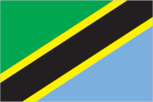
divided diagonally by a yellow-edged black band from the lower hoist-side corner; the upper triangle (hoist side) is green and the lower triangle is blue; the banner combines colors found on the flags of Tanganyika and Zanzibar; green represents the natural vegetation of the country, gold its rich mineral deposits, black the native Swahili people, and blue the country's many lakes and rivers, as well as the Indian Ocean
Government type
presidential republic
Independence
26 April 1964 (Tanganyika united with Zanzibar to form the United Republic of Tanganyika and Zanzibar); 29 October 1964 (renamed United Republic of Tanzania); notable earlier dates: 9 December 1961 (Tanganyika became independent from UK-administered UN trusteeship); 10 December 1963 (Zanzibar became independent from UK)
International law organization participation
has not submitted an ICJ jurisdiction declaration; accepts ICCt jurisdiction
International organization participation
ACP, AfDB, AU, C, CD, EAC, EADB, EITI, FAO, G-77, IAEA, IBRD, ICAO, ICC (NGOs), ICCt, ICRM, IDA, IFAD, IFC, IFRCS, ILO, IMF, IMO, IMSO, Interpol, IOC, IOM, IPU, ISO, ITSO, ITU, ITUC (NGOs), MIGA, MONUSCO, NAM, OPCW, SADC, UN, UNAMID, UNCTAD, UNESCO, UNHCR, UNIDO, UNIFIL, UNISFA, UNMISS, UNWTO, UPU, WCO, WFTU (NGOs), WHO, WIPO, WMO, WTO
Judicial branch
- highest court(s)
- Court of Appeal of the United Republic of Tanzania (consists of the chief justice and 14 justices); High Court of the United Republic for Mainland Tanzania (consists of the principal judge and 30 judges organized into commercial, land, and labor courts); High Court of Zanzibar (consists of the chief justice and 10 justices)
- judge selection and term of office
- Court of Appeal and High Court justices appointed by the national president after consultation with the Judicial Service Commission for Tanzania, a judicial body of high level judges and 2 members appointed by the national president; Court of Appeal and High Court judges serve until mandatory retirement at age 60, but terms can be extended; High Court of Zanzibar judges appointed by the national president after consultation with the Judicial Commission of Zanzibar; judges can serve until mandatory retirement at age 65
- subordinate courts
- Resident Magistrates Courts; Kadhi courts (for Islamic family matters); district and primary courts
Legal system
English common law; judicial review of legislative acts limited to matters of interpretation
Legislative branch
- description
- unicameral National Assembly or Parliament (Bunge) (393 seats; 264 members directly elected in single-seat constituencies by simple majority vote, 113 women indirectly elected by proportional representation vote, 5 indirectly elected by simple majority vote by the Zanzibar House of Representatives, 10 appointed by the president, and 1 seat reserved for the attorney general; members serve 5-year terms); note - in addition to enacting laws that apply to the entire United Republic of Tanzania, the National Assembly enacts laws that apply only to the mainland; Zanzibar has its own House of Representatives or Baraza La Wawakilishi (82 seats; 50 members directly elected in single-seat constituencies by simple majority vote, 20 women directly elected by proportional representation vote, 10 appointed by the Zanzibar president, 1 seat for the House speaker, and 1 ex-officio seat for the attorney general; elected members serve a 5-year term)
- election results
- National Assembly - percent of vote by party - NA; seats by party - CCM 350, Chadema 20, ACT-Wazalendo 4, CUF 3; composition as of early 2021 (388 members) - men 245, women 143, percent of women 36.9%Zanzibar House of Representatives - percent of vote by party - NA; seats by party - NA; composition - NA
- elections
- Tanzania National Assembly and Zanzibar House of Representatives - elections last held on 28 October 2020 (next National Assembly election to be held in October 2025; next Zanzibar election NA)
National anthem
- lyrics/music
- collective/Enoch Mankayi SONTONGA
- name
- "Mungu ibariki Afrika" (God Bless Africa)
- note
- note: adopted 1961; the anthem, which is also a popular song in Africa, shares the same melody with that of Zambia but has different lyrics; the melody is also incorporated into South Africa's anthem
National heritage
- selected World Heritage Site locales
- Ngorongoro Conservation Area (m); Ruins of Kilwa Kisiwani and Songo Mnara (c); Serengeti National Park (n); Selous Game Reserve (n); Kilimanjaro National Park (n); Stone Town of Zanzibar (c); Kondoa Rock-Art Sites (c)
- total World Heritage Sites
- 7 (3 cultural, 3 natural, 1 mixed)
National holiday
Union Day (Tanganyika and Zanzibar), 26 April (1964)
National symbol(s)
Uhuru (Freedom) torch, giraffe; national colors: green, yellow, blue, black
Political parties and leaders
Alliance for Change and Transparency (Wazalendo) or ACT-Wazalendo [Zitto Zuberi KABWE]Civic United Front (Chama Cha Wananchi) or CUF [Ibrahim Haruna LIPUMBA]Party of Democracy and Development (Chama Cha Demokrasia na Maendeleo) or CHADEMA [Freeman Aikael MBOWE]Revolutionary Party of Tanzania (Chama Cha Mapinduzi) or CCM [Samia Suluhu HASSANnote: only parties with seats in the National Assembly listed
Suffrage
18 years of age; universal
Economy
Agricultural products
cassava, maize, sweet potatoes, sugar cane, rice, bananas, vegetables, milk, beans, sunflower seed
Average household expenditures
- on alcohol and tobacco
- 4.2% of household expenditures (2018 est.)
- on food
- 33.1% of household expenditures (2018 est.)
Budget
- expenditures
- $10.017 billion (2019 est.)
- revenues
- $8.968 billion (2019 est.)
Budget surplus (+) or deficit (-)
-1.8% (of GDP) (2017 est.)
Credit ratings
- Moody's rating
- B2 (2020)
- note
- note: The year refers to the year in which the current credit rating was first obtained.
Current account balance
- Current account balance 2018
- -$2.262 billion (2018 est.)
- Current account balance 2019
- -$1.512 billion (2019 est.)
- Current account balance 2020
- -$1.122 billion (2020 est.)
Debt - external
- Debt - external 2018
- $20.569 billion (2018 est.)
- Debt - external 2019
- $22.054 billion (2019 est.)
Economic overview
emerging lower middle-income East African economy; resource-rich and growing tourism; strong post-pandemic recovery from hospitality, electricity, mining, and transit sectors; declining poverty; stable inflation; gender-based violence economic and labor force disruptions
Exchange rates
- Currency
- Tanzanian shillings (TZS) per US dollar -
- Exchange rates 2017
- 2,228.857 (2017 est.)
- Exchange rates 2018
- 2,263.782 (2018 est.)
- Exchange rates 2019
- 2,288.207 (2019 est.)
- Exchange rates 2020
- 2,294.146 (2020 est.)
- Exchange rates 2021
- 2,297.764 (2021 est.)
Exports
- Exports 2018
- $8.307 billion (2018 est.)
- Exports 2019
- $9.659 billion (2019 est.) note: data are in current year dollars
- Exports 2020
- $8.555 billion (2020 est.) note: data are in current year dollars
Exports - commodities
gold, cashews, copper, precious metals, legumes (2020)
Exports - partners
India 15%, United Arab Emirates 15%, Switzerland 14%, Uganda 12%, China 7% (2020)
Fiscal year
1 July - 30 June
GDP - composition, by end use
- exports of goods and services
- 18.1% (2017 est.)
- government consumption
- 12.5% (2017 est.)
- household consumption
- 62.4% (2017 est.)
- imports of goods and services
- -20.5% (2017 est.)
- investment in fixed capital
- 36.1% (2017 est.)
- investment in inventories
- -8.7% (2017 est.)
GDP - composition, by sector of origin
- agriculture
- 23.4% (2017 est.)
- industry
- 28.6% (2017 est.)
- services
- 47.6% (2017 est.)
GDP (official exchange rate)
$60.633 billion (2019 est.)
Gini Index coefficient - distribution of family income
- Gini Index coefficient - distribution of family income 2017
- 40.5 (2017 est.)
Household income or consumption by percentage share
- highest 10%
- 29.6% (2007)
- lowest 10%
- 2.8%
Imports
- Imports 2018
- $10.399 billion (2018 est.)
- Imports 2019
- $10.576 billion (2019 est.) note: data are in current year dollars
- Imports 2020
- $9.181 billion (2020 est.) note: data are in current year dollars
Imports - commodities
copper, refined petroleum, packaged medicines, palm oil, wheat (2020)
Imports - partners
China 34%, Democratic Republic of the Congo 14%, India 12%, United Arab Emirates 6%, South Africa 3% (2020)
Industrial production growth rate
6.5% (2021 est.)
Industries
agricultural processing (sugar, beer, cigarettes, sisal twine); mining (diamonds, gold, and iron), salt, soda ash; cement, oil refining, shoes, apparel, wood products, fertilizer
Inflation rate (consumer prices)
- Inflation rate (consumer prices) 2019
- 3.46% (2019 est.)
- Inflation rate (consumer prices) 2020
- 3.29% (2020 est.)
- Inflation rate (consumer prices) 2021
- 3.69% (2021 est.)
Labor force
29.863 million (2021 est.)
Population below poverty line
26.4% (2017 est.)
Public debt
- Public debt 2016
- 38% of GDP (2016 est.)
- Public debt 2017
- 37% of GDP (2017 est.)
Real GDP (purchasing power parity)
- note
- note: data are in 2017 dollars
- Real GDP (purchasing power parity) 2019
- $149.798 billion (2019 est.)
- Real GDP (purchasing power parity) 2020
- $152.788 billion (2020 est.)
- Real GDP (purchasing power parity) 2021
- $159.326 billion (2021 est.)
Real GDP growth rate
- Real GDP growth rate 2019
- 5.8% (2019 est.)
- Real GDP growth rate 2020
- 2% (2020 est.)
- Real GDP growth rate 2021
- 4.28% (2021 est.)
Real GDP per capita
- note
- note: data are in 2017 dollars
- Real GDP per capita 2019
- $2,600 (2019 est.)
- Real GDP per capita 2020
- $2,600 (2020 est.)
- Real GDP per capita 2021
- $2,600 (2021 est.)
Reserves of foreign exchange and gold
- note
- note: excludes gold
- Reserves of foreign exchange and gold 31 December 2016
- $4.067 billion (31 December 2016 est.)
- Reserves of foreign exchange and gold 31 December 2017
- $5.888 billion (31 December 2017 est.)
- Reserves of foreign exchange and gold 31 December 2018
- $5.05 billion (31 December 2018 est.)
Taxes and other revenues
11.7% (of GDP) (2018 est.)
Unemployment rate
- Unemployment rate 2019
- 2.22% (2019 est.)
- Unemployment rate 2020
- 2.53% (2020 est.)
- Unemployment rate 2021
- 2.65% (2021 est.)
Youth unemployment rate (ages 15-24)
- female
- 5.5%
- male
- 3.7%
- total
- 4.6% (2021 est.)
Energy
Carbon dioxide emissions
- from coal and metallurgical coke
- 1.32 million metric tonnes of CO2 (2019 est.)
- from consumed natural gas
- 2.705 million metric tonnes of CO2 (2019 est.)
- from petroleum and other liquids
- 7.466 million metric tonnes of CO2 (2019 est.)
- total emissions
- 11.491 million metric tonnes of CO2 (2019 est.)
Coal
- consumption
- 577,000 metric tons (2020 est.)
- exports
- 126,000 metric tons (2020 est.)
- imports
- 0 metric tons (2020 est.)
- production
- 712,000 metric tons (2020 est.)
- proven reserves
- 269 million metric tons (2019 est.)
Electricity
- consumption
- 6,522,440,000 kWh (2019 est.)
- exports
- 0 kWh (2019 est.)
- imports
- 113 million kWh (2019 est.)
- installed generating capacity
- 1.623 million kW (2020 est.)
- transmission/distribution losses
- 974 million kWh (2019 est.)
Electricity access
- electrification - rural areas
- 23.3% (2021)
- electrification - total population
- 42.7% (2021)
- electrification - urban areas
- 77.3% (2021)
- population without electricity
- 37 million (2020)
Electricity generation sources
- biomass and waste
- 1% of total installed capacity (2020 est.)
- fossil fuels
- 65% of total installed capacity (2020 est.)
- geothermal
- 0% of total installed capacity (2020 est.)
- hydroelectricity
- 32.8% of total installed capacity (2020 est.)
- nuclear
- 0% of total installed capacity (2020 est.)
- solar
- 1.3% of total installed capacity (2020 est.)
- tide and wave
- 0% of total installed capacity (2020 est.)
- wind
- 0% of total installed capacity (2020 est.)
Energy consumption per capita
- Total energy consumption per capita 2019
- 3.334 million Btu/person (2019 est.)
Natural gas
- consumption
- 1,378,773,000 cubic meters (2019 est.)
- exports
- 0 cubic meters (2021 est.)
- imports
- 0 cubic meters (2021 est.)
- production
- 1,378,773,000 cubic meters (2019 est.)
- proven reserves
- 6.513 billion cubic meters (2021 est.)
Petroleum
- crude oil and lease condensate exports
- 0 bbl/day (2018 est.)
- crude oil and lease condensate imports
- 0 bbl/day (2018 est.)
- crude oil estimated reserves
- 0 barrels (2021 est.)
- refined petroleum consumption
- 52,800 bbl/day (2019 est.)
- total petroleum production
- 0 bbl/day (2021 est.)
Refined petroleum products - exports
0 bbl/day (2015 est.)
Refined petroleum products - imports
67,830 bbl/day (2015 est.)
Refined petroleum products - production
0 bbl/day (2015 est.)
Communications
Broadband - fixed subscriptions
- subscriptions per 100 inhabitants
- 2 (2020 est.)
- total
- 1,135,608 (2020 est.)
Broadcast media
according to statistics from the Tanzania Communications Regulatory Authority (TCRA), Tanzania had 45 television stations as of 2020; 13 of those stations provided national content services (commercially broadcasting free-to-air television); there are 196 radio stations, most operating at the district level, but also including 5 independent nationally broadcasting stations and 1 state-owned national radio station; international broadcasting is available through satellite television which is becoming increasingly widespread; there are 3 major satellite TV providers (2020)
Internet country code
.tz
Internet users
- percent of population
- 32% (2021 est.)
- total
- 20.48 million (2021 est.)
Telecommunication systems
- domestic
- fixed-line telephone network less than 1 connection per 100 persons; mobile-cellular service is 85 telephones per 100 persons (2021)
- general assessment
- Tanzania’s telecom sector enjoys effective competition, particularly in the mobile segment; the government has encouraged foreign participation to promote economic growth and social development, and policy reforms have led to the country having one of the most liberal telecom sectors in Africa; the government has sought to increase broadband penetration by a range of measures, including the reduction in VAT charged on the sale of smartphones and other devices, and reductions in the cost of data; the MNOs became the leading ISPs following the launch of mobile broadband services based on 3G and LTE technologies; operators are hoping for revenue growth in the mobile data services market, given that the voice market is almost entirely prepaid; the MNOs have invested in network upgrades, which in turn has supported m-mobile data use, as well as m-money transfer services and banking services. Together, these have become a fast-developing source of revenue; the landing of the first international submarine cables in the country some years ago revolutionized the telecom market, which up to that point had entirely depended on expensive satellite connections; the government aims to complete a national fiber backbone network, having signed an agreement; in late 2021, the government announced plans to extend the national backbone network from about 8,300km to 15,000km by 2023, and to provide ongoing connectivity to more countries in the region (2022)
- international
- country code - 255; landing points for the EASSy, SEACOM/Tata TGN-Eurasia, and SEAS fiber-optic submarine cable system linking East Africa with the Middle East; satellite earth stations - 2 Intelsat (1 Indian Ocean, 1 Atlantic Ocean) (2019)
Telephones - fixed lines
- subscriptions per 100 inhabitants
- (2021 est.) less than 1
- total subscriptions
- 72,000 (2021 est.)
Telephones - mobile cellular
- subscriptions per 100 inhabitants
- 85 (2021 est.)
- total subscriptions
- 54 million (2021 est.)
Transportation
Airports
166 (2021)
Airports - with paved runways
- 10
- note
- note: paved runways have a concrete or asphalt surface but not all have facilities for refueling, maintenance, or air traffic control; the length of a runway required for aircraft to safely operate depends on a number of factors including the type of aircraft, the takeoff weight (including passengers, cargo, and fuel), engine types, flap settings, landing speed, elevation of the airport, and average maximum daily air temperature; paved runways can reach a length of 5,000 m (16,000 ft.), but the “typical” length of a commercial airline runway is between 2,500-4,000 m (8,000-13,000 ft.)
Airports - with unpaved runways
- 156
- note
- note: unpaved runways have a surface composition such as grass or packed earth and are most suited to the operation of light aircraft; unpaved runways are usually short, often less than 1,000 m (3,280 ft.) in length; airports with unpaved runways often lack facilities for refueling, maintenance, or air traffic control
Civil aircraft registration country code prefix
5H
Merchant marine
- by type
- bulk carrier 4, container ship 9, general cargo 148, oil tanker 46, other 115
- total
- 322 (2022)
National air transport system
- annual freight traffic on registered air carriers
- 390,000 (2018) mt-km
- annual passenger traffic on registered air carriers
- 1,481,557 (2018)
- inventory of registered aircraft operated by air carriers
- 91
- number of registered air carriers
- 11 (2020)
Pipelines
311 km gas, 891 km oil, 8 km refined products (2013)
Ports and terminals
- major seaport(s)
- Dar es Salaam, Zanzibar
Railways
- broad gauge
- 2,707 km (2022) 1.000 m guage
- narrow gauge
- 969 km (2022) 1.067 m gauge
- standard gauge
- 421 km (2022)
- total
- 4,097 km (2022)
Roadways
- paved
- 11,201 km (2022)
- total
- 145,203 km (2022)
- unpaved
- 134,002 km (2022)
Waterways
1,594 km (2022) (Lake Tanganyika 673 km, Lake Victoria 337 km, and Lake Nyasa (Lake Malawi) 584 km are the principal avenues of commerce with neighboring countries; the rivers are not navigable)
Military and Security
Military - note
the TDPF’s primary concerns are maritime piracy and smuggling, border security, terrorism, animal poaching, and spillover from instability in neighboring countries, particularly Mozambique and the Democratic Republic of the Congo (DRC); it participates in multinational training exercises, regional peacekeeping deployments, and has ties with a variety of foreign militaries, including those of China and the US; it has contributed troops to the UN’s Force Intervention Brigade in the DRC and to the Southern African Development Community intervention force in Mozambique; since 2020, the TPDF has deployed additional troops to its border with Mozambique following several cross-border attacks by fighters from the Islamic State of Iraq and ash-Sham operating in Mozambique; the TPDF’s principal ground forces are 5 infantry brigades and an armored brigade; the Naval Forces operate patrol and fast attack boats, while the Air Force inventory includes small numbers of combat aircraft and helicopters (2023)
Military and security forces
- Tanzania People's Defense Forces (TPDF or Jeshi la Wananchi la Tanzania, JWTZ): Land Forces, Naval Forces, Air Force, National Building Army (Jeshi la Kujenga Taifa, JKT), People's Militia (Reserves)Ministry of Home Affairs: Tanzania Police Force (2023)
- note
- note 1: the National Building Army (aka National Services) is a paramilitary organization under the Defense Forces that provides six months of military and vocational training to individuals as part of their two years of public service; after completion of training, some graduates join the regular Defense Forces while the remainder become part of the People's (or Citizen's) Militianote 2: the Tanzania Police Force includes the Police Field Force (aka Field Force Unit), a special police division with the responsibility for controlling unlawful demonstrations and riots
Military and security service personnel strengths
approximately 25,000 active-duty personnel (21,000 Land Forces; 1,000 Naval Forces; 3,000 Air Force) (2023)
Military deployments
- 575 Central African Republic (MINUSCA); 850 Democratic Republic of the Congo (MONUSCO); 125 Lebanon (UNIFIL) (2023)
- note
- note: in 2021, Tanzania began contributing troops to the Southern African Development Community (SADC) intervention force that was assisting the Mozambique Government's fight against Islamic militants
Military equipment inventories and acquisitions
the TPDF's inventory includes mostly Soviet-era and Chinese equipment; in recent years, China has been the leading supplier of arms and equipment (2023)
Military expenditures
- Military Expenditures 2018
- 1.2% of GDP (2018 est.)
- Military Expenditures 2019
- 1.1% of GDP (2019 est.)
- Military Expenditures 2020
- 1.2% of GDP (2020 est.)
- Military Expenditures 2021
- 1.1% of GDP (2021 est.)
- Military Expenditures 2022
- 1.2% of GDP (2022 est.)
Military service age and obligation
18-25 years of age for voluntary military service for men and women; 6-year commitment (2-year contracts afterwards); selective conscription for 2 years of public service (2023)
Transnational Issues
Disputes - international
Tanzania-Burundi: none identified Tanzania-Democratic Republic of the Congo: none identified Tanzania-Kenya: none identified Tanzania-Malawi: dispute with Malawi over the boundary in Lake Nyasa (Lake Malawi) and the meandering Songwe River; Malawi contends that the entire lake up to the Tanzanian shoreline is its territory, while Tanzania claims the border is in the center of the lake Tanzania-Mozambique: none identified Tanzania-Rwanda: none identified Tanzania-Uganda: none identified
Illicit drugs
significant transit country for illicit drugs in East Africa; international drug trafficking organizations and courier networks transit illicit drugs through mainland Tanzania to markets in Europe and North America; cultivates cannabis and khat for domestic consumption and regional and international distribution; domestic drug use continues increasing including methamphetamine use (2021)
Refugees and internally displaced persons
- refugees (country of origin)
- 111,708 (Burundi), 89,017 (Democratic Republic of the Congo) (2023)
Terrorism
Terrorist group(s)
- Islamic State of Iraq and ash-Sham - Mozambique (ISIS-M)
- note
- note: details about the history, aims, leadership, organization, areas of operation, tactics, targets, weapons, size, and sources of support of the group(s) appear(s) in Appendix-T
Environment
Air pollutants
- carbon dioxide emissions
- 11.97 megatons (2016 est.)
- methane emissions
- 59.08 megatons (2020 est.)
- particulate matter emissions
- 15.36 micrograms per cubic meter (2019 est.)
Climate
varies from tropical along coast to temperate in highlands
Environment - current issues
water pollution; improper management of liquid waste; indoor air pollution caused by the burning of fuel wood or charcoal for cooking and heating is a large environmental health issue; soil degradation; deforestation; desertification; destruction of coral reefs threatens marine habitats; wildlife threatened by illegal hunting and trade, especially for ivory; loss of biodiversity; solid waste disposal
Environment - international agreements
- party to
- Biodiversity, Climate Change, Climate Change-Kyoto Protocol, Climate Change-Paris Agreement, Comprehensive Nuclear Test Ban, Desertification, Endangered Species, Hazardous Wastes, Law of the Sea, Marine Dumping-London Convention, Nuclear Test Ban, Ozone Layer Protection, Ship Pollution, Wetlands, Whaling
- signed, but not ratified
- none of the selected agreements
Food insecurity
- severe localized food insecurity
- due to localized shortfalls in staple food production - according to the latest analysis, an estimated 990,000 million people were facing severe acute food insecurity between March and May 2023, 839,000 people in 28 mainland districts and 151,000 on Zanzibar Island; the food insecurity situation was mainly driven by a reduced crop production in 2022 due to dry weather conditions and by high food prices (2023)
Land use
- agricultural land
- 43.7% (2018 est.)
- agricultural land: arable land
- arable land: 14.3% (2018 est.)
- agricultural land: permanent crops
- permanent crops: 2.3% (2018 est.)
- agricultural land: permanent pasture
- permanent pasture: 27.1% (2018 est.)
- forest
- 37.3% (2018 est.)
- other
- 19% (2018 est.)
Major lakes (area sq km)
- fresh water lake(s)
- Lake Victoria (shared with Uganda and Kenya) - 62,940 sq km; Lake Tanganyika (shared with Democratic Republic of Congo, Burundi, and Zambia) - 32,000 sq km; Lake Malawi (shared with Mozambique and Malawi) - 22,490
- salt water lake(s)
- Lake Rukwa - 5,760 sq km
Major rivers (by length in km)
Nile (shared with Rwanda [s], Uganda, South Sudan, Sudan, and Egypt [m]) - 6,650 kmnote – [s] after country name indicates river source; [m] after country name indicates river mouth
Major watersheds (area sq km)
Atlantic Ocean drainage: Congo (3,730,881 sq km), (Mediterranean Sea) Nile (3,254,853 sq km)Indian Ocean drainage: Zambezi (1,332,412 sq km)
Revenue from coal
0.02% of GDP (2018 est.)
Revenue from forest resources
2.19% of GDP (2018 est.)
Total renewable water resources
96.3 billion cubic meters (2019 est.)
Total water withdrawal
- agricultural
- 4.63 billion cubic meters (2020 est.)
- industrial
- 30 million cubic meters (2020 est.)
- municipal
- 530 million cubic meters (2020 est.)
Urbanization
- rate of urbanization
- 4.89% annual rate of change (2020-25 est.)
- urban population
- 37.4% of total population (2023)
Waste and recycling
- municipal solid waste generated annually
- 9,276,995 tons (2012 est.)