1986 Edition
CIA World Factbook 1986 (Internet Archive)
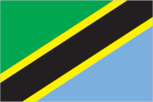
Geography
Agriculture
main crops — cotton, coffee, sisal on mainland; cloves and coconuts on Zanzibar
Aid
economic aid commitments from Western (non-US) countries (1970-79), ODA and OOF, $100 million; US, including Ex-Im (FY70-80), $200 million
Airfields
- 95 total, 90 usable; 27 with permanent-surface runways; 21 with runways 2,440-3,659 m, 3 with runways 1,220-2,439 m
- 100 total, 93 usable; 12 with permanent-surface runways; 3 with runways 2,440-3,659 m, 45 with runways 1, 220-2,439 m
Branches
- Syrian Arab Army, Syrian Arab Air Force, Syrian Arab Navy
- President Ali Hassan Mwinyi has full executive authority on the mainland; National Assembly dominated by the Chama Cha Mapinduzi (Revolutionary Party); National Assembly consists of 233 members, 72 from Zanzibar, of whom 10 are directly elected, 65 appointed from the mainland, and 96 directly elected from the mainland (these numbers are slated to be changed when amendments to the Constitution are approved)
- Tanzanian People's Defense Force includes Army, Navy, and Air Force; paramilitary Police Field Force Unit
Budget
- 1985 — revenues $6.3 billion (excluding aid payments); expenditures $10.9 billion
- (1984/85) revenues, $891.8 million; current expenditures, $1.017 billion; development expenditures, $359.5 million
Capital
Dar es Salaam
Civil air
- 1 4 major transport aircraft
- 1 major transport aircraft
Coastline
1,424 km (this includes 1 13 km Mafia Island, 177 km Pemba Island, and 212 km Zanzibar) People
Communists
a few Communist sympathizers, especially on Zanzibar
Electric power
372,800 kW capacity (1985); 816 million kWh produced (1985), 37 kWh per capita
Ethnic divisions
mainland — 99% native African consisting of well over 100 tribes; 1% Asian, European, and Arab; Zanzibar — almost all Arab
Exports
$396 million (f.o.b., 1984); coffee, cotton, sisal, cashew nuts, meat, cloves, tobacco, tea, coconut products
External debt
$2.8 billion (1983); debt service ratio 68.1% (1984— not including IMF)
Fiscal year
- calendar year Communications
- 1 July-30 June Communications
GDP
$4.2 billion (1984), $210 per capita; real growth rate, 0.6% (1984 prelim.)
Government leaders
Ali Hassan MWINYI, President (since November 1985); Joseph Sinde WARIOBA, Prime Minister (since November 1985)
Highways
- 16,939 km total; 12,051 km paved, 2,625 km gravel or crushed stone, 2,263 km improved earth
- total 34,500 km, 3,600 km paved; 5,600 km gravel or crushed stone; remainder improved and unimproved earth
Imports
$831 million (c.i.f., 1984); manufactured goods, machinery and transport equipment, cotton piece goods, crude oil, foodstuffs
Infant mortality rate
103/1,000(1984)
Inland waterways
- 672 km; of little importance
- several thousand km navigable on Lakes Tanganyika, Victoria, and Malawi; principal inland waterway ports are Mwanza on Lake Victoria and Kigoma on Lake Tanganyika
Labor force
208,680 in paid employment (1983); 90% agriculture, 10% industry and commerce
Land boundaries
3,883 km Water
Language
Swahili and English (official); English primary language of commerce, administration, and higher education; Swahili widely understood and generally used for communication between ethnic groups; first language of most people is one of the local languages; primary education is generally in Swahili
Legal system
based on English common law; permanent constitution adopted 1977, replaced interim constitution adopted 1965; Zanzibar has its own constitution but remains subject to provisions of the union constitution; judicial review of legislative acts limited to matters of interpretation; legal education at University of Dar es Salaam; has not accepted compulsory ICJ jurisdiction
Life expectancy
52
Limits of territorial waters (claimed)
50 nm
Literacy
79%
Major industries
primarily agricultural processing (sugar, beer, cigarettes, sisal twine), diamond mine, oil refinery, shoes, cement, textiles, wood products
Major trade partners
exports — FRG, UK, US; imports— FRG, UK, US, Iran
Member of
Af DB, Commonwealth, FAO, G-77, GATT, IAEA, IBRD, ICAC, ICAO, ICO, IDA, IFAD, IFC, ILO, IMF, IMO, INTELSAT, INTERPOL, ITU, NAM, OAU, SADCC, UN, UNESCO, UPU, WHO, WMO, WTO Economy
Military manpower
- males 15-49, 2,403,000; 1,347,000 fit for military service; about 1 1 3,000 reach military age ( 1 9) annually 300km Land 942,623 km2 (including islands of Zanzibar and Pemba, 2,642 km2); more than twice the size of California; forest 45%, meadow and pasture 37%, inland water 6%, arable 4%, crop 1%, other 7%
- males 15-49, 4,712,000; 2,706,000 fit for military service
Monetary conversion rate
- 3.925 Syrian pounds=US$l (official rate, February 1984); two other officially sanctioned rates — the "parallel" and "tourist" rates — are determined by the government guided by supply and demand
- 17 Tanzanian shillings=US$l (14 June 1984)
National holiday
Union Day, 26 April; Independence Day, 9 December
Nationality
noun — Tanzanian(s); adjective— Tanzanian
Natural resources
hydroelectric power potential, large unexploited iron and coal, gemstone and gold mines, natural gas, nickel
Official name
United Republic of Tanzania
Organized labor
15% of labor force Government
Pipelines
- 1,304 km crude oil; 515 km refined products
- 982 km crude oil
Political subdivisions
25 regions — 20 on mainland, 5 on Zanzibar
Population
22,415,000 (July 1986), average annual growth rate 3.2%
Ports
- 3 major (Tartus, Latakia, Baniyas), 2 minor
- 3 major (Dar es Salaam, Mtwara, Tanga)
Railroads
- 1,543 km total; 1,281 km standard gauge, 262 km 1.050-meter narrow gauge
- 3,555 km total; 960 km 1.067meter gauge; 2,595 km 1.000-meter gauge, 6.4 km double track, 962 km Tan-Zam Railroad 1.067-meter gauge in Tanzania; 1 15 km 1.000-meter gauge planned by end of decade
Religion
mainland— 33% Christian, 33% Muslim, 33% indigenous beliefs; Zanzibar — almost all Muslim
Suffrage
universal adult over age 18 Political party and leader: Chama Cha Mapinduzi (Revolutionary Party), only political party, dominated by Nyerere; has considerable power over domestic policies and the enforcement of them
Telecommunications
- fair system currently undergoing significant improvement; 512,600 telephones (5.3 per 100 popl.); 9 AM, no FM, 40 TV stations; 1 Indian Ocean satellite station; 1 Intersputnik satellite station under construction; 1 submarine cable; coaxial cable and radio-relay to Iraq, Jordan, Turkey, and Lebanon (inactive) Defense Forces
- fair system of open wire, radio relay, and troposcatter; 103,800 telephones (0.6 per 100 popl.); 6 AM, no FM, 2 TV stations; 1 Indian Ocean satellite station Defense Forces
Type
republic; single party constitutionally supreme on the mainland and on Zanzibar
Voting strength
(October 1980 national elections) close to 7 million registered voters; Nyerere received 93% of about 6 million votes cast; general elections scheduled for late 1985